

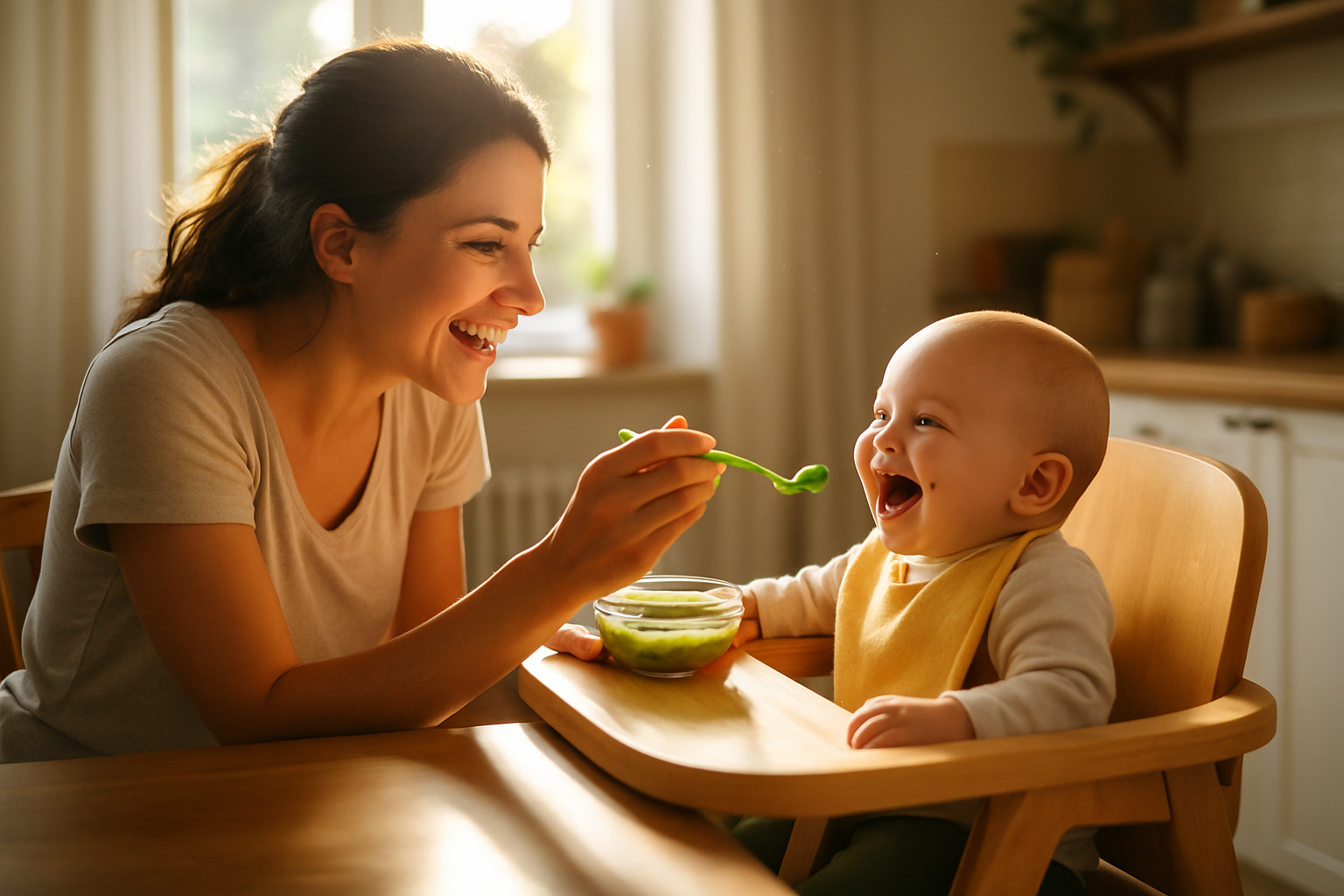
Everything You Need to Know Before Starting Baby’s First Foods
Stepping into the world of solid foods is one of the most exciting milestones in your baby’s first year of life. At the same time, it is completely normal to feel a wave of anxiety mixed in with your excitement. You might wonder if your little one is truly ready, which feeding style to choose, or how to navigate the terrifying world of food allergies and choking hazards. Take a deep breath because you are not alone in feeling this way.
Transitioning from breast milk or formula to baby’s first foods is a gradual journey of exploration, sensory development, and nutritional growth. The primary purpose of this comprehensive guide is to provide you with a stress-free, evidence-based roadmap. We want to help you feel confident, prepared, and ready to enjoy every messy, joyful bite along the way.
When is the Right Time? Recognizing Signs of Readiness
For generations, well-meaning family members might tell you to start feeding your baby rice cereal at four months old. However, modern pediatric guidelines have evolved significantly based on infant development research. The American Academy of Pediatrics (AAP) now recommends exclusive breastfeeding or formula feeding for around the first six months of life, with solid foods introduced alongside milk around that time.
Age alone is never the only indicator of whether your baby is prepared for baby’s first foods. Instead, you need to look for specific developmental milestones that prove your infant’s digestive and nervous systems are ready. Watch closely for these key physical signs of readiness:
- Your baby can sit up independently with little to no support.
- They have excellent head and neck control, meaning their head does not wobble or drop backward.
- The tongue-thrust reflex has faded, which means they no longer automatically push food out of their mouth with their tongue.
- They show intense interest in what you are eating, often watching your every bite, reaching for your plate, or opening their mouth when food approaches.
Choosing Your Approach: Purees vs. Baby-Led Weaning (BLW)
Once you confirm your baby is ready, you face your first major parenting decision: how do you want to feed them? There are two main approaches to introducing baby’s first foods, and neither one is inherently better than the other. The best choice is the one that fits your family’s lifestyle and comfort level.
Traditional Spoon-Feeding with Purees
Traditional spoon-feeding with purees involves starting with very smooth, runny foods and gradually increasing texture as your baby grows. The pros include feeling more in control of volume, less initial waste, and lower anxiety regarding choking. The cons include the extra time spent prepping purees and the eventual transition phase to textured foods.
Baby-Led Weaning (BLW)
Baby-Led Weaning, commonly known as BLW, skips purees entirely. Instead, you offer soft, graspable pieces of whole foods right from the start, allowing your baby to self-feed. Proponents love that BLW fosters fine motor skills, promotes intuitive eating, and makes family mealtime much easier since the baby eats what the parents eat. Safety considerations include ensuring foods are cut into appropriate shapes and accepting that a massive amount of food will end up on the floor.
Combining Both Approaches
Remember that you do not have to choose just one method. Many parents utilize a combination approach, offering responsive feeding that includes both purees and finger foods depending on the day, time, and menu.
The Best First Foods for Babies
When planning your baby’s first foods, nutritional priorities are crucial. Around six months of age, your baby’s iron stores—which they built up while in the womb—begin to deplete rapidly. Breast milk is an incredible source of nutrition, but it is relatively low in iron and zinc. Therefore, your nutritional priority should be offering iron-rich and zinc-rich foods daily.
Great choices include iron-fortified baby oatmeal, finely minced or pureed meats, poultry, well-cooked lentils, and mashed beans. You can easily pair these nutrient-dense options with gentle fruits and vegetables. Excellent starter produce includes ripe avocado, mashed banana, steamed sweet potato, and soft-cooked apple slices.
Consistency matters just as much as the food itself. If you are starting with purees, aim for a smooth, runny consistency at first, thickening it up over a few weeks. If you are practicing BLW, ensure the foods are soft enough to be easily mashed between your thumb and forefinger and shaped into pieces your baby can grasp with their palm.
How to Safely Introduce Common Allergens
If you grew up hearing that you should wait until your child was a toddler to introduce foods like peanuts or eggs, you can officially let go of that outdated advice. Modern medical guidelines strongly encourage the early and regular introduction of common allergens to help reduce the risk of food allergies later in life.
The top allergens to introduce early include peanuts, tree nuts, eggs, dairy, soy, wheat, fish, shellfish, and sesame. Here is a simple, step-by-step guide to doing this safely:
- Introduce only one new potential allergen at a time. This helps you easily identify which food caused a reaction if one occurs.
- Offer the allergen during the morning or early afternoon so you have several hours to monitor your baby for any allergic reactions before bedtime.
- Start with a very small amount, such as a tiny dab on the lips or a small taste mixed into a food they already tolerate well.
- If your baby tolerates the food without any issues, continue offering it regularly as part of their weekly diet to maintain immune tolerance.
Choking Hazards vs. Gagging: What Every Parent Needs to Know
One of the biggest fears parents face when offering baby’s first foods is the thought of their child choking. To manage this anxiety, it is essential to understand the difference between gagging and actual choking. They look and sound very different.
Understanding Gagging
Gagging is a completely normal, protective reflex. When a baby takes a bite of food that is too big or moves too far back in their mouth, their gag reflex triggers automatically to push the food forward. During a gag, your baby’s face might turn red, their eyes might water, and they may cough, sputter, or make retching noises. This can be startling to watch, but it usually resolves on its own within a few seconds without intervention.
Recognizing Choking
Choking, on the other hand, occurs when a foreign object completely or partially blocks the airway. A choking baby is typically silent, may turn pale or blue, cannot cry or cough effectively, and shows signs of panic. To minimize this risk, always avoid high-hazard foods during the first year, including whole grapes, cherry tomatoes, nuts, popcorn, raw hard vegetables, hot dog rounds, and hard candies.
Essential Gear and Supplies for Mealtime
You do not need to spend a fortune on fancy gadgets to feed your baby, but having a few essential items will make mealtime much safer and cleaner. Start with a proper high chair. The most important feature of a high chair is a solid footrest and a 90-degree angle posture. Proper seating support stabilizes your baby’s core, which is essential for safe swallowing and preventing choking.
Next, invest in baby-safe utensils made from soft silicone that won’t hurt delicate gums. Suction bowls and divided plates that stick firmly to the high chair tray will save your sanity by preventing the entire meal from flipping onto the floor. Finally, stock up on long-sleeved waterproof bibs and a washable splat mat to place under the high chair for quick and easy cleanup.
What to Expect: Poop Changes, Water, and Milk Intake
When you start introducing baby’s first foods, expect a dramatic shift in your diaper routine. Because your baby’s digestive system is learning how to process solid food, you will likely notice immediate changes in their bowel movements. Diapers may become firmer, smell significantly stronger, and change colors based on what they ate yesterday. Seeing pieces of undigested carrot or spinach in the diaper is completely normal!
You might also wonder about hydration. Once your baby reaches six months old, you can offer small sips of water in an open cup or a straw cup during mealtime. However, keep in mind the golden rule of the first year: food before one is just for fun. Breast milk or formula remains the primary source of nutrition and calories throughout the entire first year.
Conclusion: Trust Your Instincts and Enjoy the Journey
Embarking on the adventure of baby’s first foods is an incredible milestone filled with messy faces, funny reactions, and new discoveries. Remember to follow your baby’s unique cues, prioritize iron-rich foods, and embrace the mess as a vital part of sensory learning. Patience is your greatest tool during this transition. Trust your instincts, take plenty of photos, and enjoy watching your little one explore the wonderful world of food.


