

How to Prevent Common Household Accidents for Babies: The Ultimate Room-by-Room Safety Guide
There is nothing quite like the bittersweet moment your tiny, stationary newborn transforms into an active, curious explorer. One day you are safely placing your baby down on the rug, and the next, they are army-crawling across the floor with laser focus toward the nearest electrical outlet. While this developmental milestone is a joyful cause for celebration, it also brings a sudden wave of panic for many parents. Keeping up with a newly mobile infant requires a whole new level of vigilance.
According to safety experts, the vast majority of childhood injuries happen right at home, and remarkably, many of these incidents are entirely preventable with proactive home modifications. You do not need to wrap your entire house in bubble wrap, but you do need a solid strategy. This comprehensive guide will walk you through everything you need to know about how to prevent common household accidents for babies, room by room, so you can foster a safe environment where your little one can thrive.
Understanding Your Baby’s Developing Mobility and Risks
Childproofing is not a one-time event; it is an ongoing process that evolves alongside your child. A newborn has very different vulnerabilities than a six-month-old crawler or a twelve-month-old cruiser. Newborns rely entirely on passive safety measures, such as secure cribs, safe sleep spaces, and carefully supervised tummy time. However, the moment an infant begins to scoot or crawl, your strategy must shift dramatically to active childproofing.
To truly understand your home hazards, pediatric safety specialists recommend a simple yet eye-opening exercise: get down on your hands and knees. Crawling through every room from a baby’s vantage point reveals dangers that adults standing at five or six feet tall completely overlook. From that low angle, dangling blind cords look like climbing ropes, low bookshelf corners sit right at eye level, and loose coins or button batteries hiding under the couch become major choking hazards. By adopting your baby’s perspective, you can spot and eliminate risks before they become emergencies.
Room-by-Room Baby Safety Proofing Checklist
Every room in your home presents unique challenges. Breaking your childproofing efforts down space by space makes the project feel much more manageable. Here is your essential room-by-room guide on how to prevent common household accidents for babies.
Living Room and Family Room Hazards
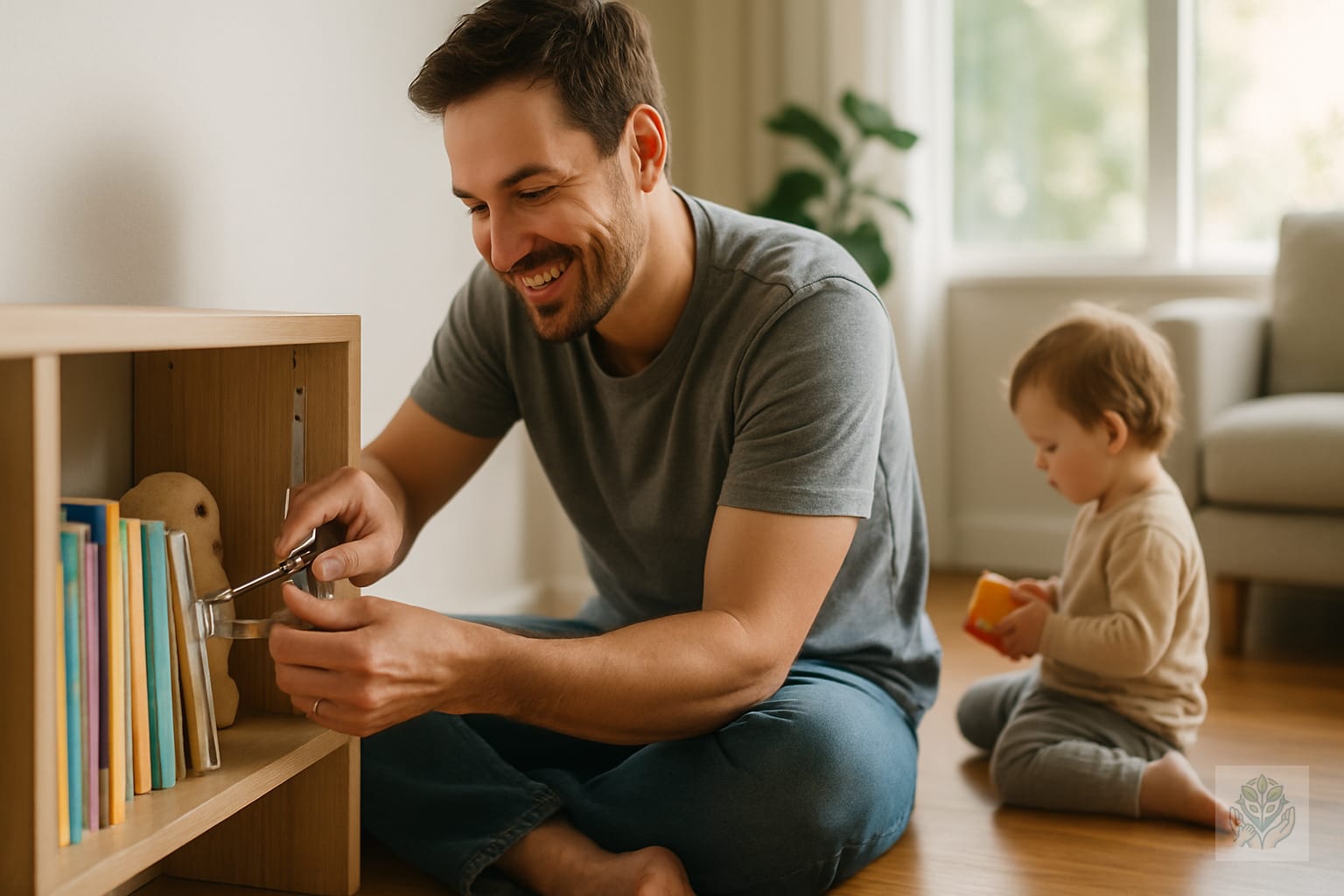
The family room is often where babies spend most of their waking hours. Start by anchoring all heavy furniture, including bookshelves, chests of drawers, and television sets, directly to the wall using heavy-duty anti-tip straps. Televisions on unstable media consoles are a major tipping hazard for curious toddlers trying to pull themselves up. Next, secure all loose electronic cords behind furniture or wrap them up out of reach. Cover sharp coffee table corners with soft silicone guards, or temporarily store the glass-topped table in the garage until your child is older.
Kitchen Safety
The kitchen is the heart of the home, but it is also one of the most dangerous zones for a toddler. Install stove guards to prevent little hands from pulling down hot pots or turning burner knobs. Fit all lower cabinets containing cleaning supplies, plastic bags, or heavy cookware with reliable safety latches. Always push hot mugs of coffee, tea, and cooking liquids far back onto countertops, well away from dangling tablecloth or placemat edges. Finally, ensure your trash can has a secure, locking lid to keep curious hands away from food waste and discarded packaging.
Bathroom Safety
Bathrooms pose significant risks, primarily related to water and medications. Never leave a baby unattended in the bath, even for a single second, as drowning can happen silently in just a few inches of water. Install a toilet lock to keep curious explorers from splashing in the bowl or dropping toys inside. Store all medications, vitamins, razors, and cosmetics in high cabinets or locked containers. Additionally, set your home water heater to a maximum of 120 degrees Fahrenheit to prevent accidental scalds when your baby learns how to turn on the faucet.
Nursery and Bedroom Safety
The nursery should be a haven of safe sleep. Always follow safe sleep guidelines by placing your baby to sleep flat on their back on a firm crib mattress with no loose blankets, pillows, bumper pads, or stuffed animals. Ensure crib slats are no more than two and three-eighths inches apart so a baby’s head cannot get stuck. Keep the crib away from windows, and ensure all window treatments are cordless to eliminate strangulation hazards. Just like in the living room, securely anchor the nursery dresser and bookcase to the wall studs.
Top 4 Most Common Household Accidents and How to Prevent Them
Understanding the most frequent types of injuries helps parents allocate their time and childproofing budget where it matters most. Here are the top four accidents to watch out for and practical prevention strategies.
- Falls: Falls from changing tables, beds, and stairs are the leading cause of emergency room visits for infants. Always keep a hand on your baby while using the changing table, and never leave them elevated on an unconfined surface. Install hardware-mounted safety gates at the top and bottom of all staircases as soon as your baby starts crawling.
- Poisoning: Household cleaners, laundry detergent pods, cosmetics, and certain houseplants can be toxic to inquisitive babies. Store all chemicals high up or behind locked cabinet doors. Keep a mental or physical list of toxic plants, and remove them from your home if they are within your child’s reach.
- Burns and Scalds: Hot bathwater, spilled hot drinks, and exposed oven doors cause severe childhood burns. Always test bathwater with your elbow or a reliable thermometer before placing your baby in the tub. Use the back burners on your stove whenever possible, and turn pot handles inward.
- Choking and Suffocation: Babies explore the world by putting objects straight into their mouths. Keep floors meticulously clear of small items like coins, marbles, small toy parts, and paper clips. Avoid letting your baby play with plastic grocery bags, and ensure all bedding remains minimal and breathable.
Essential Safety Gear You Actually Need
Walking down the baby safety aisle at the store can feel overwhelming, with hundreds of gadgets promising total protection. Fortunately, you do not need all of them. Focusing on a few high-quality, essential items will give you the best return on investment for keeping your child safe.
- Furniture Anchors and Anti-Tip Straps: Non-negotiable for securing heavy dressers, bookshelves, and televisions to wall studs.
- Hardware-Mounted Safety Gates: Essential for blocking off stairways and hazardous rooms. Avoid pressure-mounted gates at the top of stairs.
- Outlet Covers and Plug Guards: Sliding outlet covers or heavy-duty box covers prevent electrical shock while remaining convenient for adult use.
- Cabinet Latches and Door Pinch Guards: Magnetic or strap locks keep toxic chemicals and heavy pots out of reach, while foam pinch guards prevent little fingers from getting slammed in doors.
Emergency Preparedness: What to Do If the Worst Happens
Even with the most rigorous childproofing, accidents can still happen because babies are quick and unpredictable. Being prepared provides invaluable peace of mind. Start by saving crucial phone numbers into your mobile phone, including your pediatrician, the local poison control center (1-800-222-1222 in the United States), and emergency services.
Every parent and caregiver should take an accredited infant CPR and choking first-aid course. Knowing the physical difference between a baby who is coughing and one who is choking silently can save a life. Finally, assemble a dedicated home baby first-aid kit stocked with digital thermometers, infant pain relievers approved by your pediatrician, adhesive bandages, sterile gauze, and saline drops.
Recommended Amazon Products
As an Amazon Associate, NurtureBharat earns from qualifying purchases.

FOXIGON Baby Safety Plug Guards – 12 Pcs Child Proofing Socket Protectors with Easy Removal Pin | Switch Board Covers for Electric Socket Safety at Home
₹149.00
₹799.00
— Save 81%
In stock
Conclusion
Learning how to prevent common household accidents for babies is a journey rooted in love, awareness, and proactive preparation. While you cannot shield your child from every single bump and bruise as they grow, putting these essential safety measures in place dramatically reduces the risk of severe injuries. Remember that perfection is never required; what matters most is staying aware of your developing child’s new abilities and adapting your home accordingly.
Take a deep breath, tackle one room at a time, and give yourself grace as you navigate this adventurous parenting milestone. What is your favorite childproofing hack or safety discovery? Drop a comment below to share your tips with other parents in our community!
Frequently Asked Questions
When should I start childproofing my home for a baby?
You should start childproofing your home before your baby begins to crawl or scoot, typically around 4 to 6 months of age. Getting ahead of their mobility ensures hazards are secured before they can reach them.
What are the most common household accidents for babies?
The most frequent accidents include falls from changing tables or stairs, accidental poisoning from household cleaners or medications, burns from hot liquids or bathwater, and choking on small objects.
How can I prevent furniture from tipping over on my baby?
Always secure heavy furniture such as bookshelves, dressers, and televisions directly to wall studs using heavy-duty anti-tip straps or furniture anchors to prevent dangerous tip-overs.
Are pressure-mounted gates safe for stairs?
Pressure-mounted gates should never be used at the top of stairs because they can dislodge under pressure. Always use hardware-mounted safety gates securely screwed into the wall studs for stairways.
What is the safest temperature for home bathwater?
Set your home water heater to a maximum of 120 degrees Fahrenheit and always test the bathwater with your elbow or a reliable thermometer before placing your baby in the tub.
What emergency numbers should every parent have saved?
Every parent should save their pediatrician’s office number, local emergency services (911), and the national Poison Control Center hotline (1-800-222-1222 in the US) in their mobile phones.


