

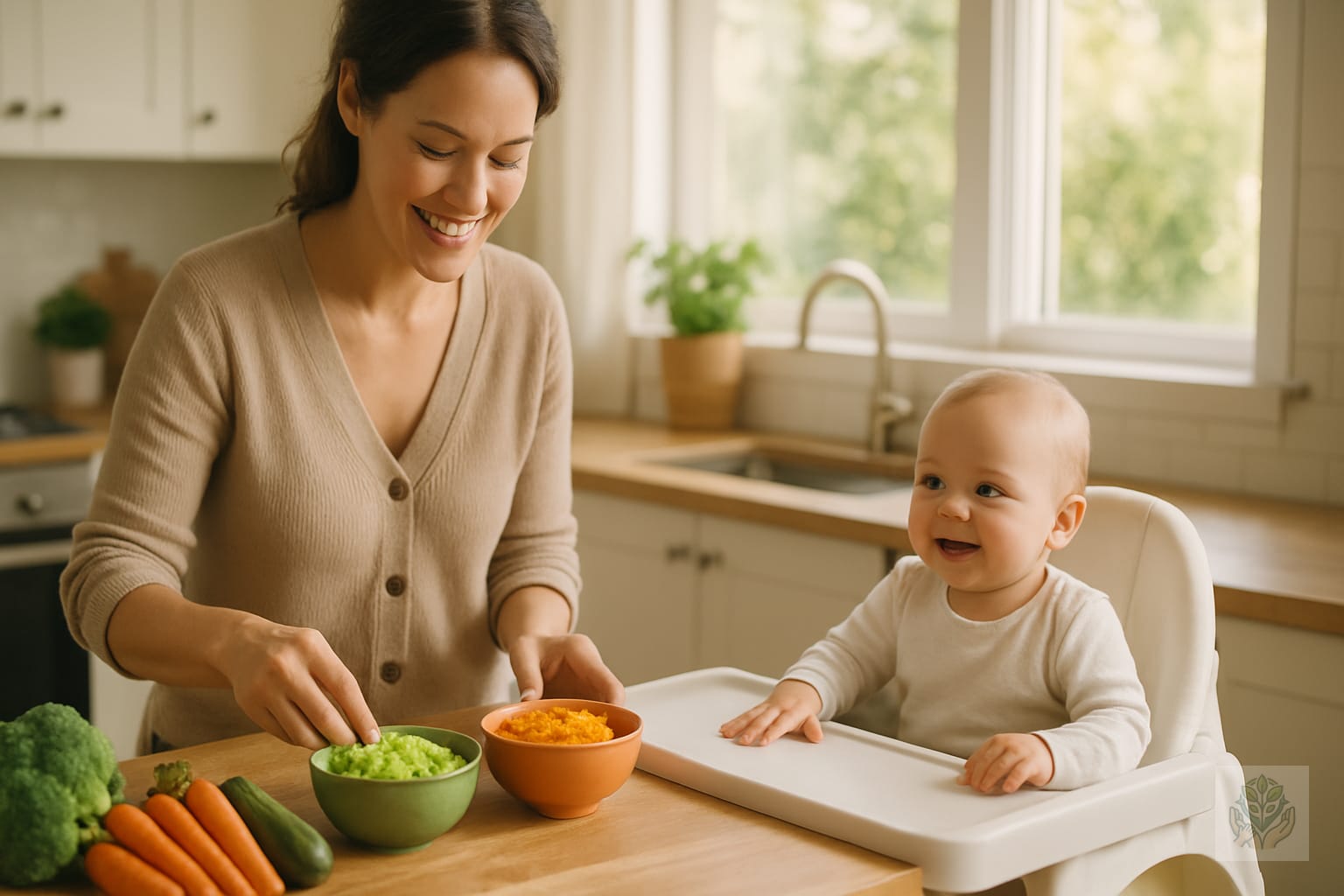
First Foods Timeline From Six to Twelve Months: The Ultimate Month-by-Month Feeding Guide
Reaching the six-month mark is an incredible milestone in your parenting journey. Your sweet baby is transforming right before your eyes, and suddenly, they are showing a curious interest in what is on your plate. Stepping into the world of solid foods can feel both thrilling and slightly overwhelming. You might wonder if your baby is truly ready, how much they should actually eat, and which foods to offer first. For more foundational knowledge, read our complete guide to baby nutrition tips.
This comprehensive first foods timeline is designed to guide you month by month through your baby’s first year of eating. By focusing on variety, safety, and a joyful approach to mealtimes, you will help your little one build a healthy relationship with food that lasts a lifetime.
Before You Begin: Safety and Readiness Basics
Before spooning up that very first bite, it is important to ensure your baby is developmentally ready. Pediatric guidelines generally recommend starting solids around six months, but every baby develops at their own pace. Look for these essential signs of physical readiness rather than just relying on a calendar date. Learn more in our guide to starting baby’s first foods:
- Your baby can sit upright with little to no support.
- They have lost the tongue-thrust reflex, which means they do not automatically push food out of their mouth with their tongue.
- They show strong interest in food, perhaps watching you eat with fascination or reaching for your plate.
- They have good head and neck control.
As you embark on this adventure, you will also want to understand the difference between gagging and choking. Gagging is a normal, protective reflex where your baby pushes food forward in their mouth to clear their airway. It can sound alarming, but it is a safe part of learning how to manage textures. Choking, on the other hand, is silent, dangerous, and occurs when the airway is blocked. Always supervise your baby closely during every meal.
Parents generally choose between traditional purees, Baby-Led Weaning (BLW) where babies self-feed soft strips of whole foods, or a combined approach. Pick the method that feels most comfortable for your family.
Month 6: The Journey Begins
During the sixth month, your primary nutritional goal remains breast milk or formula. Solids at this stage are primarily for practice, exploring new flavors, and developing oral motor skills. Food before one is largely about fun and exploration!
Start with single-ingredient foods to help your baby get used to new tastes. Excellent options for month six include:
- Avocados mashed or sliced into large, manageable strips.
- Ripe bananas mashed smoothly or cut into thick pieces.
- Steamed and thoroughly mashed sweet potatoes or carrots.
- Iron-fortified baby oatmeal mixed with breast milk or formula.
This is also the ideal window to introduce common allergens, such as peanut butter (thinned out with water or breast milk), well-cooked scrambled eggs, and dairy. Current pediatric research shows that introducing common allergens early and often can actually help reduce the risk of developing food allergies. Introduce one new allergen at a time and wait a couple of days before trying another.
Months 7 to 8: Expanding Palates and Textures
As your baby enters their seventh and eighth months, they become much more efficient at moving food around in their mouth. It is time to transition away from completely smooth purees and move toward lumpy purees, mashed foods, and soft finger foods.
You can begin combining flavors to create exciting culinary experiences. Try mixing sweet potato with a touch of cinnamon, or apple with mild spinach. This is also a wonderful time to introduce proteins and dairy. Explore our homemade healthy baby recipes for more ideas:
- Well-cooked, finely shredded chicken or tender beef.
- Flaked, boneless white fish like cod or salmon.
- Well-cooked and mashed lentils or beans.
- Full-fat plain Greek yogurt or cottage cheese.
Keep mealtimes relaxed and messy. Let your baby touch, squish, and explore their food with their hands.
Months 9 to 10: Mastering Self-Feeding and Pincer Grasp
By nine and ten months, your baby will likely display an exciting developmental milestone: the pincer grasp. Instead of raking food with their whole fist, they now pick up small pieces using their thumb and index finger.
This new dexterity opens up a whole new world of finger foods. Offer small, bite-sized pieces that encourage independent eating:
- Soft-cooked vegetable florets like broccoli or cauliflower.
- Small pieces of soft ripe fruit like peaches, melons, or berries cut into quarters.
- Scrambled eggs cut into small strips or squares.
- Well-cooked pasta pieces like penne or fusilli.
Aim for two to three meals a day alongside your regular milk feeds. You should also introduce water in an open cup or a weighted straw cup during mealtime. Do not worry about how much water they actually drink; at this stage, it is mostly about learning the mechanics of using a cup. Now is also the perfect time to start planning healthy baby meals for your growing infant.
Months 11 to 12: Approaching Toddlerhood
As your baby approaches their first birthday, you will notice a shift in their nutritional needs. Solid foods begin to take center stage as a major source of daily energy and nutrition, while milk intake may taper slightly.
Your little one is now ready to fully integrate into family mealtimes. They can eat much of what the rest of the family eats, provided meals are prepared with low or no added salt and sugar. Establish a predictable routine of three meals and one to two healthy snacks daily.
Encourage the use of toddler-friendly spoons and forks. While they may not master utensil use right away, letting them practice builds essential coordination and independence. Make sure you are choosing the right baby feeding accessories to support their development.
Crucial Safety Rules and Foods to Avoid
Navigating this first foods timeline also means keeping safety front and center. Certain foods pose severe health risks to infants under the age of one and must be strictly avoided. To learn more about childproofing your home, see our ultimate baby safety guide:
- Honey: Never give honey to a baby under twelve months due to the risk of infant botulism.
- Choking Hazards: Avoid whole grapes, cherry tomatoes, nuts, popcorn, whole dried fruits, and hard raw vegetables unless they are cut, cooked, or modified safely.
- Cow’s Milk as a Drink: While dairy in cooking or yogurt is fine, do not offer plain cow’s milk as a primary beverage until after twelve months, as it can irritate an infant’s digestive system.
- Added Sugars and Sodium: Keep processed foods, added sugars, and salty snacks away from your baby’s developing kidneys and palate.
Recommended Amazon Products
As an Amazon Associate, NurtureBharat earns from qualifying purchases.

Baby First Foods Tracker Magnet – Weaning Checklist with Allergen Introduction Log and Feeding Safety Guide for New Parents – 11 x 9.25 Inches
₹3,418.00
₹10,792.86
— Save 68%
Conclusion
Introducing solid foods is a remarkable journey of growth, mess, and discovery. Remember the golden rule: food before one is mostly for practice, fun, and allergen exposure. Every baby moves at their own pace along this first foods timeline. Some babies take to eating instantly, while others prefer to take their time exploring textures slowly. Trust your baby’s cues, keep mealtimes joyful, and enjoy watching your little one discover the wonderful world of food!
Frequently Asked Questions
When is my baby ready to start solid foods?
Babies are generally ready around six months old when they can sit upright with little support, have lost the tongue-thrust reflex, show strong interest in food, and have good head control.
Should I start with purees or baby-led weaning?
You can choose traditional purees, baby-led weaning with soft whole food strips, or a combined approach based on what feels most comfortable for your family.
When should I introduce common food allergens?
Current guidelines recommend introducing common allergens like peanut butter, eggs, and dairy early and often starting around six months to help reduce the risk of food allergies.
What foods should I avoid giving my baby under one year?
Never give honey due to the risk of infant botulism. Also avoid choking hazards like whole grapes and nuts, cow’s milk as a primary drink, and added sugars or high sodium.
How much milk should my baby drink while starting solids?
Breast milk or formula remains the primary source of nutrition during the first year. Solids are initially for practice, exploration, and developing oral motor skills.
What is the pincer grasp and when does it develop?
The pincer grasp develops around nine to ten months, allowing your baby to pick up small pieces of food using their thumb and index finger for independent self-feeding.


