

How Parents Can Encourage Independent Hygiene Habits: A Step-by-Step Guide
Introduction
If you have ever spent twenty minutes arguing about why teeth brushing is mandatory, you know the daily struggle of the daily hygiene battle. Parenting brings many joys, but negotiating handwashing, hair brushing, and bath time can quickly drain your patience. Learn more in our guide on how to teach children good hygiene habits. We often find ourselves standing over our children, micromanaging every single swipe of the toothbrush or squirt of soap.
However, why early independence matters for child development goes far beyond saving your sanity. When children take ownership of their personal care, they build self-esteem, fine motor skills, and lifelong healthy habits. Developing these skills early empowers kids to feel capable and confident in their own bodies.
What to expect in this guide is a realistic, compassionate roadmap designed to take you from constant nag to supportive coach. We will explore age-appropriate milestones, environmental tweaks, playful routines, and troubleshooting strategies to make independent hygiene habits a natural part of your family life.
Understanding Hygiene Milestones by Age
Children develop at their own pace, but understanding typical developmental milestones helps set realistic expectations. Trying to force a toddler to brush independently is just as counterproductive as micromanaging a ten-year-old.
Toddlers (Ages 1-3): Participating with supervision
At this stage, toddlers are eager to copy everything you do. Independent hygiene habits start with participation rather than total autonomy. Let your toddler hold the toothbrush while you guide it, or let them splash water on their hands. Your primary goal is making hygiene a normal, positive part of the daily routine for kids.
Preschoolers (Ages 4-5): Learning routines and basic steps
Preschoolers can handle multi-step processes with gentle guidance. They can typically wash their hands with soap, brush their teeth with a pea-sized amount of toothpaste (though they still need a parent to follow up and clean missed spots), and wipe themselves after using the toilet with occasional assistance.
School-Age (Ages 6+): Mastering autonomy and consistency
By school age, children have the fine motor skills and cognitive ability to manage most of their hygiene independently. They can shower, brush, and groom with minimal supervision. At this stage, your role shifts from hands-on helper to gentle reminder.
Step 1: Make the Bathroom and Sink Accessible
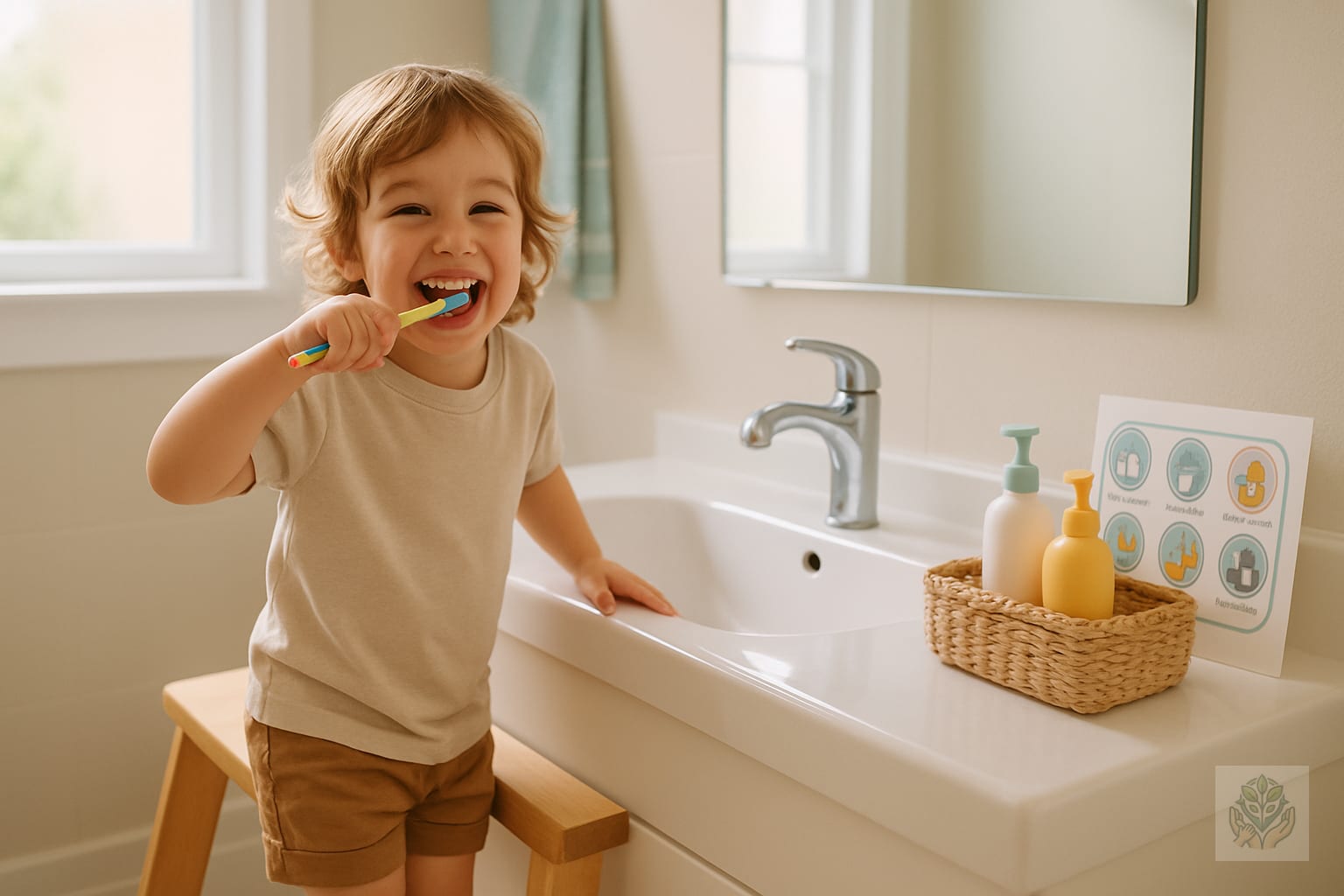
Adult-sized bathrooms can feel hostile and intimidating to little bodies. If a child cannot reach the sink or pull a heavy drawer open, true independence becomes nearly impossible.
Using sturdy step stools and faucet extenders
Invest in a wide, non-slip step stool that allows your child to stand comfortably at the sink without wobbling. Faucet extenders are another inexpensive game-changer. They bridge the gap between the faucet and the edge of the sink, helping toddlers reach the running water easily.
Organizing child-friendly toiletries at eye level
Store your child’s toothbrush, toothpaste, and hairbrush on a low shelf or in a dedicated basket where they can grab them independently. When children can access their own supplies, they feel a genuine sense of ownership over their routine.
Creating a designated, easy-to-reach towel hook
High towel bars are notoriously difficult for kids to use. Hang a low command hook or a suction-cup hook right at your child’s eye level. This simple adjustment ensures they can actually hang up their towel instead of leaving it in a soggy heap on the floor.
Step 2: Turn Routines into Fun Games
Chores feel like work, but play feels natural. Infusing fun into personal care is one of the most effective ways to encourage independent hygiene habits without hearing complaints.
Using brushing timer apps and songs
Two minutes can feel like an eternity to a child brushing their teeth. Use fun two-minute brushing songs, interactive brushing apps, or sand timers to keep them engaged until the time is up.
Creating playful handwashing rituals
Singing a favorite song while scrubbing with soap ensures they wash long enough to kill germs. Turn handwashing into a concert by singing the alphabet or making up silly bubble-popping games.
Bath time toys and sensory-friendly soaps
Bath time resistance often stems from boredom or discomfort. Introduce floating toys, cups for pouring, or colorful, gently scented, hypoallergenic soaps to make evening cleanup a relaxing reward rather than a battle. For those with younger babies, check out our ultimate guide to baby bath time.
Step 3: Use Visual Aids and Checklists
Children thrive on predictability and visual cues. When you are the one constantly barking orders, your child learns to wait for your directions rather than thinking for themselves.
Designing a step-by-step bathroom routine chart
Break down morning and evening routines into simple picture icons. Show a picture of a toilet, followed by handwashing, teeth brushing, and hair combing.
Laminating a morning and bedtime hygiene checklist
Laminate the chart so your child can use a dry-erase marker to check off each box as they complete it. This shifts your role from nagging boss to helpful cheerleader.
The power of sticker charts and positive reinforcement
For younger children, a sticker chart can work wonders. Celebrate consistent effort with enthusiastic verbal praise and small milestones rather than material bribes, reinforcing the internal satisfaction of taking care of their bodies.
Step 4: Step Back and Allow for Imperfection
Perfection is the enemy of progress. If you swoop in to fix every crookedly combed patch of hair or slightly messy handwash, your child will quickly learn to let you do it all.
The importance of letting kids try it themselves first
Give your child space to practice. If they put their shirt on backwards or miss a tiny spot on their hands, take a deep breath and let it go. Mastery takes repetition.
How to handle gentle corrections without nagging
Instead of criticizing, ask guiding questions. Try saying, Let us check the mirror together to see if our teeth are sparkling! This invites self-assessment rather than defensiveness.
Building confidence through small wins
Every time a child completes a hygiene task unassisted, their confidence grows. Acknowledge these small victories to motivate them toward greater autonomy, reinforcing 7 positive parenting habits for raising confident and caring kids.
Troubleshooting Common Hygiene Resistance
Every parent hits roadblocks. Understanding how to navigate resistance keeps your sanity intact and your child moving forward. This process is a key part of managing everyday behavior challenges in kids.
What to do when your child hates hair washing or teeth brushing
For hair washing, try a rinser cup with a soft silicone edge to keep water out of their eyes, or let them hold a dry washcloth over their face. For brushing battles, switch to an electric toothbrush with a fun character or let them choose a mild-flavored toothpaste.
Handling sensory sensitivities to textures and smells requires patience. Some children genuinely struggle with the texture of toothpaste foam or the sound of the electric toothbrush. Opt for unflavored, non-foaming toothpastes or soft manual brushes, and introduce new sensory experiences gradually.
Consistency versus perfection means knowing when to step in and help. If your child is exhausted or running a fever, step in and handle their hygiene routine for them. If resistance turns into an emotional outburst, learn how to handle child tantrums without shouting. Independence is a marathon, not a sprint.
Conclusion
Learning to encourage independent hygiene habits is a gradual journey that requires patience, consistency, and a lot of grace. By transforming your bathroom space, introducing playful routines, and utilizing visual checklists, you empower your child with lifelong skills.
Remember that every small step forward is a victory for your child’s developing autonomy. Celebrate the messy teeth-brushing sessions and the slightly damp bathroom floors, because they are stepping stones toward self-reliance.
What is your best tip for surviving the daily hygiene routine? Drop a comment below or share your favorite trick with our parenting community!
Frequently Asked Questions
At what age should children start practicing independent hygiene habits?
Children can start participating in basic hygiene through playful imitation as toddlers around ages one to three. By preschool age, they can handle multi-step routines with supervision, and school-age children can typically manage most tasks independently.
How can I make the bathroom more accessible for my toddler?
You can make the bathroom accessible by using a wide, non-slip step stool, installing a faucet extenders to help them reach running water, placing toiletries at eye level, and hanging a low towel hook.
What is the best way to stop daily battles over teeth brushing?
To reduce brushing battles, try using two-minute timer apps, fun songs, or electric toothbrushes featuring favorite characters. Allowing children to choose a mild-flavored toothpaste can also make the experience more enjoyable.
How do visual checklists help with hygiene routines?
Visual charts break down morning and evening routines into simple picture icons, helping kids remember each step without constant parental reminders. Laminating the chart allows children to check off tasks using a dry-erase marker.
How should I handle sensory sensitivities to toothpaste or hair washing?
For sensory sensitivities, try unflavored or non-foaming toothpastes and soft manual brushes. For hair washing, use a rinser cup with a soft silicone edge to keep water out of their eyes, or let them hold a dry washcloth over their face.
Should I correct my child if their hygiene routine is messy?
Perfection is not the goal when building independence. Allow your child to try things themselves first and use gentle, guiding questions rather than criticism to help them self-assess their routine.


