

10 Clever Open Storage Ideas for a Montessori-Inspired Kids’ Room
Designing a child’s bedroom can feel like a constant battle against clutter. Toys overflow from plastic bins, clothes end up on the floor, and favorite books vanish under beds. If you are searching for a calmer, more intentional approach to your child’s living space, a Montessori-inspired open storage system might be the exact solution you need.
By implementing thoughtful montessori open storage ideas, you can transform a chaotic bedroom into a peaceful sanctuary that nurtures your child’s natural desire for independence. When children can easily see, reach, and return their belongings, they naturally learn to care for their environment without constant reminders from adults. For more guidance on creating a well-rounded space, take a look at our essential furniture for a functional nursery guide.
Why Open Storage is the Cornerstone of a Montessori Kids’ Room
At the heart of the Montessori philosophy lies the concept of the prepared environment. Dr. Maria Montessori observed that children thrive when their surroundings are scaled to their physical size and designed for their developmental needs. Traditional bedrooms often feature high closets, deep toy chests, and furniture meant for adults, which inadvertently makes children entirely dependent on caregivers for basic daily tasks.
Visible and accessible open storage completely changes this dynamic. When toys and clothes are displayed clearly on low shelves rather than hidden away in opaque bins, cognitive overwhelm drops significantly. Instead of dumping an entire toy box onto the floor to find one specific block, your child can spot the desired item instantly.
This visibility encourages deep, self-directed play and sustained concentration. When playtime ends, the clear visual cues make the cleanup process intuitive rather than frustrating. Implementing practical and aesthetic open storage solutions is the first step toward raising a confident, self-reliant child. Discover more options for enrichment with our best educational toys for kids age-wise guide.
The 3 Golden Rules of Montessori Organization
Before diving into specific furniture pieces, it helps to understand the core principles governing Montessori organization in the home. Keeping these rules in mind ensures your storage choices actively support your child’s growth.
1. Low to the Ground
Every single item your child uses daily should be physically within their reach. This means ditching high bookcases and towering dressers in favor of furniture that sits low to the floor. If a toddler needs to ask an adult to reach a puzzle or a pair of socks, the environment is no longer fostering independence.
2. Less is More
Overcrowded shelves lead to decision fatigue and frantic toy dumping. The Montessori approach relies heavily on toy rotation. By displaying only a curated selection of eight to ten items at a time and storing the rest away, you keep novelty high and maintain a calm aesthetic.
3. Order and Beauty
Children possess an innate sensitivity to order during their early years. Every toy, book, and garment should have a designated, visible home. Using natural materials like wood, wicker, and cotton adds warmth and beauty, teaching children to value and respect their personal belongings.
7 Inspiring Open Storage Solutions for Your Child’s Room
Bringing these principles to life does not require a complete architectural overhaul. Here are seven practical open storage solutions you can easily integrate into your child’s bedroom or playroom.
1. Low Wooden Shelving Units
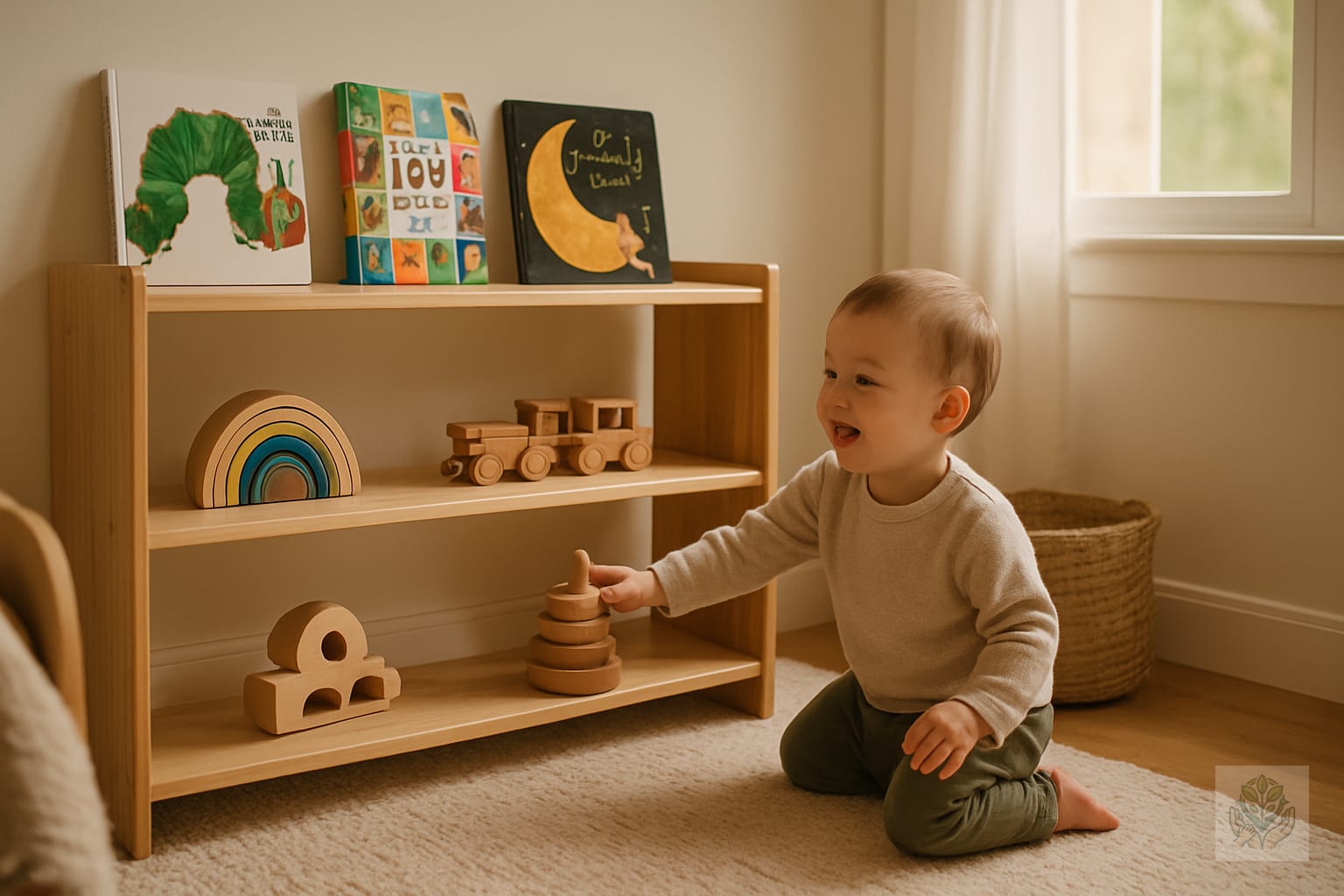
The classic Montessori toy shelf is typically low, wide, and features open compartments. Instead of packing multiple toys into one cubby, place just one activity per section. For example, put a wooden puzzle on its own tray or a basket of musical instruments by itself. This invites deep engagement and makes cleanup remarkably straightforward. You can also explore selections from our Montessori learning toys parent’s guide to find the best items for these shelves.
2. Low Hanging Clothes Rails
Instead of hiding your child’s wardrobe behind closed closet doors, install a low garment rack at their eye level. Hang just three to five weather-appropriate outfits for the week. Allowing your child to choose their own clothes each morning builds vital decision-making skills and self-confidence.
3. Low Open Baskets and Bins
For soft toys, wooden blocks, or art supplies, shallow open baskets work wonders. Natural materials like seagrass or felt bins look wonderful and allow toddlers to peer inside easily. Avoid deep bins where items get lost at the bottom, as these inevitably lead to dumping and frustration.
4. Picture Ledges for Book Display
Traditional bookcases store books with their spines facing out, which can be visually overwhelming for young children. Picture ledges mounted at child height display books with their covers facing forward. This functions like a bookstore display, immediately drawing children in and encouraging a lifelong love of reading. Pair this setup with selections from our ultimate guide to age-appropriate books for toddlers and preschoolers.
5. Capped Cube Storage Used Horizontally
If you already own standard cube storage shelves, simply turn them on their side. By utilizing them horizontally instead of vertically, you instantly lower the height to a safe, child-friendly level while creating a sturdy surface on top for displaying special treasures or activity trays.
6. Peg Rails at Child Height
Installing a simple wooden shaker peg rail low on the wall provides a designated spot for daily items. Hang your child’s everyday jacket, backpack, sun hat, or a basket of dress-up clothes here. It establishes a comforting routine where children know exactly where to place their gear upon walking into their room.
7. Floor-Level Display Trays
Sometimes storage is less about furniture and more about spatial definition. Using shallow wooden trays or woven mats on the floor helps define specific play areas. A puzzle lives on its specific tray, signaling to the child where the work begins and ends.
Adapting Open Storage Across Different Zones
A well-planned Montessori room is divided into distinct zones for sleeping, dressing, reading, and playing. Tailoring your storage to each specific zone maximizes functionality throughout the day.
In the play zone, focus on categorization. Keep building materials together in one open basket, sensory toys on low wooden shelves, and art supplies neatly arranged on trays. In the sleep and clothing zone, simplify wardrobe choices down to a few seasonal options on your low clothing rack. In the reading nook, combine a cozy floor mattress or plush rug with low book slings so your child can easily curl up with a story whenever they desire.
How to Maintain Your Child’s Open Storage System Long-Term
Setting up an organized room is a wonderful milestone, but maintaining the system requires a bit of ongoing strategy. Fortunately, open storage makes maintenance much easier when you follow a few simple habits.
- Implement a Toy Rotation Schedule: Every few weeks, pack away half of the current toys in opaque storage bins in a closet. Bring out a fresh batch to renew your child’s interest and keep the open shelves from becoming cluttered.
- Involve Your Toddler in Cleanup: Make tidying up a shared, joyful activity rather than a punishment. Guide your child by naming where items go, such as putting the wooden blocks back into their specific basket. Learn more effective routines in our daily routine for kids by age guide.
- Adapt as Your Child Grows: Children develop rapidly. Raise your picture ledges, adjust garment rail heights, and swap out toddler toys for board games and independent art supplies as your child reaches new developmental stages.
Empowering Your Child Through Thoughtful Design
Transitioning to montessori open storage ideas is about much more than achieving a clean, Pinterest-worthy aesthetic. It is an intentional design choice that communicates trust and respect to your child. By providing an environment that is accessible, orderly, and beautiful, you grant them the autonomy to manage their own space.
If overhauling an entire bedroom feels daunting, remember that you do not need to do everything at once. Start small by clearing off one low shelf or setting up a single picture ledge for books. Watch how your child naturally interacts with the new setup, and let their engagement guide your next steps. Thoughtful design truly empowers children to become capable, confident learners in their own homes.
Frequently Asked Questions
What is Montessori open storage?
Montessori open storage uses low, accessible shelves, baskets, and racks to display toys and clothes at a child’s eye level, promoting independence and reducing clutter.
Why is open storage important in a Montessori room?
Open storage allows children to easily see, reach, and return their belongings without adult help, fostering self-reliance, decision-making, and deep concentration.
How do I organize toys using Montessori principles?
Keep toys on low shelves with only one activity per tray or basket. Implement a toy rotation schedule to prevent overwhelm and maintain high engagement.
What furniture works best for Montessori open storage?
Low wooden shelving units, horizontal cube storage, low clothing rails, picture ledges for books, and shallow open baskets are ideal Montessori furniture choices.
How high should Montessori storage be?
Storage should always be at the child’s physical eye and reach level, typically very low to the ground, so toddlers can access their items independently.
How do I maintain a Montessori open storage system?
Rotate toys every few weeks, involve your child in simple cleanup routines, and adjust shelf heights as your child grows and develops new skills.


