

Baby Fitted Sheets: What Parents Should Look For (Ultimate Buying Guide)
Introduction
The importance of a safe and cozy sleep space
Creating a nurturing nursery is one of the most exciting parts of preparing for a new baby. Parents spend countless hours researching cribs, soothing mobiles, and blackout curtains to ensure their little one gets the rest they need. Yet, one of the most fundamental elements of the nursery often gets overlooked. For more ideas on organizing your nursery setup, read our guide on essential furniture for a functional nursery. Selecting the right baby fitted sheets plays a massive role in your infant’s daily comfort and safety.
Your baby will spend up to sixteen or seventeen hours a day sleeping during those first few months. Because their skin is delicate and their bodies are still developing temperature regulation, the fabric resting against them matters deeply. Beyond pure comfort, sleep safety is paramount for every parent navigating the newborn fog.
Why choosing the right baby fitted sheet matters more than you think
It is easy to assume that all crib sheets are essentially the same, but material quality, elasticity, and weave make a tremendous difference. A poorly made sheet can shrink in the wash, lose its stretch, or worse, pull away from the mattress corners and create a suffocation hazard. Investing time into understanding baby fitted sheets ensures peace of mind every time you lay your baby down for a nap or bedtime.
Why Crib Sheet Safety is Priority Number One
Adhering to safe sleep guidelines (AAP recommendations)
The American Academy of Pediatrics provides strict safe sleep guidelines to reduce the risk of Sudden Infant Death Syndrome and suffocation. The core message is clear: keep the crib bare. This means no pillows, heavy blankets, stuffed animals, or loose positioning devices. Because the crib must remain free of extra items, the crib sheet becomes the single piece of fabric your baby interacts with directly.
Following these recommendations means choosing a sheet that fits snugly over a firm, flat mattress. You should never use a flat sheet tucked in around a mattress, as it can easily come loose. A dedicated baby fitted sheet is an absolute necessity.
The danger of loose bedding and ill-fitting sheets
An ill-fitting sheet is more than just a minor annoyance; it is a genuine safety hazard. If a sheet is too large for the mattress, it can bunch up or slip off the corners while the baby moves around. This excess fabric can potentially cover an infant’s nose and mouth.
Always inspect the dimensions of your mattress before purchasing bedding. Standard crib mattresses measure approximately twenty-eight inches by fifty-two inches, but thickness can vary. Always match your sheet size to your specific mattress dimensions.
Deep pockets and secure elastic bands: Your best defense
When shopping for baby fitted sheets, look for options featuring fully encased, thick elastic bands that run the entire perimeter of the sheet rather than just at the corners. This ensures the fabric hugs the underside of the mattress tightly and securely. Deep pockets are also beneficial if you use a waterproof mattress protector or a slightly thicker organic mattress.
Key Factors to Consider When Buying Baby Fitted Sheets
1. Material and Fabric Breathability
Babies cannot regulate their body temperature as efficiently as adults. Breathable fabrics help prevent overheating during sleep, which is a critical factor in safe sleep practices. Natural fibers allow air to circulate freely around your baby, keeping them comfortable throughout the night.
2. Safety Certifications (OEKO-TEX, GOTS Organic)
Because your baby’s skin absorbs whatever it touches, chemical-free textiles are essential. Look for certifications like OEKO-TEX Standard 100, which tests for harmful substances, or GOTS (Global Organic Textile Standard), which ensures organic integrity from harvest to manufacturing. These labels give parents confidence that no toxic dyes or pesticides are near their baby. To learn more about selecting safe materials for your little one, check out our guide on how to choose safe skin care products for babies.
3. Fit and Mattress Dimensions (Standard crib vs. mini crib)
Not all baby beds are created equal. While standard cribs dominate the market, mini cribs, portable play yards, and bassinets require entirely different sheet sizes. Always double-check product labels to ensure you are buying the correct size for your specific sleeping apparatus.
4. Durability and Ease of Washing
Prepare yourself for frequent laundry loads. Spit-up, diaper leaks, and midnight blowouts mean your baby fitted sheets will live in the washing machine. Look for fabrics that maintain their softness, elasticity, and color through dozens of hot-water cycles without pilling or tearing.
5. Skin Sensitivity and Hypoallergenic Properties
Eczema and sensitive skin are common in infancy. Hypoallergenic fabrics that lack synthetic blends minimize the risk of skin irritation, rashes, and chafing. Pure, natural materials are always the gentlest choice for a newborn.
Comparing the Best Fabrics for Baby Sheets
Organic Cotton: Soft, breathable, and eco-friendly
Organic cotton is a gold standard in baby bedding. It is cultivated without synthetic pesticides or fertilizers, making it exceptionally gentle on sensitive skin. It offers fantastic breathability and durable everyday performance.
Jersey Knit: Stretchy, t-shirt soft, and easy to fit
Jersey knit sheets feel just like your favorite worn-in cotton t-shirt. They feature a knit weave rather than a traditional woven structure, giving them incredible stretch. This stretch makes wrestling a sheet onto a tight mattress significantly easier during middle-of-the-night sheet changes.
Bamboo Rayon: Temperature-regulating and buttery soft
Bamboo is rapidly growing in popularity for baby products due to its luxurious texture. Bamboo rayon naturally wicks moisture away from the skin and features thermoregulating properties, keeping your baby warm in the winter and cool in the summer.
Muslin Cotton: Lightweight and gets softer with every wash
Muslin is a finely woven, breathable fabric that is wonderful for warmer climates. While it may feel slightly textured at first, high-quality muslin cotton becomes exponentially softer with every single trip through the laundry cycle.
How Many Crib Sheets Do You Actually Need?
The rule of thumb for midnight blowout emergencies
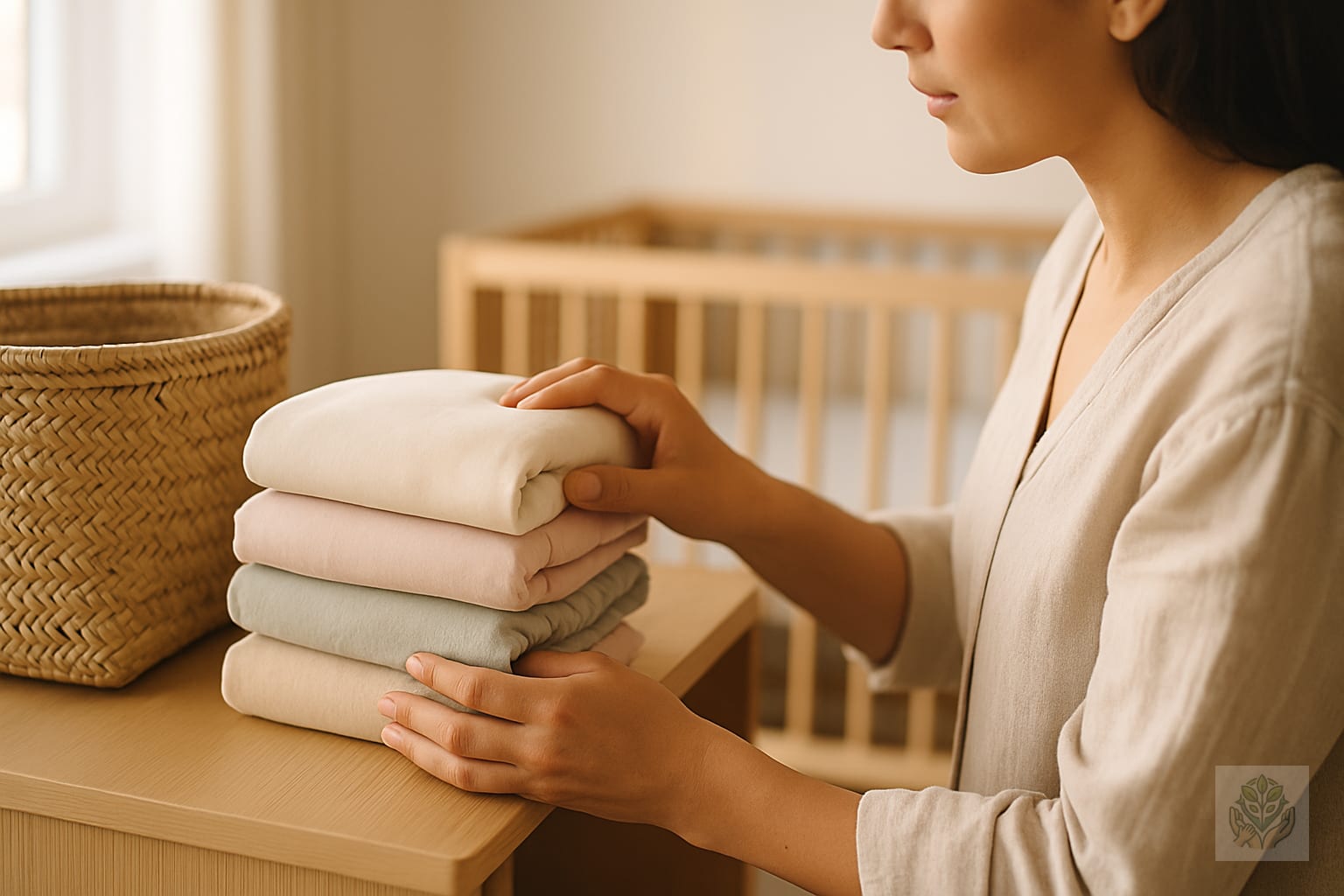
A common parenting question is how many baby fitted sheets to put on the registry. The golden rule is to have at least three to four sheets on hand. This ensures you always have a clean one ready while another is in the wash and a spare for unexpected middle-of-the-night incidents. For more checklist items to prepare for your baby, visit our ultimate baby diapering checklist.
Layering the crib mattress (the waterproof pad trick)
Seasoned parents swear by the layering method for crib mattresses. Start with a waterproof mattress protector, followed by a fitted sheet. Then, add another waterproof pad and a second baby fitted sheet right on top. When a middle-of-the-night mess occurs, you simply strip off the top layer, revealing a clean, dry sheet and mattress pad underneath in seconds.
Care and Maintenance Tips for Baby Sheets
Best laundry practices for baby’s delicate skin
Wash all new baby fitted sheets before their first use to remove any manufacturing residue or dust collected during shipping. Use gentle, fragrance-free laundry detergents formulated specifically for sensitive infant skin. You can find more helpful tips in our complete roadmap to healthy newborn care.
How to avoid shrinkage in organic and cotton fabrics
Natural fibers like cotton and bamboo are prone to shrinking when exposed to high heat. To maintain the precise fit of your baby fitted sheets, wash them in cold or warm water and tumble dry on low heat or line dry when possible.
Avoiding harsh chemical detergents and fabric softeners
Skip liquid fabric softeners and dryer sheets entirely when washing baby bedding. These products leave a chemical film on the fabric fibers, which can reduce breathability, compromise flame-retardant properties, and irritate your baby’s skin.
Conclusion
Summary of what to look for
Choosing the right baby fitted sheets is an important part of setting up a safe and comfortable nursery. By prioritizing safety certifications, breathable natural fabrics, secure elastic, and the correct size, you create an ideal environment for your baby to rest and grow. For guidance on other essential items, check out our guide on top 10 best baby products every new parent needs.
Final checklist for confident shopping
- Verify your mattress dimensions (standard vs. mini).
- Look for 100% breathable natural fabrics like organic cotton, bamboo, or jersey.
- Check for safety certifications such as OEKO-TEX or GOTS.
- Ensure the sheet features a thick, fully encased elastic hem.
- Stock up on at least three to four sheets for easy rotation.
Frequently Asked Questions
Why are baby fitted sheets important for sleep safety?
Baby fitted sheets must fit securely over the mattress to prevent loose fabric from creating a suffocation hazard, adhering to safe sleep guidelines.
What is the standard size for a crib mattress sheet?
Standard crib mattresses measure approximately 28 inches by 52 inches, but you should always verify your specific mattress dimensions and thickness before buying.
How many baby fitted sheets do I need to buy?
It is recommended to have at least three to four sheets on hand to handle frequent laundry loads from spit-up, diaper leaks, and middle-of-the-night accidents.
What are the best breathable fabrics for baby sheets?
Top choices include organic cotton for everyday durability, jersey knit for stretchiness, bamboo rayon for temperature regulation, and muslin for warm climates.
What safety certifications should I look for in crib sheets?
Look for OEKO-TEX Standard 100 certification to ensure the fabric is free of harmful substances, and GOTS for verified organic textiles.
How can I prevent baby sheets from shrinking in the wash?
Wash your natural fiber sheets in cold or warm water and tumble dry on low heat or line dry to maintain their precise fit.


