

How to Create a Daily Activity Routine for Preschoolers: A Stress-Free Guide
If you have ever spent your morning chasing a toddler who refuses to put on shoes, or survived a meltdown because lunch was delayed by ten minutes, you know that preschool life can feel like a whirlwind. Without a plan, parents often find themselves constantly reacting to the next outburst rather than guiding their child through a peaceful, productive day. The secret to reclaiming your sanity is to learn how to create a daily activity routine for preschoolers.
Preschoolers are at a developmental stage where they are learning to navigate their big emotions and developing a sense of self. They crave predictability because it makes the world feel safe and manageable. When children know what to expect next, they experience less anxiety and have fewer power struggles. This guide will walk you through the science of structure and provide actionable steps to build a routine that actually works for your unique family.
Why Preschoolers Need a Daily Routine
Structure does not mean rigidity. Instead, a consistent schedule serves as a roadmap for your child’s day. When you establish a daily activity routine for preschoolers, you are providing them with the security they need to explore, learn, and grow. One of the most significant benefits is the reduction of power struggles. When the transition to bedtime or mealtime is an expected part of the rhythm rather than an abrupt interruption of play, your child is far more likely to cooperate. For more guidance on organizing your days, explore our complete daily routine guide for kids by age.
Beyond behavior, routines foster independence. By knowing the sequence of the day, children begin to take initiative. They start to put their toys away when they see the clock approach lunchtime or head toward the bathroom after a snack because they know it is part of the flow. This builds immense confidence. Furthermore, routines reinforce healthy biological habits. Regular mealtimes, consistent naps, and predictable sleep cycles help regulate your child’s internal clock, leading to better mood, better sleep, and more stability for everyone.
Key Components of a Successful Preschool Schedule
A successful schedule is all about balance. If you focus only on educational tasks, your child will become restless; if you focus only on physical play, they may become overstimulated. To create an effective daily activity routine for preschoolers, aim for a blend of active movement and quiet, focused engagement. You can find more ideas in our comprehensive overview of preschool activities for early learning.
You must establish anchor points. These are the non-negotiable moments in your day that remain consistent, such as waking up, eating breakfast, lunch, and dinner, and your bedtime routine. These anchors provide the stability your child needs to pivot between different activities. Finally, try to mix child-led play with parent-led activities. While you want to guide their development, allowing your child the autonomy to choose their own toys or books during specific blocks of time fosters creativity and decision-making skills.
Step-by-Step: How to Build Your Routine
Building a plan might seem daunting, but it can be broken down into four manageable steps. First, identify your non-negotiables. These are the fixed points of your day—nap times, mealtimes, and work or school commitments. Write these down as the skeleton of your day.
Second, slot in essential developmental activities. Ensure that you have time for outdoor physical play, fine motor tasks like drawing or building with blocks, and language-rich activities like reading together. Third, add buffer zones. Never schedule activities back-to-back without a ten-minute transition period. These buffers are where you can help your child switch gears, preventing the dreaded transition meltdown.
Fourth, keep it realistic. It is easy to fall into the trap of over-scheduling, but preschooler attention spans are short. If you find yourself rushing from one task to the next, you are likely doing too much. Start with a simple framework and add more structure only as you see how your child responds.
Sample Daily Routine for Preschoolers
Use this template as a starting point, but feel free to adjust it to fit your household:
- Morning: Wake up, breakfast, and high-energy play to get the wiggles out.
- Mid-day: Educational focus (puzzles, letter tracing) followed by lunch.
- Afternoon: Quiet time or nap followed by creative play (painting, sensory bins).
- Evening: Dinner, bath, reading time, and a consistent wind-down ritual.
Remember, the goal of this daily activity routine for preschoolers is to support your child, not to create a rigid set of rules that governs every second of your existence.
Pro-Tips for Implementing the Routine
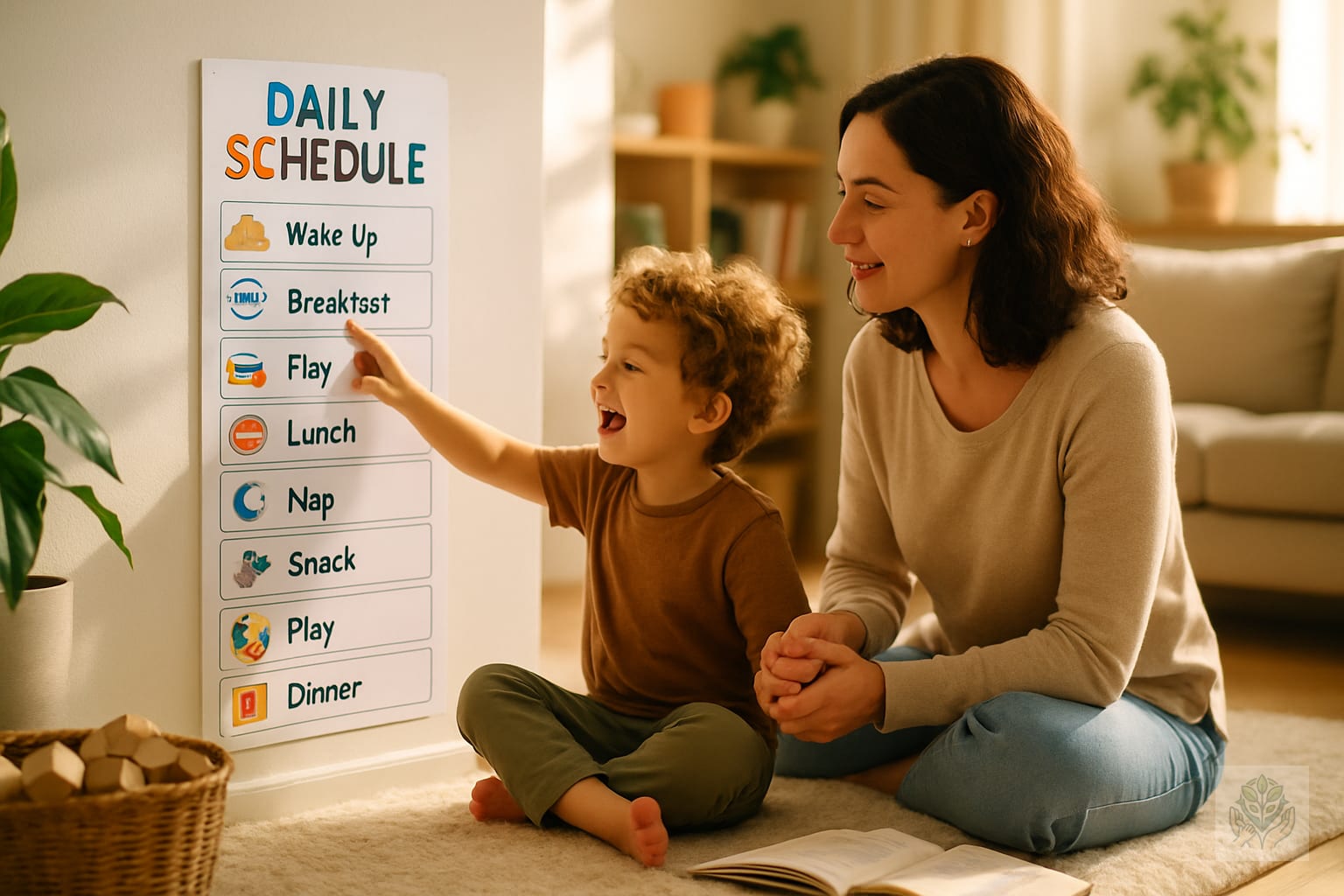
Visual schedules are a game-changer for this age group. Because preschoolers cannot yet read time on a clock, use pictures or icons to represent different parts of the day. A simple chart on the wall allows them to see exactly what is happening next. You can even use color-coded strips to show different blocks of time.
Timers are another effective tool. If you are struggling with transitions, try using a visual timer or a fun song to signal that an activity is ending. When children hear the sound or see the sand run out, they begin to anticipate the change themselves. Finally, embrace flexibility. Life happens, and it is perfectly okay to deviate from the plan if you are having a wonderful time at the park or if everyone is just having a tired day. The routine is meant to serve you, not the other way around.
Common Challenges and How to Solve Them
Even with the best plan, resistance happens. If your child resists a transition, validate their feelings. Say something like, I see you are having so much fun with those blocks, but it is time to move to lunch now. Giving a five-minute warning before a shift can also drastically reduce pushback. For more help with everyday friction, review our strategies in the complete guide to managing everyday behavior challenges in kids.
If you find that the schedule is not working, adjust it for your child’s unique temperament. Some children need more downtime, while others need constant physical stimulation. If the day goes off the rails, let it go. Do not try to force the schedule back into place. Simply meet your child where they are, provide a little extra comfort, and try again the next day. You can also explore advice on positive parenting techniques that actually work to handle tough moments.
Conclusion
Learning how to create a daily activity routine for preschoolers is one of the most proactive steps you can take as a parent. By fostering predictability, you are setting the stage for fewer meltdowns and more joyful interactions. Remember, consistency is the goal, but perfection is not. Start small, stay patient, and listen to the feedback your child gives you through their behavior.
Are you ready to bring more peace to your home? Download our free printable routine template and start your journey toward a more structured day today. If you have a favorite trick for keeping your preschooler on track, please share it in the comments below!
Frequently Asked Questions
Why do preschoolers need a daily routine?
Preschoolers crave predictability because it makes the world feel safe and manageable. Routines help reduce anxiety, minimize power struggles, encourage independence, and regulate biological sleep and eating habits.
How do I start building a daily schedule for my child?
Begin by identifying fixed anchor points like mealtimes, naps, and waking up. Then, slot in developmental activities like outdoor play and reading, making sure to include buffer zones for smooth transitions.
What is the best way to help preschoolers understand a schedule?
Since preschoolers cannot read clocks yet, use visual schedules with pictures or icons. Color-coded charts and fun timers also help them easily anticipate what activity comes next.
What should I do if my preschooler resists transitions?
Validate their feelings by acknowledging what they are currently enjoying, and give them a gentle five-minute warning before the activity needs to change to help them mentally prepare.
How flexible should a preschool daily routine be?
The routine should serve your family, not rule it. It is completely okay to deviate from the schedule occasionally when life happens or when your child needs extra downtime.
How do I balance learning and play in a preschool routine?
Aim for a healthy blend of active physical movement, quiet focused tasks, child-led play, and parent-led learning blocks to prevent your child from becoming restless or overstimulated.


