

The Complete Guide to Baby Feeding Accessories: A New Parent’s Essential Checklist
Preparing for a new baby often feels like trying to learn a new language. You walk into a baby store and are immediately met with rows of gadgets, colorful gadgets, and conflicting advice from every direction. Among the most overwhelming categories is baby feeding accessories. You want the very best for your little one, but figuring out what is truly necessary versus what is just clever marketing can be a challenge.
The goal of this guide is to simplify the decision-making process for you. By focusing on safety, functionality, and long-term durability, you can build a collection of tools that make mealtime less stressful and more enjoyable. Whether you are breastfeeding, formula feeding, or preparing for the big transition to solid foods, this baby feeding accessories essential checklist will help you navigate your journey with confidence. For more help getting organized, check out our guide on everything you need to know about choosing baby feeding accessories.
Phase 1: Newborn Feeding Essentials (0–6 Months)
The first few months are all about getting into a rhythm. Whether you are nursing or using bottles, keeping things simple will save your sanity during those middle-of-the-night feedings. You can find more comprehensive advice in our complete roadmap to healthy newborn care from birth.
Choosing the Right Bottles
When selecting bottles, prioritize the material and the nipple flow rate. Glass bottles are excellent for those who want to avoid plastic entirely, while silicone bottles offer a soft, natural feel that mimics breastfeeding. Plastic bottles remain a popular, lightweight, and durable option, provided they are BPA-free. Start with slow-flow nipples to prevent your baby from gulping too quickly, and pay attention to anti-colic features that help reduce gas and fussiness.
Breastfeeding Must-Haves
For breastfeeding parents, your focus should be on personal comfort and efficiency. Stock up on high-quality nipple creams to soothe soreness early on. Breast pads, whether reusable or disposable, are non-negotiable for managing letdown. Finally, invest in sturdy breast milk storage bags that can be laid flat in the freezer to save space, ensuring you always have a backup supply available.
The Importance of Burping Cloths and Bibs
Never underestimate the number of burping cloths you will need. Spit-up is a natural part of infancy, and having a high-absorbency cloth draped over your shoulder at all times is a lifesaver. Look for organic cotton or bamboo fabrics, which are soft on sensitive skin and durable enough for frequent washing.
Sterilizers and Drying Racks
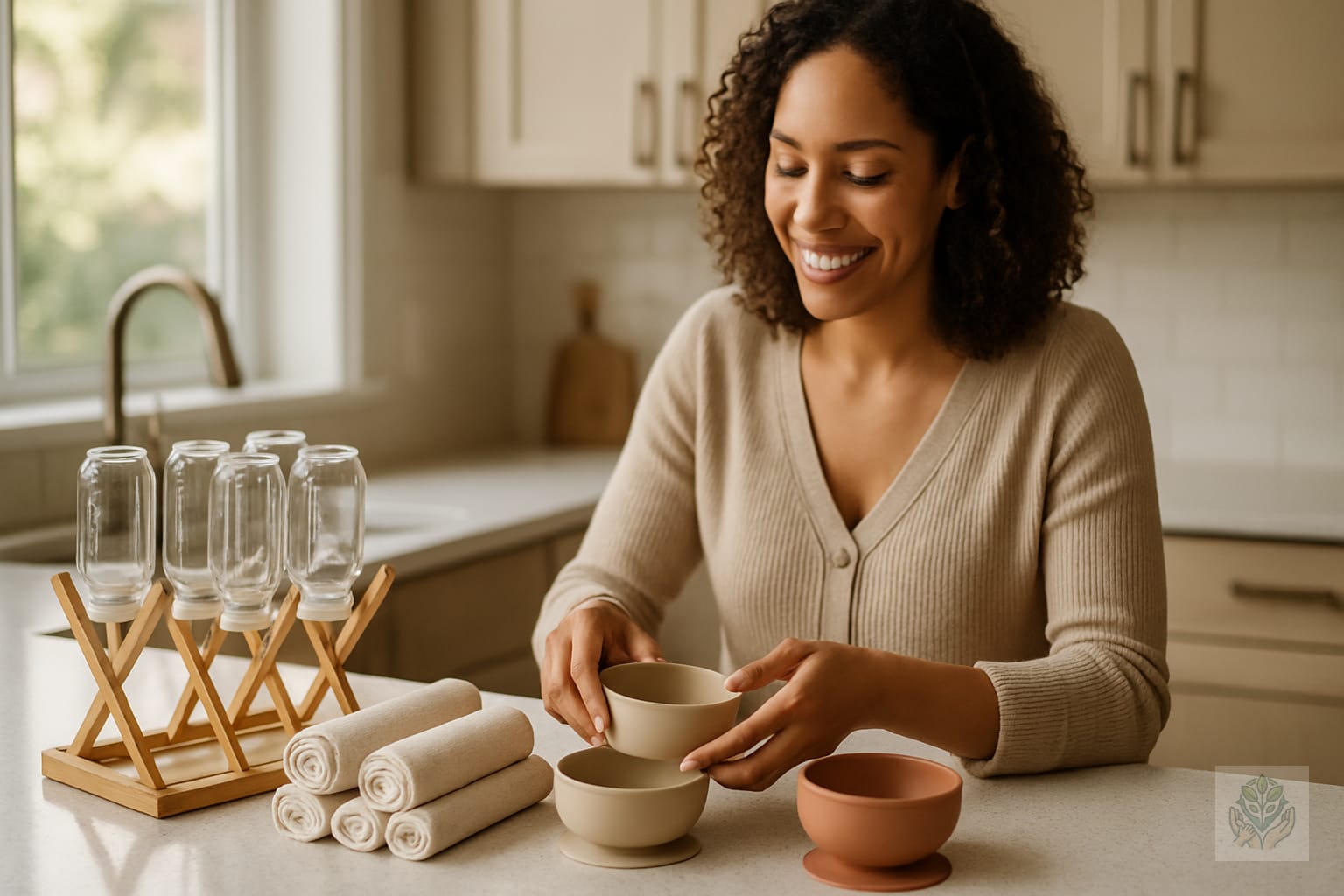
Do you need a high-tech electric sterilizer? Not necessarily. While they offer convenience, simply boiling parts in water or using the dishwasher’s sanitizing cycle is often sufficient. However, a dedicated drying rack—one that keeps bottles and pump parts upright and off the counter—is a must-have accessory that helps maintain hygiene while keeping your kitchen organized. For more nursery organization tips, see our guide on essential furniture for a functional nursery.
Phase 2: Transitioning to Solids (6–12 Months)
Around six months, your baby’s palate begins to expand. This is an exciting milestone, but it also means a new set of gear is required to handle the inevitable mess. You can learn more in our baby meal planning from six to twelve months guide.
High Chair Features
Your high chair is the command center for mealtime. Look for a model with a five-point safety harness to keep your baby secure. Removable, dishwasher-safe trays are essential for easy cleanup, and if you have limited space, consider a model that can fold away or attach directly to an existing kitchen chair.
First Utensils and Cups
When starting solids, soft-tip spoons are gentler on a baby’s developing gums. As your baby develops fine motor skills, introduce a straw cup rather than a traditional sippy cup. Speech-language pathologists often recommend straw cups because they promote better oral development and muscle coordination compared to spouted cups. You can also explore the best sippy cups for babies learning to drink for more options.
Plates and Bowls
The best tip for feeding a baby is to invest in suction-base plates and bowls. These stick firmly to the high chair tray, preventing your little one from tossing their entire meal onto the floor. Opt for 100% food-grade silicone; it is durable, microwave-safe, and free from harsh chemicals.
Bibs for Solids
Forget the cloth bibs when it comes to purees and finger foods. Silicone bibs with a built-in crumb catcher are superior for messy eaters. They can be wiped clean in seconds or rinsed in the sink, saving you from a never-ending cycle of laundry.
Safety First: What to Look for in Materials
As a parent, your primary concern is the safety of the materials touching your baby’s food. Always check the packaging for labels such as BPA-free, phthalate-free, and PVC-free. Food-grade silicone is generally considered the gold standard for baby feeding accessories because it is non-porous and resistant to bacteria growth. For more general safety advice, read our everything parents need to know about baby safety guide.
Cleaning is just as important as the materials themselves. Always inspect silicone items for tiny tears where food particles can hide. Replace any plastic bottles that show signs of deep scratches or wear, as these can become breeding grounds for bacteria over time.
How to Build Your Feeding Registry Without Overspending
It is easy to get caught up in buying every gadget you see, but your bank account will thank you if you stick to the essentials. Identify your ‘must-haves’ first—the items you know you will use daily. Categorize everything else as ‘nice-to-haves’ that you can purchase later if you find you really need them. Remember that you do not need every size of bottle or every type of bowl on day one. Space out your purchases based on your baby’s developmental milestones to ensure you are only buying what you actually use.
Frequently Asked Questions (FAQs)
Do I really need a bottle warmer?
While a bottle warmer is a nice convenience, it is not strictly necessary. Many babies are perfectly happy with room-temperature milk or formula. If you do choose to warm a bottle, a simple bowl of warm water works perfectly fine.
How many bottles should I own for the first few months?
Aim for 6 to 8 bottles if you plan to bottle feed full-time. This ensures you always have a clean set ready while the others are in the dishwasher, preventing the need for mid-day scrubbing.
When is the best time to introduce a straw cup?
Most babies can begin practicing with a straw cup around 6 to 9 months. It may take some time for them to understand the suction mechanism, so start with an open-cup practice and offer a straw cup with water during meal times.
Are there eco-friendly options for feeding accessories?
Yes, there are many! Look for brands that prioritize glass bottles, bamboo utensils, and silicone products. These materials are much more sustainable than single-use plastics and are free from harmful chemicals.
Conclusion
Your journey through the world of baby feeding accessories is about supporting your child’s growth while maintaining your own sanity. Focus on high-quality, safe, and practical gear rather than accumulating every gadget on the market. By choosing items that are easy to clean and built to last, you will create a stress-free environment for you and your baby. For more tips, check out our guide on everything you need to know about baby nutrition tips.
Remember that the best feeding tool is one that works for your family’s unique lifestyle. If you are looking for a simple, organized way to keep track of your shopping, download our printable baby feeding accessories essential checklist today and start your journey with peace of mind.
Frequently Asked Questions
Do I really need a bottle warmer?
While a bottle warmer is a nice convenience, it is not strictly necessary. Many babies are perfectly happy with room-temperature milk or formula. If you do choose to warm a bottle, a simple bowl of warm water works perfectly fine.
How many bottles should I own for the first few months?
Aim for 6 to 8 bottles if you plan to bottle feed full-time. This ensures you always have a clean set ready while the others are in the dishwasher, preventing the need for mid-day scrubbing.
When is the best time to introduce a straw cup?
Most babies can begin practicing with a straw cup around 6 to 9 months. It may take some time for them to understand the suction mechanism, so start with an open-cup practice and offer a straw cup with water during meal times.
Are there eco-friendly options for feeding accessories?
Yes, there are many! Look for brands that prioritize glass bottles, bamboo utensils, and silicone products. These materials are much more sustainable than single-use plastics and are free from harmful chemicals.
What materials are safest for baby feeding accessories?
Food-grade silicone, stainless steel, glass, and BPA-free plastics are generally considered the safest materials. Always check for labels confirming the items are phthalate-free and PVC-free before purchasing.
How can I prevent my baby from throwing plates off the high chair?
The best solution is to invest in 100% food-grade silicone suction-base plates and bowls. These stick firmly to smooth high chair trays, making it much harder for your baby to toss their food onto the floor.


