

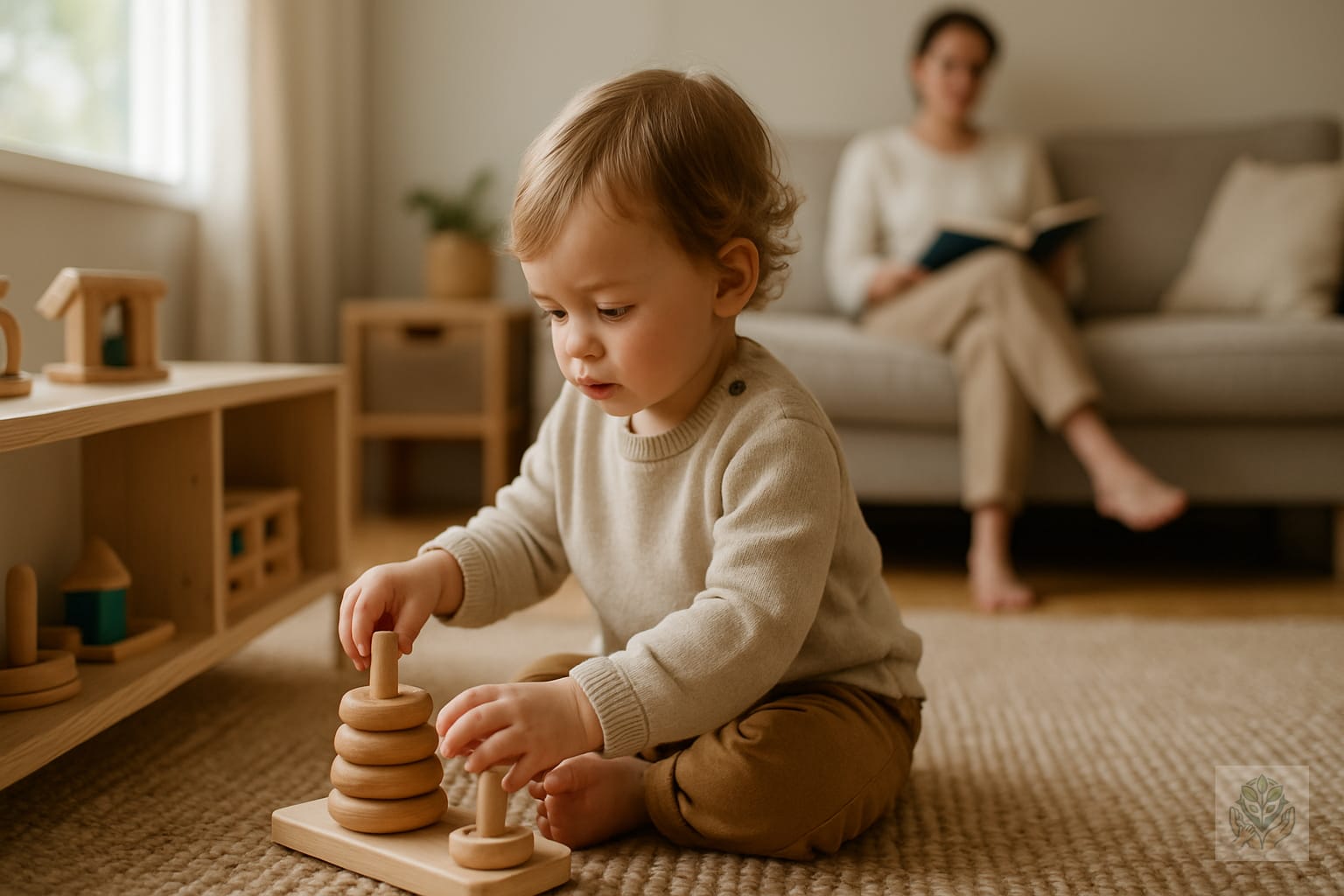
10 Montessori Toys That Encourage Independent Play (And Why They Work)
Every parent knows the feeling of being the primary source of entertainment for their child. While playtime is a wonderful way to bond, constant requests for attention can leave even the most dedicated parent feeling drained. The reality is that children are capable of much more autonomy than we often give them credit for, provided they have the right tools.
This is where the Montessori method shines. By choosing 10 Montessori toys that encourage independent play, you can transform your home into a space where your child feels confident, capable, and deeply focused. When we step back, our children often step up, developing the concentration and problem-solving skills they need to thrive. For a deeper understanding of the core philosophy, check out everything you need to know about Montessori learning toys.
What Makes a Toy ‘Montessori-Aligned’ for Independent Play?
Not every wooden toy on the shelf is truly Montessori-aligned. The philosophy focuses on creating an environment that respects the child’s natural drive to learn. Authentic Montessori toys for independent play avoid the bells and whistles of modern plastic gadgets, focusing instead on simplicity and intentionality.
First, look for natural materials. Wood, cotton, and metal provide sensory feedback that synthetic materials simply cannot replicate. Second, the toy should be open-ended. If a toy does everything for the child—flashing, singing, or moving on its own—it isn’t leaving room for the child’s imagination. Finally, these toys should be developmentally appropriate. They should offer just enough of a challenge to keep the child engaged, fostering that beautiful, deep state of concentration known as the flow state. You can further refine your selection by reading our ultimate beginner’s guide to buying age-appropriate toys.
Top 10 Montessori Toys That Encourage Independent Play
Selecting the right tools is the first step in setting your child up for success. Here are ten items that have stood the test of time in classrooms and homes alike.
1. Wooden Stacking and Nesting Toys
These simple items help children develop spatial awareness and understanding of size relationships. By manipulating the pieces, children learn to solve problems physically.
2. Practical Life Tool Kits
Practical life activities like pouring water, transferring beans, or sorting items help refine fine motor skills. These tasks feel like work to a child, which is exactly why they find them so satisfying. You might also enjoy these 11 easy hand strengthening activities for preschoolers.
3. Puzzles with Minimal Pieces
Puzzles that feature a limited number of pieces encourage focus. Unlike complex games, these allow the child to complete a task successfully, building confidence with every finished board. For more on this, see our article on the educational benefits of puzzle games explained.
4. Open-Ended Building Blocks
Blocks are the gold standard for creativity. With no instructions or intended design, a child can build a bridge, a tower, or an imaginary home, learning about gravity and balance as they go.
5. Balancing Boards
For children who need to move, balancing boards are excellent. They support physical independence and core strength while allowing the child to control their own level of challenge.
6. Threading and Lacing Sets
Lacing sets are quiet, engaging, and perfect for improving hand-eye coordination. They require a level of steady concentration that keeps little hands busy for long stretches.
7. Play Kitchen Accessories
Imitative play is vital for toddlers. By providing simple kitchen tools, you allow your child to mimic the work they see you doing, which fosters independence in everyday life. For more context, read about the educational benefits of pretend play explained.
8. Sound Shakers or Musical Percussion
Music provides a unique way to explore cause and effect. A child quickly learns that their action produces a specific sound, encouraging experimentation and sensory discovery.
9. Art Easels or Drawing Boards
Creative expression is a cornerstone of child development. An accessible art station allows your child to focus on process rather than the product, giving them a healthy outlet for their emotions.
10. Pikler Triangles
The Pikler triangle is a climbing frame designed to help children test their physical limits safely. It encourages gross motor development and builds incredible self-trust.
How to Set Up an ‘Independent Play’ Space
The best toy in the world will fail if it is buried at the bottom of a dark toy chest. To truly foster independent play, you must curate the environment. Start with toy rotation; keep only a small selection of toys out at a time, and rotate them every few weeks to keep interest high. Place toys on low, accessible shelves rather than in bins. This allows your child to choose their activity without needing your help, creating a true ‘Yes’ space where everything is accessible and safe. Check out our tips on 10 clever open storage ideas for a Montessori-inspired kids’ room to get started.
The Parent’s Role: When to Step In and When to Step Back
This is often the hardest part for parents: learning to observe without intervening. If your child is in a state of focus, avoid the urge to praise them, ask questions, or redirect their play. Interruptions can break that precious flow state. Instead, practice the art of quiet observation from across the room. If they ask for help, offer the minimum amount of support needed to keep them moving, rather than doing the task for them.
Conclusion
Integrating 10 Montessori toys that encourage independent play into your home doesn’t mean you are distancing yourself from your child. Instead, it means you are giving them the gift of competence. By creating a prepared environment and selecting toys that challenge their growing minds, you are nurturing their ability to entertain and educate themselves. Start small, observe their interests, and enjoy watching your child flourish through their own discovery. For more Montessori-inspired activity ideas to support your child’s development, join our community newsletter today.
Frequently Asked Questions
What are Montessori toys that encourage independent play?
Montessori toys are simple, open-ended items made from natural materials that allow children to explore, solve problems, and engage deeply without adult intervention.
How do I choose the right Montessori toys for my toddler?
Look for toys that are developmentally appropriate, made of natural materials, and open-ended to inspire creativity and problem-solving skills.
Why is independent play important for children?
Independent play builds confidence, enhances focus, and develops problem-solving skills, allowing children to learn how to entertain and self-soothe on their own.
How can I set up an independent play space at home?
Use low shelves to display a small, rotated selection of toys so your child can easily reach them and make their own choices.
Should I praise my child while they are playing independently?
It is best to observe quietly without interrupting, as praise or questions can break their precious state of deep focus and concentration.
What are some examples of Montessori toys for toddlers?
Examples include wooden stacking toys, open-ended building blocks, puzzles with minimal pieces, and practical life tool kits like child-sized pouring sets.


