

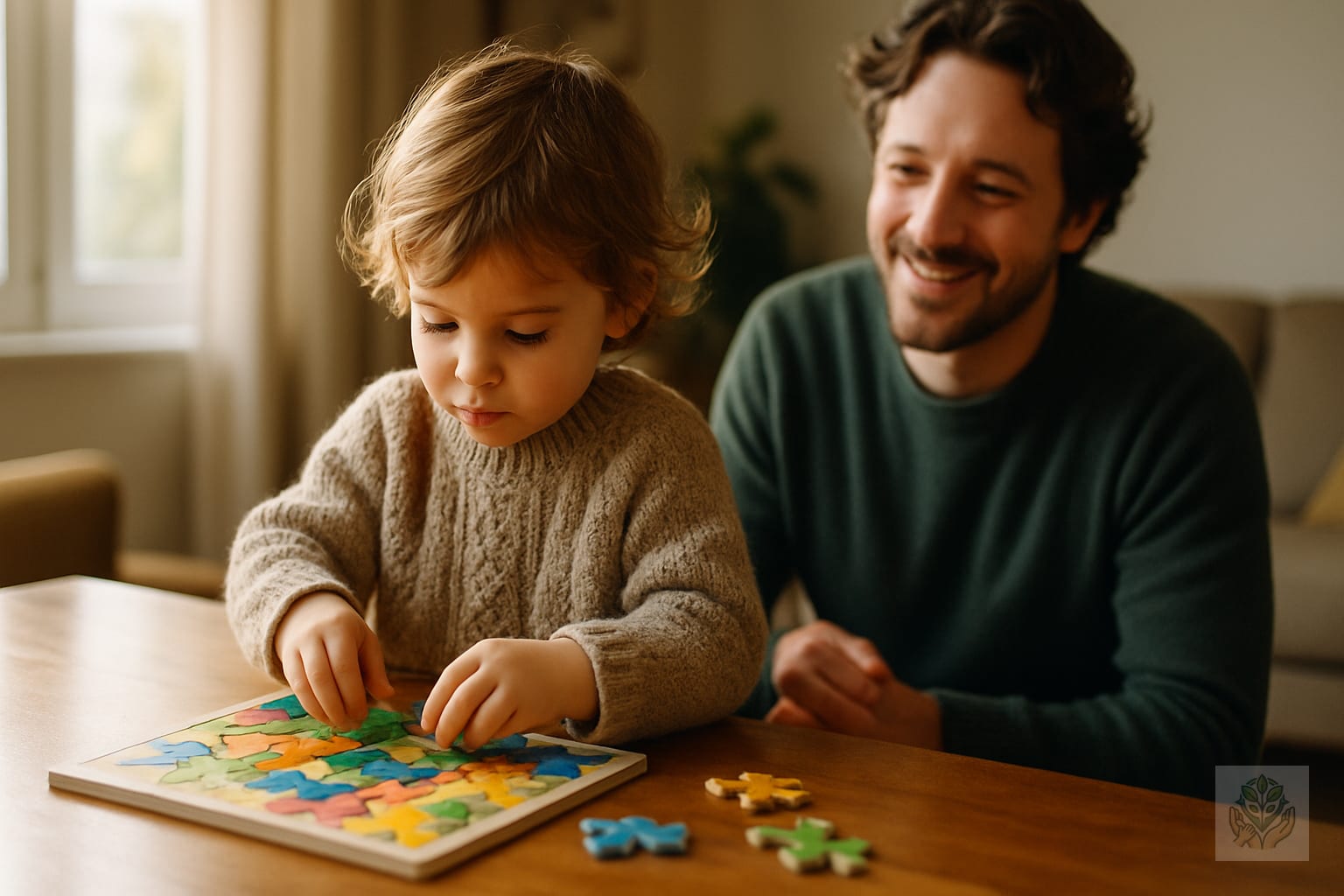
Boost Your Child’s Brain: 10 Puzzle Games That Improve Memory and Focus
In an era dominated by rapid-fire digital content and constant notifications, the average attention span is under more pressure than ever before. Many parents notice that their children struggle to settle down or stay focused on a single task for extended periods. The good news is that cognitive skills are much like physical muscles; they can be strengthened with the right exercises. Among the most effective tools for this are puzzle games that improve memory and focus, which are a key part of everything you need to know about educational puzzle games for kids.
The science behind this is rooted in neuroplasticity—the brain’s incredible ability to reorganize itself by forming new neural connections. When a child engages in a challenging puzzle, they aren’t just passing time. They are firing up their executive functions, refining their problem-solving skills, and building the mental endurance required for academic success. By introducing puzzle games that improve memory and focus, you provide your child with a low-pressure environment to sharpen their cognitive toolkit.
The Cognitive Science: How Puzzles Enhance Memory and Focus
To understand why these games work, we must look at how the brain processes information. During childhood, the brain is rapidly developing, particularly in areas responsible for working memory—the mental scratchpad we use to hold and manipulate information. When a child completes a complex puzzle, they must keep multiple pieces of information in their mind simultaneously, which directly trains their working memory.
Furthermore, puzzles often induce what psychologists call a flow state. This is that deep, immersive experience where a child is so focused on the challenge at hand that distractions fall away. Unlike passive digital entertainment, puzzles require active participation. This engagement lowers cortisol levels associated with stress and anxiety, allowing the prefrontal cortex—the area of the brain responsible for planning and focus—to function at its peak. You can further support these developmental milestones by exploring the educational benefits of puzzle games explained: why kids need more playtime.
Top Puzzle Game Categories for Brain Development
Not all puzzles serve the same purpose. To build a well-rounded brain, it is helpful to understand the different cognitive categories they target. Jigsaw puzzles, for instance, are unparalleled for improving spatial reasoning. They force a child to mentally rotate shapes and visualize how they fit into a larger whole, a skill essential for later success in geometry and engineering. You can also incorporate best Montessori toys for cognitive development: a parent’s guide to provide varied sensory and spatial challenges.
Logic puzzles, such as grid games or Sudoku, help children practice deductive reasoning. They learn to eliminate incorrect possibilities to find the right solution. Meanwhile, pattern matching games are excellent for visual working memory, helping children identify subtle differences and similarities quickly. By varying the types of games your child plays, you ensure they are exercising different regions of their cognitive map.
10 Recommended Games to Improve Memory and Focus
If you are looking for specific ways to boost your child’s brain, start with these ten options. Each of these puzzle games that improve memory and focus offers unique developmental benefits.
- Classic Jigsaw Puzzles: Choose puzzles customized to your child’s skill level. They encourage patience, persistence, and visual-spatial orientation.
- Rush Hour: This popular traffic logic game requires kids to navigate a car out of a crowded grid. It is fantastic for planning and sequential thinking.
- Set: A fast-paced card game that challenges children to find patterns in shape, number, and color. It is excellent for visual processing speed.
- Rubik’s Cubes: While challenging, they provide a powerful workout for spatial memory and finger dexterity.
- Chess: Often called the ultimate focus trainer, chess forces players to anticipate an opponent’s move, building long-term strategic planning.
- Memory Match Games: The quintessential exercise for short-term visual memory. Flipping cards to find pairs is simple yet incredibly effective for young learners.
- Tangrams: These seven-piece geometric puzzles teach children how to break complex shapes into simpler components, boosting spatial awareness.
- Word Searches: While primarily for vocabulary, they also demand sustained visual focus and scanning abilities.
- Sudoku for Kids: These simplified grid puzzles teach children the basics of logic and numeric patterns without needing advanced math skills.
- Kanoodle: This 3D brain-teasing game involves fitting colorful pieces into various configurations, which helps develop 3D spatial thinking.
Tips for Parents: Turning Game Time into Learning Time
The environment in which your child plays matters just as much as the game itself. Try to create a distraction-free puzzle zone—a quiet corner with adequate lighting where your child can focus without interruption. This helps normalize the act of deep concentration as a daily habit, and you can learn more from our guide on how to build a simple preschool learning corner: a step-by-step guide.
Knowing when to help is a delicate art. If a child becomes visibly frustrated, they may disengage entirely. Offer subtle hints rather than solving the puzzle for them. The goal is to keep them in the zone of proximal development, where the task is challenging but achievable. Consistency beats intensity; playing for fifteen minutes every day is far more beneficial for brain development than a three-hour marathon once a week. For younger children, you might also consider 11 easy hand strengthening activities for preschoolers to build the motor skills necessary for handling small puzzle pieces.
FAQ: Common Questions About Brain-Training Games
Are digital puzzle apps as effective as physical games?
While digital apps can be engaging and portable, physical puzzles offer tactile feedback that aids in brain development and fine motor skills. Balance is key; use apps for convenience, but prioritize physical games for deep focus. You can find more balance tips in our advice on how parents can manage screen time at home.
How much time should a child spend on puzzles daily?
There is no strict rule, but 15 to 30 minutes of intentional puzzle time is usually sufficient to see cognitive benefits without causing fatigue.
Can puzzles help children with ADHD improve focus?
Many children with ADHD benefit significantly from puzzle games because they provide a structured, high-interest task that rewards persistence. Always consult with a specialist if you have specific developmental concerns.
Conclusion
Incorporating puzzle games into your home life is one of the simplest and most effective ways to boost your child’s brain. By choosing a variety of activities, you help your child build the memory, focus, and logical reasoning skills that will serve them for a lifetime. Start a family puzzle night to make these exercises a fun, shared tradition, which is a great way to support the reasons why family bonding matters for young children. Do you have a favorite brain-building game that your child loves? Share your experiences in the comments below!
Frequently Asked Questions
Are digital puzzle apps as effective as physical games?
While digital apps can be engaging and portable, physical puzzles offer tactile feedback that aids in brain development and fine motor skills. Balance is key; use apps for convenience, but prioritize physical games for deep focus.
How much time should a child spend on puzzles daily?
There is no strict rule, but 15 to 30 minutes of intentional puzzle time is usually sufficient to see cognitive benefits without causing fatigue.
Can puzzles help children with ADHD improve focus?
Many children with ADHD benefit significantly from puzzle games because they provide a structured, high-interest task that rewards persistence. Always consult with a specialist if you have specific developmental concerns.
At what age can children start playing logic puzzles?
Children as young as two can start with simple shape-sorting and oversized wooden puzzles. As they grow, you can introduce more complex grid games and logic puzzles suited to their developmental stage.
Do puzzle games help with academic performance?
Yes. Puzzles strengthen working memory, spatial awareness, and problem-solving skills, which form the foundational basis for mathematics, reading comprehension, and science.
How can I prevent my child from getting frustrated with difficult puzzles?
If your child gets stuck, offer subtle guidance rather than completing the puzzle for them. Keeping challenges manageable prevents burnout and encourages a healthy growth mindset.


