

15 Essential Books for a Preschool Learning Library: A Parent’s Guide
Creating a home environment rich in literature is one of the most significant gifts you can offer your child. Building a curated preschool learning library provides the foundation for early literacy skills and fosters a lifelong love of discovery. During the preschool years, children undergo a transformation in language acquisition, making this the golden age for reading development and cognitive growth.
Choosing the right books might feel overwhelming, but it is actually quite simple when you know what to look for. By focusing on quality over quantity and selecting titles that resonate with your child’s developing brain, you can curate a collection that educates and delights. Whether your child is just starting to identify letters or is ready for complex narrative structures, these 15 essential books for a preschool learning library will set them on the path to success. You can also explore our complete guide to creating a home learning resource collection to further support their development.
The Pillars of a Preschool Library: What to Look For
When you start shopping for your preschooler, look beyond the cover. A truly great preschool book serves multiple functions beyond just telling a story. High-quality children’s literature should support visual literacy through engaging, high-contrast, or colorful illustrations. This visual component helps children learn to decode information and understand storytelling even before they can read the text themselves.
Rhythm, rhyme, and repetition are essential for language acquisition. Books that utilize these tools help children predict upcoming words, which builds confidence and phonemic awareness. Additionally, you should prioritize themes that support social-emotional development. Stories that handle emotions, friendship, and sharing are vital for this developmental stage. Finally, look for interactive formats like lift-the-flap or touch-and-feel books, which turn the act of reading into a physical experience that keeps active toddlers engaged. You can find more developmental resources in our ultimate complete guide to preschool activities for early learning.
Essential Books for Early Literacy & Phonics
Early literacy isn’t just about reading words; it is about recognizing patterns and sounds. To get started, your collection should include books that focus on letter recognition and phonemic awareness. The following titles are staples in any high-quality preschool learning library:
- Chicka Chicka Boom Boom by Bill Martin Jr. and John Archambault: A rhythmic, high-energy classic that makes learning the alphabet an absolute blast. Check out these 10 simple letter recognition games for toddlers to complement your reading.
- Dr. Seuss’s ABC: This book is perfect for introducing letter sounds through the signature Seuss rhyme scheme that children find so captivating.
- The Very Hungry Caterpillar by Eric Carle: While famous for its imagery, it is also a fantastic tool for introducing sequencing and vocabulary related to food and nature.
- Brown Bear, Brown Bear, What Do You See? by Bill Martin Jr.: The repetitive structure is perfect for early readers to memorize and join in, reinforcing word recognition.
- Elephant & Piggie series by Mo Willems: These books are masterpieces of phonetic simplicity and high-frequency word repetition, making them ideal for new readers.
Must-Have Picture Books for Social-Emotional Learning
Preschoolers often experience big feelings that they do not yet have the vocabulary to express. Books are excellent tools for modeling empathy, sharing, and problem-solving. By reading about characters who navigate challenges, children learn that their own feelings are valid and manageable. For more support in this area, see our complete guide to managing everyday behavior challenges in kids.
- The Color Monster by Anna Llenas: This beautiful book helps children categorize their emotions into colors, making abstract feelings much easier to talk about.
- Llama Llama Mad at Mama by Anna Dewdney: A relatable story that teaches children how to manage frustration and temper tantrums in a healthy way.
- The Pout-Pout Fish by Deborah Diesen: This story explores how our attitudes affect our interactions with others and the power of changing a bad mood.
- In My Heart by Jo Witek: A lovely exploration of the many different feelings a child can experience in a single day.
- Hands Are Not for Hitting by Martine Agassi: A gentle, practical guide that teaches children about boundaries and appropriate physical expression.
Non-Fiction Choices: Sparking Curiosity About the World
Never underestimate the power of non-fiction. Simple science and nature-themed books help children connect with the world around them while building a robust vocabulary. These books satisfy a preschooler’s natural curiosity and build foundational knowledge that prepares them for more complex learning in grade school.
- National Geographic Little Kids First Big Book of Why: This series is designed specifically for curious minds that ask questions about how the world works.
- Seed to Plant by Kristin Baird Rattini: A clear, visually driven look at the life cycle of plants that simplifies complex biology for young readers.
Interactive and Activity-Based Books
Active learning is the gold standard for preschoolers. Books that encourage physical movement or participation, such as seek-and-find or action-based stories, are essential. These formats help children develop focus, attention span, and fine motor skills. You can also explore 15 engaging indoor activities that improve fine motor skills for kids to keep the learning momentum going.
- Where’s Waldo? (or similar search-and-find books): These are fantastic for teaching patience and visual scanning skills.
- Press Here by Hervé Tullet: This interactive book encourages the child to touch, shake, and blow on the pages, making them an active participant in the story.
- From Head to Toe by Eric Carle: A book that forces children to get up and move, mimicking the physical actions of the animals on the pages.
How to Organize Your Preschool Home Library
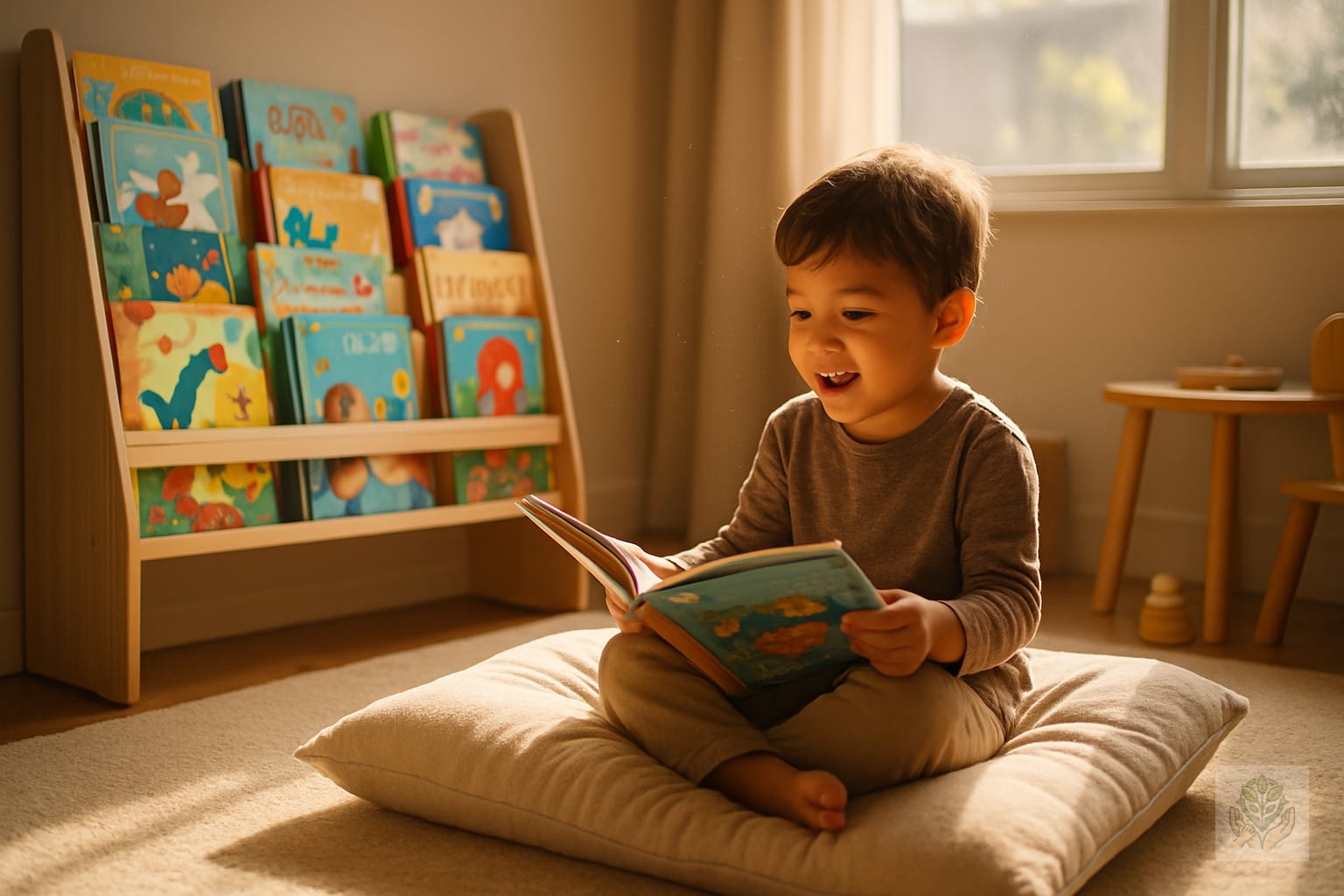
Organization is key to ensuring your children actually engage with their books. Accessibility is the most important factor; make sure books are at a child’s eye level. If books are stored on a high shelf, they effectively do not exist to a preschooler. Consider using forward-facing bookshelves so children can see the colorful covers, which is often more enticing than just seeing the spines. To optimize your space, you might look at our how to build a simple preschool learning corner guide.
Another great strategy is rotating books to maintain interest. If your child seems bored, hide half of the library away for a month and then swap them out. This makes the “old” books feel brand new again. Finally, create a cozy reading nook with pillows, soft lighting, and perhaps a small stuffed animal. This space should be associated with comfort and relaxation, helping to foster a lifelong love for reading.
Tips for Reading Aloud Effectively
Reading aloud is a performative act that draws children into the story. Do not be afraid to use funny voices, whisper for suspense, or shout with excitement. The more engaged you are, the more engaged your child will be. Ask open-ended questions throughout the story to encourage critical thinking. For example, ask, What do you think will happen next? or How do you think that character feels right now?
Choosing the right time of day is also crucial. Bedtime is a classic, but reading during a quiet afternoon transition can also be very successful. Keep your reading sessions flexible; if your child only wants to read for five minutes, that is perfectly fine. The goal is positive association, not endurance. For help establishing these transitions, see our daily routine for kids by age (1–6 years complete guide).
Conclusion
Building your preschool learning library is a marathon, not a sprint. By choosing a mix of phonetic, social-emotional, and interactive books, you are providing your child with a diverse educational experience that extends far beyond the classroom. These early moments spent curled up with a story are the building blocks of literacy and emotional intelligence.
Start small, visit your local library, and add books to your collection as you go. Each volume you add is a doorway to a new world for your little one. What is the absolute favorite book in your current collection? We would love to hear from you—share your top preschool book recommendation in the comments below!
Frequently Asked Questions
What makes a book essential for a preschool learning library?
Essential preschool books feature high-contrast illustrations, rhythm, rhyme, repetition, and themes that support early literacy and social-emotional development.
How many books should I start with in a home preschool library?
You can start small with 15 core titles covering phonics, social-emotional learning, and interactive formats, gradually expanding your collection over time.
Why are social-emotional books important for preschoolers?
Social-emotional books help children identify and manage big feelings like anger, frustration, and empathy, giving them the vocabulary to express emotions.
How can I organize books to encourage my preschooler to read?
Store books at your child’s eye level using forward-facing bookshelves so they can easily see the colorful covers and choose stories independently.
How often should I rotate books in my child’s library?
Rotating books every few weeks or months by hiding half of them and swapping them out helps keep older titles feeling fresh and exciting.
What is the best way to read aloud to a preschooler?
Use funny voices, ask open-ended questions about the plot, and keep reading sessions flexible to create a positive association with reading.


