

Complete Guide to STEM Toys for Kids of Every Age
In a world increasingly driven by technology and innovation, parents often look for ways to give their children a head start. One of the most effective and enjoyable ways to do this is through STEM toys. Whether you are looking for building blocks or advanced coding robots, integrating these tools into your child’s routine can spark a lifelong love for learning.
What are STEM Toys and Why Do They Matter?
STEM stands for Science, Technology, Engineering, and Mathematics. STEM toys are playthings specifically designed to help children develop skills in these four areas. Rather than just being passive entertainment, these toys encourage active exploration and problem-solving.
These toys matter because they bridge the gap between abstract academic concepts and real-world application. By playing with STEM toys, children move from being passive consumers of technology to becoming active creators and critical thinkers. This transition is essential for building future-ready skills that will serve them well in school and beyond.
The Benefits of STEM-Based Learning Through Play
The primary advantage of STEM-based learning is that it happens organically through play. When a child balances blocks to build a tower, they are learning about physics and structural integrity without even realizing it. This approach reduces the pressure associated with formal schooling and replaces it with curiosity.
Additionally, these toys cultivate resilience. When a robot fails to follow a command or a magnetic structure collapses, the child must analyze the issue and try again. This process of trial and error is a cornerstone of the scientific method. By nurturing this mindset, you are teaching your child that mistakes are simply opportunities to learn and refine their strategy. For younger learners, you can also support development through 10 fun DIY crafts that improve fine motor skills in toddlers and preschoolers.
Choosing the Right STEM Toys by Age Group
To maximize the impact of your investment, it is important to choose toys that match your child’s developmental stage. Here is a breakdown of how to navigate STEM play through the years.
Ages 0–2: Sensory and Cause-and-Effect Foundations
At this age, learning is all about exploration through senses. Focus on toys that demonstrate cause and effect. Simple stacking cups, musical instruments, and basic shape sorters are excellent for developing fine motor skills and spatial recognition. These early tools lay the groundwork for understanding how objects interact in space. You might also find best Montessori toys for cognitive development to be a helpful resource for this stage.
Ages 3–5: Building Logic, Spatial Awareness, and Early Engineering
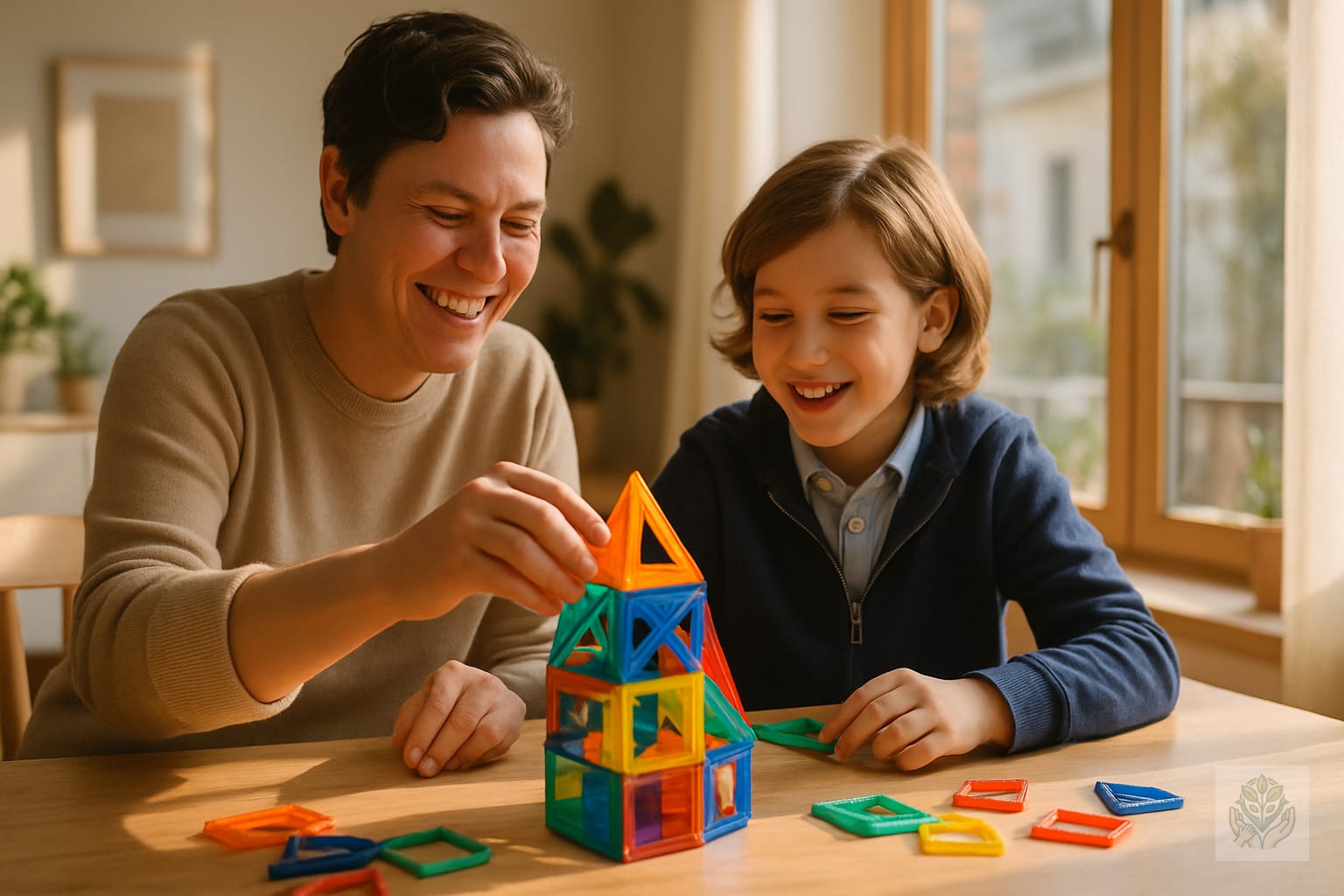
As children enter the preschool years, their ability to follow sequences increases. This is the perfect time to introduce building sets, basic magnetic tiles, and simple puzzles. These toys encourage children to think about how different parts create a cohesive whole, fostering early engineering skills and logical reasoning.
Ages 6–9: Introduction to Coding, Robotics, and Scientific Experimentation
Elementary-aged children are ready for more structured challenges. You can introduce programmable robots that teach the logic of sequences and loops. Additionally, chemistry kits and simple physics sets allow kids to conduct their own experiments, turning your kitchen table into a mini laboratory where they can observe reactions and test hypotheses. Consider checking our educational benefits of puzzle games explained for more ways to challenge their growing minds.
Ages 10–13: Advanced Mechanics, Complex Coding, and Real-World Problem Solving
For pre-teens, the goal shifts toward complex application. Look for advanced robotics kits that allow for custom programming and intricate mechanical construction. At this stage, STEM toys should challenge children to apply their knowledge to solve real-world problems, such as designing a bridge that can support weight or writing code to automate a household task.
How to Select the Best STEM Toys for Your Child’s Interests
Not every child will gravitate toward the same type of play. Understanding your child’s unique interests is the key to choosing a toy that will actually be used.
Identifying Learning Styles (Visual, Tactile, Logical)
Observe how your child interacts with the world. A visual learner might thrive with complex 3D puzzles or model kits. A tactile learner may prefer hands-on building materials like circuitry sets or clay modeling. A logical, analytical child might find deep satisfaction in complex coding board games or strategic card games that emphasize patterns and sequences.
Budgeting vs. Longevity: Choosing Durable Options
High-quality STEM toys are an investment. When shopping, prioritize durability. Many modular building sets or advanced robotics systems are designed to grow with your child by offering add-on parts or increasingly complex challenges. Choosing these modular systems often provides better long-term value than buying a single-use toy that will be discarded once the mystery is solved. You can see more tips in our ultimate beginner’s guide to buying age-appropriate toys.
Top STEM Toy Categories to Explore
If you are feeling overwhelmed by the sheer number of options on the market, focus on these four proven categories to get started:
- Building Sets and Magnetic Tiles: These are the gold standard for spatial reasoning and basic engineering.
- Coding Robots for Kids: Essential for building digital literacy and sequential thinking.
- Chemistry and Physics Experiment Kits: Perfect for hands-on, safe exploration of the natural world.
- Math and Logic Board Games: Great for teaching strategy, probability, and analytical thinking in a social setting.
Parenting Tips: Fostering a STEM Mindset at Home
You do not need to be a scientist to support your child’s growth. The most important thing you can do is model curiosity. Ask open-ended questions like, “What do you think will happen if we add this piece here?” or “How could we make this structure stronger?”
Allow for unstructured exploration time. Some of the most valuable learning occurs when a child takes a toy apart to see how it works or combines pieces from different sets in an unexpected way. Your role is simply to provide the materials and the encouragement to explore, fail, and try again.
Conclusion: Investing in Future-Ready Skills
Incorporating STEM toys into your home is more than just a way to keep your children entertained. It is a commitment to their future. By encouraging curiosity, persistence, and logical thinking, you are equipping your children with the skills they need to navigate a changing world with confidence. Whether they grow up to be engineers, artists, or entrepreneurs, the foundations built through play will serve as a constant advantage. Learn more about best educational toys for kids to round out your home collection.
Frequently Asked Questions (FAQs)
Are expensive STEM toys always better?
Not necessarily. While some premium kits offer high-end components, many simple and inexpensive items like plain wooden blocks or basic science experiment supplies found at home can be just as effective at teaching critical concepts.
How do I get my child interested in STEM if they prefer art?
STEM and art often overlap. Look for STEAM toys that include an artistic component, such as robots that draw, light-up craft kits, or 3D pens. This allows your child to use creative skills while exploring engineering principles.
What is the best age to start introducing STEM toys?
You can start as early as infancy with sensory toys that demonstrate cause and effect. The key is to keep the activities developmentally appropriate, ensuring the toys are engaging without being overly frustrating.
Frequently Asked Questions
What does STEM stand for in educational toys?
STEM stands for Science, Technology, Engineering, and Mathematics. Toys in this category are specifically designed to help children develop foundational skills in these four core areas through hands-on play.
Are expensive STEM toys always better for child development?
Not necessarily. While some premium kits offer advanced components, many simple and affordable items like building blocks or basic experiment supplies are just as effective at teaching critical thinking concepts.
What is the best age to start introducing STEM toys?
You can start as early as infancy with sensory toys that demonstrate cause and effect. The key is ensuring the toys match the child’s current developmental stage.
How can I encourage a child who prefers art to engage with STEM?
You can explore STEAM toys that integrate art, such as robots that draw, light-up craft kits, or 3D printing pens, allowing children to use creative skills while learning engineering principles.
How do STEM toys help build future-ready skills?
STEM toys encourage active problem-solving, resilience through trial and error, and logical reasoning, helping children transition from passive consumers of technology to active creators.
What types of STEM toys are best for toddlers aged 3 to 5?
For preschoolers aged 3 to 5, building sets, magnetic tiles, and simple spatial puzzles are ideal because they foster early engineering skills, logic, and fine motor control.


