

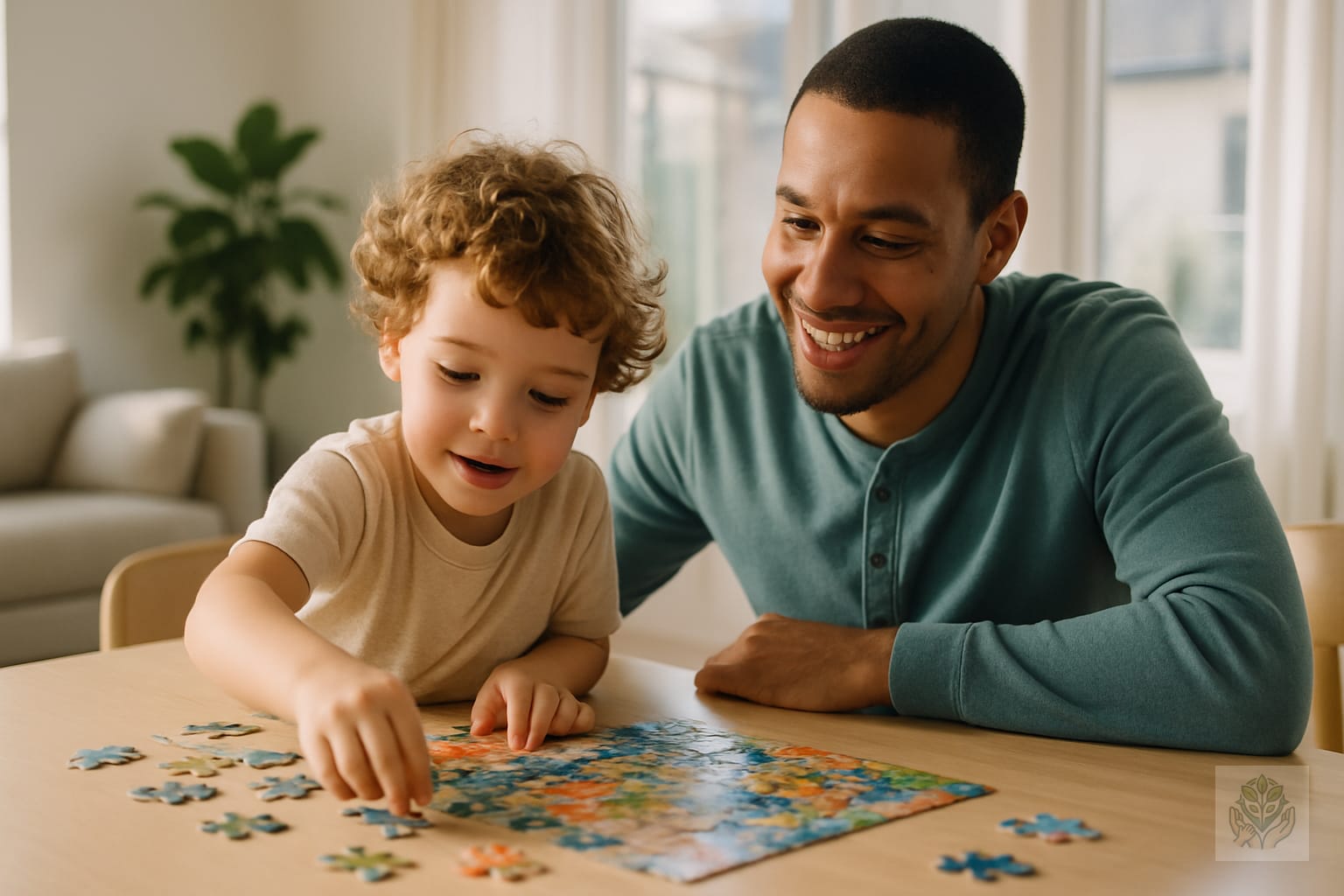
The Complete Guide to Puzzle Games for Kids of Every Age: Boosting Brainpower Through Play
In an era dominated by high-speed digital entertainment, the humble puzzle game for kids might seem like a relic of the past. Yet, parents and educators are rediscovering that these classic activities are essential tools for growth. Beyond the simple satisfaction of clicking a piece into place, puzzles offer a unique pathway to developing a sharp, analytical, and resilient mind.
Integrating puzzle games for kids into your daily routine is about more than just keeping them quiet for an hour. It is about fostering critical thinking, patience, and spatial reasoning. By matching the right challenge to your child’s current developmental stage, you can transform playtime into a powerful brain-boosting exercise as part of everything you need to know about educational puzzle games for kids.
The Science of Play: Cognitive Benefits of Puzzles for Children
The cognitive benefits of puzzles extend far beyond the tabletop. When a child interacts with a puzzle, they are engaging in a multi-sensory process that builds foundational skills for future academic success. One of the most immediate benefits is the refinement of fine motor skills. Manipulating pieces, rotating them, and forcing them into position requires precise hand-eye coordination, which can also be enhanced through 15 engaging indoor activities that improve fine motor skills for kids.
Puzzles also demand spatial awareness. As children learn to perceive shapes, colors, and the relationship between parts and the whole, they are developing visual-perceptual skills that are critical for geometry and reading. Perhaps most importantly, puzzles teach persistence. Encountering a piece that does not fit forces the child to rethink their approach, encouraging them to develop the grit needed to tackle life’s larger obstacles.
Puzzles for Toddlers (Ages 1–3): Building Foundations
At this early stage, the goal is to provide a successful, sensory-rich experience. Toddlers are still developing their dexterity, so look for sturdy materials that can withstand drops and chewing. Chunky wooden puzzles are perfect for this age group as they are easy to grasp and manipulate.
Start with simple knob puzzles where each piece corresponds to a specific hole. These help children associate objects with shapes. As they progress, introduce 2-4 piece cardboard sets that feature familiar animals or colors. Pro tip: Facilitate the process by talking through your own thinking—narrating where a piece might go without doing the work for them. This supportive approach builds their confidence while keeping the game enjoyable, much like the methods suggested in our guide on best educational toys for kids (age-wise guide for smart learning).
Puzzles for Preschoolers (Ages 3–5): Expanding Horizons
Preschoolers are ready for a higher level of complexity. Their ability to categorize and identify patterns has grown significantly, making this the perfect time to introduce floor puzzles. These oversized sets are physically engaging and teach children to work within a defined space, serving as a great addition to any ultimate complete guide to preschool activities for early learning.
Focus on puzzles that feature 12-50 pieces. You can also integrate shape-sorting games or themed puzzles that align with your child’s interests, such as construction vehicles, dinosaurs, or nature scenes. Keep engagement high by rotating their collection, ensuring that they do not get bored with the same designs, and providing just enough support to keep the challenge rewarding rather than frustrating.
Puzzles for School-Age Kids (Ages 6–10): Critical Thinking and Logic
Once children reach school age, you can move beyond standard jigsaws and begin introducing logic-based challenges. This is the stage where puzzle games for kids truly start to emphasize strategic planning. Try introducing tangrams to teach geometric decomposition, or simple Sudoku puzzles designed specifically for children to build number recognition and logical sequencing, which are essential skills discussed in the complete guide to ABC and number activities for young learners.
3D puzzles are another excellent way to engage this age group, as they require a deeper level of spatial reasoning. As your child gains confidence, you might consider introducing timed challenges to turn the task into a friendly competition. This helps them learn to handle pressure and refine their problem-solving speed.
Puzzles for Tweens and Teens (Ages 11+): Complex Challenges
For older children, the complexity of the puzzle should match their growing capability. This is the age to introduce 1,000+ piece jigsaw puzzles, which require genuine focus and sustained effort over several days. Mechanical puzzles—those that require physical manipulation to unlock or disassemble—also provide a great mental workout.
Consider the social aspect of puzzling as well. Working on a large, intricate puzzle as a family project can be a fantastic way to bond and communicate away from screens. While digital brain teasers have their place, encouraging tactile puzzles helps teenagers develop a better balance between technology and real-world logic, which is crucial for why family bonding matters for young children.
How to Choose the Best Puzzles for Your Child’s Interest Level
Choosing the right puzzle is an exercise in observation. Start by assessing your child’s attention span. If they get frustrated easily, choose a slightly easier puzzle with larger, more distinct pieces. If they breeze through them, it is time to level up by increasing the piece count or choosing images with more uniform colors and patterns.
Always follow their interests. If your child loves outer space, a puzzle featuring the solar system will hold their attention far longer than a generic landscape. When a child feels invested in the final image, they are much more likely to persist until the very last piece is placed.
Creating a Puzzle-Friendly Environment at Home
If you want to make puzzles a family ritual, you need an environment that supports them. Invest in storage solutions like clear, stackable bins to keep pieces organized and prevent the frustration of lost corners. A dedicated table or a felt puzzle mat allows you to leave a project in progress without cluttering your living space, an idea supported by our ultimate complete guide to creating a home learning resource collection.
Try to move away from viewing puzzles as a solo chore. Make it a collaborative activity by setting up a puzzle station where everyone can contribute a few pieces throughout the day. This reduces the pressure on the child and turns the activity into a shared, low-stakes family tradition.
Conclusion
Incorporating puzzle games for kids into your family life is a simple way to build complex skills. From the fine motor development of a toddler to the logical reasoning of a teen, puzzles offer a lifelong reward. Start small, follow your child’s lead, and most importantly, have fun with the process. If you are ready to get started, download our printable puzzle checklist to track your child’s progress, and let us know in the comments: what is the favorite puzzle game in your household?
Frequently Asked Questions
What are the benefits of puzzle games for kids?
Puzzle games help children develop fine motor skills, spatial awareness, hand-eye coordination, patience, and critical thinking abilities.
What type of puzzles are best for toddlers aged 1 to 3?
Sturdy wooden chunky puzzles and simple knob puzzles are ideal for toddlers as they are easy to grasp and help associate objects with shapes.
How many pieces should a preschooler’s puzzle have?
Preschoolers aged 3 to 5 are generally ready for floor puzzles or sets featuring between 12 and 50 pieces.
What kind of puzzles work well for school-age kids?
School-age kids benefit from logic-based challenges like tangrams, simple Sudoku, 3D puzzles, and standard jigsaw puzzles.
How can I choose the right puzzle for my child?
Assess your child’s attention span and match the puzzle to their personal interests, such as animals, space, or vehicles, to keep them engaged.
How can I store puzzle pieces so they don’t get lost?
Use clear, stackable bins for organization and a dedicated table or felt puzzle mat to keep ongoing projects safe and tidy.


