

How to Choose the Right Shoes for Toddlers: A Parent’s Expert Guide
Walking into a children’s shoe store can feel like stepping into a chaotic maze of bright colors, flashing lights, and tiny high-tops. As a parent, you want the best for your child’s development, but the sheer volume of options can make it difficult to know how to choose the right shoes for toddlers. It is easy to get caught up in the latest trends, but when it comes to early childhood, function must always outweigh fashion.
Proper footwear is crucial because toddler feet are essentially made of soft cartilage that is still molding. Because they are so malleable, the wrong shoes can actually interfere with natural development. Interestingly, pediatric experts often remind us that toddlers do not technically need shoes at all until they start walking outdoors consistently. For the house, barefoot is often best. However, once your little one starts navigating parks, driveways, and daycare floors, you need to be prepared with a pair that supports their journey. For more advice on active play, see our guide on 10 outdoor activities to boost toddler development naturally.
The Anatomy of a Perfect Toddler Shoe
When you start learning how to choose the right shoes for toddlers, you will notice that not all footwear is created equal. Many adult-style sneakers are far too rigid for a developing foot. To protect your child, look for shoes that mimic the natural shape and movement of the foot. You can also explore how to choose lightweight shoes for toddlers to ensure maximum comfort.
First, look for flexible soles. If you pick up the shoe, you should be able to bend it easily with your hands. A stiff sole forces the foot to move according to the shoe, rather than allowing the muscles and ligaments to develop naturally. Second, ensure the material is breathable, such as leather, cotton, or high-quality mesh. Toddlers have active sweat glands, and breathable materials prevent moisture buildup that can lead to irritation or fungal growth.
A wide toe box is another non-negotiable feature. Toddlers need to splay their toes for balance as they master their gait. If the front of the shoe is pointed or narrow, it can cause crowding and discomfort. Finally, prioritize a non-slip grip. Whether it is rubberized soles or textured patterns, the grip is essential for preventing slips on smooth surfaces as they transition from unsteady first steps to confident running.
When Should Toddlers Start Wearing Shoes?
Many parents feel pressured to put shoes on their infants the moment they begin standing. However, the benefits of being barefoot are significant. When a child walks without shoes, their brain receives vital sensory feedback from the ground, which improves coordination and arch strength. There is no biological rush to put them in footwear.
The transition to wearing shoes should happen only when necessary. If your toddler is strictly playing inside, let them go barefoot or use socks with non-slip grips. Once they are walking outdoors, navigating rocky terrain, or if your daycare facility has strict footwear requirements, it is time to invest in a pair. Think of shoes as a tool for protection against heat, cold, and sharp debris, rather than a mandatory garment for walking.
Step-by-Step: How to Measure Toddler Feet at Home
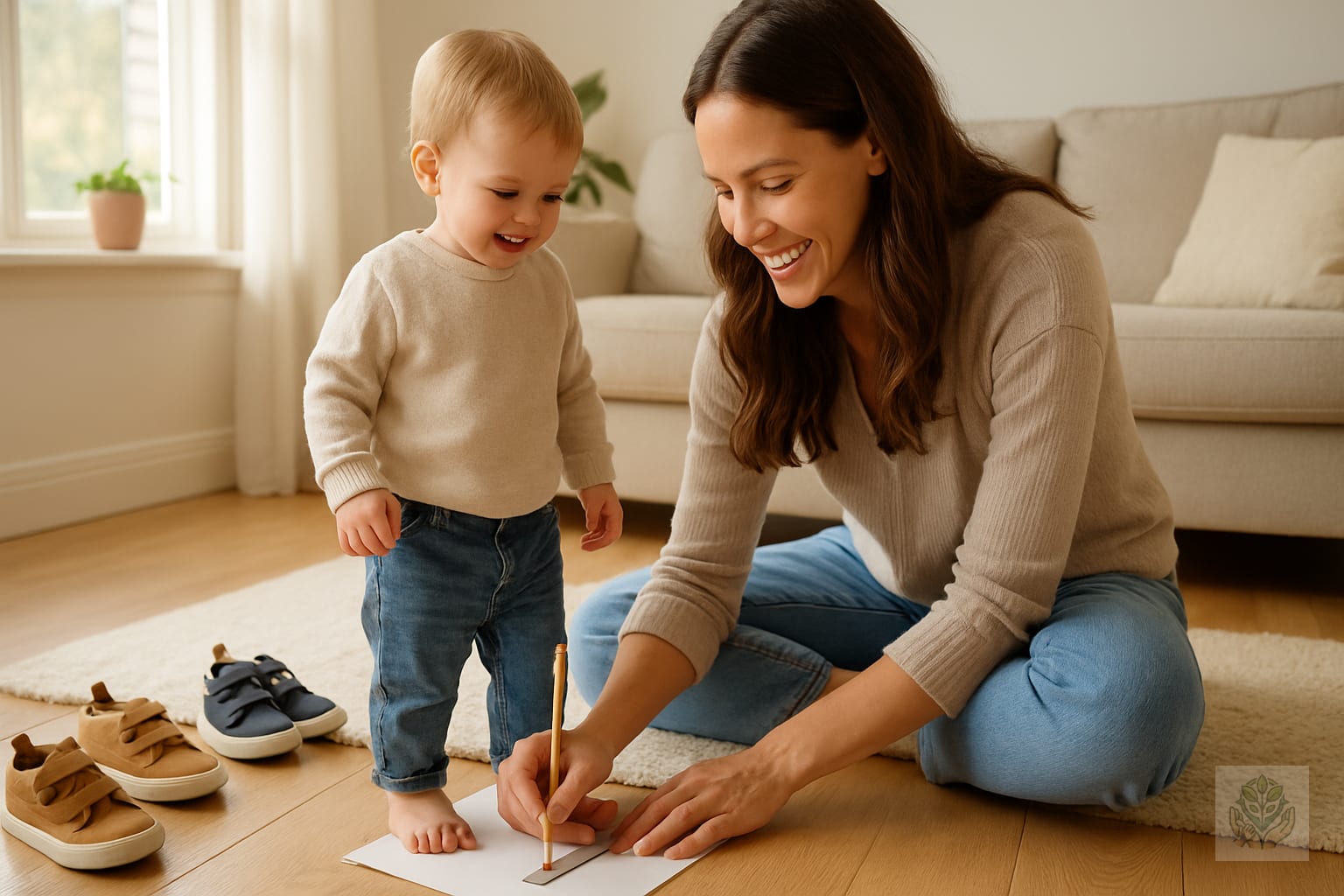
Knowing how to choose the right shoes for toddlers starts with accurate sizing. Footwear sizing is notoriously inconsistent between brands, so you should measure your child’s feet every few months. To get a reliable measurement at home, you only need a piece of paper, a pencil, and a ruler.
Place a sheet of paper flat against a wall and have your toddler stand on it with their heels touching the wall. Because feet spread out under pressure, you must measure while they are standing. Mark the furthest tip of their longest toe on the paper. Use your ruler to measure the distance from the edge of the paper to that mark.
Once you have the measurement, remember the thumb-width rule. You should leave about half an inch, or roughly the width of an adult thumb, between the end of the longest toe and the front of the shoe. This allows room for growth and natural foot movement. If the shoe is too tight, it can restrict growth; if it is too loose, your child may trip frequently.
Common Mistakes Parents Make When Buying Toddler Shoes
It is common to want to save money, but buying shoes that are too big is a major mistake. Some parents believe they are being thrifty by buying a size or two up, thinking the child will eventually grow into them. This creates a significant tripping hazard and can cause the child to alter their walking pattern to keep the shoe on, which is detrimental to their biomechanics. For more tips on managing household clutter related to kids’ gear, read our article on 15 genius sports equipment storage ideas to tame the garage clutter.
Another common error is prioritizing style over support. While those miniature loafers or high-fashion boots might look adorable in photos, they often lack the necessary flexibility and arch support for a toddler. Furthermore, never accept hand-me-downs that have been heavily worn. Shoes mold to the foot of the original wearer. When a second child wears a shoe that has already been broken in by someone else, it can encourage an improper walking gait.
Signs Your Toddler’s Shoes Don’t Fit Anymore
Because children rarely complain that their feet hurt, it is up to you to monitor for signs that it is time for an upgrade. A visual check of the foot after your child has been playing is the best diagnostic tool. If you see red marks on the tops or sides of their feet, the shoe is likely too narrow or too tight.
If you notice your toddler resists putting their shoes on, they are likely feeling physical discomfort. Additionally, pay attention to their movement. If your previously confident walker starts tripping constantly or seems to be walking differently, their shoes may no longer provide the support they need. Finally, inspect the sole. If the wear pattern is significantly uneven, it might be time to replace the pair to ensure their feet are properly aligned. Learn more about the ultimate guide to finding comfortable footwear for kids: healthy feet & happy kids.
Expert Tips for a Stress-Free Shoe Shopping Trip
If you prefer to buy shoes in person, the timing of your trip makes a huge difference. Go in the afternoon, as feet naturally swell throughout the day. A shoe that fits perfectly at 9:00 AM might feel tight by 4:00 PM, so shopping later ensures you get the right size for all-day comfort.
Involve your toddler in the process to keep them engaged. Let them choose between two pre-approved, supportive options. This gives them a sense of autonomy and makes the experience less of a battle. For younger toddlers, Velcro closures are excellent. They allow for easy application, provide a secure fit, and eventually help your child gain independence as they learn to put on their own shoes. If you are struggling with hygiene transitions during this stage, check out our guide on how parents can encourage independent hygiene habits.
Conclusion
Learning how to choose the right shoes for toddlers is a balancing act of comfort, safety, and functionality. By focusing on flexible materials, wide toe boxes, and a secure fit, you are setting your child up for success as they explore the world. Remember that fashion should never come at the cost of development, and checking their size every two to three months is essential for their growing feet.
Do not stress if you do not get it right on the first try. Parenting is a learning curve, and your child’s feet are resilient. By being mindful of these tips, you can ensure their early steps are supported, comfortable, and ready for adventure. For further support, consider exploring our positive parenting techniques that actually work.
Frequently Asked Questions
When should toddlers start wearing shoes?
Toddlers do not need shoes until they start walking outdoors consistently. Indoors, going barefoot is best because it provides sensory feedback and helps develop natural foot strength and balance.
What features should I look for in toddler shoes?
Look for flexible soles that bend easily, breathable materials like cotton or leather, a wide toe box for toe splay, and a non-slip grip to prevent falls.
How often should I measure my toddler’s feet?
You should measure your toddler’s feet every two to three months. Toddler feet grow rapidly, and sizing can vary significantly between different brands.
Can I buy shoes a size bigger so my toddler can grow into them?
No, buying shoes that are too big is a major tripping hazard and forces your child to alter their walking pattern. Always buy shoes that fit correctly right now, leaving about a thumb-width of space.
Are hand-me-down shoes safe for toddlers?
It is best to avoid heavily worn hand-me-downs. Shoes mold to the shape of the original wearer’s foot, which can negatively impact your second child’s developing walking gait.
What is the best time of day to go shoe shopping for kids?
The best time to shop for shoes is in the afternoon. Feet naturally swell throughout the day, so shopping later ensures you buy a size that provides all-day comfort.


