

How to Create a Simple After-School Schedule for Preschoolers (That Actually Works)
The final bell rings, you pick up your little one, and you are ready for a lovely afternoon together. But instead of happy greetings, you are met with tears, screaming, or a complete refusal to cooperate. If this scenario sounds familiar, you are certainly not alone. Many parents find themselves exhausted by the afternoon transition, often wondering why their child behaves so differently at home than they do at school.
Introduction: Why Preschoolers Struggle After School
The transition from a structured classroom environment to the home front is a massive shift for a developing brain. Even if your child loves their preschool program, it requires an immense amount of energy for a three or four-year-old to follow rules, share toys, manage friendships, and listen to teachers all day long. By the time they reunite with you, their capacity for self-regulation is often completely drained.
The ‘After-School Restraint Collapse’ explained
Child development experts often refer to this phenomenon as the after-school restraint collapse. This is not a sign of bad behavior or a lack of discipline. Rather, it is a sign of safety. Your preschooler has held it together all day in an environment where they feel they must perform or follow strict social norms. When they see you, their safest person, they finally feel comfortable enough to let their guard down and release all that pent-up tension. Understanding that this behavior is a compliment to your secure bond is the first step toward managing it effectively.
The 3 Pillars of a Successful After-School Routine
Creating a simple after-school schedule for preschoolers does not mean rigid time-blocking. Instead, it involves building a rhythm that meets your child’s emotional and physical needs. Focus on these three pillars to transform your afternoons. For more ideas on structuring this part of the day, check out our guide on stress-free after-school routine ideas for kids.
1. Connection Before Correction
When you first reunite, avoid jumping straight into questions like, “Did you eat your lunch?” or “Did you play with your friends?” These questions can feel like demands on their already exhausted brain. Instead, prioritize fifteen minutes of undivided, low-pressure attention. Sit on the floor, engage in parallel play, or simply offer a big hug. This reconnection helps replenish their emotional cup, making the rest of the evening flow much more smoothly.
2. Predictability and Visual Cues
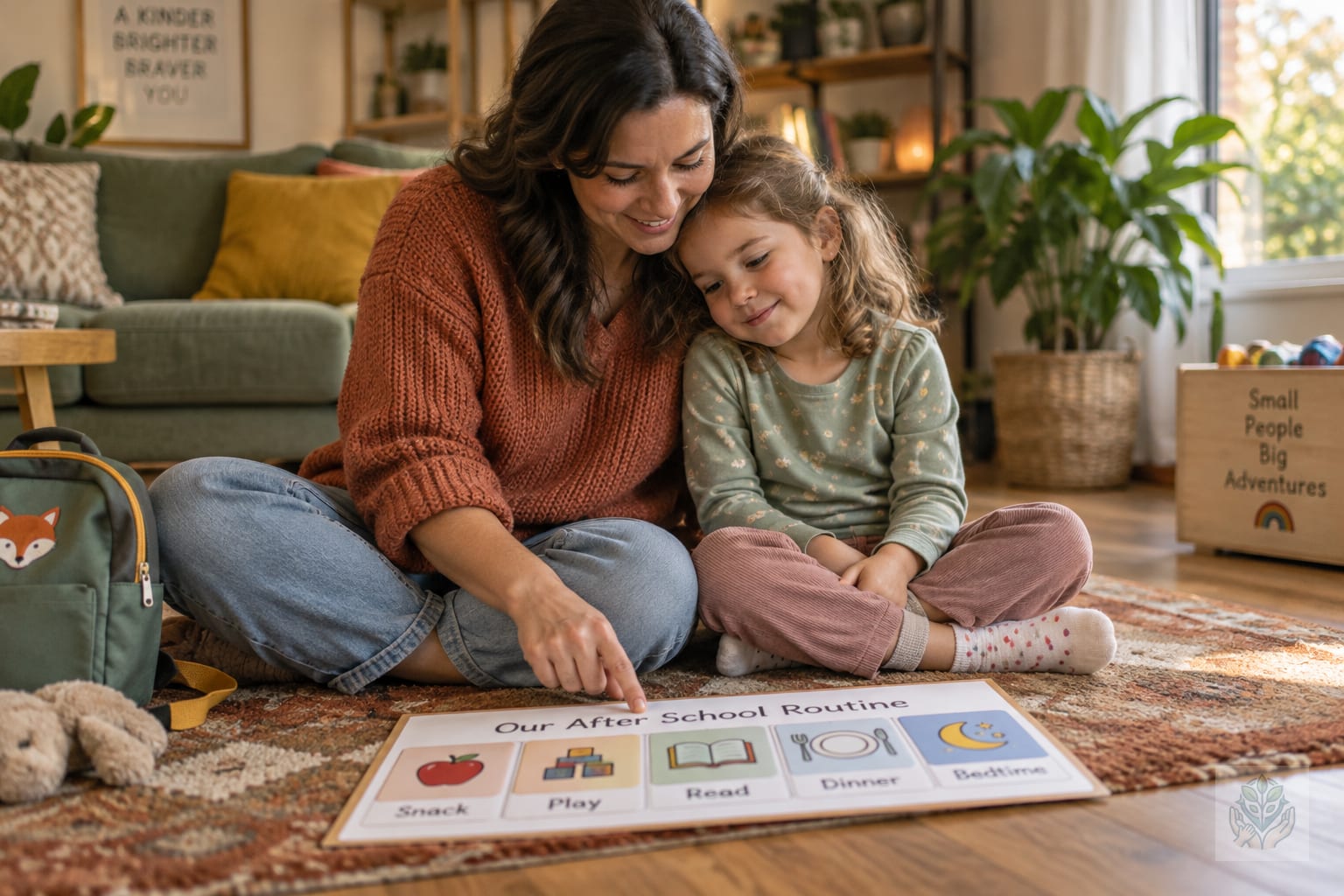
Preschoolers thrive on predictability because they have little control over their own lives. When they know exactly what to expect, their anxiety levels drop. Use visual cues, such as a picture chart, to show the sequence of events. When they can see that playtime follows snack time, they are less likely to fight the transition because the schedule becomes the objective authority rather than your nagging. You can also explore strategies from our guide on setting clear rules without constant arguments.
3. Sensory Regulation
After a day of classroom sensory input, your child may need to either quiet down or burn off energy. Observe your child’s needs. If they come home bouncing off the walls, they need heavy work or movement, like climbing, jumping, or pushing a heavy laundry basket. If they come home lethargic and moody, they likely need a low-stimulation environment with dimmed lights and soft music. You can also incorporate indoor activities that build gross motor skills to help them release excess physical energy.
A Sample Simple After-School Schedule for Preschoolers
Every family is different, but having a general flow helps minimize decision fatigue. Use this framework to design a routine that fits your lifestyle.
The ‘Golden Hour’: Immediate arrival and decompression
Spend the first 20 minutes focusing on deep breathing and low-stakes connection. This is the time for a quick change of clothes into something comfortable and a gentle transition into the home environment.
Fueling Up: Nutrient-dense snacks
Never underestimate the power of ‘hangry.’ Offer a protein-rich snack as soon as possible. Focus on options like apple slices with almond butter, cheese cubes, or yogurt. Stable blood sugar is essential for a stable mood. For more inspiration, take a look at these healthy breakfast ideas for children’s immune support that can easily be adapted for nutritious afternoon snacks.
Active vs. Quiet play balance
Structure the middle of your afternoon based on your child’s temperament. If they need to release energy, head outside or set up an obstacle course in the living room. If they have had a high-stimulation day, prioritize quiet activities like building with blocks, coloring, or listening to an audiobook. You can also encourage independent downtime with toys recommended in our guide on Montessori toys that encourage independent play.
Preparing for bedtime transitions
Start the wind-down process early. Begin dimming the lights, turning off screens, and engaging in repetitive, calming activities like folding laundry together or reading a book. This signals to their brain that the day is coming to a close. To help them settle down for the night, consider tips from our guide on how to create a calm and comfortable sleep environment for kids.
5 Tips for Managing After-School Meltdowns
Even with the best schedule, meltdowns happen. Here is how to handle them with grace:
- Remain the calm anchor. Your child is looking to you to see how they should react to their big feelings.
- Validate the emotion. Say, “I see that you are feeling frustrated right now. I am here with you.”
- Keep it simple. When a child is in the middle of a meltdown, they cannot process complex sentences.
- Give them space. Sometimes, they just need to cry or shout for a moment in a safe spot.
- Offer comfort, not punishment. A meltdown is a cry for help, not an act of defiance.
Essential Tools to Simplify Your Afternoon
Visual routine charts
Use images to represent tasks like putting away shoes, washing hands, and sitting for a snack. You can find these online or make your own using photos of your child performing these tasks.
Quiet corners for regulation
Create a small, cozy space in your home filled with pillows, stuffed animals, and books. This is a sanctuary for when your child feels overwhelmed and needs to reset their nervous system.
Conclusion: Consistency Over Perfection
Remember that your goal is not to create a military-grade operation but to build a gentle, supportive rhythm that helps your child transition from school to home. You do not need to be perfect. If a day goes off the rails, simply start fresh the next day. Focus on consistency over perfection, and over time, you will notice that the afternoon transition becomes a time of connection rather than conflict. By using a simple after-school schedule for preschoolers, you are teaching your child how to regulate their emotions and setting them up for long-term success.
Call to Action: Download our free printable preschool routine checklist
Ready to get started? Download our free printable preschool routine checklist to customize your afternoon flow today and say goodbye to the after-school chaos!
Frequently Asked Questions
Why do preschoolers have meltdowns after school?
Preschoolers experience after-school restraint collapse because they hold their emotions together all day in a structured environment. When they return to the safety of their parents, they finally release all that pent-up tension.
How can I handle after-school meltdowns?
Remain calm, validate your child’s emotions, keep communication simple, give them safe space if needed, and offer comfort rather than punishment.
How much screen time is appropriate after school for preschoolers?
It is generally recommended to avoid or strictly limit screen time immediately after school, as the high stimulation can make later transitions to dinner and bedtime much harder.
Should my preschooler do extracurricular activities on school days?
If your child is struggling with the transition home, it is best to avoid extracurriculars on school days to prevent burnout and excessive fatigue.
What are the core pillars of a good after-school routine?
The three main pillars are connection before correction, predictability through visual cues, and addressing sensory regulation needs.
How do visual routine charts help preschoolers?
Visual charts give children a clear picture of what comes next, reducing anxiety and making the schedule the objective authority rather than parental nagging.


