

10 Easy Dry Sensory Activities for Toddlers (Mess-Free Fun!)
If you are a parent of a toddler, you know that sensory play is essential. It is the language through which little ones explore the world. However, you might also dread the thought of water spills, paint-covered walls, or sticky slime ground into the carpet. This is where dry sensory activities for toddlers become your secret weapon.
Sensory play is a fundamental pillar of early childhood development. It helps toddlers understand textures, weights, and spatial relationships. By opting for dry materials, you can offer your child a rich tactile experience that keeps your home clean and your stress levels low. Let us dive into why these mess-free activities are a game-changer for your daily routine.
Why Choose Dry Sensory Activities?
The primary benefit of dry sensory bins is the simplicity of cleanup. While water bins require towels, mop-ups, and drying time, dry materials like rice or pasta are easily contained or vacuumed. For alternative wet play ideas, you can also explore our 15 engaging water sensory play ideas for young children. These activities encourage independent play, allowing you to fold laundry or enjoy a warm cup of coffee while your child is deeply engaged.
Beyond the convenience, dry sensory activities support critical developmental milestones. When a toddler scoops, pours, or sorts, they are refining their fine motor skills. They are also building concentration and hand-eye coordination. Exploring different textures—the smooth surface of a dried bean versus the soft fuzz of a pom-pom—helps children categorize information about the physical world.
Essential Supplies for Mess-Free Sensory Bins
You do not need an expensive kit to get started. In fact, most of the best supplies are already in your pantry. To set up successful dry sensory activities for toddlers, focus on three categories: a sturdy container, a filler, and transfer tools.
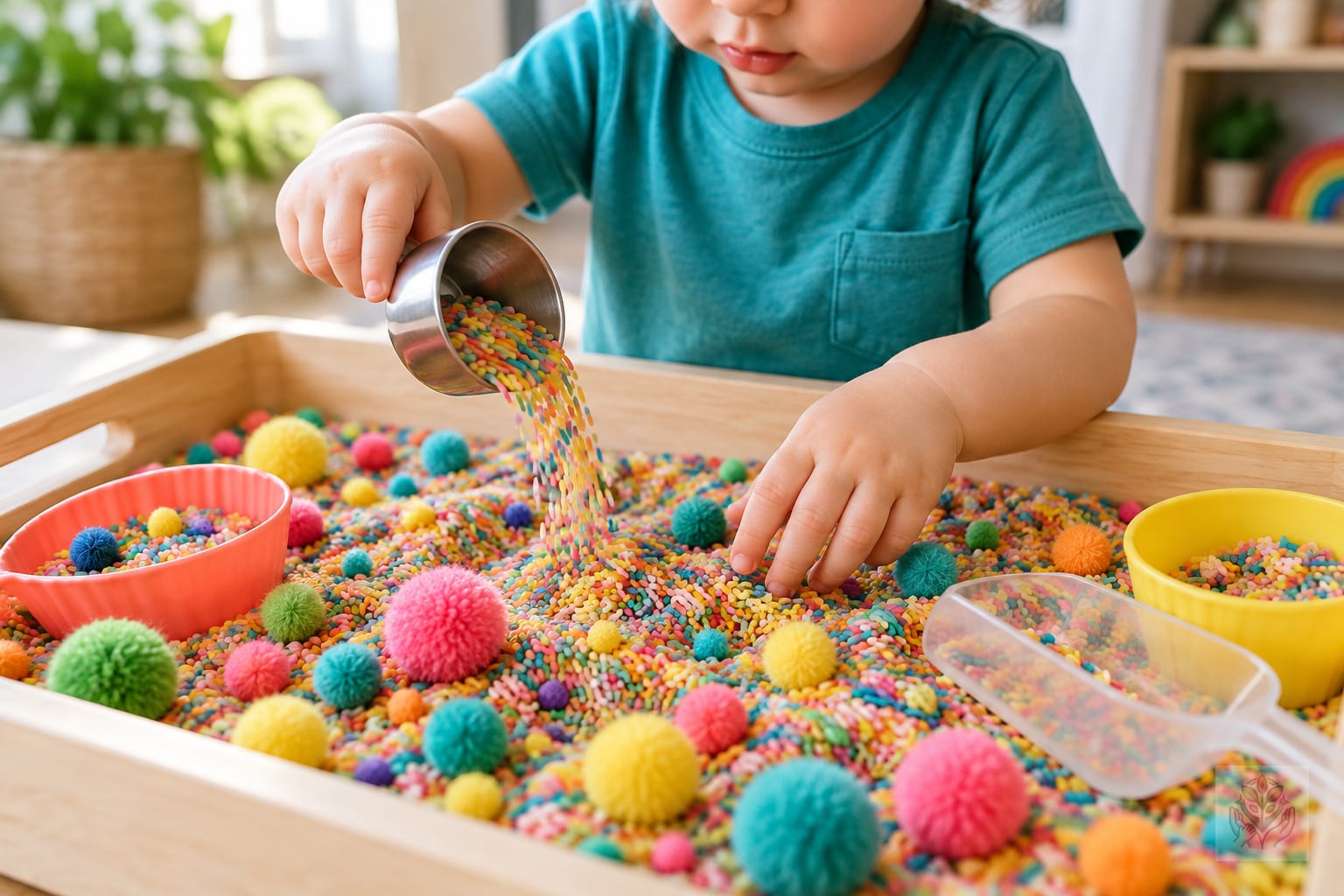
For the container, a plastic under-bed storage bin works perfectly because it has a large surface area. A shallow roasting pan or a wooden tray also works well for keeping items contained. For fillers, consider dried rice, split peas, uncooked pasta, dried beans, or pom-poms. You can find even more inspiration in our guide on 15 fun sensory bin fillers for toddlers. Finally, grab some basic tools like measuring cups, plastic scoops, funnels, and blunt-ended tongs. These items help toddlers practice the mechanics of grasping and releasing.
10 Easy Dry Sensory Activities Your Toddler Will Love
- The Rainbow Rice Excavation: Dye rice with food coloring for a vibrant, multi-sensory experience. Bury small plastic animals inside and let your toddler dig for treasures.
- Pasta Sorting and Transferring: Provide different shapes of dry pasta and ask your toddler to sort them into bowls using their fingers or large spoons.
- Pom-Pom Color Matching: Place a variety of colored pom-poms in a bin. Give your toddler small containers that match those colors and let them sort the pom-poms accordingly.
- Dried Bean ‘Sand’ Castle: Beans have a distinct weight and sound. Use cups and molds to let your child create shapes, focusing on the sensory feedback of the beans as they pour.
- Kinetic Sand Exploration: While slightly different, kinetic sand is a dry material that sticks only to itself, making it one of the most low-mess options available.
- Oatmeal Construction Site: Use dry oats as a base. Add small plastic trucks or construction vehicles to the bin for a pretend-play experience that feels great to touch.
- Dried Lentil Scooping Station: Lentils are smaller than beans, providing a different tactile sensation. Encourage your child to use a funnel to watch them flow into different bottles.
- Hidden Treasure Hunt (using dried corn): Use dried corn kernels as your base. Hide puzzle pieces or small toys deep inside for a fun search-and-find activity.
- Cotton Ball Texture Bin: This is a wonderful, soft option. Fill a bin with colorful cotton balls and encourage your toddler to count them or move them from one side of the tray to the other.
- Felt and Ribbon Tactile Box: For a non-food option, fill a box with strips of ribbon and scraps of felt. This encourages sensory exploration of fabrics without the risk of small loose items.
Safety First: Tips for Managing Sensory Play
While these activities are generally safe, supervision is mandatory, especially for toddlers who are still exploring with their mouths. If you are concerned about choking hazards, always choose larger fillers like large pasta shells or big pom-poms.
To keep materials inside the bin, place a large beach towel or an old plastic tablecloth underneath the setup. This makes cleanup as easy as folding the edges of the towel and shaking the leftovers back into the bin. Always store your sensory materials in airtight containers to keep them fresh and free from moisture or pests. For tips on keeping these and other items organized, check out our smart storage ideas for baby and toddler rooms.
How to Extend Playtime
To keep your child interested, rotate your supplies. You do not need to introduce a new theme every day; simply changing the tools can spark renewed interest. For example, replacing a spoon with a pair of kitchen tongs can make an old activity feel brand new. To encourage further independence and focus, you can also look into 10 Montessori toys that encourage independent play.
You can also incorporate seasonal themes to make things more exciting. During the fall, use dried corn and small pumpkins. During the winter, use white rice as ‘snow’ and add arctic animal figurines. These small adjustments keep the learning process fresh and engaging for your toddler.
Conclusion
Incorporating dry sensory activities for toddlers into your week does not have to be a major project. Start small, use what you have in your cupboards, and observe how your child learns through touch and manipulation. These moments of quiet, focused play are as beneficial for you as they are for your little one. What is your favorite sensory bin filler? Share your ideas in the comments below!
Frequently Asked Questions
What are dry sensory activities for toddlers?
Dry sensory activities involve using non-liquid materials like dried rice, beans, pasta, or pom-poms in a bin to provide tactile exploration for young children without the mess of water or paint.
Why choose dry sensory bins over wet ones?
Dry sensory bins offer extremely easy cleanup since spilled materials can be quickly swept or vacuumed up, eliminating the need for towels, mop-ups, and drying time associated with water play.
What supplies do I need to set up a dry sensory bin?
You only need three basic items: a sturdy plastic container or tray, a dry filler like rice, oats, or pasta, and transfer tools such as measuring cups, funnels, and spoons.
How do sensory activities help toddler development?
They refine fine motor skills, build hand-eye coordination, encourage independent concentration, and help toddlers learn to categorize different textures and weights in the physical world.
Are dry sensory bins safe for young toddlers?
Yes, as long as you provide active adult supervision and select larger fillers like big pom-poms or large pasta shells if your child still tends to put items in their mouth.
How can I keep sensory materials contained during playtime?
Place a large beach towel or a plastic tablecloth underneath the sensory bin to catch any stray pieces, making cleanup as simple as shaking the leftovers back into the container.


