

Free Alphabet Printable Worksheets for Preschoolers: Fun Ways to Teach ABCs
Early letter recognition is the foundation of every child’s literacy journey. Before a child can read a sentence or write a story, they must first become familiar with the shapes and sounds of the alphabet. As parents and educators, finding ways to make this process both educational and enjoyable is key to long-term success. Free alphabet printable worksheets for preschoolers offer a perfect bridge between play and formal instruction.
Many parents struggle to balance screen time with educational engagement. By incorporating printable activities into your daily routine, you can transform what might have been passive time into an active, hands-on learning experience. These tools provide a structured yet flexible approach to teaching, allowing children to explore letters at their own pace.
The Benefits of Using Alphabet Printables for Preschoolers
Beyond simply keeping little hands busy, alphabet printables serve a crucial role in developmental growth. One of the most significant benefits is the development of fine motor skills. As children navigate a pencil or crayon through the curves and lines of a letter, they are strengthening the tiny muscles in their fingers and hands that are essential for future handwriting, which you can further support with fun pencil grip activities for toddlers and preschoolers.
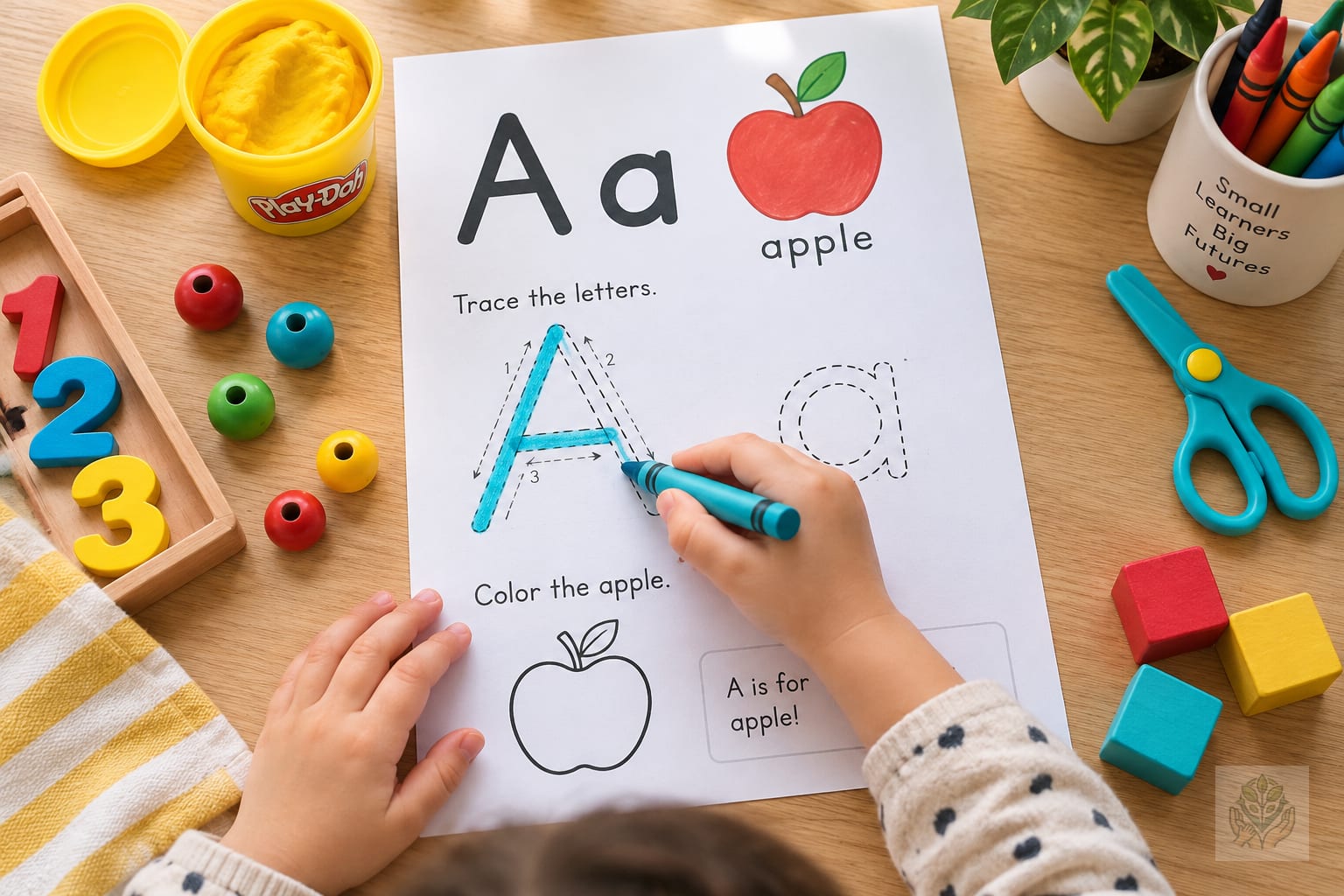
These worksheets also play a vital role in reinforcing letter-sound association. When a child identifies a picture of an apple next to the letter A, they are mentally linking the visual symbol to a phonemic sound. This is a foundational step in reading readiness. Furthermore, successfully completing a page builds immense confidence in early writers. Seeing their progress from shaky, uneven lines to controlled strokes fosters a sense of accomplishment that encourages them to keep practicing.
For busy parents and teachers, the convenience of printables is unmatched. Whether you are at home, waiting for an appointment, or sitting in a coffee shop, having a portable stack of activities ensures that learning can happen anywhere. It is a low-stress way to introduce early academic concepts without the pressure of a formal classroom environment.
Types of Alphabet Worksheets Every Preschooler Needs
Not all activities are created equal. To provide a well-rounded experience, you should look for a variety of worksheet styles that target different skills:
- Letter Tracing Worksheets: These provide structured guidance for both uppercase and lowercase letter formation. They are excellent for developing muscle memory.
- Letter Recognition Coloring Pages: These focus on visual identification. Children must search for a specific letter hidden among others, which sharpens their attention to detail. You can also explore engaging dot marker coloring activities for preschoolers for more colorful learning fun.
- Find the Letter Hidden Pictures: These engaging games make identification feel like a puzzle, keeping children focused and entertained for longer periods.
- Beginning Sounds Matching Activities: These worksheets ask children to draw a line connecting a letter to an image that starts with that letter’s sound, reinforcing phonics.
How to Effectively Use Alphabet Worksheets (Tips for Success)
Even the best worksheets can lose their appeal if they become a chore. To keep things engaging, aim for short, focused sessions lasting only 10 to 15 minutes. Children at the preschool age have limited attention spans, and short bursts of learning are far more effective than long, forced lessons.
Try pairing your printed materials with physical manipulatives. If your child is tracing the letter B, have them build a letter B out of playdough or find magnetic letters to place on the page. By involving multiple senses, you increase the likelihood that the information will stick. You can also incorporate easy dry sensory activities for toddlers to build tactile engagement alongside their daily tracing.
Designating a specific ‘learning corner’ in your home can also signal to your child that it is time to focus. A small desk, a comfortable floor mat, or even a dedicated tray can help create a sense of routine. To make these resources even more sustainable, consider placing your worksheets inside plastic sheet protectors. By using dry-erase markers, your child can practice the same letter dozens of times without needing a fresh sheet of paper every day.
Step-by-Step: Incorporating ABC Worksheets into a Daily Routine
Consistency is the secret to building strong literacy skills. Start by focusing on a ‘Letter of the Week.’ This approach allows your child to fully immerse themselves in one character at a time, exploring its shape, sound, and common words associated with it.
Combine your tracing exercises with phonics games throughout the day. For example, if you are working on the letter S, point out items around the house that start with the ‘ssss’ sound, such as ‘spoon’ or ‘sock.’ This helps bridge the gap between the worksheet on the table and the world around them.
When it comes to writing versus identification, be patient. Many children are ready to identify letters long before they have the physical control to write them. If your child seems frustrated by the pencil work, pivot back to identification games like coloring or finding letters. Allow their physical development to guide the intensity of the writing tasks.
Recommended Resources: Where to Find Quality Alphabet Printables
When selecting resources, look for designs that are clean and intentional. A good worksheet should feature a simple, clear font that isn’t overly decorative, as fancy scripts can be confusing for a young learner. The images should be recognizable and distinct to avoid unnecessary distraction.
We believe that high-quality learning materials should be accessible to everyone. Our library of free alphabet printable worksheets for preschoolers is designed with these exact principles in mind. From simple tracing guides to fun, interactive phonics puzzles, you can download and print our entire collection today to start your journey. If you need older material later on, you can also explore free printable worksheets for 5-year-olds as your child grows.
Conclusion
Introducing the alphabet to your preschooler is an exciting milestone that sets the stage for a lifelong love of reading and writing. By using free alphabet printable worksheets as a supplemental tool, you provide your child with the structure and repetition they need to succeed in a fun, pressure-free way. Remember that your support and encouragement are the most important tools in their kit. Keep the activities consistent, celebrate their progress, and enjoy this special time of discovery together. Download our free set of alphabet worksheets today and begin the adventure!
Frequently Asked Questions
At what age should a child start tracing letters?
Most children begin to show an interest in tracing around age three or four. If your child shows interest, start with simple, large-scale tracing activities and move to formal worksheets as hand control improves.
Should I teach uppercase or lowercase letters first?
While it is common to start with uppercase letters because they are easier to form, lowercase letters are more common in reading. Experts often suggest introducing them simultaneously or prioritizing lowercase early on.
How do I help a preschooler who is frustrated with handwriting?
Frustration usually stems from physical difficulty. Try using a thicker crayon, a marker, or a finger in sand. Shorten practice sessions and remind them that mistakes are a normal part of learning.
How long should daily alphabet worksheet sessions last?
Aim for short, focused sessions lasting only 10 to 15 minutes. Preschoolers have limited attention spans, and short bursts of learning are far more effective than long, forced lessons.
Can I reuse these alphabet worksheets?
Yes! You can place your worksheets inside plastic sheet protectors and use dry-erase markers so your child can practice the same letter repeatedly without needing fresh paper.
What skills do alphabet printables help develop?
Alphabet printables help develop fine motor skills, hand-eye coordination, letter recognition, and phonemic awareness by linking visual letter symbols to their sounds.


