

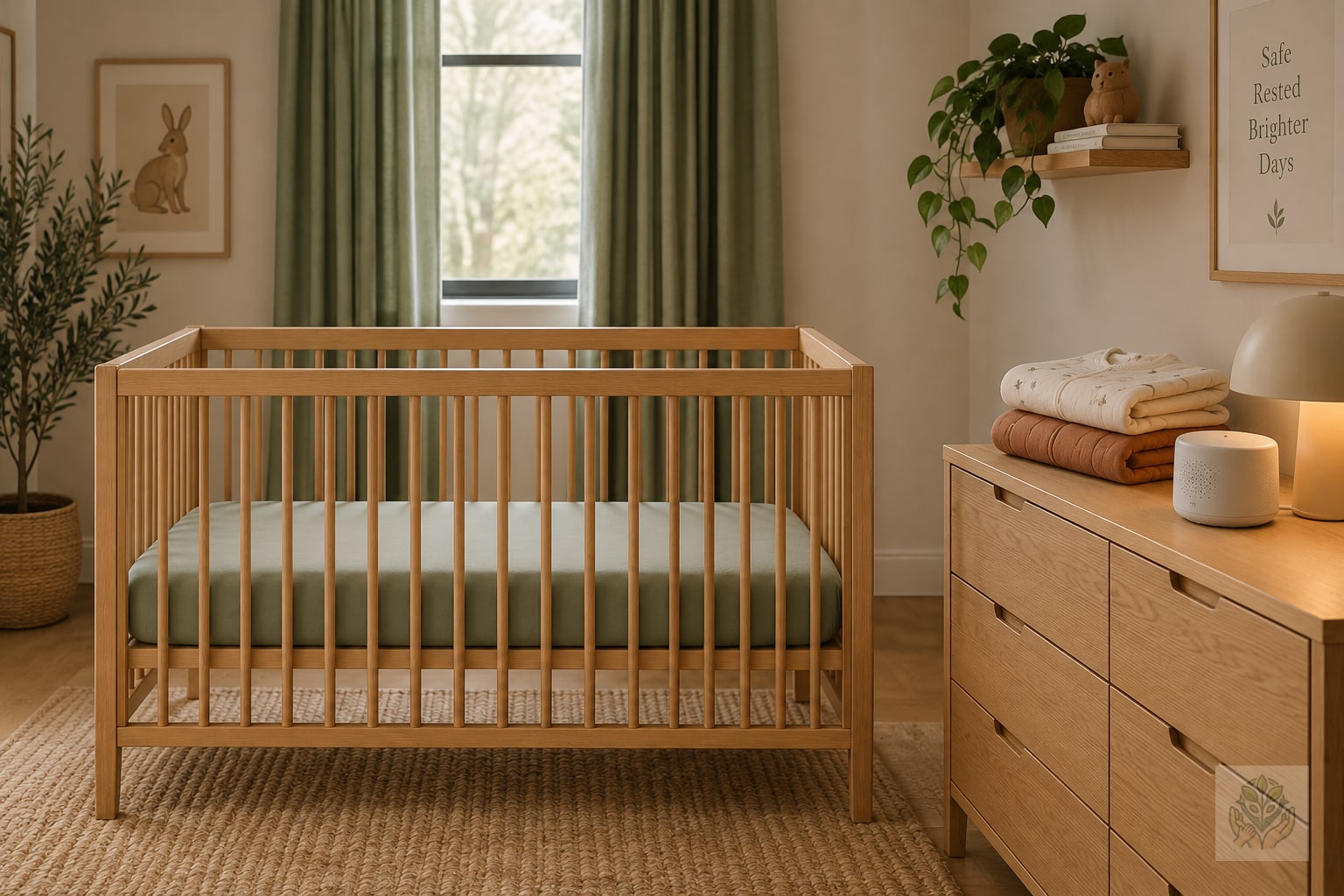
Essential Sleep Items Every Baby Nursery Needs: A Parent’s Checklist
Preparing for a new arrival is an exciting time, but staring at an empty nursery can feel overwhelming. When it comes to your little one, the most important goal is creating a space that prioritizes rest and safety. Understanding the essential sleep items every baby nursery needs is the first step toward helping your infant establish healthy sleep habits from day one.
Why a dedicated sleep environment matters for your baby
Babies spend a significant portion of their first year sleeping. A dedicated nursery acts as a sensory-controlled environment that signals to your baby that it is time to wind down. By minimizing external disruptions and focusing on a consistent setup, you support your baby’s developing circadian rhythm. Learn how to shape this space further in our guide on how to create a safe and comfortable nursery for your baby.
The goal of this guide: Safety, comfort, and functionality
In this guide, we will break down exactly what you need to purchase and what you can safely leave off your registry. We focus on evidence-based recommendations, prioritizing the safe sleep guidelines set by pediatric organizations to ensure your peace of mind while your baby drifts off to sleep.
The Foundation: Safe Sleep Surfaces
The most critical element of your nursery is the surface where your baby rests. This is not the place to prioritize aesthetics over safety.
Choosing a firm, flat crib mattress
Always choose a crib mattress that is firm and fits snugly within the crib frame. There should be no gap between the mattress and the sides of the crib—if you can fit more than two fingers between them, the mattress is too small. A firm surface is essential to support your baby’s development and reduce risks during sleep.
Selecting a safety-certified crib or bassinet
Whether you choose a full-sized crib or a compact bassinet, ensure it meets current safety standards. Look for the JPMA certification seal and verify that the product has not been recalled. The slats on a crib should be no more than 2 3/8 inches apart to prevent entrapment. For more selection tips, review our parent’s safety checklist on how to choose a safe crib for your baby.
The importance of following SIDS prevention guidelines
Following safe sleep practices is non-negotiable. Always place your baby on their back to sleep on a flat, non-inclined surface. Keeping the sleep area free of clutter is the best way to prevent accidental suffocation and ensure your baby remains safe throughout the night.
Linens and Bedding: Less is More
It is tempting to decorate your baby’s crib with cute blankets and plush items, but the safest environment is actually the simplest one.
Why you only need fitted crib sheets
The only linen item you truly need for the crib itself is a tight-fitting crib sheet. Avoid decorative skirts or heavy covers. A fitted sheet stays securely in place and prevents any loose fabric from becoming a hazard. For guidance on quantities, check out our resource explaining how many crib sheets do you really need.
The dangers of loose blankets, pillows, and bumpers
Pediatricians strongly advise against using blankets, pillows, crib bumpers, or stuffed animals in the sleeping area. These items can block your baby’s airway or cause overheating. By keeping the crib completely bare, you eliminate the primary risks associated with sleep-related accidents.
Choosing breathable, organic materials
If you have the budget, prioritize natural, breathable fabrics like organic cotton or bamboo for your crib sheets. These materials help regulate your baby’s body temperature, keeping them comfortable without the risk of synthetic overheating.
Wearable Sleep Solutions
Since loose blankets are unsafe, parents need a way to keep their babies warm and secure. This is where wearable blankets come in.
Swaddles for newborns: Pros and cons
A swaddle mimics the feeling of the womb and helps suppress the startle reflex that often wakes newborns. However, once your baby shows signs of rolling over, you must stop swaddling immediately to allow them the freedom of movement they need to stay safe.
Transitioning to sleep sacks as baby grows
As your baby outgrows the swaddle, transition to a wearable blanket or sleep sack. These are essentially sleeveless sleeping bags that keep your baby warm without the danger of loose fabric. They are a staple of nursery sleep essentials for any parent.
Choosing the right TOG rating for your nursery temperature
Look for the TOG (Thermal Overall Grade) rating on sleep sacks. A lower TOG is perfect for warmer summer months, while a higher TOG provides extra warmth during winter. Matching the sack to your nursery’s climate ensures your baby is never too hot or too cold.
Creating the Perfect Sleep Environment
Even the best sleepers need a conducive environment. You can curate your nursery to maximize rest with a few smart additions.
Blackout curtains: The secret to better naps
Quality blackout curtains are a game changer. They block out sunlight during daytime naps and prevent streetlights or morning glare from waking your baby prematurely. This simple tool helps maintain a consistent sleep-wake schedule.
White noise machines: Blocking out household distractions
Household noises like the doorbell, talking, or pets can easily disrupt a baby. A white noise machine provides a consistent, soothing background hum that masks sudden sounds. Ensure you keep the volume at a moderate level—experts recommend keeping it under 50 decibels.
Managing room temperature and air quality
The ideal temperature for a baby’s room is typically between 68 and 72 degrees Fahrenheit. Use a nursery thermometer to monitor the room and consider a humidifier if the air is particularly dry, which can help your baby breathe easier while sleeping. For more comprehensive tips, read our guide on how to create a calm and comfortable sleep environment for kids.
Monitoring and Nighttime Care
Nighttime wake-ups are inevitable. Having the right tools on hand makes these transitions smoother for both you and your infant.
Baby monitors: Audio vs. video vs. smart sensors
Choosing a monitor depends on your preferences. Video monitors offer visual reassurance, while smart monitors can track breathing patterns. Regardless of the type, ensure the camera or monitor base is placed well away from the crib, with all cords kept strictly out of reach.
Dim lighting: Nightlights and dimmable lamps for low-stimulation feedings
Avoid turning on bright overhead lights for middle-of-the-night feedings or diaper changes. Use a warm-toned nightlight or a dimmable lamp to keep the environment quiet and sleepy. This helps your baby understand that the night is for resting, not for play.
What You Can Skip (The ‘Don’t Buy’ List)
The baby industry is full of products that look appealing but aren’t necessary—or worse, are unsafe.
Addressing common marketing traps in baby gear
You do not need expensive proprietary mattress pads, luxury bedding sets, or sleep positioners. Marketing often preys on parental anxiety, but your baby does not need a complex nursery to sleep well.
Items that compromise safety according to pediatricians
Avoid anything that claims to hold your baby in a specific position, such as wedges or sleep positioners. These are not recommended by pediatricians and can pose significant safety risks. If a product isn’t a firm mattress or a safe wearable blanket, think twice before adding it to your cart. Explore additional insights in our overview of how to choose safe baby furniture for your home.
Conclusion
When preparing for your new arrival, remember that the essential sleep items every baby nursery needs are fundamentally about simplicity. By focusing on a safe mattress, breathable sleep sacks, light control, and consistent routines, you are building the best possible environment for your baby’s growth and development.
Consistency is key to a restful nursery. Once you have your setup ready, stick to your chosen sleep routine to help your baby feel secure and comfortable. Do you have a favorite nursery item that helped your baby sleep? Share your thoughts in the comments or subscribe to our newsletter for more expert tips on navigating parenthood.
Frequently Asked Questions
What are the essential sleep items for a baby nursery?
The essential sleep items include a firm crib mattress, a safety-certified crib or bassinet, tight-fitting crib sheets, wearable sleep sacks or swaddles, blackout curtains, and a white noise machine.
Are pillows and blankets safe for a newborn in a crib?
No, pillows, loose blankets, bumper pads, and stuffed animals are unsafe and should be kept out of the crib to prevent the risk of suffocation and SIDS.
When should I transition my baby out of a swaddle?
You should stop swaddling your baby as soon as they show the first signs of trying to roll over, typically around two to four months of age.
What is the ideal room temperature for a baby nursery?
The ideal room temperature for a baby nursery is between 68 and 72 degrees Fahrenheit to ensure your infant stays comfortable and safe during sleep.
How do I choose the right sleep sack for my baby?
Choose a sleep sack based on the TOG (Thermal Overall Grade) rating, matching it to the ambient temperature of your nursery to keep your baby warm without overheating.
What baby sleep products should I avoid buying?
Avoid buying sleep positioners, wedge pillows, heavy quilts, decorative crib bumpers, and expensive luxury bedding sets that compromise safety guidelines.


