

Family Bike Ride Essentials: The Ultimate Checklist for Toddlers and Preschoolers
There is something undeniably magical about feeling the wind in your face while cruising down a paved trail with your little ones. Cycling together is one of the most rewarding outdoor family activities, offering a wonderful way to foster a love for nature and active living from an early age. However, heading out with tiny passengers requires a bit more forethought than a simple solo ride around the block. Proper preparation transforms a potentially stressful outing into a smooth, joyful adventure for everyone involved.
Whether you are planning a leisurely weekend cruise to a local park or exploring a scenic greenway, knowing what to bring makes all the difference. This comprehensive guide covers everything you need to know about family bike ride essentials, from mandatory safety gear and comfort items to clever packing strategies and route planning.
Safety First: The Non-Negotiables
When cycling with young children, safety is always the top priority. Before you even think about packing snacks or planning your route, you need to ensure your setup meets the highest safety standards. Taking shortcuts with safety gear is never worth the risk.
Choosing the Right Helmet: Fit, Certification, and Comfort
A properly fitted helmet is the single most important piece of gear your child will wear. Look for a helmet that carries an official safety certification, such as a CPSC rating in the United States. When trying it on, use the simple two-finger rule: the helmet should sit level on top of the head, two finger-widths above the eyebrows, with straps forming a snug V-shape under the ears. The chin strap should allow just enough room for one finger to slip underneath. Never buy a used helmet, as previous impacts can compromise its structural integrity.
Selecting the Right Transport: Bike Seats vs. Trailers vs. Cargo Bikes
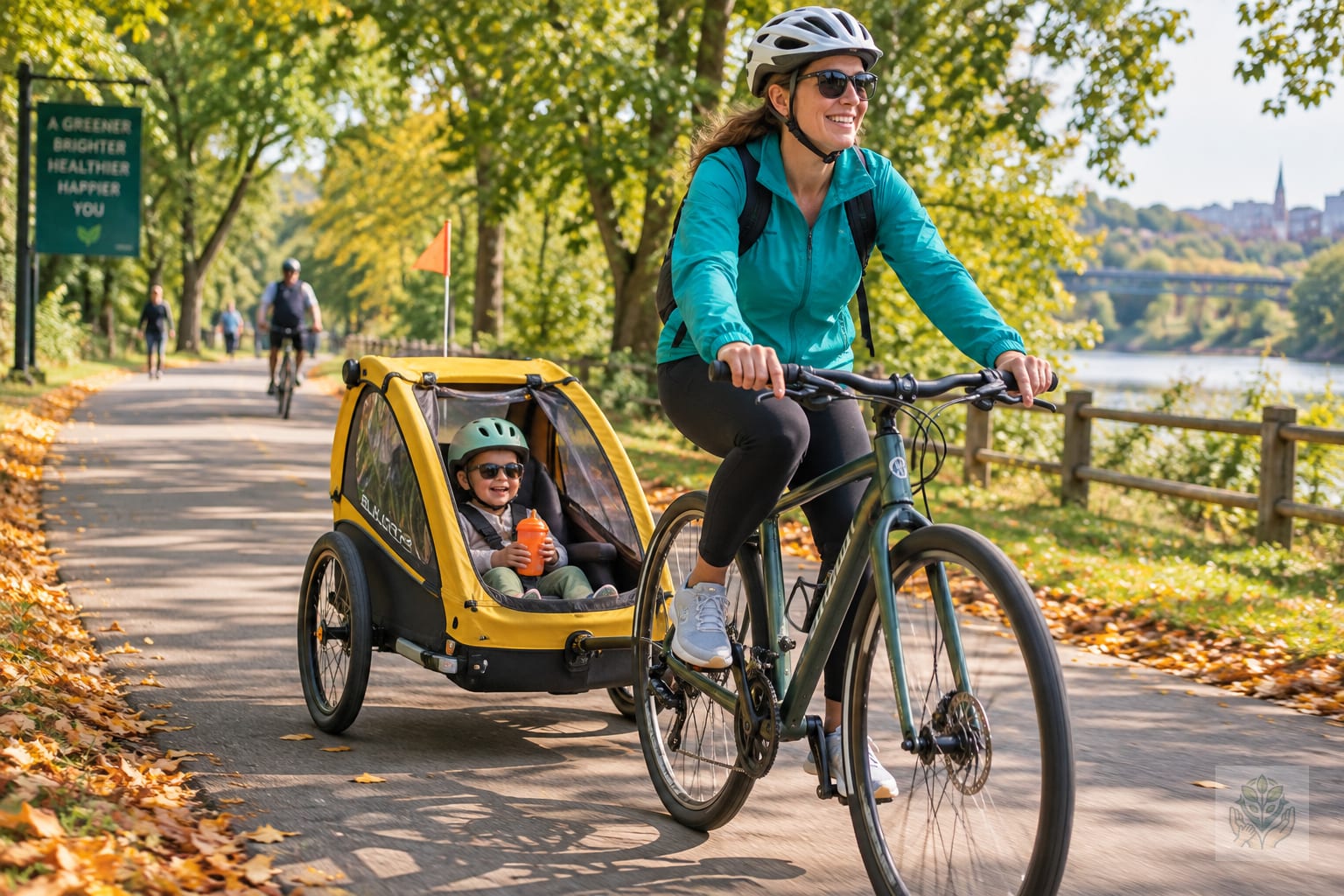
How your child travels depends on their age, weight, and your riding style. Rear-mounted and front-mounted bike seats allow for great interaction and keep you intimately connected to your child’s reactions, but they do raise your bike’s center of gravity. Bike trailers offer exceptional stability, weather protection, and ample storage space for gear, making them ideal for long rides with infants and toddlers. Cargo bikes provide a secure bucket-style front seating arrangement where you can keep a watchful eye on multiple children at once while carrying all your daily gear. For more ideas on hauling equipment, you can read our guide on the best bags and storage accessories for family bike rides.
Clothing: High-Visibility Gear and Weather-Appropriate Layers
Little passengers sitting still in a seat or trailer cool down much faster than the active adult pedaling. Dress your child in breathable, moisture-wicking layers rather than heavy cotton. Always opt for bright, high-visibility colors so drivers and other cyclists can spot you easily from a distance. For cooler days, add a windproof jacket, and always have a lightweight rain shell packed in case unexpected weather rolls in.
Comfort Essentials for Little Passengers
A comfortable child is a happy child, and a happy child means a peaceful ride for you. Because toddlers and preschoolers cannot easily adjust their positions or voice their minor discomforts immediately, you need to anticipate their needs before you set off.
Sun Protection: Kid-Friendly Sunscreen and Sunglasses
Children’s skin is exceptionally sensitive to UV rays, especially when exposed to reflective pavement and open trails. Apply a broad-spectrum, mineral-based sunscreen before heading out and bring it along for reapplication. Flexible, shatterproof children’s sunglasses with UV400 protection keep the glare out of their eyes and prevent dust or insects from flying into them while you move.
Managing Naps: Ensuring a Comfortable Head-Rest Position
The rhythmic motion of a bicycle is practically guaranteed to lull a tired toddler straight to sleep. If your child nods off in a trailer or reclining bike seat, their head can slump dangerously forward. Look for bike seats with adjustable, multi-position reclines, or invest in a supportive travel pillow designed specifically to cradle a helmeted head during unexpected roadside catnaps.
Choosing the Right Bike Seat Padding for Long Rides
Hard plastic seats can become uncomfortable over bumpy terrain and extended periods. Many child bike seats come with minimal factory padding. Adding a washable, cushioned seat liner or ensuring your trailer features a well-padded sling seat helps absorb shocks from bumps and potholes, protecting your child’s developing spine and keeping them cozy.
Packing the ‘Toddler Survival Kit’
Experienced parents know that leaving the house with a toddler requires a well-stocked diaper bag or gear pouch. When you are miles away from home on a bike trail, having the right supplies on hand is crucial.
Hydration and Bike-Friendly Snack Ideas
Physical activity and fresh air quickly work up an appetite. Pack plenty of water in an easy-to-sip bottle, even on cooler days. Choose low-choke hazards for snacks that are easy to eat while moving slowly or during quick pauses. Great options include:
- Soft fruit slices like bananas or peeled apple wedges
- Whole-grain crackers or pretzels
- Nut-free energy bites or soft granola bars
- Pouch-style applesauce or yogurt
Entertainment: Small Toys and Distraction Tips
Even the most scenic bike routes can occasionally prompt an impatient sigh from the backseat. Clip a favorite lightweight toy or teething ring to the safety harness using a pacifier strap so it cannot be dropped onto the trail. Point out interesting sights along the way, such as dogs, construction equipment, or colorful birds, to keep their minds engaged.
Essential Hygiene: Wipes, Diapers, and a Mini First-Aid Kit
Messy fingers and sticky snack residue are inevitable. Always pack a generous supply of wet wipes and hand sanitizer. If your child is still in diapers, bring a portable changing pad and disposal bags. A compact first-aid kit containing adhesive bandages, antiseptic wipes, and tweezers for rogue splinters rounds out your essential supplies.
Planning Your Route
The success of your family cycling adventure depends heavily on where you choose to ride. Picking the right path ensures a safe, relaxing experience for both you and your young children.
Finding Toddler-Friendly Trails
Leave the rugged mountain bike single-tracks and busy city streets for another day. Instead, look for dedicated multi-use greenways, paved park trails, and wide boardwalks that are completely separated from car traffic. Flat terrain is your best friend when you are pulling extra weight or carrying a child on your bike frame. For more ideas on outdoor outings, check out these 25 fun park activities for toddlers and preschoolers.
Timing the Ride
Plan your ride around your child’s natural daily rhythms. The ideal window is usually mid-morning after breakfast and before the midday heat peaks, or late afternoon following a solid nap. Avoid scheduling rides right when your child is normally prone to crankiness or hunger.
Rest Stop Strategy
Break up the ride frequently. A great strategy is to map out a route that connects point A to point B with a fun destination in the middle, such as a playground, a duck pond, or an ice cream shop. Giving your child a chance to stretch their legs and burn off energy outside of the bike seat makes the journey much more enjoyable.
Transitioning to Their Own Bike
As your child grows into their preschool years, they will likely start showing an interest in pedaling right alongside you rather than riding as a passenger.
When Is Your Preschooler Ready for a Balance Bike?
Many children can start experimenting with balance bikes as young as two years old. Balance bikes teach children how to steer and balance on two wheels without the distraction of pedals. Once they master coasting and lifting their feet with confidence, transitioning to a traditional pedal bike with training wheels or a pedal kit becomes remarkably easy. Learn more in our guide on how balance bikes help children learn cycling faster.
Safety Basics for Kids Riding Alongside Parents
When your preschooler finally joins you on their own two wheels, establish strict safety rules immediately. Teach them to always stop at intersections, stay on the right side of the path, and listen carefully to your voice commands. For neighborhood rides, consider using a tag-along bike or a tow bar system if your child gets too tired to finish the journey home under their own power. When they are ready to upgrade, you can also consult our tips on how to choose the right bicycle size for your child.
Conclusion
Embarking on bicycle adventures with your toddler or preschooler is a fantastic way to build lifelong memories and instill healthy outdoor habits. By carefully reviewing your safety gear, packing smart comfort items, and planning thoughtful, flat routes, you set the stage for countless stress-free outings. Remember to start small with short neighborhood loops before working your way up to longer weekend trail rides. Grab your helmet, pack your snacks, and enjoy the wonderful journey ahead!
FAQ
What age can a baby start riding in a bike seat?
Most pediatricians and safety experts recommend waiting until a baby is at least one year old before placing them in a child bike seat. At this age, their neck muscles are strong enough to support the weight of a properly fitted helmet and withstand the vibrations of a moving bicycle.
How do I prevent my toddler from sleeping while biking?
While you cannot completely control when a toddler falls asleep, you can minimize unplanned snoozing by timing your rides carefully around their natural nap schedule. Keep them actively engaged by pointing out sights along the way, singing songs, or offering a quick snack break if you notice their eyelids getting heavy.
Are bike trailers safer than rear-mounted seats?
Both options have distinct safety advantages. Bike trailers offer a protective roll cage, lower center of gravity, and better impact protection during a fall. Rear-mounted seats place the child closer to the parent and allow for easier communication, but they carry a slightly higher risk of injury if the adult bike tips completely over.
Frequently Asked Questions
What age can a baby start riding in a bike seat?
Most pediatricians recommend waiting until a baby is at least one year old before placing them in a child bike seat, as their neck muscles must be strong enough to support a helmet.
How do I prevent my toddler from sleeping while biking?
Time your rides around their nap schedule, keep them engaged by pointing out sights, sing songs, or take a quick break if you notice their eyelids getting heavy.
Are bike trailers safer than rear-mounted seats?
Both have advantages. Bike trailers offer a protective roll cage and lower center of gravity, while rear-mounted seats allow for closer communication with the parent.
What kind of helmet should my toddler wear?
Choose a certified helmet with a CPSC rating that fits securely, sitting two finger-widths above the eyebrows with a snug V-shape under the ears.
What are the best snacks to bring on a family bike ride?
Pack low-choke hazards like soft fruit slices, whole-grain crackers, energy bites, or pouch-style applesauce that are easy to eat during quick pauses.
When can a child transition to a balance bike?
Many children can start using a balance bike as young as two years old to learn steering and balancing before moving on to a traditional pedal bike.


