

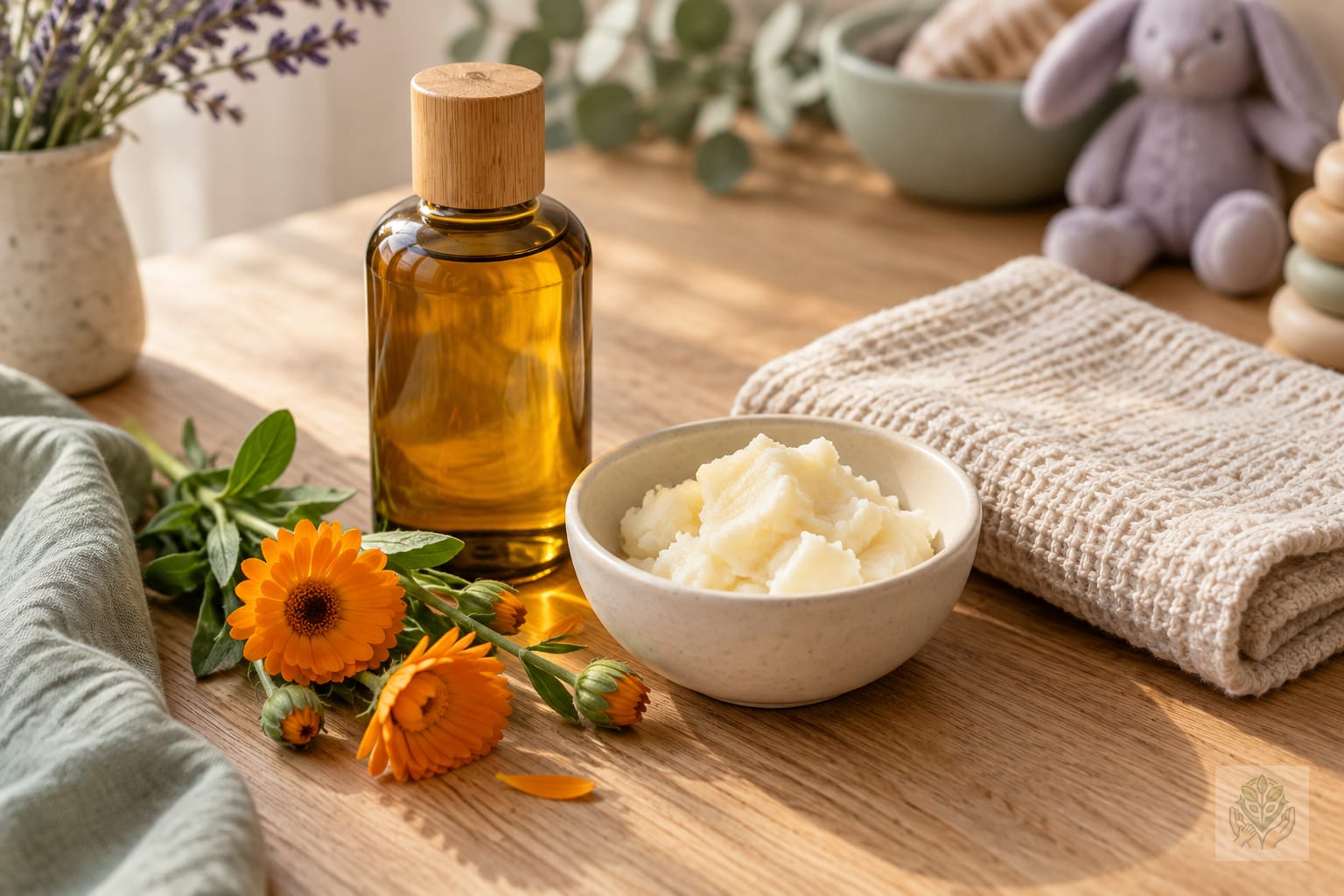
Natural Baby Skin Care: The Ultimate Guide to Soft and Healthy Skin
Welcoming a new baby into the world is an incredible journey filled with wonder, but it also brings a steep learning curve. One of the first things you will notice is just how soft and delicate your baby’s skin is. Newborn skin is significantly thinner than adult skin, making it highly permeable and easily affected by environmental factors. Because of this sensitivity, many parents are shifting toward natural baby skin care to ensure their little ones are not exposed to unnecessary chemicals.
In this guide, we will explore the essentials of maintaining healthy infant skin. We will cover why less is often more, which ingredients provide the best protection, and how to simplify your routine to keep your baby comfortable and happy.
Understanding Your Baby’s Skin vs. Adult Skin
To provide the best care, it helps to understand what makes infant skin unique. Baby skin is thinner, has a higher absorption rate, and is still developing its moisture barrier. This means that whatever you apply to your baby’s skin can be absorbed into their system much more quickly than it would be for an adult. To learn more about safely handling your infant, check out our guide on how to hold a newborn baby safely and comfortably.
The philosophy of natural baby skin care centers on the idea that simple is best. Many conventional products are packed with synthetic fragrances, preservatives, and dyes. These additives can disrupt the natural pH of a baby’s skin, leading to dryness, irritation, or allergic reactions. By choosing natural, plant-based alternatives, you reduce the risk of irritation and support the skin’s natural ability to hydrate and protect itself.
The Risk of Hidden Toxins
Many mainstream baby lotions and washes contain hidden toxins that can be problematic for infants. Fragrances, while pleasant to the nose, are the most common cause of contact dermatitis in children. When shopping for products, look past the colorful packaging and focus on the ingredient list. If you cannot pronounce the ingredients, or if the list is excessively long, it is often a sign that you should look for a cleaner, more natural alternative. For product recommendations, you may find our curated selection of the best baby lotions for soft and healthy skin helpful.
Top Natural Ingredients Safe for Baby Skin
When curating your diaper bag and nursery supplies, prioritize ingredients that are gentle and effective. Nature provides powerful emollients that can soothe and heal even the most sensitive skin.
- Coconut oil: An excellent natural moisturizer that also offers mild antimicrobial properties, making it great for general skin health.
- Shea butter: Known for its deep hydrating capabilities, it is perfect for treating stubborn dry or flaky patches on your baby’s arms and legs.
- Colloidal oatmeal: If your baby suffers from flare-ups, a warm bath with colloidal oatmeal can provide instant relief from itching and inflammation.
- Chamomile and calendula: These botanical extracts are legendary for their ability to calm redness, soothe minor rashes, and comfort delicate tissue.
Essential Natural Baby Bath Routine Tips
While you might be tempted to bathe your baby every single day, newborn skin often thrives with fewer baths. Over-bathing can strip away the natural oils that your baby’s skin needs to stay hydrated. For a complete walkthrough of bath time best practices, read our step-by-step baby bath routine for beginners.
For most newborns, two to three baths a week are sufficient. When it is bath time, ensure the water is lukewarm—test it with your inner wrist to ensure it is not too hot. Always use fragrance-free, plant-based cleansers, or skip the soap altogether for the first few months, using only warm water. After the bath, gently pat your baby dry rather than rubbing, as friction can easily irritate the skin.
Natural Solutions for Common Baby Skin Issues
Even with the best care, skin issues like rashes and acne can occur. Fortunately, there are many natural baby skin care solutions that avoid harsh pharmaceuticals.
For diaper rash, focus on keeping the area clean and dry. Instead of heavy chemical-laden creams, opt for natural barriers like organic coconut oil or zinc oxide balms without synthetic fragrances. You can also explore our expert review on the best disposable diapers for sensitive baby skin to prevent irritation. For baby acne or cradle cap, a light application of olive oil can help soften the flakes. Simply massage the oil into the scalp, let it sit for a few minutes, and gently brush away the scales with a soft baby brush.
Ingredients to Avoid in Baby Products
Knowing what to avoid is just as important as knowing what to use. Become a pro at reading labels by keeping an eye out for these common offenders:
- Parabens and phthalates: These are known endocrine disruptors that have no place in infant care.
- Synthetic fragrances: Often hidden under the term ‘parfum,’ these are a primary trigger for skin sensitivities.
- Sulfates (SLS/SLES): These foaming agents can strip away essential oils, leaving skin dry and vulnerable.
- Artificial dyes: Often used for aesthetics, these can cause unnecessary contact allergies.
Conclusion
Caring for your baby’s skin does not have to be a complicated or expensive endeavor. By adhering to the principles of natural baby skin care—choosing clean ingredients, keeping routines simple, and being mindful of what you put on your baby’s body—you are setting them up for long-term skin health. To ensure every part of your baby’s environment is safe and nurturing, take a look at our guide on how to create a safe and comfortable nursery for your baby. Trust your instincts as a parent, and remember that when it comes to your little one, nature often knows best. If you have a favorite natural remedy or a go-to safe product, we would love to hear from you in the comments below!
Frequently Asked Questions
How often should I bathe my newborn?
For most newborns, two to three baths a week are sufficient. Over-bathing can strip away the natural oils that your baby’s skin needs to stay hydrated.
What are the best natural ingredients for baby skin?
Coconut oil, shea butter, colloidal oatmeal, and chamomile or calendula extracts are excellent natural options for soothing and moisturizing infant skin.
Why should I avoid synthetic fragrances in baby products?
Synthetic fragrances are the most common cause of contact dermatitis and skin irritation in children, disrupting the natural pH of their delicate skin.
How can I naturally treat diaper rash?
Keep the area clean and dry, and use natural barriers like organic coconut oil or chemical-free zinc oxide balms instead of heavy, fragrance-laden creams.
What ingredients should I avoid in baby lotions?
Always check labels to avoid parabens, phthalates, synthetic fragrances, sulfates like SLS, and artificial dyes, as these can cause severe skin sensitivities.
How do I manage cradle cap naturally?
A light application of olive oil can help soften the flakes. Massage the oil into the scalp, let it sit for a few minutes, and gently brush away the scales.