

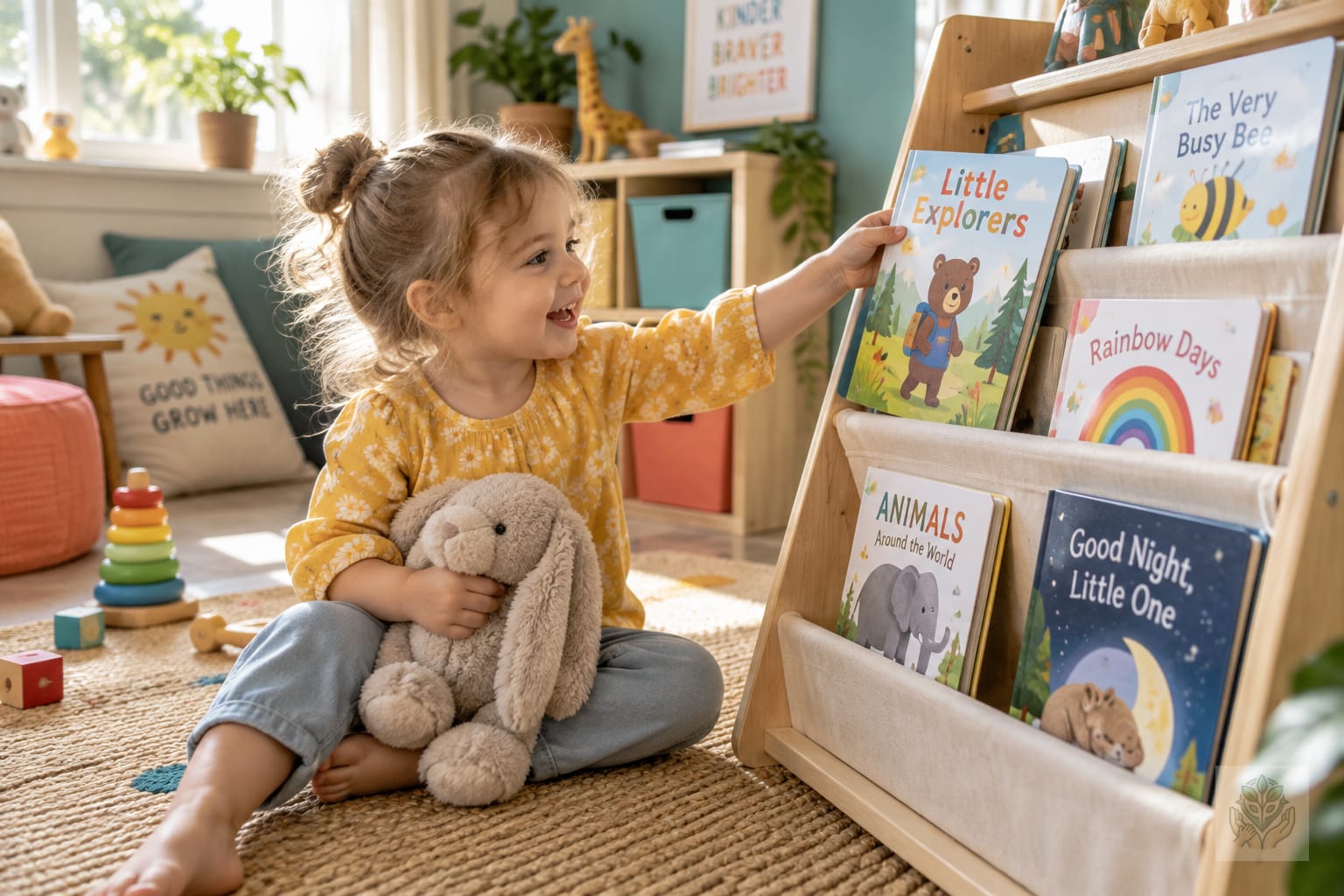
15 Creative Book Storage Ideas for Toddlers to Tame the Toy Room Chaos
Introduction
If you live with a toddler or preschooler, you likely know the daily chaos of finding board books scattered under the couch, stuffed between cushions, or piled into precarious towers. Keeping children’s literature organized can feel like an uphill battle. Just when you sort the shelf, a whirlwind of little hands pulls every storybook back out onto the floor.
However, implementing the right book storage ideas for toddlers changes everything. When stories are displayed thoughtfully, they transform from clutter into an invitation. Accessible storage supports early literacy development and fosters independence, allowing young children to choose their own adventures and learn how to tidy up afterward.
In this guide, we explore fifteen creative, functional, and adorable ways to organize children’s books. Whether you need a space-saving small room hack, a budget-friendly DIY project, or a Montessori-inspired display, these strategies will help you create a cozy reading oasis at home. For more inspiration on setting up children’s spaces, check out our guide on 25 beautiful kids’ room decoration ideas to transform their space.
Why Traditional Bookshelves Don’t Always Work for Toddlers
Standard tall bookshelves look lovely in adult rooms, but they often fail toddlers and preschoolers. When books are packed tightly with only their spines showing, pre-readers cannot tell what is inside. To a two-year-old, a spine is just a random colored strip, making it difficult to find a favorite bedtime story independently.
This is where the Montessori approach shines. Front-facing book storage displays covers outwardly, acting as visual cues. When children see vibrant illustrations staring back at them, they feel instantly drawn to the literature. This visual accessibility sparks curiosity, encourages autonomy, and builds early reading habits naturally.
Of course, safety always comes first. Young climbers love to scale furniture, so remember to anchor all heavy shelving units securely to the wall. Choose child-friendly materials with rounded edges and non-toxic finishes to ensure your little bookworm explores safely. You can find more childproofing tips in our ultimate child proofing guide.
Top 5 Low-Profile & Front-Facing Book Storage Ideas
Front-facing displays are the gold standard for early childhood education. Here are five low-profile solutions that put covers front and center.
1. Sling Bookshelves: Soft Pockets for Easy Browsing
Sling bookshelves use fabric pockets to hold books upright at a child-friendly height. The canvas or cotton slots make it effortless for little hands to slide volumes in and out without tearing the pages.
2. Low Ledge Bookshelves: Utilizing Wall Space at Child Height
Installing shallow wooden ledges low on the wall creates a beautiful gallery effect. Children can easily see every cover and grab their preferred story without adult assistance.
3. Forward-Facing Floor Baskets: Perfect for Mobile Toddlers
If you prefer furniture that can move around, wide and shallow floor baskets work wonders. Toss board books inside facing outward so your toddler can flip through them just like records in a bin.
4. Repurposed Spice Racks: Budget-Friendly Wall Ledges
Wooden spice racks mounted upside down or right-side up make fantastic miniature bookshelves. They take up minimal wall space and hold a handful of bedtime favorites perfectly.
5. Picture Ledges: Sleek, Modern, and Space-Saving
Picture ledges designed for art frames double as wonderful book displays. Their narrow lips keep volumes secure while maintaining a clean, modern aesthetic in a shared family room.
Clever Small-Space Book Storage Solutions
Working with a compact nursery or a shared bedroom? These clever space-saving hacks maximize every square inch.
6. Rolling Book Carts: Mobile Libraries You Can Move from Room to Room
A multi-tiered metal utility cart makes an incredible portable library. You can wheel your child’s favorite reads from the playroom to the living room and tuck it away into a closet corner when playtime ends.
7. Under-Bed Storage Bins: Maximizing Hidden Space
Low-profile rolling plastic bins or wooden pull-out drawers slide easily underneath a toddler bed. This keeps overflow literature organized and out of sight without sacrificing valuable floor space. For more ways to optimize your layout, take a look at these 25 smart storage ideas for baby and toddler rooms.
8. Over-the-Door Organizers: Utilizing Unused Vertical Space
Clear plastic over-the-door shoe organizers are brilliant for holding lightweight paperback books and board books. Each pocket holds one or two items visibly, making clean-up a fun matching game.
9. Corner Bookshelves: Turning Awkward Angles into Cozy Reading Corners
Unused corners often become dead space. Installing a wedge-shaped corner shelf turns that awkward architectural angle into a charming mini-library nook.
Functional Furniture with Built-In Book Storage
Multipurpose furniture is a parent’s best friend. These options combine comfortable seating with clever literary organization.
10. Storage Ottoman or Bench: Seating Meets Book Organization
A padded storage bench at the foot of the bed or in the living room provides a cozy spot to sit and read together while hiding a massive cache of stories inside.
11. Cube Storage Organizers with Bins: Versatile and Customizable
Cube shelves are classroom staples for a reason. Use some cubes for forward-facing book displays and others with fabric bins for puzzle storage or chunky stuffed animals. If you are setting up a dedicated learning area, you might also enjoy our guide on open-ended Montessori toys every child should try.
12. Reading Nook Tents and Canopies with Integrated Pockets
Many indoor play tents and reading canopies now feature built-in mesh or fabric side pockets. These pockets are ideal for stashing two or three bedtime stories right where your child cuddles up.
DIY & Budget-Friendly Book Storage Hacks
You do not need to spend a fortune to upgrade your child’s reading space. Try these creative, wallet-friendly DIY ideas.
13. Cereal Box Magazine Holders: Upcycling for Organization
Cut standard cereal boxes diagonally to create sturdy magazine holders. Let your child decorate them with stickers or colorful paper before lining them up on a shelf.
14. Plastic Crate Stacking: Colorful and Sturdy Storage
Plastic milk crates zip-tied or secured together form a rugged, customizable shelving unit. Turn them on their sides so children can pull books right out of the openings.
15. Rain Gutter Bookshelves: Industrial and Ultra-Budget-Friendly
Vinyl rain gutters cut to custom lengths and mounted to the wall make surprisingly sleek, deep book ledges. Add colorful end caps to keep everything secure and visually appealing.
Tips for Maintaining Your Child’s Book Organization
Setting up the storage is only half the battle. Maintaining your child’s book organization requires a few simple, consistent habits:
- Rotate books seasonally: Keep a batch of stories stored away in a closet and swap them out every few months. This keeps reading fresh and exciting.
- Involve your toddler: Turn clean-up time into a game by asking your toddler to put all the blue books away or tuck the animal stories into their special basket. For more engaging learning ideas, explore our collection of free alphabet printable worksheets for preschoolers.
- Declutter regularly: Periodically remove ripped, chewed, or outgrown board books to make room for new developmental milestones.
Conclusion
Creating an inviting literary environment does not require an interior design degree or a massive budget. By utilizing clever book storage ideas for toddlers, you can transform cluttered piles into an accessible, beautiful invitation to read. Whether you choose a Montessori sling shelf or a DIY rain gutter ledge, your efforts will pay off.
Ultimately, making books visible and accessible empowers your child to take ownership of their learning journey. When reading is easy, fun, and woven into the fabric of daily play, you plant the seeds for a lifelong love of literature. Take a look around your home today and try implementing just one of these creative storage solutions to see how your child responds. To learn more about curating titles for this age group, read our complete guide on how to build a home library for young children.
Which of these book storage ideas is your favorite? Do you have a clever organization hack that works wonders in your home? Share your thoughts and tips in the comments below!
Frequently Asked Questions
Why are front-facing bookshelves better for toddlers?
Front-facing bookshelves display book covers outwardly, serving as visual cues. This helps pre-readers easily identify their favorite stories, fosters independence, and sparks curiosity compared to traditional spines.
How can I organize books in a small toddler room?
For small spaces, utilize vertical wall storage like picture ledges or upside-down spice racks. Over-the-door shoe organizers, rolling carts, and under-bed storage bins are also fantastic space-saving hacks.
Are Montessori book shelves safe for toddlers?
Yes, Montessori bookshelves are generally low to the ground, making them safe and accessible. However, always anchor heavy shelving units securely to the wall to prevent tipping.
How do I keep my toddler’s books from getting cluttered?
Rotate books seasonally by storing a batch away and swapping them out every few months. Involve your child in clean-up games and declutter ripped or outgrown books regularly.
What are some budget-friendly DIY book storage ideas?
You can make affordable book ledges using inexpensive vinyl rain gutters, upcycle cereal boxes into decorated magazine holders, or use stackable plastic crates turned on their sides.
At what age should I start encouraging independent reading habits?
You can introduce accessible, low-profile book storage as soon as your child begins walking and exploring independently, typically around 12 to 18 months of age.