

Sports Equipment for Toddlers and Preschoolers: A Parent’s Guide to Active Play
As parents, we all want our children to grow up strong, healthy, and full of confidence. One of the most effective ways to encourage this is by introducing young children to physical play early on. Investing in the right sports equipment for toddlers and preschoolers can transform your backyard or living room into a fun arena of growth and discovery. You do not need expensive training programs or rigid schedules; you simply need the right tools to spark your child’s natural enthusiasm for movement.
Why Early Introduction to Sports Matters for Toddlers and Preschoolers
Physical play during the early years is much more than just a way to burn off extra energy. There is a deep, proven connection between early physical activity and gross motor skill development. When children run, jump, kick, and throw, they build crucial neural pathways that improve overall brain function and physical agility.
Using age-appropriate sports equipment helps children develop fundamental movement skills like coordination, balance, and spatial awareness. Beyond the physical benefits, mastering a new physical skill boosts a child’s self-esteem and confidence. They learn that with practice, they can achieve their goals. You can also explore indoor activities that build gross motor skills for toddlers & kids to keep them active year-round.
When introducing sports to very young children, it is essential to set realistic expectations. At this stage, the primary focus should always be on fun, exploration, and play, rather than competition or scoring. Letting children explore at their own pace ensures they develop a positive lifelong association with physical fitness.
Choosing the Right Sports Gear by Age (Toddlers vs. Preschoolers)
Children develop at an astonishing rate during their first five years. What fascinates a one-year-old will likely bore a four-year-old, which is why matching gear to developmental milestones is so important. Refer to our complete guide to choosing age-wise toys for kids for more developmental insights.
For toddlers ages one to three, the focus should be on grasping, kicking, throwing larger objects, and building basic balance. Soft, oversized balls and low-to-the-ground equipment work best for this age group.
Preschoolers ages three to five are ready for slightly more structured play. They can begin to understand basic aim, catching mechanics, and pedaling. Their attention spans are growing, allowing for longer play sessions with interactive toys.
Safety must always come first when selecting children’s sports gear. Look for products made from durable, non-toxic plastics, and prioritize soft foam alternatives for indoor use to prevent accidental bumps and bruises.
The Must-Have Sports Equipment for Little Athletes
Equipping your home with versatile gear does not require breaking the bank. Here are the top categories of sports equipment for toddlers and preschoolers that offer maximum engagement and developmental benefits.
1. Soccer Goals and Soft Soccer Balls
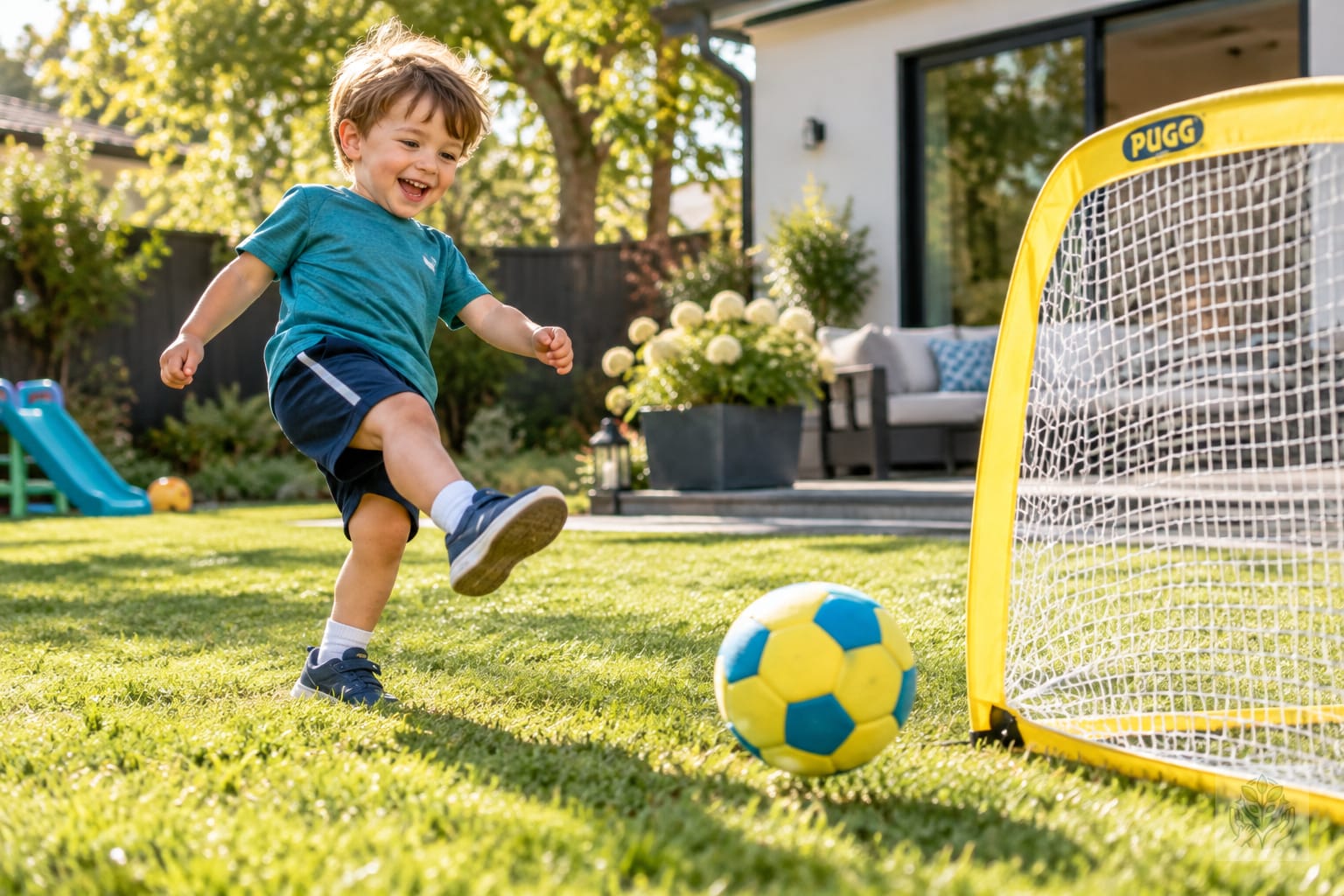
Soccer is widely considered the easiest sport for young children to start with because the rules are simple and the mechanics mimic natural running and kicking. Pop-up goals are lightweight, easy to assemble, and take up very little storage space. Paired with a soft foam soccer ball, toddlers can practice kicking without the fear of getting hurt or breaking household items.
2. Adjustable Basketball Hoops
Basketball is fantastic for building hand-eye coordination and vertical jump. Miniature hoops that feature adjustable heights are a smart investment because they literally grow with your child. You can lower the rim for a toddler learning to drop the ball through the net and raise it as your preschooler develops a proper shot.
3. T-Ball Sets
T-ball sets serve as the ultimate foundation for baseball and softball. Striking a stationary ball off a tee teaches children timing, hand-eye coordination, and proper grip. Look for sets that include oversized, lightweight plastic bats and soft, large balls to ensure safety while your little slugger practices their swing.
4. Balance Bikes and Scooters
Before moving on to a traditional pedal bike, balance bikes and three-wheeled scooters are incredible tools for mastering spatial awareness and equilibrium. Balance bikes allow toddlers to push themselves along with their feet, naturally learning how to balance on two wheels without the distraction of training wheels. Learn more in our guide on how balance bikes help children learn cycling faster.
5. Junior Tennis or Badminton Rackets
Racket sports help children learn how to track moving objects in the air. Junior rackets featuring oversized heads and lightweight frames make it much easier for young children to make contact. Pair them with large, soft foam balls or giant shuttlecocks for frustration-free backyard rallies.
Best Sports Toys for Rainy Days and Small Spaces
Bad weather or limited outdoor space should never stop your child from staying active. Having a few indoor-friendly options ensures your kids can burn energy year-round. Check out fun music and movement games for toddlers to burn energy when you need more indoor ideas.
Inflatable sports balls and soft foam bowling sets are gentle on indoor flooring and walls while providing hours of active indoor fun. Over-the-door mini basketball hoops turn any bedroom or playroom into an instant court without taking up valuable floor space.
You can also incorporate balancing beams and foam stepping stones to create indoor obstacle courses. These items promote core strength, agility, and balance while keeping play safe and engaging.
What to Look for When Buying Toddler Sports Gear
When shopping for sports equipment for toddlers and preschoolers, keep a few key purchasing factors in mind to ensure you get the best value and safety. You can consult the age-wise toy buying checklist for parents for additional toy selection tips.
- Durability: Choose weather-resistant materials that can withstand being left outside and the rough, enthusiastic play of young children.
- Portability: Look for lightweight, collapsible, or modular designs that you can easily pack up for a trip to the park or store away in a closet.
- Safety Certifications: Ensure products meet or exceed local safety standards, feature smooth rounded edges, and are clearly labeled for your child’s specific age group.
Fostering a Lifelong Love for Movement
Introducing your child to active play through fun sports equipment for toddlers and preschoolers sets the stage for a healthy, vibrant future. By keeping sports playful, low-pressure, and centered around exploration, you help your child associate physical activity with joy and excitement. For outdoor adventures beyond the backyard, read our guide on fun park activities for toddlers and preschoolers.
What is your child’s absolute favorite piece of sports gear to play with? We would love to hear your stories and ideas in the comments below!
Frequently Asked Questions
What is the best age to introduce sports equipment to children?
You can introduce soft, oversized sports equipment like foam balls and low hoops to toddlers around ages one to two. The focus should always be on fun and exploration rather than structured rules.
How do sports help in toddler development?
Early physical activity builds gross motor skills, improves balance, enhances spatial awareness, and strengthens neural pathways that support overall brain function and confidence.
Are balance bikes safe for toddlers?
Yes, balance bikes are very safe and excellent for toddlers. They allow children to use their feet to propel and stop themselves, naturally learning balance without needing training wheels.
What indoor sports equipment is best for small spaces?
Over-the-door mini basketball hoops, soft foam bowling sets, and modular foam stepping stones are fantastic, space-saving options for active indoor play on rainy days.
What should I look for when buying sports gear for preschoolers?
Look for durability, non-toxic materials, safety certifications, weather resistance, portability, and lightweight designs with smooth, rounded edges tailored to your child’s age.
How can I keep sports fun for young children?
Keep activities low-pressure, avoid strict competition, and let children explore at their own pace. Praise their effort rather than the outcome to build positive associations with fitness.