

Parenting is one of the most rewarding yet challenging responsibilities in life. Every parent wants to raise happy, confident, and responsible children, but finding the right approach can often feel overwhelming. Positive parenting has emerged as one of the most effective parenting styles because it focuses on building strong relationships, encouraging good behavior, and fostering emotional well-being rather than relying on punishment or fear. Supported by child development experts and psychologists, positive parenting techniques help children develop self-discipline, confidence, and healthy social skills that last a lifetime.
One of the most important principles of positive parenting is creating a strong emotional connection with your child. Experts agree that children thrive when they feel loved, valued, and understood. Spending quality time together, listening attentively, and showing genuine interest in their thoughts and feelings can strengthen the parent-child bond. Even simple activities such as reading a book, playing a game, or having a conversation about their day can help children feel emotionally secure and supported.
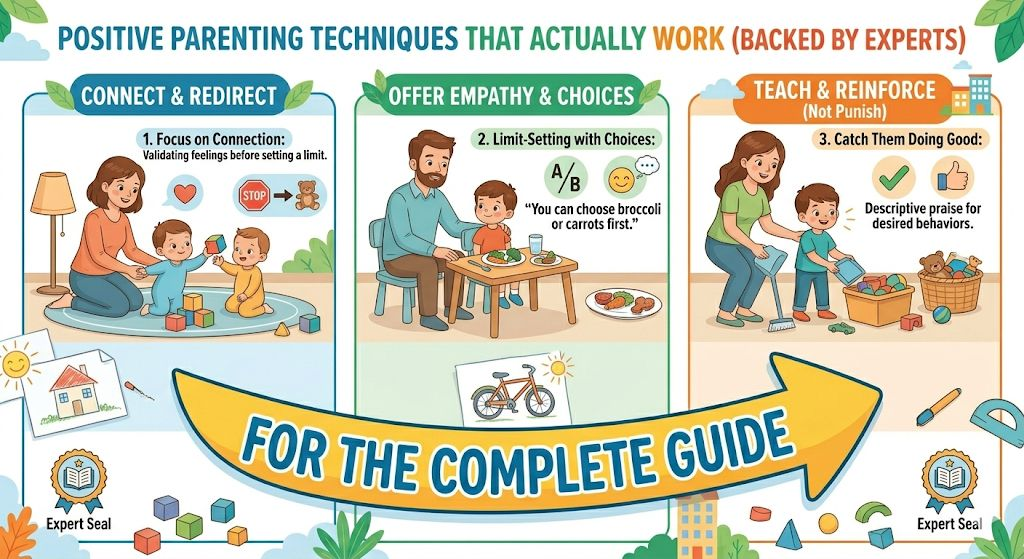
Another highly effective technique is focusing on positive reinforcement. Instead of constantly pointing out mistakes, parents should acknowledge and praise good behavior. When children receive recognition for their efforts and achievements, they are more likely to repeat those behaviors. For example, saying, “I’m proud of how you shared your toys today,” is more effective than only correcting negative actions. Positive reinforcement boosts self-esteem and motivates children to make better choices.
Setting clear and consistent boundaries is also essential in positive parenting. Children need structure and predictable rules to feel safe and understand expectations. Experts recommend establishing age-appropriate rules and explaining the reasons behind them. Consistency helps children learn responsibility and understand the consequences of their actions. Rather than using harsh punishments, positive parenting encourages logical consequences that are related to the behavior. This approach helps children learn valuable lessons while maintaining respect and trust.
Effective communication plays a key role in successful parenting. Experts emphasize the importance of speaking to children with respect and empathy. Instead of dismissing their feelings, parents should acknowledge emotions and help children express themselves appropriately. For instance, if a child is upset, saying, “I understand you’re feeling frustrated right now,” can help them feel heard and understood. This practice teaches emotional intelligence and encourages healthy communication skills.
Modeling positive behavior is another technique strongly supported by child development specialists. Children learn by observing the adults around them. Parents who demonstrate kindness, patience, honesty, and respect are more likely to see those same qualities reflected in their children. Actions often have a greater impact than words, making it important for parents to lead by example in everyday situations.
Encouraging independence is equally important for a child’s growth and confidence. Positive parenting involves allowing children to make age-appropriate choices and solve problems on their own whenever possible. Giving children opportunities to take responsibility for simple tasks helps build decision-making skills, resilience, and self-confidence. Experts believe that children who are encouraged to think independently are better prepared to face challenges as they grow older.
Finally, maintaining patience and managing parental stress are essential components of positive parenting. No parent is perfect, and difficult moments are inevitable. Experts recommend staying calm during conflicts and viewing mistakes as opportunities for learning rather than reasons for punishment. A patient and supportive approach helps children feel secure and teaches them healthy ways to handle challenges and emotions.
In conclusion, positive parenting is not about being permissive or avoiding discipline; it is about guiding children with respect, empathy, and consistency. Techniques such as building strong emotional connections, using positive reinforcement, setting clear boundaries, communicating effectively, modeling good behavior, encouraging independence, and practicing patience have been proven to support healthy child development. By applying these expert-backed strategies, parents can create a nurturing environment that helps children grow into confident, responsible, and emotionally healthy individuals.