

Parenting is a journey filled with love, sacrifices, and the desire to give children the best possible future. In India, parenting is often influenced by cultural values, family traditions, and societal expectations. While these factors can provide strong support systems, they can also lead to certain parenting mistakes that may unintentionally affect a child’s confidence, emotional well-being, and overall development. The good news is that recognizing these mistakes is the first step toward becoming a more effective and supportive parent.
One of the most common parenting mistakes Indian parents make is comparing their children with others. Whether it’s comparing grades, sports performance, or behavior, many children hear statements like, “Look at how well your cousin is doing.” While parents may believe this motivates their child, experts suggest that constant comparisons can damage self-esteem and create feelings of inadequacy. Instead of comparing children to others, parents should focus on their child’s individual strengths, celebrate progress, and encourage personal growth.
Another common issue is placing excessive emphasis on academic performance. Education is undoubtedly important, but many Indian parents unintentionally create pressure by equating success solely with high marks and prestigious careers. This can lead to stress, anxiety, and fear of failure. To fix this, parents should recognize and appreciate other talents such as creativity, communication skills, sports, leadership, and problem-solving abilities. Encouraging a balanced approach to learning helps children develop confidence and a broader perspective on success.
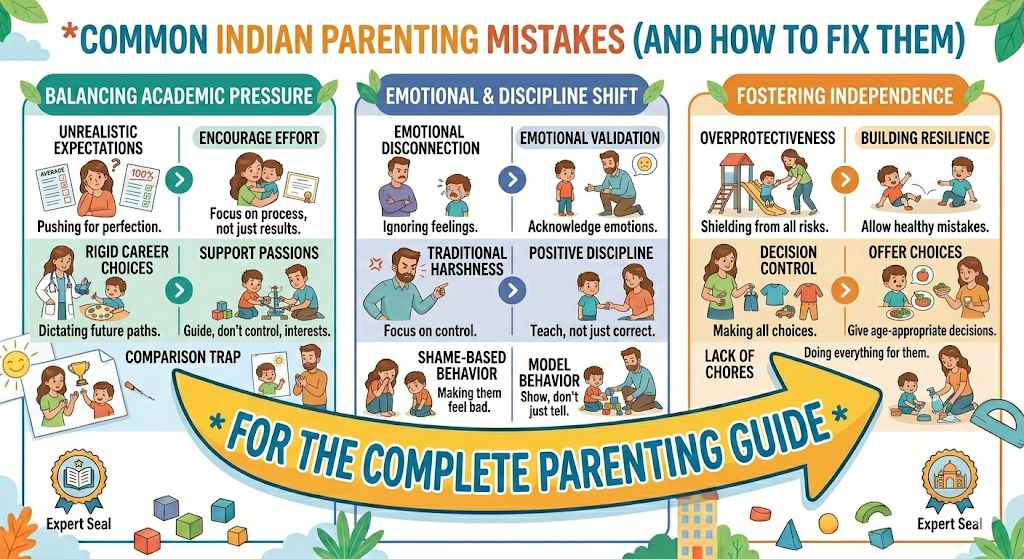
Many parents also tend to make decisions on behalf of their children without considering their opinions. While guidance is necessary, constantly controlling choices can limit a child’s ability to think independently. Whether it’s choosing hobbies, subjects, or career paths, children benefit from having a voice in decisions that affect their lives. Parents can support independence by listening to their children’s interests, discussing options, and involving them in age-appropriate decision-making.
Overprotective parenting is another common challenge. Out of concern for safety and success, some parents try to shield their children from every difficulty or failure. However, experts believe that facing challenges is an important part of learning and personal growth. Children develop resilience, problem-solving skills, and confidence when they are allowed to make mistakes and learn from them. Parents should provide support while giving children opportunities to handle situations independently.
Communication gaps can also create problems within families. In many Indian households, children may hesitate to express their feelings due to fear of criticism or punishment. When children do not feel heard, they may become withdrawn or reluctant to share important concerns. Parents can improve communication by actively listening, avoiding judgment, and creating a safe environment where children feel comfortable discussing their thoughts and emotions.
Another mistake is relying heavily on punishment rather than guidance. Strict discipline and frequent scolding may result in temporary obedience, but they often fail to teach long-term responsibility. Positive discipline techniques, such as explaining consequences, setting clear expectations, and encouraging problem-solving, are generally more effective. Children respond better when they understand the reasons behind rules rather than simply fearing punishment.
Many Indian parents also underestimate the importance of mental and emotional well-being. While physical health and academics often receive attention, emotional health can sometimes be overlooked. Children experience stress, anxiety, and emotional challenges just like adults. Parents should encourage open conversations about feelings, provide emotional support, and seek professional help when necessary.
In conclusion, parenting mistakes are common and do not make anyone a bad parent. What matters most is the willingness to learn and adapt. By avoiding comparisons, reducing academic pressure, encouraging independence, improving communication, allowing children to learn from mistakes, and focusing on emotional well-being, Indian parents can create a healthier and more supportive environment for their children. Small changes in parenting approaches can have a lasting positive impact, helping children grow into confident, capable, and emotionally resilient individuals.