

“`html
Mastering the Baby Bath Routine: A Step-by-Step Guide for New Parents
Introduction
Bringing home a newborn fills your heart with immense joy, but let us be honest for a moment—it also brings a wave of nervous anticipation. When it comes to the baby bath routine, many first-time parents feel a sudden spike of anxiety. Will the water be too hot? How do I hold a slippery baby? Take a deep breath because you are not alone in feeling this way. Every experienced parent once stood right where you are standing, clutching a tiny washcloth with shaking hands.
Establishing a consistent routine plays a vital role in your baby’s early development. Beyond simply getting clean, a predictable evening or morning sequence signals security and comfort to an infant. Warm water mimics the cozy environment of the womb, while gentle skin-to-skin contact releases oxytocin for both you and your child. This daily or semi-weekly ritual transforms into a powerful sensory anchor that promotes better sleep patterns.
When setting your expectations, remember that newborns do not need a full immersion bath every single day. In fact, bathing an infant two to three times a week is more than enough to keep them clean without stripping their delicate skin of natural oils. Between bath days, simple sponge baths around the face, neck creases, and diaper area will do the trick.
Preparation: The ‘Before-You-Start’ Checklist
Success during any newborn bath time relies entirely on preparation. You never want to find yourself halfway through washing a slippery infant only to realize you forgot the towel in the other room. Gathering your supplies ahead of time ensures a calm, uninterrupted experience for everyone involved.
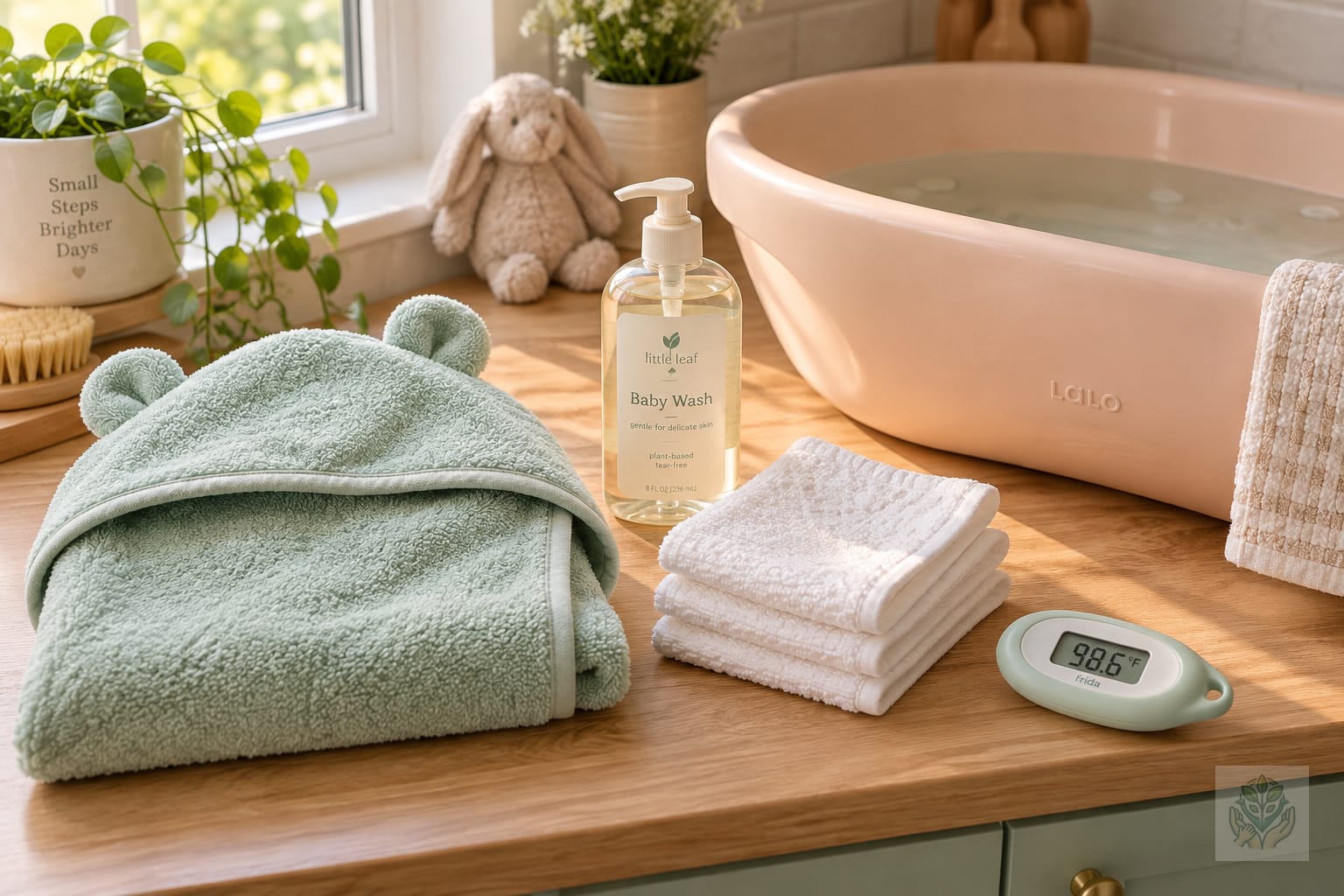
When looking at essential supplies, keep things simple. You do not need twenty different gadgets. Focus on a reliable baby bathtub, a gentle and fragrance-free baby wash, a soft hooded towel, and a few cotton washcloths. Keeping these items within arm reach before you even fill the tub is the ultimate parenting hack.
Next, focus on the environment. The room should feel comfortably warm, around 75 degrees Fahrenheit, so your baby does not get chilled when undressed. Always check the water temperature using a bath thermometer or the inside of your wrist. The water should feel comfortably warm, never hot, ideally hovering right around 100 degrees Fahrenheit or 38 degrees Celsius.
Above all else, remember the golden rule of water safety: never, ever leave your baby unattended, even for a single second. If the doorbell rings or you forget something, you must scoop your baby up in a towel and take them with you.
Step-by-Step Baby Bath Routine
Once your preparation checklist is complete, you are ready to dive into the actual washing process. Follow this simple newborn bathing guide to keep things smooth, safe, and soothing.
Step 1: Preparing the bathing area and supplies
Fill the infant tub with just two to three inches of warm water. Test the temperature meticulously. Lay your hooded towel flat nearby and place an open diaper and fresh outfit right next to it so you can dress your baby quickly afterward.
Step 2: Undressing and soothing your baby
Undress your baby slowly, talking to them in a soft, reassuring voice. If your baby gets startled by the sudden cool air, wrap them loosely in the towel while you lower them gently into the water, uncovering only the parts of the body you are currently washing.
Step 3: The proper grip (the football hold/support technique)
Slide your non-dominant arm underneath your baby’s back, supporting their neck and head firmly in the crook of your elbow. Use your hand from that same arm to securely grip their upper arm or shoulder. This leaves your dominant hand free to wash. You can learn more about proper positioning in our guide on how to hold a newborn baby safely and comfortably.
Step 4: Washing from head to toe (eyes, face, body, and diaper area)
Dip a clean washcloth in plain warm water with no soap. Gently wipe each eye from the inside corner outward, using a fresh part of the cloth for each eye. Next, wipe the rest of the face and outer ears. Apply a tiny drop of mild baby wash to your hand or a washcloth, then gently wash the body, saving the diaper area for the very last step.
Step 5: The delicate umbilical cord stump care
If your baby’s umbilical cord stump has not fallen off yet, you should stick to sponge baths. If you are giving a shallow tub bath, simply ensure the water level stays below the belly button. Pat the stump dry gently afterward and keep it exposed to air so it can heal naturally.
Step 6: Drying off and moisturizing
Lift your baby out of the water using a firm grip, and immediately wrap them in the hooded towel. Pat them dry rather than rubbing, paying special attention to skin folds in the neck, thighs, and armpits. If your baby has dry skin, apply a gentle, hypoallergenic baby lotion to lock in moisture.
Expert Tips for Calm and Happy Bath Time
Even with perfect preparation, your baby might occasionally express displeasure with the bath. Incorporating a few expert strategies can turn a fussy session into a peaceful bonding experience.
Singing songs, humming, or narrating what you are doing builds wonderful auditory connections. Your voice is your baby’s favorite sound, and it acts as an immediate soothing agent when they feel unsure about the water.
If your baby starts crying, pause and assess the situation. Are they cold? Is water splashing in their eyes? Often, simply laying a warm, wet washcloth across their chest while they sit in the bath provides enough comforting pressure to calm them down instantly.
When deciding when to bathe, consider your family schedule. While a warm bath makes a fantastic addition to a calm and comfortable sleep environment, you can also bathe your baby in the morning if that fits your energy levels better. The key is consistency, not the clock.
Common Baby Bath Mistakes to Avoid
New parents often fall into a few common traps. Being aware of these pitfalls helps you navigate your infant hygiene steps with total confidence.
- Using too much soap: Babies do not need sudsy bubble baths. Excess soap strips natural oils and leads to dry, irritated skin.
- Water depth and heat: Keep water shallow and always double-check the temperature to prevent accidental burns or slips.
- Rushing when baby is upset: If your baby is inconsolable, it is completely okay to wrap them up, abandon the bath for the day, and try again tomorrow.
Frequently Asked Questions (FAQs)
How soon can I submerge my baby in water?
For umbilical cord safety, sponge baths are recommended until the stump dries up and falls off, usually within one to three weeks. Once the navel heals completely, you can safely give your baby a gentle immersion bath.
What should I do if my baby gets soap in their eyes?
Do not panic. Take a clean washcloth dampened with plain, lukewarm water and gently wipe across their eyes from the nose outward to flush out the suds. Comfort them with a gentle cuddle right away.
Do I need to bathe my baby every single day?
No, daily bathing is not necessary for infants and can actually dry out their skin. Bathing two to three times a week is plenty, provided you clean their face, hands, and diaper area daily with a damp cloth, much like teaching your child proper hand washing habits as they grow.
Conclusion
Mastering this simple infant bath time routine takes time, patience, and a little bit of practice. Do not be discouraged if the first few attempts feel chaotic. As you and your baby learn each other’s cues, bath time will naturally transform from a stressful chore into one of the sweetest, most connective parts of your day. Take a deep breath, trust your instincts, and enjoy these fleeting moments with your little one. For more guidance on preparing your home and nursery for your new arrival, check out our tips on creating a safe and comfortable nursery.
“`
Frequently Asked Questions
How soon can I submerge my baby in water?
Sponge baths are recommended until the umbilical cord stump falls off, usually within one to three weeks. Once the navel heals completely, you can safely give your baby an immersion bath.
What should I do if my baby gets soap in their eyes?
Do not panic. Take a clean washcloth dampened with plain, lukewarm water and gently wipe across their eyes from the nose outward to flush out the suds, then comfort your baby.
Do I need to bathe my baby every single day?
No, daily bathing is not necessary and can dry out delicate infant skin. Bathing two to three times a week is plenty, as long as you clean their face, neck, and diaper area daily.
What is the ideal water temperature for a baby bath?
The water should feel comfortably warm, never hot, ideally hovering right around 100 degrees Fahrenheit or 38 degrees Celsius. Always verify using a bath thermometer or your wrist.
How can I calm a fussy baby during bath time?
Sing softly, narrate what you are doing, or place a warm, wet washcloth across their chest while they sit in the water to provide a comforting and secure sensation.
Is it safe to leave a baby unattended in the bath for a second?
Never leave your baby unattended in the water, even for a single second. If you need to grab something, wrap the baby in a towel and take them with you immediately.