

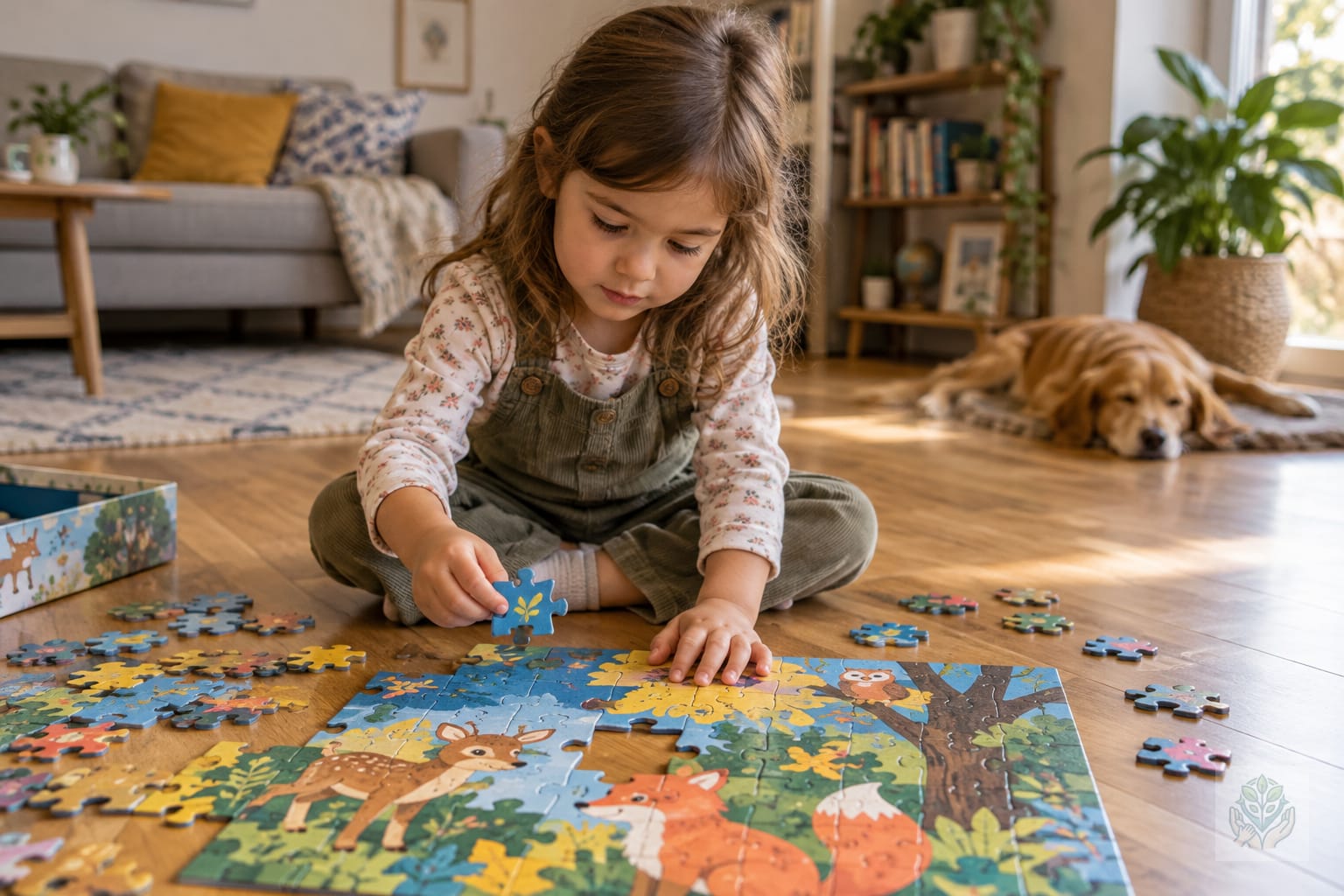
Best Jigsaw Puzzle Games for Kids by Age: A Complete Guide
Remember the quiet satisfaction of clicking that final puzzle piece into place? In a modern world dominated by glowing screens, tablets, and fast-paced video games, finding screen-free activities that genuinely capture a child’s attention can feel like a monumental task. Yet, the timeless appeal of jigsaw puzzle games remains as strong as ever. These classic toys offer a wonderful way to slow down, focus, and engage in meaningful play.
As parents and educators know, puzzles are much more than just a rainy-day pastime. They are powerful developmental tools. Selecting the best jigsaw puzzle games for kids by age ensures your child gets the right mix of challenge and fun without unnecessary frustration. Whether you are looking for chunky wooden boards for a curious toddler or complex 3D structures for a pre-teen, choosing age-appropriate puzzles makes all the difference in nurturing a lifelong love for learning. For broader developmental milestones, you can also explore our complete guide to choosing age-wise toys for kids.
Why Jigsaw Puzzles Are Essential for Child Development
Before diving into specific product recommendations, it helps to understand why child development specialists continually champion puzzle play. When a child sits down to sort, flip, and fit pieces together, multiple areas of the brain activate simultaneously. The cognitive benefits are vast and far-reaching.
Cognitive Growth and Spatial Awareness
Cognitively, children build spatial awareness as they mentally rotate pieces to see how they fit. They practice shape recognition, sorting by color, and memory retention. If you have ever watched a child recall where a specific blue corner piece belongs, you have witnessed working memory in action. You can discover more brain-boosting fun in our complete guide to puzzle games for kids of every age.
Fine Motor Skills and Physical Development
Physically, puzzles are champions of fine motor skill development. Manipulating small pieces helps toddlers and preschoolers refine their pincer grasp, building the finger strength necessary later for handwriting. Hand-eye coordination also improves dramatically as eyes scan the board and hands make precise adjustments.
Emotional Benefits, Patience, and Confidence
Beyond physical and mental growth, puzzles offer profound emotional benefits. They teach patience and perseverance. When a piece does not fit right away, children learn to try a different angle instead of giving up immediately. Successfully completing a challenging puzzle delivers a massive boost in confidence, teaching kids that hard work pays off.
Best Puzzles for Toddlers (Ages 1–3): Building Foundations
For toddlers, the primary goal is introducing the basic concept of fitting objects together while supporting early hand-eye coordination. At this stage, complex interlocking cardboard pieces lead to quick frustration. Instead, look for durability and simplicity.
What to Look for in Toddler Puzzles
What to look for: Chunky wooden pieces, knobbed peg puzzles, and sets containing anywhere from two to twelve pieces. Wood is ideal because it withstands mouthing, dropping, and rough toddler handling. To explore material differences further, check out our comparison of wooden vs. plastic puzzle games.
Top Recommendations and Introduction Tips
Top product recommendations for this age group include classic Melissa & Doug chunky wooden puzzles and simple peg-style animal puzzles. These often feature brightly colored, standalone pieces that double as play figures.
Tips for introducing puzzles to toddlers:
- Start with simple single-piece inset boards.
- Sit on the floor together and narrate your actions, such as saying, Let us find the puppy’s home.
- Keep initial sessions short and positive, celebrating every successful placement.
Best Puzzles for Preschoolers (Ages 3–5): Expanding Imagination
Preschoolers are undergoing a massive leap in imagination, problem-solving, and dexterity. They can handle more pieces and are beginning to understand how individual fragments contribute to a bigger picture.
What to Look for in Preschool Puzzles
What to look for: Interlocking cardboard puzzles, heavy-duty wooden floor puzzles, and options ranging from 12 to 48 pieces. Themes featuring their favorite animals, vehicles, or storybook characters can be major motivators.
Top Recommendations and Guidance Strategies
Top product recommendations include large floor puzzles from brands like Crocodile Creek or Mudpuppy, as well as simple wooden frame puzzles with border outlines that offer helpful visual clues.
How to support without doing it for them:
- Help your child sort edge pieces from interior pieces first.
- Ask guiding questions rather than pointing directly to the spot, such as, Where do you think the firefighter’s yellow hat goes?
- Allow them to experience the satisfaction of placing the final piece completely on their own.
Best Puzzles for Early Elementary (Ages 5–8): Boosting Complexity
Children in early elementary school possess the patience and cognitive maturity to tackle significantly more intricate challenges. They can categorize pieces systematically and understand visual patterns.
What to Look for in Early Elementary Puzzles
What to look for: Puzzles containing 50 to 150 pieces, themed designs such as world maps, science ecosystems, or detailed animal habitats, and varied piece shapes that test their focus. For kids who love building skills across multiple areas, you might also like our complete guide to STEM toys for kids of every age.
Top Recommendations and Advanced Strategies
Top product recommendations include Ravensburger kids puzzles, known for their soft-click technology and premium durability, and GeoPuzzles, which double as geography lessons by shaping pieces like actual countries and states.
Transitioning to advanced strategies happens naturally here. Teach your child to flip all pieces face up, sort by color families or borders, and build the frame before filling in the center. This turns puzzle-solving into a structured, strategic game rather than a guessing exercise.
Best Puzzles for Older Kids (Ages 9–12+): Mastering Challenges
Older kids and tweens need substantial mental stimulation to stay engaged away from screens. Modern puzzles for this demographic offer incredible detail, vivid artwork, and architectural depth.
What to Look for in Older Kids’ Puzzles
What to look for: Puzzles ranging from 200 to 500+ pieces, 3D construction puzzles, complex holographic artwork, and challenging patterns with minimal color variation.
Top Recommendations and Family Bonding
Top product recommendations include Wrebbit3D architectural puzzles, which allow kids to construct famous landmarks or movie vehicles, and 300-piece National Geographic or MasterPieces puzzle sets featuring stunning photography.
These advanced jigsaw puzzle games for kids provide a fantastic collaborative project for family game night or a rewarding solo endeavor that promotes mindfulness and stress relief after a long school day. If your family enjoys screen-free table games together, you can also explore our favorite easy board games for family bonding time.
How to Choose the Right Puzzle: A Quick Buyer’s Checklist
With countless options lining store shelves and online shops, making a final decision can feel overwhelming. Keep this quick buyer’s checklist handy when shopping for the best jigsaw puzzle games for kids by age:
- Material Quality: Opt for sturdy wood for toddlers and thick, glare-reduced cardboard for older children to prevent bent tabs and peeling layers.
- Piece Count and Size: Match the count to attention span and hand size. Too many pieces cause burnout; too few cause boredom.
- Child’s Personal Interests: Lean into their current obsessions, whether those are dinosaurs, outer space, princesses, or construction trucks.
Conclusion
Investing in quality puzzle time is one of the simplest yet most effective ways to support your child’s cognitive and emotional growth. By carefully selecting the best jigsaw puzzle games for kids by age, you provide a wonderful gateway to independent problem-solving, reduced screen time, and hours of engaging family fun.
What is your child’s all-time favorite puzzle brand or theme? Drop a comment below and share your family’s puzzle-solving experiences with our community!
Frequently Asked Questions
What age should kids start doing jigsaw puzzles?
Children can start doing simple one-piece inset puzzles or chunky wooden peg puzzles as early as 12 to 18 months old to build foundational motor skills.
How many puzzle pieces are appropriate for a 3-year-old?
For 3-year-olds, puzzles with 12 to 24 pieces are ideal. They offer enough challenge without causing frustration, especially when featuring large, interlocking cardboard or heavy wooden pieces.
What are the developmental benefits of puzzles for children?
Puzzles enhance cognitive skills like spatial awareness and memory, improve fine motor skills and hand-eye coordination, and foster patience, perseverance, and emotional resilience.
How do I choose the right puzzle for my child?
Choose puzzles based on your child’s age, fine motor development, attention span, and personal interests such as animals, maps, or favorite cartoon characters.
Are 3D puzzles good for older kids?
Yes, 3D puzzles are fantastic for kids ages 9 and older because they provide spatial challenges, promote problem-solving, and offer a rewarding screen-free activity.
How can I help my child solve a difficult puzzle without doing it for them?
Help your child sort edge pieces from interior pieces and ask guiding questions about colors and shapes rather than pointing directly to where a piece belongs.