

Best Types-of Books for Early Readers: A Guide for Parents and Educators
Choosing the right books for your child is one of the most significant steps you can take to foster a lifelong love of learning. As children embark on their literacy journey, the specific texts they encounter can either build confidence or lead to unnecessary frustration. Finding the best types of books for early readers requires understanding both the mechanics of reading and the unique personality of your child.
Why choosing the right books matters for early literacy
Early literacy is not just about identifying letters; it is about connecting symbols to meaning. When children read books that align with their current skill level, they experience the joy of accomplishment. Conversely, pushing a child into complex literature before they are ready can lead to burnout. By selecting books that match their developmental stage, you help them internalize the rhythms of language and the structure of storytelling.
The milestone of independent reading
Transitioning from being read to by an adult to reading independently is a monumental milestone. It marks a shift toward autonomy and critical thinking. During this phase, your role transitions from the primary storyteller to a supportive coach. The books you choose during this period act as the bridge that carries a child across the gap between emerging skills and fluent reading.
How this guide will help you select the perfect books for your child
This guide breaks down the science and the art of book selection. Whether you are a teacher looking to stock a classroom library or a parent trying to find the perfect bedtime story, you will learn how to identify the right early reader books, decode reading levels, and nurture a home environment that celebrates literacy.
Understanding Reading Levels: What to Look For
Navigating the world of educational terminology can be overwhelming. However, understanding a few basics will make your trips to the library much more productive.
Decoding vs. Comprehension
Decoding is the process of translating written words into spoken sounds. Comprehension is the ability to understand the meaning behind those words. The best types of books for early readers balance both. If a child spends all their energy decoding, they often lose the plot. We want books that allow them to practice their phonics skills without sacrificing their enjoyment of the story. For younger children taking their very first steps into literacy, you can also explore helpful resources like How to Teach Lowercase Letters to Preschoolers: Fun and Effective Strategies to build letter recognition.
Understanding Lexile and Guided Reading levels
Many publishers use leveling systems like Lexile or Guided Reading (A-Z) to categorize text complexity. These systems analyze factors like sentence length, vocabulary density, and content familiarity. While these are excellent guidelines, they are not rigid rules. Always use these levels as a starting point rather than a definitive limit on what your child should be exposed to.
The Five Finger Rule for checking book difficulty
If you aren’t sure if a book is right for your child, try the Five Finger Rule. Have your child open the book to a middle page and start reading. For every word they don’t know or struggle to pronounce, they hold up a finger. If they raise five fingers by the end of the page, the book is likely too difficult for independent reading and is better suited as a read-aloud book for you to share together.
Top Types of Books for Early Readers
Not all children’s literature is created equal when it comes to instruction. Here are the categories that offer the most support to growing readers.
Decodable Books: The foundation of phonics-based learning
Decodable books are specifically written to focus on the phonetic patterns a child is currently learning. These texts contain a high frequency of words that follow specific rules (like CVC words: cat, dog, sit). By limiting the number of irregular sight words, these books help children practice phonics effectively, boosting their confidence in their own abilities.
Predictable Text: Building confidence through repetition
Predictable books often use repeating sentence patterns, such as “I see a dog. I see a cat. I see a bird.” These patterns allow children to use picture clues and repetitive structure to guess unfamiliar words. While not a substitute for phonics, they are fantastic for building fluency and helping children feel successful during the early stages.
Emergent Reader Picture Books: Relying on visual cues
For children who are just starting to recognize that words on a page represent stories, picture books are vital. The illustrations provide context that helps the child make sense of the text. When a child can “read” the story by looking at the pictures, they are learning how to narrate a sequence of events—a foundational skill for later reading comprehension. For expert recommendations on finding the right titles, check out How to Choose the Best Picture Books for Young Children: A Parent’s Guide.
Levelled Readers (Step-into-Reading, I Can Read series)
These series are designed to grow with your child. They are usually categorized into levels (Pre-Level 1, Level 1, Level 2, etc.). The best types of books for early readers in these collections offer a sense of progression, allowing children to see how far they have come as they move from simple sentences to longer, more complex narratives.
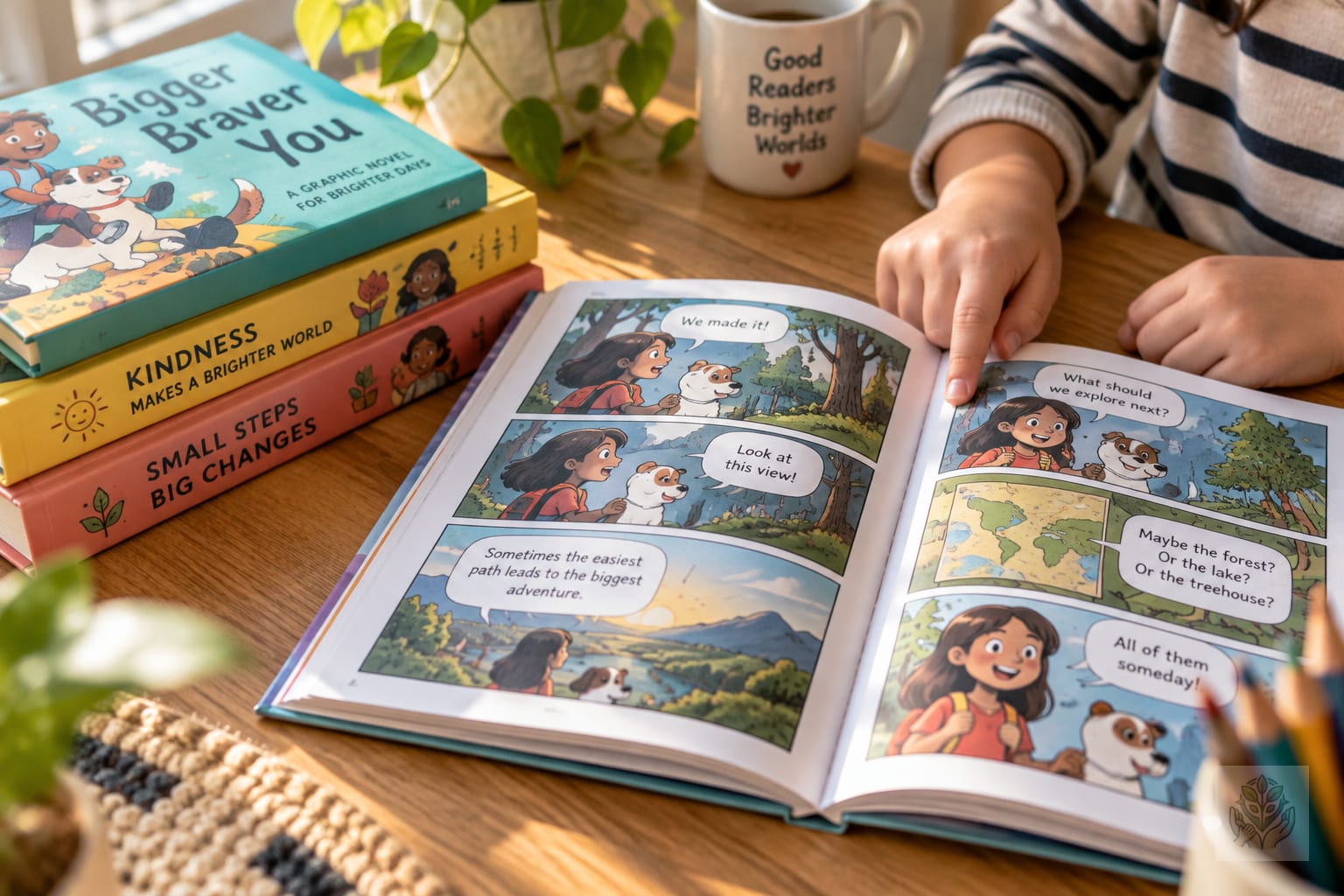
Graphic Novels for Beginners: Visual storytelling benefits
Graphic novels are increasingly popular for a reason. The marriage of text and art makes reading feel less daunting. The limited text in speech bubbles makes them perfect for children who are intimidated by walls of text. These books are excellent for developing inference skills and visual literacy.
How to Match Books to Your Child’s Interests
Even the most perfectly leveled book will fail if it doesn’t capture a child’s imagination.
Following the High-Interest principle
If your child loves dinosaurs, look for decodable books about dinosaurs. If they are obsessed with space, prioritize books about planets. Interest acts as a powerful motivator. When a child cares about the subject matter, they are much more willing to work through the tricky parts of the text.
Integrating non-fiction for curious minds
Many children prefer facts over fiction. Non-fiction early readers provide fascinating information about animals, machines, or history. These books are great for expanding vocabulary and showing children that reading is a gateway to learning about the real world.
The role of humor and interactive books
Reading should be fun. Look for books that make your child laugh, have surprise endings, or include interactive elements like lift-the-flaps or questions for the reader. Humor creates a positive emotional connection to reading, which encourages children to pick up books voluntarily.
Tips for Supporting Early Readers at Home
Your support is the most important factor in your child’s success.
Creating a literacy-rich environment
Make sure books are easily accessible. A dedicated reading nook or a low shelf filled with colorful titles signals that reading is a part of your daily life. When children see adults reading, they are more likely to view reading as a valuable and enjoyable activity. You can also explore How to Organize Baby Books in a Small Nursery: Creative Storage Solutions for Tight Spaces for brilliant ideas on keeping reading spaces tidy.
The importance of reading aloud versus reading alone
Continue reading to your child even after they start reading on their own. This helps them stay interested in sophisticated stories that are beyond their current reading level. It also allows you to model prosody, expression, and pacing, which are essential elements of fluent reading.
How to handle frustration when a book is too hard
If your child becomes frustrated, don’t force them to finish. Simply take over reading for a page or two, or suggest choosing a different, easier book. Remind them that reading is a skill like riding a bike; it takes practice, and it is perfectly normal to start with smaller steps.
Celebrating reading milestones
Acknowledge your child’s progress, whether they finished their first book, learned a new sight word, or started reading longer sentences. Positive reinforcement helps keep their motivation high and their attitude toward reading enthusiastic. To foster even more growth, you might integrate learning tools found in 15 Essential Books for a Preschool Learning Library: A Parent’s Guide.
Common Mistakes to Avoid When Choosing Books
- Pushing for complexity too soon: Focus on what they can read comfortably, not what they should be reading based on age.
- Ignoring the child’s preference: A book that is “perfect” by an educator’s standard is worthless if your child finds it boring.
- Focusing only on speed over understanding: Remember that reading is about meaning. Don’t rush them; encourage them to engage with the story.
Conclusion
The journey toward literacy is a marathon, not a sprint. By understanding the best types of books for early readers and tailoring your selections to your child’s interests and skill level, you are giving them the best possible start. For further development tips, you can read our comprehensive overview on The Complete Guide to Choosing Age-Wise Toys for Kids: A Developmental Roadmap. Stay patient, stay consistent, and remember to keep the experience lighthearted and fun.
What is your child’s favorite book right now? We would love to hear your recommendations in the comments below!
Frequently Asked Questions
What are decodable books?
Decodable books are texts specifically written to focus on the phonetic patterns a child is currently learning. They feature a high frequency of words that follow strict phonics rules, helping beginners build confidence.
What is the Five Finger Rule?
The Five Finger Rule is a quick way to check book difficulty. Have a child read a middle page and raise a finger for every unknown word. If they raise five fingers, the book is likely too difficult.
Why are graphic novels good for early readers?
Graphic novels combine text and art, making reading less intimidating for beginners. The limited text in speech bubbles helps children develop visual literacy and inference skills.
Should I continue reading aloud to a child who can read independently?
Yes. Reading aloud to independent readers exposes them to advanced vocabulary and complex stories beyond their current reading level while modeling fluent pacing and expression.
How do leveled readers help children?
Leveled readers grow with your child, offering a clear sense of progression from simple sentences to longer narratives, ensuring they feel successful at every stage.
What should I do if a book is too frustrating for my child?
If your child gets frustrated, take over reading for a page or two, or switch to an easier book. Keep the experience positive and remind them that reading takes practice.


