
The Best Vegetables for Your Baby’s First Meals: A Complete Guide
Watching your little one reach the milestone of starting solid foods is an exciting adventure. You might feel a mix of eager anticipation and slight nervousness as you transition away from exclusively milk-fed days. Choosing the right first foods sets the stage for a lifetime of healthy eating habits.
When searching for the best vegetables for your baby’s first meals, you want options that are gentle on tiny tummies, nutrient-dense, and easy to prepare. Introducing vegetables early helps your baby develop a palate that appreciates savory and earthy flavors before they lean toward naturally sweet fruits.
This comprehensive guide covers everything you need to know. From developmental readiness signs to top vegetable picks and safe preparation methods, we will help you navigate this messy, beautiful milestone with confidence.
When is Your Baby Ready for Vegetables?
Before spoon-feeding your baby their very first bite of mashed sweet potato, it helps to confirm they are physically ready. Most pediatric health organizations recommend introducing solid foods around six months of age. However, every baby develops at their own unique pace.
Signs of Readiness for Solid Foods
Your baby will give you clear developmental cues when they are ready to explore solid foods. Look for the following signs:
- Good head and neck control, allowing them to sit upright with minimal support.
- Loss of the extrusion reflex, meaning they no longer automatically push food out of their mouths with their tongue.
- Showing genuine interest in what you eat, perhaps reaching for your food or watching you chew.
- Doubling their birth weight, which typically happens around the six-month mark.
Consulting Your Pediatrician Before Starting
Always schedule a chat with your pediatrician at the six-month well-child visit to get the official green light. Your doctor knows your baby’s specific growth curve and medical history best. They can offer tailored advice, especially if there is a family history of severe food allergies.
Top 5 Best Vegetables for a Baby’s First Meals
Selecting the best vegetables for baby meals does not have to be complicated. The ideal starter foods offer smooth textures and rich nutrient profiles. Here are five pediatrician-approved favorites:
Avocado (Creamy, Healthy Fats, Naturally Pureed)
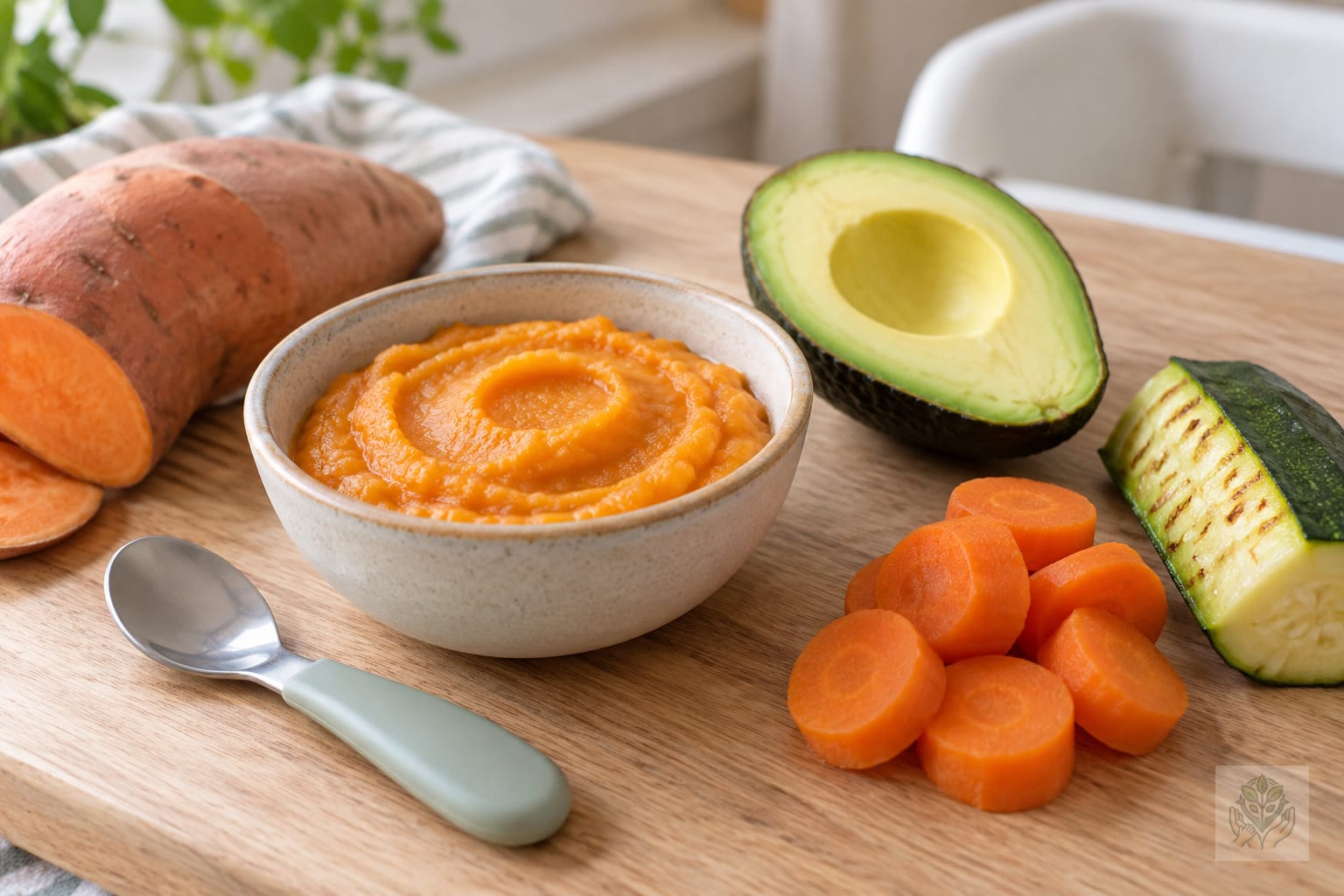
Technically a single-seed berry, avocado functions wonderfully as a first vegetable. It provides essential healthy fats that support rapid brain development in infants. You do not even need to cook it; simply mash a ripe avocado with a bit of breast milk or formula until it reaches a velvety, spoonable consistency. For alternative starter options, you can also explore our guide to the best fruits to introduce as first foods.
Sweet Potato (Naturally Sweet, Rich in Vitamins, Easy to Mash)
Sweet potatoes are a universal baby favorite due to their comforting, natural sweetness. They are packed with beta-carotene, which converts to Vitamin A for healthy vision and immune function. Steam or roast them until fork-tender, then blend or mash them thoroughly.
Carrots (Vitamin A Powerhouse, Easily Steamed and Blended)
Carrots offer a wonderful earthy flavor and vibrant color that stimulates your baby’s visual senses. Steaming them breaks down their natural fibers, making them safe and easy to puree. Because carrots have a naturally high water and sugar content when cooked, babies usually take to them quite readily.
Butternut Squash (Smooth Texture, Appealing Mild Sweetness)
Similar to sweet potato, butternut squash boasts a silky texture when blended and a mild, nutty sweetness. It provides a generous dose of fiber, potassium, and vitamins C and A. Roasting the squash before pureeing caramelizes its natural sugars just enough to delight your baby’s taste buds. Once your baby masters these veggies, you can discover more meal ideas in our nutrient-rich guide to foods that support healthy baby growth.
Zucchini (High Water Content, Easy to Digest, Gentle Flavor)
Zucchini is exceptionally gentle on a brand-new digestive system. It has a high water content and a very mild flavor that pairs well with sweeter vegetables later on. Peel the zucchini and steam it until very soft before blending it into a smooth, light puree.
How to Prepare Vegetables for Baby’s First Tastes
How you cook your baby’s food matters just as much as what you choose to feed them. Proper preparation ensures maximum nutrient retention and complete safety.
Steaming vs. Roasting: Retaining Nutrients
Steaming is one of the best ways to cook vegetables for infants because it locks in water-soluble vitamins like Vitamin C and B-complex vitamins. Roasting vegetables with a tiny drizzle of olive oil also works wonderfully, as it concentrates their natural flavors and makes them extra tender. Avoid adding salt, sugar, or heavy seasonings to your baby’s portion.
Purees vs. Baby-Led Weaning (BLW) Finger Foods
You can choose between traditional spoon-feeding with smooth purees or Baby-Led Weaning (BLW), where infants self-feed soft, graspable pieces of food. If you choose purees, aim for a consistency similar to single cream. If you try BLW, ensure vegetable pieces are large enough for your baby to grab with a fist and soft enough to mash easily between your thumb and forefinger. For quick meal prep inspiration, check out our collection of easy vegetable puree recipes babies will love.
Important Safety Tips: Avoiding Choking Hazards
Safety is always paramount when feeding infants. Never serve raw, hard vegetables like crunchy carrot sticks or raw apple slices, as these present severe choking hazards. Always steam, roast, or boil vegetables until they are completely tender. Always supervise your baby closely while they are eating and ensure they sit upright in a high chair.
Step-by-Step: How to Introduce New Veggies
Taking a slow and methodical approach helps you identify any potential sensitivities while building healthy eating routines.
The 3-to-5-Day Wait Rule for Monitoring Food Allergies
When introducing a new food, feed it to your baby for three to five days straight before introducing another new ingredient. This window allows you to easily spot any signs of an allergic reaction, such as hives, tummy upset, or unusual rashes. While true vegetable allergies are relatively rare, this practice gives you peace of mind.
Starting with Single-Ingredient Purees
Keep things simple at the very beginning. Serve single-ingredient purees like plain sweet potato or mashed avocado. This allows your baby to truly experience and understand the distinct flavor profile of each individual vegetable.
Mixing and Matching Once Flavors Are Established
Once your baby happily accepts several individual vegetables, feel free to get creative! Mix sweet potato with zucchini, or blend butternut squash with a touch of avocado. Combination purees introduce complex flavor profiles and keep mealtime exciting.
Common Challenges and How to Overcome Them
Feeding a baby is rarely a straight line. You will likely encounter closed mouths, turned heads, and messy floors.
What to Do When Your Baby Rejects a Vegetable
If your baby makes a funny face or spits out their first bite of broccoli or zucchini, do not panic. This is not necessarily a sign of dislike; it is simply a brand-new sensory experience. Stay calm, keep mealtimes low-pressure, and try again on another day. As your child grows into toddlerhood, you may find helpful strategies in our guide on how to plan healthy meals for picky eaters.
The Importance of Repeated Exposure
Did you know it can take anywhere from ten to fifteen repeated exposures for an infant to accept a new flavor? If your baby rejects a vegetable the first three times, keep offering tiny tastes. Persistence pays off when building an adventurous palate.
Natural Ways to Sweeten Bitter Veggies Early On
If you are introducing slightly bitter green vegetables like spinach or broccoli later on, try mixing them with a naturally sweet vegetable like sweet potato or butternut squash. This gentle transition helps bridge the flavor gap and encourages your baby to accept earthy greens.
Conclusion
Choosing the best vegetables for your baby’s first meals is a wonderful way to nourish their growing body and mind. By starting with wholesome foods like avocado, sweet potato, and zucchini, you lay the foundation for a lifetime of healthy eating.
Remember to take things slow, follow your pediatrician’s guidance, and embrace the messy, fun journey of feeding your little one. Every messy face and successful bite is a step toward raising a happy, healthy eater!
Frequently Asked Questions
When can my baby start eating solid foods and vegetables?
Most pediatric health organizations recommend introducing solid foods around six months of age. Look for signs of readiness such as good head control, sitting upright, and loss of the extrusion reflex.
What are the best first vegetables for a baby?
Top pediatrician-approved choices include avocado, sweet potato, carrots, butternut squash, and zucchini because they are nutrient-dense, easily digestible, and have smooth textures when pureed.
Should I steam or roast vegetables for my baby?
Both methods are excellent. Steaming locks in water-soluble vitamins like Vitamin C, while roasting concentrates natural flavors and creates a tender texture. Avoid adding salt or heavy seasonings.
What is the 3-to-5-day wait rule?
This rule involves feeding your baby a single new food for three to five days straight before introducing another ingredient. It helps you easily monitor and identify any potential food allergies.
What should I do if my baby rejects a new vegetable?
Do not panic or force it. It can take 10 to 15 repeated exposures for an infant to accept a new flavor. Keep mealtimes low-pressure and try offering small tastes again later.
How do I prevent choking hazards when serving vegetables?
Never serve raw, hard vegetables like crunchy carrot sticks. Always steam, roast, or boil vegetables until they are completely tender, and ensure your baby sits upright while supervised.