Home Blog Page 11

Road Trip Accessories Every Child Needs: The Ultimate Parent’s Packing Guide

Road Trip Accessories Every Child Needs: The Ultimate Parent’s Packing Guide

There is a specific moment in every family vacation when the excitement of the open road fades into the rhythmic, repetitive chant of, Are we there yet? As parents, we have all been there. The initial joy of a road trip can quickly dissolve into chaos if the backseat becomes a battleground of boredom and discomfort.

The secret to a peaceful family journey is not just a high-quality GPS or a well-planned route; it is effective preparation. By choosing the right road trip accessories every child needs, you can transform your vehicle into a cozy, organized environment that keeps kids engaged and content. In this guide, we will walk you through the essential gear designed to make your next family drive your best one yet, as described in our ultimate packing list for family trips.

The Foundation: Comfort Accessories for Long Rides

Comfort is the cornerstone of a successful trip. When a child feels physically supported, they are far more likely to fall asleep or remain calm during long stretches of driving.

Neck Pillows and Head Supports

First, invest in high-quality neck pillows and head supports. Standard pillows often slide around, but travel-specific cushions designed for car seats help children maintain an upright position while they nap, preventing the dreaded head-bob.

Backseat Organizers and Sunshades

Next, consider backseat organizers and kick mats. These are lifesavers for two reasons. They provide easy access to toys and books, and they protect your car interior from muddy shoes and accidental spills. Finally, sunshades are non-negotiable. Whether you opt for cling-on mesh or roller shades, they prevent harsh glare and keep the backseat from overheating, ensuring a more comfortable environment for delicate skin.

Entertainment Essentials: Keeping Boredom at Bay

We all want to limit screen time, but on a six-hour drive, a digital break can be a sanity-saving tool. However, the best road trips rely on a balance of screen-free and digital engagement. For tips on setting healthy limits, refer to our guide on how parents can manage screen time at home.

Screen-Free Entertainment Options

For screen-free fun, pack travel-sized games, coloring kits, and audiobooks. Magnetic board games are excellent because they prevent pieces from getting lost under the seats. Audiobooks are a fantastic way to engage the whole family in a story, turning the car into an interactive listening environment.

Digital Entertainment and Lap Desks

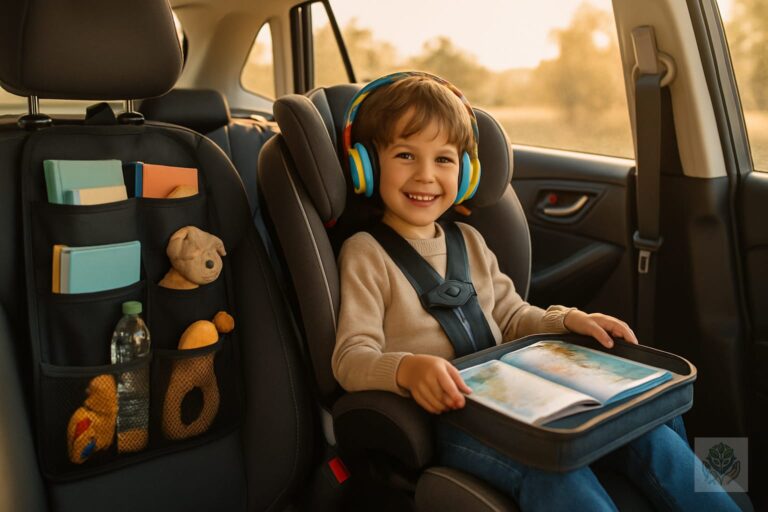
If you choose to use tablets, prioritize tablet mounts and high-quality headphones. A mounted device at eye level reduces neck strain and motion sickness. Pairing this with a volume-limiting headset allows your child to enjoy their favorite show without interfering with your music or navigation instructions.

The ultimate road trip hack is the activity lap desk. These portable surfaces provide a stable area for drawing, playing with action figures, or eating snacks, effectively corralling the clutter to one contained space.

Snack and Hydration Management

Managing hunger is the primary defense against backseat meltdowns. Instead of loose bags that end up in every crevice of your car, utilize spill-proof snack containers. For those wanting healthier options, read our guide on the top healthy snacks for kids to pack for your journey. These containers allow children to manage their own snacks without constant parental intervention.

Coolers and Trash Solutions

Keep a dedicated cooler bag within your reach rather than in the trunk. This ensures that fresh fruit, cheese sticks, or juice boxes remain cold throughout the day. Additionally, bring a portable trash solution. A small, lined bin or a hanging bag keeps the vehicle clean, preventing the build-up of wrappers and empty bottles that inevitably clutter the floorboards.

Safety and Practical Must-Haves

While comfort and entertainment are vital, safety should always be the priority. Every family vehicle should be equipped with a specialized emergency car kit. This should include basic tools, jumper cables, and a flashlight, but also a dedicated first aid kit stocked with bandages, antiseptic wipes, and age-appropriate fever reducers. You can also review our ultimate guide to baby safety for more comprehensive tips on keeping your little ones protected.

Power Management on the Road

In our modern era, power management is just as important as a first aid kit. Carry multiple portable chargers and high-capacity power banks. There is nothing more stressful than a device dying mid-movie when you are hours away from the next charging station.

Packing Tips: How to Organize Your Road Trip Gear

Even with the best gear, your trip will be difficult if you cannot find what you need. One effective strategy is the grab-bag method. Assign each child a small bag or backpack that contains only the items they are allowed to use that day. This prevents the entire car from being covered in toys. For help choosing the right gear, check out our guide on best school bags for kids.

Developmental Packing Strategies

Pack items based on your child’s developmental needs. Toddlers need easy-access comfort items and soft toys, while older children benefit from dedicated organization pockets for their electronics and reading material. Remember to keep a cleaning kit, including wet wipes and a small handheld vacuum, easily accessible to manage the inevitable crumbs and spills.

Conclusion

Equipping your car with the right road trip accessories every child needs changes the dynamic of your entire travel experience. By prioritizing comfort, managing snacks, and keeping boredom at bay, you turn a long drive into a series of positive family memories. Remember, the journey is just as important as the destination. With a little preparation and the right tools, you can ensure that your family arrives at your destination feeling refreshed and ready for adventure. If you are looking for more fun, explore our 15 unforgettable family adventure ideas.

Ready to hit the road? Click here to download our free comprehensive Road Trip Packing Checklist to ensure you never leave an essential item behind.

Frequently Asked Questions

What are the most important road trip accessories for kids?

The most important accessories include neck pillows for comfort, backseat organizers to reduce clutter, sunshades for glare protection, and activity lap desks for entertainment.

How can I keep my child entertained on a long car ride?

Combine screen-free options like audiobooks, magnetic travel games, and coloring kits with tablet mounts and volume-limiting headphones for digital media.

How do I manage snacks and prevent messes in the car?

Use spill-proof snack containers, keep a dedicated cooler bag within reach for fresh foods, and place a small portable trash bin in the backseat.

Are neck pillows necessary for kids in car seats?

Travel-specific neck pillows help support a child’s head while they nap, preventing awkward head-bobbing and keeping them more comfortable during long stretches.

What safety items should I pack for a family road trip?

Always pack a well-stocked first aid kit, an emergency car kit with tools and a flashlight, and portable power banks to keep your devices charged.

How can I organize my child’s travel gear efficiently?

Use the grab-bag method by assigning each child a small backpack with their daily approved items, and use backseat organizers with pockets for easy access.
How to Choose a Durable School Bag for Kids: The Ultimate Parent’s Guide

How to Choose a Durable School Bag for Kids: The Ultimate Parent’s Guide

Every parent knows the frustration of sending a child off to school only to have them return a few months later with a broken zipper, a frayed strap, or a gaping hole in the bottom of their backpack. Replacing torn school bags every semester is not just an annoyance; it is a drain on your household budget and a contributor to unnecessary waste. Knowing how to choose a durable school bag for kids is an essential skill that saves you time, money, and stress while ensuring your child has reliable gear for their daily adventures. You can also explore our curated list of the best school bags for kids in India for top-rated recommendations.

Investing in a high-quality, durable backpack is a classic example of quality over quantity. When you select a bag built to withstand the rigors of playground roughhousing and heavy textbook loads, you are making a smart long-term investment. In this guide, we will walk you through everything you need to consider before making your next purchase.

Why Durability Matters: More Than Just Fabric

When we talk about durable school bags for kids, we are looking at much more than just the exterior fabric. A truly reliable backpack acts as a protective shell for expensive school supplies like tablets, laptops, and notebooks. If a seam rips during a rainy commute, those supplies are instantly at risk.

Furthermore, a sturdy bag maintains its structure over time. A sagging, shapeless bag can shift the weight away from your child’s center of gravity, leading to poor posture and unnecessary muscle strain. By choosing a bag that holds its shape and integrity, you are protecting not only the gear inside but also your child’s physical health as they grow and carry heavier loads.

Key Materials to Look For

The secret to a long-lasting backpack lies in its construction materials. When shopping, ignore the flashy, low-quality options and look for these industry standards:

  • Denier Polyester: Look for 600D (denier) polyester or higher. The higher the denier number, the thicker and more abrasion-resistant the fabric is.
  • Ballistic Nylon: Originally designed for military use, this fabric is incredibly tough and highly resistant to tears and scuffs.
  • Reinforced Stitching: Check the stress points, specifically where the straps meet the bag and where the base connects to the main compartment. Double or bar-tack stitching indicates a bag built to last.
  • Heavy-Duty Zippers: Zippers are the first thing to fail on cheap bags. Look for brands that use YKK zippers, which are widely considered the gold standard for reliability and smooth operation.

Ergonomics: Protecting Your Child’s Back

A durable bag is useless if it is uncomfortable to wear. Ergonomics play a vital role in ensuring your child is willing and able to carry their bag properly for the entire school year. For more on this, review our school backpack safety tips for parents to help protect your child’s spine.

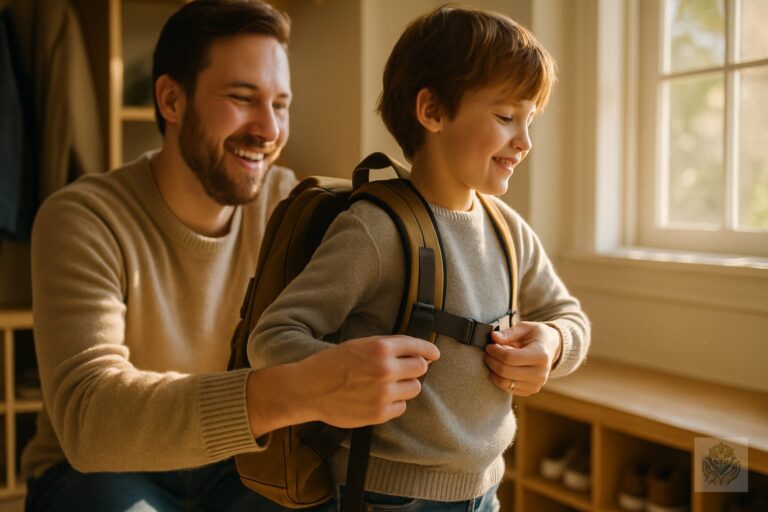
Look for backpacks featuring high-density foam padding in the shoulder straps to prevent digging. A chest strap or sternum buckle is an excellent feature, as it helps distribute the weight evenly across the torso rather than pulling on the shoulders. Additionally, a firm, padded back panel provides the necessary support to keep the contents of the bag from poking your child in the back, ensuring comfort during long walks or transit.

Size and Capacity: Choosing the Right Fit

Buying a bag that is too big in hopes that the child will grow into it is a common mistake. An oversized bag often results in improper weight distribution, which can lead to back pain and clumsiness in the hallways.

When measuring, the backpack should never be wider than your child’s torso and should hang no lower than four inches below their waistline. To test this, have your child put on the bag; the bottom of the pack should rest comfortably against the small of their back. Always check the internal capacity to ensure it fits their specific grade-level requirements—a middle schooler will clearly need more volume than a kindergartener.

Essential Features of a Long-Lasting Bag

Beyond the basics, certain features elevate a backpack from average to excellent. Consider these must-haves for maximum longevity:

  • Water-Resistant Coatings: A polyurethane or DWR (Durable Water Repellent) coating protects books from accidental spills and light rain.
  • Reinforced Bottom Panels: The bottom of the bag hits the floor constantly. A heavy-duty, abrasion-resistant base material, such as reinforced vinyl or double-layered nylon, is a game-changer.
  • External Storage: Side pockets designed for water bottles prevent liquids from leaking inside the main compartment onto school work.
  • Reflective Details: High-visibility strips are essential for safety, especially if your child walks to school or participates in after-school activities during the winter months.

Care and Maintenance Tips

Even the most durable bag needs a little love to survive the school year. Establish a routine of checking the backpack every Friday afternoon to remove forgotten food items or crumpled papers that could cause odors or stains. Keeping a tidy space is part of helping children encourage independent hygiene habits at home.

When it comes to cleaning, always check the manufacturer’s label. Many high-quality bags can be spot-cleaned with mild soap and a damp cloth, which is usually preferred over machine washing to maintain the integrity of the water-resistant coating. If you must machine wash, use a gentle cycle inside a mesh laundry bag and always air dry to prevent heat damage to zippers and straps.

When to Replace a School Bag

Despite your best efforts, even the sturdiest gear has a lifespan. Watch for these clear signs that it is time for an upgrade:

  1. Broken or Misaligned Zippers: If the zipper tracks are misaligned or the slider is missing teeth, the bag is no longer secure.
  2. Frayed or Detaching Straps: Any sign of the shoulder straps pulling away from the bag body is a safety hazard and indicates structural failure.
  3. Unrepairable Holes: If the fabric has developed large tears that cannot be patched, moisture and debris will inevitably ruin the contents.
  4. Persistent Odors: If a bag has been exposed to mold or chronic food spills that no amount of cleaning can remove, it is it time to refresh their school gear and ensure they have a comfortable study environment for better focus at home.

Conclusion

Learning how to choose a durable school bag for kids is one of the most effective ways to simplify your back-to-school preparations. By prioritizing high-quality materials, ergonomic design, and reinforced construction, you reduce the likelihood of mid-year replacements and give your child a reliable companion for their academic journey. Remember, while a quality backpack might cost a little more at the checkout, it will pay for itself many times over by lasting through the toughest school days. Maintaining a daily routine for kids can further help ensure they manage their belongings carefully throughout the year.

Frequently Asked Questions

What is the best fabric for a durable school bag?

High-denier polyester (600D or higher) and ballistic nylon are the best fabrics. They offer exceptional resistance to tears, scuffs, and daily wear and tear.

Why is ergonomic design important in kids’ backpacks?

Ergonomic designs with padded shoulder straps and sternum buckles distribute weight evenly across the torso, protecting your child from muscle strain and poor posture.

How do I know if a school bag is the right size?

A school bag should never be wider than your child’s torso and should hang no lower than four inches below their waistline to ensure proper weight distribution.

How can I make my child’s school bag last longer?

Regularly check for forgotten food items, spot-clean with mild soap instead of machine washing, and avoid overloading the bag beyond its recommended capacity.

What zippers are the most reliable for backpacks?

YKK zippers are widely considered the gold standard for durability and smooth operation, preventing one of the most common causes of backpack failure.

When should I replace my child’s school bag?

You should replace the bag if it has broken zippers, frayed or detaching shoulder straps, unrepairable holes, or persistent odors that cleaning cannot remove.

20 Healthy Hygiene Habits Every Child Should Learn: A Parent’s Guide

0

20 Healthy Hygiene Habits Every Child Should Learn: A Parent’s Guide

Parenting is a constant journey of teaching new skills, but few are as vital as personal care. Establishing healthy hygiene habits early on is about much more than keeping your child looking tidy; it is the foundation for long-term physical health and self-confidence. When children learn to take ownership of their bodies, they develop a sense of autonomy that serves them well into adulthood.

Starting these lessons while children are young makes the process much more natural. By turning complex tasks into manageable daily routines, you can help your child master these skills without unnecessary stress. In this guide, we will explore 20 essential hygiene habits that every child should learn, organized by category to make implementation easier for your family.

Why Hygiene Matters: More Than Just Being Clean

Hygiene is often associated simply with aesthetics, but its impact reaches far deeper. Proper healthy hygiene habits act as the first line of defense against the spread of illnesses in schools and childcare settings. When children wash their hands effectively and cover their coughs, they protect themselves and their peers from seasonal germs.

Beyond the biological benefits, hygiene is a pillar of independence. When a child learns to brush their own teeth or manage their own grooming, they experience a boost in self-esteem. They realize they are capable of caring for themselves, which fosters confidence. Furthermore, practicing good grooming helps children navigate social environments more comfortably, as peers often respond positively to those who demonstrate self-respect through their appearance.

The Essential 20 Hygiene Habits

To keep your focus sharp, we have categorized these 20 habits into logical groups. Breaking them down helps you introduce them gradually rather than overwhelming your child.

Category 1: Hand & Body Basics

  • Washing hands after the bathroom: This is the golden rule of hygiene.
  • Handwashing before every meal: Prevents the spread of bacteria from surfaces to food.
  • Bathing or showering regularly: Developing a consistent frequency, especially as they get older.
  • Using deodorant: A critical addition once a child reaches their pre-teen years.
  • Changing socks and underwear daily: A simple step that prevents fungal infections and odors.

Category 2: Oral Care

  • Brushing teeth twice a day: Morning and night is non-negotiable for dental health.
  • Flossing once daily: Essential for removing debris between teeth where brushes cannot reach.
  • Cleaning the tongue: A frequently missed step that significantly reduces bad breath.
  • Replacing toothbrushes: Teaching children to recognize when bristles look worn.

Category 3: Grooming & Nails

  • Trimming fingernails: Keeps germs from hiding under long nail beds.
  • Brushing hair daily: Prevents tangles and promotes scalp health.
  • Washing hair with shampoo: Learning how to scrub the scalp thoroughly.
  • Clothing care: Teaching children to put dirty laundry in the hamper rather than on the floor.

Category 4: Bathroom Etiquette

  • Proper wiping technique: Crucial for health and comfort.
  • Flushing after every use: Maintaining a sanitary home environment.
  • Closing the door: Introducing the concept of personal privacy as they grow.
  • Washing hands after contact with pets: Often overlooked, but vital for kids who love animals.

Category 5: Germ Prevention

  • Covering coughs and sneezes: Using the elbow or a tissue to prevent germ dispersal.
  • Not sharing drinks or utensils: Reducing the risk of transmitting viruses.
  • Handling tissues properly: Using them once and disposing of them immediately in the trash.

Age-Appropriate Milestones: Who Should Do What?

It is important to manage expectations based on your child’s developmental stage. For toddlers aged 3 to 5, hygiene is all about guided play. Use fun soaps and colorful towels to make the process enjoyable. At this age, you are mostly modeling the behavior and assisting them with the physical coordination required for tasks like brushing. You can also explore daily routines for kids by age to ensure your expectations are developmentally appropriate.

When children reach early elementary age (6 to 9), they should transition toward independent routines. Use a checklist to ensure they hit all their marks, but keep a watchful eye to verify that they are doing a thorough job. By the time they hit the pre-teen years (10 to 12), they should be managing their own hygiene independently. This is the time to introduce more advanced habits like antiperspirant use and a more structured skincare routine to prepare them for the physiological changes of puberty.

Practical Tips for Making Hygiene Fun

If your child views hygiene as a chore, they will likely resist it. Try using visual checklists or chore charts that allow them to earn stickers or small rewards for completing their morning and night routines. Gamification is incredibly powerful; for example, play a two-minute song on your phone to ensure they brush their teeth for the recommended duration. For more support, read our tips on how to teach children good hygiene habits effectively.

Positive reinforcement goes a long way. Instead of focusing on what they missed, praise them when they remember to wash their hands without being asked. When children feel proud of their independence, they are far more likely to stick with the routine long-term. Establishing these routines is much like learning how to help kids follow a morning schedule without the usual friction.

Common Challenges and How to Overcome Them

Even with the best plans, you may face the dreaded hygiene battle. If your child resists baths or brushing, start by identifying the root cause. Some children struggle with sensory issues, such as the texture of toothpaste or the sound of a hair dryer. If this is the case, look for flavorless or natural toothpaste options and experiment with different hair tools. If you find your child is also struggling with bedtime routines, you may want to look into how to help a child who fights bedtime for additional behavioral strategies.

If a child is simply being stubborn, have a calm, matter-of-fact conversation about why these habits matter. Avoid shaming them. Frame it as being a part of a growing-up process that keeps their body strong and healthy. Consistency is your greatest ally here; even on busy days, keeping the core routine intact helps cement these habits as permanent fixtures in their lives. You can also look for more advice on how parents can encourage independent hygiene habits as they grow older.

Conclusion

Building healthy hygiene habits is a marathon, not a sprint. By starting early, being consistent, and keeping the tone supportive rather than critical, you are giving your child the tools they need to stay healthy and confident. Remember, you are their best role model; when they see you prioritizing your own self-care, they will naturally follow suit. Keep up the great work, and remember that small, daily efforts lead to lifelong habits. As you continue your parenting journey, remember to focus on positive parenting habits to help nurture your child’s overall development.

Ready to get started? Click here to download our printable hygiene checklist to help your child master their daily routine today!

Frequently Asked Questions

What age should children start learning hygiene habits?

Children can start learning basic hygiene habits like handwashing and playful bath routines as toddlers aged 3 to 5, transitioning to independent routines by early elementary school.

How can I make tooth brushing fun for my child?

You can make brushing fun by playing a two-minute song to ensure they brush for the recommended duration, or by using colorful toothbrushes and flavored toothpaste they enjoy.

When should my child start using deodorant?

Children typically need to start using deodorant or antiperspirant when they reach their pre-teen years around ages 10 to 12, often coinciding with the onset of puberty.

Why are handwashing habits so important for kids?

Proper handwashing acts as the first line of defense against the spread of germs and illnesses in schools, protecting both your child and their peers.

How often should children change their clothes?

Children should change their socks and underwear daily to prevent fungal infections, unpleasant odors, and maintain proper hygiene.

What should I do if my child resists taking a bath?

Identify the root cause, as some children may struggle with sensory issues related to water or soap textures. Switch to gentle, natural products and keep the routine consistent.

Comfortable Children’s Shoes: 7 Essential Features to Look For

0

Comfortable Children’s Shoes: 7 Essential Features to Look For

As parents, we spend a lot of time watching our children grow, from their first hesitant steps to their high-speed dashes across the playground. Throughout these milestones, the shoes they wear play a pivotal role in their development. Choosing comfortable children’s shoes is not just about aesthetics; it is about providing the foundation for healthy bone growth and proper alignment. If you want to ensure your child remains active and comfortable during outdoor play, you may also want to explore our guide to the best outdoor toys for active toddlers.

Many parents believe that as long as a shoe isn’t too tight, it is fine. However, comfort goes much deeper than just the numerical size on the box. Poorly constructed footwear can lead to long-term foot health issues, affecting how your child walks, runs, and even carries their weight as they get older. In this guide, we will explore why prioritizing quality and comfort is the best investment you can make for your child’s feet.

Why Comfort Matters in Children’s Footwear

A child’s foot is not just a miniature version of an adult foot. It is largely composed of cartilage that is still in the process of ossification, meaning the bones are still forming and hardening. Because their feet are so malleable, they are highly susceptible to deformation if forced into restrictive or poorly designed shoes.

Proper footwear supports natural bone development by allowing the feet to function as they were intended. When a shoe is comfortable and well-fitted, it encourages a natural walking gait and maintains healthy posture. Conversely, rigid or ill-fitting shoes can cause common childhood foot problems, such as painful blisters, uncomfortable ingrown toenails, and unnecessary strain on the ankles and arches. You can find more comprehensive advice on selecting the right gear in our ultimate guide to finding comfortable footwear for kids.

Top 7 Features of Comfortable Children’s Shoes

When you are shopping for your little one, keep this checklist of features in mind to ensure you are choosing a pair that promotes healthy development.

1. Flexibility: Allowing the Foot to Bend Naturally

Children’s shoes should be flexible enough to bend at the ball of the foot. If you cannot easily bend the shoe with your hands, it is likely too stiff for a developing foot. Natural movement is key to strengthening the foot muscles.

2. Breathable Materials: Preventing Moisture Buildup

Active kids have active sweat glands. Choosing breathable materials like mesh, canvas, or soft, high-quality leather allows air to circulate. This prevents moisture buildup, which is the primary cause of fungal growth, odors, and skin irritation.

3. Proper Arch Support

While children often have naturally flat feet as they grow, they still require adequate internal structure. A shoe with a cushioned, contoured arch support helps stabilize the foot and prevents it from rolling inward, known as overpronation.

4. Lightweight Construction

Heavy boots or clunky sneakers can lead to premature muscle fatigue. Look for lightweight materials that do not add unnecessary weight to your child’s gait, allowing them to run and jump with ease throughout the day. For younger children, you can learn more about specific requirements in our guide on how to choose lightweight shoes for toddlers.

5. Adjustable Closures

Whether you choose Velcro straps or traditional laces, adjustable closures are vital. They allow you to customize the fit to your child’s specific foot volume. A secure fit ensures the heel does not slip out, which is essential for preventing trips and falls.

6. Wide Toe Box

The front of the shoe should be wide enough for your child to wiggle their toes freely. A cramped toe box can lead to deformities and discomfort over time. If your child’s toes cannot splay out naturally, the shoe is likely too narrow.

7. Cushioned Heel

Children put a lot of impact on their heels during play. A cushioned heel collar and sole provide the necessary shock absorption to protect growing joints and keep the wearer comfortable even on hard surfaces like pavement.

Materials Matter: Leather, Mesh, and Beyond

The materials used in a shoe define its longevity and performance. While synthetic materials are often more affordable, they may not offer the same breathability as natural options. Genuine leather is often preferred because it conforms to the shape of the foot over time and offers excellent durability.

However, high-quality synthetic mesh is a fantastic alternative for sports and summer play, as it maximizes airflow. Always check the lining of the shoe as well. Moisture-wicking linings are a game-changer for active kids, as they pull sweat away from the skin to keep feet dry and comfortable all day long.

How to Measure Your Child’s Feet Properly

Kids grow fast, sometimes seemingly overnight. To ensure you are buying comfortable children’s shoes, you should measure their feet every two to three months. You can easily do this at home by having your child stand on a piece of paper, tracing their foot, and measuring from the heel to the longest toe.

Always use the thumb-width rule: there should be about a thumb’s width of space between the end of the longest toe and the front of the shoe. This allows for the natural growth and movement of the foot without being so loose that the child loses stability.

Common Mistakes When Buying Kids’ Shoes

One of the biggest mistakes parents make is relying on hand-me-downs. While it may seem eco-friendly, a shoe that has already been worn in by another child has taken on the shape of their foot and has worn-down tread. This can hinder your child’s gait and offer inadequate support.

Additionally, avoid prioritizing style over structure. It is tempting to buy the trendy light-up shoes or those with characters, but if they lack structural integrity, they are a poor choice. Finally, never ignore the importance of socks. Always bring the type of socks your child will actually wear when trying on new shoes to get an accurate assessment of the fit. If you find your child is also struggling with other routines, you might find our strategies for helping kids follow a morning schedule very helpful.

Conclusion

Selecting comfortable children’s shoes is a fundamental aspect of supporting your child’s healthy physical development. By focusing on flexibility, a wide toe box, breathable materials, and proper support, you can ensure your little one stays active and pain-free. Remember, quality footwear is a long-term investment in your child’s well-being. Take a moment today to check your child’s current shoe fit—their feet will thank you for it! For more tips on maintaining a healthy lifestyle, check out our 7 positive parenting habits for raising confident and caring kids.

Frequently Asked Questions

Why are comfortable children’s shoes important for development?

Children’s feet are primarily composed of cartilage that is still hardening. Proper shoes support natural bone development, prevent structural deformities, and encourage a healthy walking gait.

How flexible should a child’s shoe be?

A good child’s shoe should be flexible enough to bend easily at the ball of the foot. If the shoe is too stiff to bend with your hands, it is likely too rigid for a developing foot.

Why is a wide toe box necessary?

A wide toe box gives your child room to wiggle and splay their toes naturally, preventing painful crowding, blisters, and long-term toe deformities.

How often should I measure my child’s feet?

You should measure your child’s feet every two to three months because children’s feet grow very quickly, often outgrowing shoes before they show outward signs of wear.

Is it okay for kids to wear hand-me-down shoes?

It is generally best to avoid hand-me-down shoes because they have already molded to the original owner’s foot shape and may have worn-down treads that lack proper support.

What materials are best for kids’ shoes?

Breathable materials like genuine leather, canvas, and high-quality synthetic mesh are ideal because they maximize airflow, prevent moisture buildup, and reduce the risk of odors and fungal growth.

Why Age-Appropriate Toys Matter for Child Development: A Guide for Parents

Why Age-Appropriate Toys Matter for Child Development: A Guide for Parents

Walking into a modern toy store can be an overwhelming experience. Bright colors, flashing lights, and loud noises compete for your attention, often promising to make your child smarter, faster, or more creative. With so many options available, it is tempting to pick up whatever is trending or on sale. However, more is not always better when it comes to your child’s play environment.

Defining age-appropriate play is about matching the toy to the current physical, emotional, and cognitive abilities of your child. When we select toys that align with specific developmental stages, we provide the right level of challenge to keep them engaged without causing frustration. This article explores how intentional toy selection fuels cognitive, social, and physical growth throughout childhood. Browse our guide to the best educational toys for kids for more insights.

The Science Behind Play: Why Toys Are More Than Just Entertainment

Many parents view play as a break from learning, but experts like Jean Piaget and Lev Vygotsky argued that play is actually the primary work of childhood. Through play, children test theories about how the world works, negotiate social dynamics, and process complex emotions. Toys serve as the tools for this important work.

There is a strong connection between sensory stimulation and brain architecture. When a baby reaches for a textured rattle or a toddler stacks wooden blocks, their brain is literally creating new neural pathways. By providing toys that match their developmental level, you are effectively scaffolding their ability to think, reason, and understand cause and effect.

The right toys do not just entertain; they build foundational confidence. When a child masters a puzzle or successfully builds a tower, they receive a hit of dopamine that encourages them to keep exploring. This cycle of challenge and success builds a growth mindset that serves them well into their school years. Check out our educational benefits of puzzle games article to understand how they contribute to cognitive development.

Key Developmental Benefits of Age-Appropriate Toys

Choosing toys that fit your child’s current development stage offers specific benefits that support their long-term growth. Understanding these categories can help you make more informed decisions during your next shopping trip.

Cognitive Development

Toys that encourage logic and critical thinking allow children to solve problems independently. Simple shape sorters for toddlers or strategy board games for older children challenge the brain to recognize patterns and test hypotheses. This type of play prepares them for more formal academic learning.

Fine and Gross Motor Skills

Physical movement is essential for healthy development. Fine motor skills improve when children manipulate small objects like building bricks or crayons. Gross motor skills are bolstered by toys that encourage movement, such as push toys, balls, or climbing equipment. These tools help children develop the coordination and strength they need for daily activities. You can support this growth further with these engaging indoor activities for fine motor skills.

Social-Emotional Growth

Imaginative play, such as using dolls or kitchen sets, allows children to practice empathy and communication. They learn how to share space, take turns, and express complex feelings through the safety of pretend scenarios. This type of interaction is crucial for developing social intelligence. Explore the educational benefits of pretend play to see how it shapes social maturity.

Language Acquisition

Toys often act as vocabulary boosters. When you play with a toddler and name the parts of a truck or the colors of a crayon, you are reinforcing language skills. Interactive toys that prompt conversation or storytelling are excellent tools for building a robust vocabulary.

The Risks of Toys That Are Too Young or Too Old

It is important to avoid the extremes when selecting items for your home. Toys that are too simple for a child’s developmental stage can quickly lead to boredom and disengagement. When a child is bored, they may stop playing or start using the toys in ways that are not intended, which often leads to clutter and frustration for parents.

Conversely, toys that are too advanced create the frustration factor. If a child cannot understand how to use a toy, they may feel discouraged and give up, leading to a negative association with that activity. Furthermore, there are significant safety concerns to consider. Toys designed for older children may contain small parts that pose a choking hazard to younger siblings. Always check the age labels on packaging to ensure your child’s environment remains safe. For more safety tips, review our guide to preventing common household accidents for babies.

A Stage-by-Stage Guide to Selecting Toys

Not sure where to start? Use this brief guide to help you choose the best options for your child’s age:

  • Infants (0-12 months): Prioritize sensory exploration. Look for items with different textures, high-contrast colors, and soft materials that are safe to mouth.
  • Toddlers (1-3 years): Focus on active play and imitation. Blocks for stacking, simple puzzles, and items that mimic adult activities like pretend phones or kitchen sets are perfect.
  • Preschoolers (3-5 years): This is the golden era of open-ended play. Art supplies, dress-up clothes, and building sets that don’t have a “right” way to be assembled encourage creativity.
  • School-Age (6+ years): Transition to toys that build logic and strategy. Complex board games, science kits, and hobby-related items like art sets or sports equipment keep older children engaged.

Quality Over Quantity: Strategies for a Mindful Toy Box

You do not need a mountain of plastic to keep your child happy. In fact, clutter often stifles creativity. Instead, focus on open-ended toys. Items like basic wooden blocks, silks, or plain dolls can be transformed into anything a child’s imagination can dream up. These items remain relevant for years, making them a sustainable investment.

Implementing a toy rotation is another effective strategy. By keeping only a portion of toys out at any given time and storing the rest away, you keep the play area fresh and exciting. When you bring out a box from the closet a few weeks later, it feels like new, and your child is far more likely to engage deeply with those items. You can also explore clever open storage ideas for a kids’ room to help organize your space effectively.

Conclusion

Selecting age-appropriate toys is an act of care that supports your child’s natural curiosity and growth. By focusing on quality over quantity and observing your child’s unique interests, you can create a home environment that fosters a lifelong love of learning. Remember, the best toy is often the one that invites the child to be an active participant rather than a passive observer.

Try to follow your child’s lead rather than the latest marketing trends. If you found this guide helpful, consider sharing it with other parents who might be feeling overwhelmed by the toy aisle. Sign up for our newsletter today to receive seasonal toy guides and more expert tips on child development directly to your inbox.

Frequently Asked Questions

Why are age-appropriate toys important for children?

Age-appropriate toys match a child’s current physical, emotional, and cognitive abilities, providing the right level of challenge to keep them engaged without causing frustration, thereby fueling their overall growth.

How do toys affect cognitive development?

Toys that encourage logic and problem-solving, such as shape sorters or strategy games, challenge the brain to recognize patterns and test hypotheses, preparing children for formal academic learning.

What are the risks of giving a child toys that are too advanced?

Toys that are too advanced can cause frustration, leading children to give up and develop a negative association with the activity. They may also present safety hazards, such as choking risks from small parts.

What types of toys are best for infants aged 0-12 months?

For infants, prioritize sensory exploration by looking for items with different textures, high-contrast colors, and safe soft materials that they can safely explore with their mouths.

How does toy rotation help parents?

Toy rotation keeps the play area fresh and exciting by storing some toys away and bringing them out later. This prevents clutter, maintains interest, and encourages deeper engagement.

What are open-ended toys?

Open-ended toys are items like basic wooden blocks, silks, or plain dolls that do not have a single fixed use, allowing children to transform them into anything their imagination dreams up.

Pretend Play That Develops Emotional Intelligence: A Parent’s Guide

0

Pretend Play That Develops Emotional Intelligence: A Parent’s Guide

We often watch our children lost in a world of make-believe and see nothing more than simple childhood fun. However, child development specialists view these moments through a different lens. Pretend play that develops emotional intelligence is one of the most powerful tools available to parents, serving as a low-stakes rehearsal for real-life social interactions.

Emotional intelligence, or EQ, is the ability to understand, use, and manage your own emotions in positive ways. When children engage in imaginative scenarios, they are doing much more than playing house or pretending to be superheroes; they are building the foundational social-emotional skills they will need for their entire lives. This guide explores how you can harness the power of play to nurture a more empathetic, resilient, and socially aware child.

The Link Between Pretend Play and Emotional Development

At its core, pretend play allows children to experiment with different personas and emotional states in a safe, controlled environment. One of the primary developmental milestones reached through this type of play is the development of Theory of Mind. This is the understanding that other people have thoughts, feelings, and beliefs that are different from their own. You can discover more in our educational benefits of pretend play guide.

When a child takes on the role of a parent, a doctor, or a store clerk, they are actively practicing perspective-taking. They must consider how the other person in the scenario might react to their words or actions. This process is the bedrock of empathy. Furthermore, pretend play acts as a sanctuary where children can process big emotions. If your child is nervous about a doctor’s visit, pretending to be a doctor themselves allows them to regain a sense of control and process their anxiety through a familiar, safe medium.

5 Pretend Play Activities to Boost EQ

You do not need fancy gadgets or expensive sets to teach these lessons. Here are five simple, effective ways to encourage emotional growth through play:

  • The Emotion Hospital: Encourage your child to play doctor or vet with stuffed animals. Ask them to diagnose why a toy is feeling sad, scared, or lonely. By focusing on caring for the patients rather than just the medical procedures, you build natural compassion.
  • Role-Reversal: If your child is struggling with a specific social interaction, try swapping roles. Let them be the teacher or the parent while you act as the child. This shift in perspective often leads to breakthrough moments regarding how their behavior affects others.
  • The Solve-It Storyline: Create scenarios where a puppet or toy faces a mild conflict. Ask your child, How can we solve this problem so everyone feels happy? This encourages collaborative conflict resolution and frustration tolerance.
  • Superheroes with a Twist: Instead of focusing on physical combat, create a mission where a superhero must save a neighborhood by using kindness, sharing, or helping someone who is feeling left out. This shifts the focus from power to empathy.
  • Restaurant or Store Roleplay: This classic game is excellent for practicing social etiquette and patience. Taking turns being the waiter and the customer helps children learn the importance of waiting their turn and using polite, respectful communication. You can explore more ideas for group games for kids at the park if you want to extend this social practice.

The Parent’s Role: Facilitating Emotional Learning

While independent play is vital, your presence as a co-player can elevate a simple game into a transformative learning experience. The goal is not to direct the play, but to act as a gentle guide. If you are looking for more ways to connect, learn why family bonding matters for young children.

When you join in, use open-ended questions to probe feelings. You might ask, How do you think the teddy bear feels right now because he lost his ball? or What could we do to help him feel better? By modeling emotional vocabulary during play, you provide your child with the words they need to express their own complex feelings later in real-life situations. If a character in the game becomes frustrated, verbalize it: It looks like the bear is really frustrated because the tower fell down. It is okay to be frustrated, let us see if we can try again.

Recognizing Emotional Growth in Play

As you observe your child, you will begin to notice signs of increasing emotional maturity. You might see them using more nuanced language to describe their characters’ feelings or notice them spontaneously offering comfort to a toy that is meant to be sad. These are significant markers of progress. If you need support with behavior at other times, our guide to managing everyday behavior challenges in kids provides excellent strategies.

Sometimes, play can turn aggressive. If your child begins to engage in rough or violent play, it is often a sign that they are processing intense feelings or exposure to media. Address this by gently pivoting the narrative toward social resolution rather than punishment. Ask, What could these characters do besides fighting to solve this problem? Patience is key; emotional development is a long-term journey, not a sprint. Consistency is also important, which you can read more about in our positive parenting habits article.

Conclusion

Every small play session is a building block for your child’s future relationships and resilience. By valuing pretend play that develops emotional intelligence, you are giving your child the tools to navigate a complex social world with kindness and confidence. You do not need the perfect toys or a Pinterest-worthy setup. All you need is your time, your curiosity, and a willingness to step into their imaginative world. Try initiating one of these role-play scenarios this week and observe the beautiful ways your child expresses their growing heart. For more developmental milestones, check out our educational pretend play benefits and milestones guide.

Frequently Asked Questions

What is pretend play that develops emotional intelligence?

It is imaginative play where children act out different scenarios and roles, helping them understand, manage, and express their own emotions while building empathy for others.

How does role-play build empathy in children?

Role-play allows kids to practice perspective-taking. By stepping into another person’s or character’s shoes, they learn to consider how others feel and react in different situations.

What are some examples of activities that boost EQ?

Activities like The Emotion Hospital, role-reversals, solve-it storylines with puppets, kindness-focused superheroes, and restaurant roleplay are great ways to encourage emotional growth.

At what age can children start building emotional intelligence through play?

Children can begin engaging in basic imaginative and parallel play around toddlerhood, with pretend play becoming more complex and rich in emotional learning during the preschool years.

How can parents facilitate emotional learning during playtime?

Parents can act as gentle guides by asking open-ended questions about how toy characters feel and by modeling emotional vocabulary during the game.

What should I do if my child’s pretend play turns aggressive?

Aggressive play often indicates children are processing intense feelings. Gently pivot the narrative toward social resolution by asking how characters can solve problems without fighting.

Boost Your Child’s Brain: 10 Puzzle Games That Improve Memory and Focus

0

Boost Your Child’s Brain: 10 Puzzle Games That Improve Memory and Focus

In an era dominated by rapid-fire digital content and constant notifications, the average attention span is under more pressure than ever before. Many parents notice that their children struggle to settle down or stay focused on a single task for extended periods. The good news is that cognitive skills are much like physical muscles; they can be strengthened with the right exercises. Among the most effective tools for this are puzzle games that improve memory and focus, which are a key part of everything you need to know about educational puzzle games for kids.

The science behind this is rooted in neuroplasticity—the brain’s incredible ability to reorganize itself by forming new neural connections. When a child engages in a challenging puzzle, they aren’t just passing time. They are firing up their executive functions, refining their problem-solving skills, and building the mental endurance required for academic success. By introducing puzzle games that improve memory and focus, you provide your child with a low-pressure environment to sharpen their cognitive toolkit.

The Cognitive Science: How Puzzles Enhance Memory and Focus

To understand why these games work, we must look at how the brain processes information. During childhood, the brain is rapidly developing, particularly in areas responsible for working memory—the mental scratchpad we use to hold and manipulate information. When a child completes a complex puzzle, they must keep multiple pieces of information in their mind simultaneously, which directly trains their working memory.

Furthermore, puzzles often induce what psychologists call a flow state. This is that deep, immersive experience where a child is so focused on the challenge at hand that distractions fall away. Unlike passive digital entertainment, puzzles require active participation. This engagement lowers cortisol levels associated with stress and anxiety, allowing the prefrontal cortex—the area of the brain responsible for planning and focus—to function at its peak. You can further support these developmental milestones by exploring the educational benefits of puzzle games explained: why kids need more playtime.

Top Puzzle Game Categories for Brain Development

Not all puzzles serve the same purpose. To build a well-rounded brain, it is helpful to understand the different cognitive categories they target. Jigsaw puzzles, for instance, are unparalleled for improving spatial reasoning. They force a child to mentally rotate shapes and visualize how they fit into a larger whole, a skill essential for later success in geometry and engineering. You can also incorporate best Montessori toys for cognitive development: a parent’s guide to provide varied sensory and spatial challenges.

Logic puzzles, such as grid games or Sudoku, help children practice deductive reasoning. They learn to eliminate incorrect possibilities to find the right solution. Meanwhile, pattern matching games are excellent for visual working memory, helping children identify subtle differences and similarities quickly. By varying the types of games your child plays, you ensure they are exercising different regions of their cognitive map.

10 Recommended Games to Improve Memory and Focus

If you are looking for specific ways to boost your child’s brain, start with these ten options. Each of these puzzle games that improve memory and focus offers unique developmental benefits.

  1. Classic Jigsaw Puzzles: Choose puzzles customized to your child’s skill level. They encourage patience, persistence, and visual-spatial orientation.
  2. Rush Hour: This popular traffic logic game requires kids to navigate a car out of a crowded grid. It is fantastic for planning and sequential thinking.
  3. Set: A fast-paced card game that challenges children to find patterns in shape, number, and color. It is excellent for visual processing speed.
  4. Rubik’s Cubes: While challenging, they provide a powerful workout for spatial memory and finger dexterity.
  5. Chess: Often called the ultimate focus trainer, chess forces players to anticipate an opponent’s move, building long-term strategic planning.
  6. Memory Match Games: The quintessential exercise for short-term visual memory. Flipping cards to find pairs is simple yet incredibly effective for young learners.
  7. Tangrams: These seven-piece geometric puzzles teach children how to break complex shapes into simpler components, boosting spatial awareness.
  8. Word Searches: While primarily for vocabulary, they also demand sustained visual focus and scanning abilities.
  9. Sudoku for Kids: These simplified grid puzzles teach children the basics of logic and numeric patterns without needing advanced math skills.
  10. Kanoodle: This 3D brain-teasing game involves fitting colorful pieces into various configurations, which helps develop 3D spatial thinking.

Tips for Parents: Turning Game Time into Learning Time

The environment in which your child plays matters just as much as the game itself. Try to create a distraction-free puzzle zone—a quiet corner with adequate lighting where your child can focus without interruption. This helps normalize the act of deep concentration as a daily habit, and you can learn more from our guide on how to build a simple preschool learning corner: a step-by-step guide.

Knowing when to help is a delicate art. If a child becomes visibly frustrated, they may disengage entirely. Offer subtle hints rather than solving the puzzle for them. The goal is to keep them in the zone of proximal development, where the task is challenging but achievable. Consistency beats intensity; playing for fifteen minutes every day is far more beneficial for brain development than a three-hour marathon once a week. For younger children, you might also consider 11 easy hand strengthening activities for preschoolers to build the motor skills necessary for handling small puzzle pieces.

FAQ: Common Questions About Brain-Training Games

Are digital puzzle apps as effective as physical games?

While digital apps can be engaging and portable, physical puzzles offer tactile feedback that aids in brain development and fine motor skills. Balance is key; use apps for convenience, but prioritize physical games for deep focus. You can find more balance tips in our advice on how parents can manage screen time at home.

How much time should a child spend on puzzles daily?

There is no strict rule, but 15 to 30 minutes of intentional puzzle time is usually sufficient to see cognitive benefits without causing fatigue.

Can puzzles help children with ADHD improve focus?

Many children with ADHD benefit significantly from puzzle games because they provide a structured, high-interest task that rewards persistence. Always consult with a specialist if you have specific developmental concerns.

Conclusion

Incorporating puzzle games into your home life is one of the simplest and most effective ways to boost your child’s brain. By choosing a variety of activities, you help your child build the memory, focus, and logical reasoning skills that will serve them for a lifetime. Start a family puzzle night to make these exercises a fun, shared tradition, which is a great way to support the reasons why family bonding matters for young children. Do you have a favorite brain-building game that your child loves? Share your experiences in the comments below!

Frequently Asked Questions

Are digital puzzle apps as effective as physical games?

While digital apps can be engaging and portable, physical puzzles offer tactile feedback that aids in brain development and fine motor skills. Balance is key; use apps for convenience, but prioritize physical games for deep focus.

How much time should a child spend on puzzles daily?

There is no strict rule, but 15 to 30 minutes of intentional puzzle time is usually sufficient to see cognitive benefits without causing fatigue.

Can puzzles help children with ADHD improve focus?

Many children with ADHD benefit significantly from puzzle games because they provide a structured, high-interest task that rewards persistence. Always consult with a specialist if you have specific developmental concerns.

At what age can children start playing logic puzzles?

Children as young as two can start with simple shape-sorting and oversized wooden puzzles. As they grow, you can introduce more complex grid games and logic puzzles suited to their developmental stage.

Do puzzle games help with academic performance?

Yes. Puzzles strengthen working memory, spatial awareness, and problem-solving skills, which form the foundational basis for mathematics, reading comprehension, and science.

How can I prevent my child from getting frustrated with difficult puzzles?

If your child gets stuck, offer subtle guidance rather than completing the puzzle for them. Keeping challenges manageable prevents burnout and encourages a healthy growth mindset.

10 Best STEM Toys That Improve Logical Reasoning Skills in Children

0

10 Best STEM Toys That Improve Logical Reasoning Skills in Children

In today’s rapidly evolving world, parents are increasingly looking for ways to give their children a cognitive edge. While academic performance is important, the foundation of future success lies in the ability to think critically and solve problems effectively. This is where the best STEM toys that improve logical reasoning skills come into play. By integrating Science, Technology, Engineering, and Math into daily recreation, you provide your child with the tools to navigate complex challenges with confidence. To ensure your home is fully equipped for this type of growth, consider building a simple preschool learning corner.

Logical reasoning is the backbone of cognitive growth. It involves the ability to analyze information, identify patterns, and draw conclusions based on evidence. When children engage with toys that require them to think through a process rather than just following passive instructions, they are actively building neural pathways that support executive function. Intentional play acts as a workout for the brain, turning abstract concepts into tangible experiences.

Why STEM Toys Are Essential for Logic Development

Many parents wonder if play-based learning truly translates to real-world problem solving. The answer is a resounding yes. STEM toys are specifically engineered to encourage children to experiment, fail, iterate, and succeed. This cycle of trial and error is the very definition of scientific inquiry. When a child learns to adjust a building block tower to prevent it from tipping, they are practicing physics and engineering principles without even realizing it. You can explore more on this topic in our complete guide to the educational benefits of STEM toys.

The link between spatial awareness, sequencing, and logic is profound. Sequencing—or the ability to put steps in the correct order—is a fundamental component of mathematical logic. Similarly, spatial awareness helps children visualize how parts of an object relate to the whole. By playing with these toys, children move from concrete thinking to more abstract reasoning, preparing them for the complex subjects they will encounter in school.

Key Features to Look for in Logic-Building Toys

Not all educational toys are created equal. When searching for the best tools to foster your child’s development, look for items that offer open-ended possibilities. While goal-oriented toys are excellent for teaching specific skills, open-ended kits allow children to invent their own solutions, which is a powerful way to foster creativity alongside logic. For general advice on choosing the right playthings, check out our ultimate beginner’s guide to buying age-appropriate toys.

Durability and age-appropriateness are also paramount. A toy that is too complex can cause frustration, while one that is too simple will fail to challenge the brain. Seek out toys that can grow with your child, such as building sets that start as basic structures and evolve into complex machines. Ideally, the best STEM toys should balance Science, Technology, Engineering, and Math in a way that feels like pure, unadulterated fun.

Top Recommended STEM Toys for Logical Reasoning

To help you navigate the crowded toy market, we have curated a list of categories that provide the highest cognitive return on investment.

  • Coding Robots: These tools are perfect for teaching sequencing skills. By planning a path for a robot, children learn how to break large problems into smaller, manageable tasks.
  • Magnetic Building Tiles: These are essential for spatial reasoning. They allow children to experiment with geometry and structural integrity in a 3D environment.
  • Logic Puzzle Games: Single-player deduction games sharpen critical thinking. They challenge children to use deductive reasoning to solve increasingly difficult puzzles, as outlined in our everything you need to know about educational puzzle games for kids resource.
  • Circuitry Kits: These kits provide hands-on experience with cause-and-effect analysis. Understanding how completing a circuit makes a light turn on is a fundamental lesson in technology.
  • Mathematical Board Games: Strategy games that require counting, probability, or resource management are fantastic for developing logical decision-making.
  • Engineering Sets (Marble Runs): Designing a path for a marble requires an understanding of gravity, friction, and slope, forcing children to plan ahead.
  • Programmable Logic Boards: These help children understand how inputs create specific outputs, bridging the gap between hardware and software.
  • Fraction and Shape Tangrams: These classic puzzles are surprisingly effective for teaching geometry and spatial relationships.
  • Science Experiment Kits: Hands-on biology or chemistry kits encourage children to form a hypothesis and test it, which is the cornerstone of scientific logic.
  • Modular Robot Sets: Combining mechanics with movement helps children understand how complex systems work together as a whole.

How to Integrate These Toys into Daily Play

Integrating these toys into your home doesn’t require a rigid schedule. The key is to practice scaffolding. Scaffolding is the act of providing just enough support to help your child move to the next level of understanding without doing the work for them. If your child struggles, resist the urge to jump in with the solution. Instead, ask open-ended questions like, “What do you think would happen if we tried this instead?”

Create a STEM-friendly environment by keeping these items accessible. When building materials and logic games are kept on open shelves, children are more likely to gravitate toward them during independent play. For tips on organizing these spaces, see our guide on 10 clever open storage ideas for a Montessori-inspired kids’ room. Furthermore, encourage collaborative problem solving. Working with a sibling or a parent to solve a logic puzzle teaches children how to communicate their thought processes and consider the perspectives of others.

Frequently Asked Questions (FAQs)

At what age should children start using STEM toys?

Most children can begin with simple tactile STEM toys around age two. As they grow, you can introduce more complex logic games and coding tools that match their developmental stage.

Are expensive STEM toys always better than low-tech alternatives?

Absolutely not. While some high-tech gadgets are wonderful, low-tech alternatives like wooden blocks, pattern blocks, and paper-and-pencil logic puzzles are equally effective at building a strong logical foundation.

How can I tell if a toy is truly improving my child’s logic?

You will notice the difference in their approach to challenges. Instead of giving up when something doesn’t work, a child with improved logical reasoning will stop, evaluate the error, and try a different strategy.

Conclusion

Investing in the best STEM toys that improve logical reasoning skills is an investment in your child’s future. These toys do more than just entertain; they provide a low-stakes environment for children to master the art of thinking. By prioritizing smart play, you are helping your child develop the persistence, curiosity, and analytical mind required to succeed in any field they choose. Start small, stay consistent, and watch as your child discovers the joy of solving problems for themselves.

Frequently Asked Questions

At what age should children start using STEM toys?

Most children can begin playing with simple tactile STEM toys around the age of two. As they grow older, you can introduce more complex logic games and coding tools that match their current developmental stage.

Are expensive STEM toys always better than low-tech alternatives?

No, expensive gadgets are not always better. Low-tech alternatives like wooden blocks, pattern blocks, and puzzles are equally effective at building a strong logical foundation.

How can I tell if a toy is truly improving my child’s logic?

You will notice a change in how they handle challenges. Instead of giving up immediately when something fails, a child with improved logical reasoning will pause, evaluate the mistake, and try a new strategy.

What are the best STEM toys for spatial awareness?

Magnetic building tiles, engineering sets like marble runs, and fraction shape tangrams are excellent choices for developing spatial awareness and geometry skills.

How do coding robots help with logical reasoning?

Coding robots teach sequencing skills by requiring children to plan a path for the robot, helping them break large problems down into smaller, manageable tasks.

How can parents encourage STEM play at home?

You can encourage STEM play by keeping educational toys accessible on open shelves, asking open-ended guidance questions, and participating in collaborative problem-solving activities together.

10 Montessori Toys That Encourage Independent Play (And Why They Work)

10 Montessori Toys That Encourage Independent Play (And Why They Work)

Every parent knows the feeling of being the primary source of entertainment for their child. While playtime is a wonderful way to bond, constant requests for attention can leave even the most dedicated parent feeling drained. The reality is that children are capable of much more autonomy than we often give them credit for, provided they have the right tools.

This is where the Montessori method shines. By choosing 10 Montessori toys that encourage independent play, you can transform your home into a space where your child feels confident, capable, and deeply focused. When we step back, our children often step up, developing the concentration and problem-solving skills they need to thrive. For a deeper understanding of the core philosophy, check out everything you need to know about Montessori learning toys.

What Makes a Toy ‘Montessori-Aligned’ for Independent Play?

Not every wooden toy on the shelf is truly Montessori-aligned. The philosophy focuses on creating an environment that respects the child’s natural drive to learn. Authentic Montessori toys for independent play avoid the bells and whistles of modern plastic gadgets, focusing instead on simplicity and intentionality.

First, look for natural materials. Wood, cotton, and metal provide sensory feedback that synthetic materials simply cannot replicate. Second, the toy should be open-ended. If a toy does everything for the child—flashing, singing, or moving on its own—it isn’t leaving room for the child’s imagination. Finally, these toys should be developmentally appropriate. They should offer just enough of a challenge to keep the child engaged, fostering that beautiful, deep state of concentration known as the flow state. You can further refine your selection by reading our ultimate beginner’s guide to buying age-appropriate toys.

Top 10 Montessori Toys That Encourage Independent Play

Selecting the right tools is the first step in setting your child up for success. Here are ten items that have stood the test of time in classrooms and homes alike.

1. Wooden Stacking and Nesting Toys

These simple items help children develop spatial awareness and understanding of size relationships. By manipulating the pieces, children learn to solve problems physically.

2. Practical Life Tool Kits

Practical life activities like pouring water, transferring beans, or sorting items help refine fine motor skills. These tasks feel like work to a child, which is exactly why they find them so satisfying. You might also enjoy these 11 easy hand strengthening activities for preschoolers.

3. Puzzles with Minimal Pieces

Puzzles that feature a limited number of pieces encourage focus. Unlike complex games, these allow the child to complete a task successfully, building confidence with every finished board. For more on this, see our article on the educational benefits of puzzle games explained.

4. Open-Ended Building Blocks

Blocks are the gold standard for creativity. With no instructions or intended design, a child can build a bridge, a tower, or an imaginary home, learning about gravity and balance as they go.

5. Balancing Boards

For children who need to move, balancing boards are excellent. They support physical independence and core strength while allowing the child to control their own level of challenge.

6. Threading and Lacing Sets

Lacing sets are quiet, engaging, and perfect for improving hand-eye coordination. They require a level of steady concentration that keeps little hands busy for long stretches.

7. Play Kitchen Accessories

Imitative play is vital for toddlers. By providing simple kitchen tools, you allow your child to mimic the work they see you doing, which fosters independence in everyday life. For more context, read about the educational benefits of pretend play explained.

8. Sound Shakers or Musical Percussion

Music provides a unique way to explore cause and effect. A child quickly learns that their action produces a specific sound, encouraging experimentation and sensory discovery.

9. Art Easels or Drawing Boards

Creative expression is a cornerstone of child development. An accessible art station allows your child to focus on process rather than the product, giving them a healthy outlet for their emotions.

10. Pikler Triangles

The Pikler triangle is a climbing frame designed to help children test their physical limits safely. It encourages gross motor development and builds incredible self-trust.

How to Set Up an ‘Independent Play’ Space

The best toy in the world will fail if it is buried at the bottom of a dark toy chest. To truly foster independent play, you must curate the environment. Start with toy rotation; keep only a small selection of toys out at a time, and rotate them every few weeks to keep interest high. Place toys on low, accessible shelves rather than in bins. This allows your child to choose their activity without needing your help, creating a true ‘Yes’ space where everything is accessible and safe. Check out our tips on 10 clever open storage ideas for a Montessori-inspired kids’ room to get started.

The Parent’s Role: When to Step In and When to Step Back

This is often the hardest part for parents: learning to observe without intervening. If your child is in a state of focus, avoid the urge to praise them, ask questions, or redirect their play. Interruptions can break that precious flow state. Instead, practice the art of quiet observation from across the room. If they ask for help, offer the minimum amount of support needed to keep them moving, rather than doing the task for them.

Conclusion

Integrating 10 Montessori toys that encourage independent play into your home doesn’t mean you are distancing yourself from your child. Instead, it means you are giving them the gift of competence. By creating a prepared environment and selecting toys that challenge their growing minds, you are nurturing their ability to entertain and educate themselves. Start small, observe their interests, and enjoy watching your child flourish through their own discovery. For more Montessori-inspired activity ideas to support your child’s development, join our community newsletter today.

Frequently Asked Questions

What are Montessori toys that encourage independent play?

Montessori toys are simple, open-ended items made from natural materials that allow children to explore, solve problems, and engage deeply without adult intervention.

How do I choose the right Montessori toys for my toddler?

Look for toys that are developmentally appropriate, made of natural materials, and open-ended to inspire creativity and problem-solving skills.

Why is independent play important for children?

Independent play builds confidence, enhances focus, and develops problem-solving skills, allowing children to learn how to entertain and self-soothe on their own.

How can I set up an independent play space at home?

Use low shelves to display a small, rotated selection of toys so your child can easily reach them and make their own choices.

Should I praise my child while they are playing independently?

It is best to observe quietly without interrupting, as praise or questions can break their precious state of deep focus and concentration.

What are some examples of Montessori toys for toddlers?

Examples include wooden stacking toys, open-ended building blocks, puzzles with minimal pieces, and practical life tool kits like child-sized pouring sets.

Protein-Rich Foods for Healthy Child Development: A Parent’s Complete Guide

0

Protein-Rich Foods for Healthy Child Development: A Parent’s Complete Guide

As a parent, you spend a significant amount of time thinking about what goes onto your child’s plate. You want to ensure they have the energy to play, the focus to learn, and the fuel to grow. Among all the nutrients your child needs, protein often takes center stage. Choosing the right protein-rich foods for healthy child development is not just about meal planning; it is about setting the foundation for a lifetime of wellness.

It is perfectly normal to worry about your child’s nutritional intake. With picky phases and busy schedules, it can feel like a challenge to hit every nutritional goal. However, understanding how protein supports your child can take the stress out of mealtimes. By focusing on a balanced approach to daily routines, you can provide the essential building blocks your child needs to thrive.

Why Protein is Essential for Kids

Protein is often called the building block of life, and for good reason. It is responsible for nearly every process in the human body. When children are in their developmental stages, their bodies are working overtime to grow, repair, and learn.

Building blocks: Muscle repair and bone growth

From the moment a child starts crawling to the high-energy days of middle school sports, their muscles are constantly undergoing micro-tears and repairs. Protein provides the amino acids necessary to repair this tissue and build strength. Additionally, protein plays a supporting role in bone density, ensuring that as your child gets taller, their skeletal structure remains strong and resilient.

The role of protein in immune system function

A child’s immune system is constantly learning. Proteins are key components of antibodies, which help the body defend against infections and illnesses. Without adequate protein intake, a child’s body may struggle to produce these protective agents efficiently, making it harder for them to bounce back from the common colds they pick up at school or daycare. Check our guide on recognizing when a child’s symptoms are getting worse if you are concerned about their health.

Brain development and sustained energy levels

Beyond muscles and bones, protein is crucial for cognitive development. It helps form the neurotransmitters that manage focus, memory, and mood. Unlike simple carbohydrates that cause blood sugar spikes and crashes, protein provides a steady release of energy. This helps your child maintain concentration throughout the school day and reduces the likelihood of the dreaded afternoon meltdown.

How Much Protein Do Children Actually Need?

Many parents overestimate how much protein a child truly needs. In reality, most children reach their requirements easily with a balanced diet. However, knowing the general guidelines can provide peace of mind.

Protein requirements by age

While individual needs vary based on activity level, general guidelines suggest:

  • Toddlers (ages 1-3): About 13 grams per day.
  • Young children (ages 4-8): About 19 grams per day.
  • Older children (ages 9-13): About 34 grams per day.

Understanding serving sizes for small appetites

One small egg contains about 6 grams of protein. A two-ounce serving of chicken contains approximately 14-16 grams. When you look at it this way, reaching the daily goal is often just a matter of including a palm-sized portion of protein at two or three meals a day.

Top Protein-Rich Foods for Healthy Child Development

Diversity is the key to a healthy diet. Offering a variety of protein-rich foods for healthy child development ensures your child receives not only protein but also essential vitamins and minerals. You can also explore doctor-recommended healthy snacks to supplement their daily intake.

Animal-based sources: Lean meats, poultry, and fish

Lean meats provide high-quality protein and are excellent sources of iron and zinc. Chicken, turkey, and lean cuts of beef are versatile options. Fatty fish like salmon are particularly beneficial because they provide protein alongside omega-3 fatty acids, which are vital for brain health.

Dairy power: Yogurt, cheese, and milk

Dairy is a fantastic source of protein and calcium. Greek yogurt, in particular, is much higher in protein than standard yogurt. If your child is not a fan of milk, cheese sticks or cottage cheese are excellent alternatives that are easy to pack in lunchboxes.

Plant-based protein stars: Legumes, beans, and lentils

Plant-based proteins are affordable and packed with fiber. Lentils, chickpeas, and black beans are incredibly versatile. You can blend them into pasta sauces, mash them into patties, or serve them in hearty soups. These foods are excellent for digestive health while providing essential amino acids.

Nutritious choices: Eggs, nuts, and seeds

Eggs are the gold standard for protein availability. They are easy to prepare and well-loved by many children. For older kids, nut butters, chia seeds, and hemp hearts can be sprinkled over oatmeal or yogurt to provide an extra protein boost without changing the texture of the meal too much.

Overcoming Picky Eating: Protein Strategies for Reluctant Eaters

If your child is a picky eater, you are not alone. Getting them to try new, protein-rich foods can feel like a negotiation. The goal is to keep food-related stress to a minimum. You can find more advice on managing behavioral challenges if mealtime resistance becomes a recurring issue.

Creative ways to hide or incorporate protein

Sometimes, it is all about the delivery. You can blend silken tofu into smoothies, stir white beans into mac and cheese, or add finely ground turkey to pasta sauce. These methods increase the nutrient profile of your child’s favorite comfort foods without changing the flavor they love.

Fun presentation ideas

Kids are often more likely to eat foods that look fun. Use cookie cutters to turn deli turkey into stars, or create bento boxes with colorful items. Allowing your child to dip their protein—such as chicken strips with a healthy yogurt-based ranch dressing—can also increase their willingness to try new items.

The importance of food exposure and consistency

Do not give up after one refusal. It can take 10 to 15 exposures before a child accepts a new food. Keep serving the protein in a low-pressure environment. If they do not eat it today, try again next week. Consistent exposure is the best way to expand a child’s palate over time.

Easy and Quick Protein Snack Ideas

When the afternoon hunger strikes, have your go-to snacks ready to avoid reaching for empty calories.

  • Hard-boiled eggs: Prep a batch at the start of the week.
  • Edamame: Fun to pop out of the shell and great for older kids.
  • Greek yogurt bowls: Topped with fresh berries and a sprinkle of nuts.
  • Hummus with veggie sticks: A classic combination that provides both fiber and protein.

When to Consult a Pediatrician

While most children get plenty of protein, parents should keep an eye on their child’s overall growth and energy levels. If you notice persistent fatigue, slow growth, or a lack of interest in food, it is a good idea to chat with your pediatrician. They can help identify if there are underlying issues such as food sensitivities or iron deficiencies that might be impacting your child’s nutrition. For broader concerns about activity levels, you can review when to talk to a pediatrician about your child’s physical activity.

Conclusion

Focusing on protein-rich foods for healthy child development is one of the most proactive things you can do as a parent. By introducing a variety of sources, keeping mealtimes fun, and staying patient during picky phases, you are teaching your child healthy habits that will last a lifetime. Remember, every bite counts, and small, consistent choices lead to big results in your child’s development.

Are you ready to simplify your meal planning? Download our comprehensive Kid-Friendly Protein Meal Plan today and get started on a healthier, stress-free nutrition journey for your family!

Frequently Asked Questions

How much protein does a toddler need daily?

Toddlers between the ages of 1 and 3 generally need about 13 grams of protein per day, which can easily be met with balanced meals and snacks.

What are the best plant-based protein sources for kids?

Lentils, chickpeas, black beans, tofu, and edamame are fantastic plant-based protein options that also provide essential fiber for digestion.

How can I add protein to a picky eater’s diet?

You can blend silken tofu into smoothies, stir white beans into mac and cheese, or use healthy dips like hummus to make protein more appealing.

Are eggs a good source of protein for children?

Yes, eggs are considered the gold standard for protein availability, containing about 6 grams of high-quality protein per egg along with vital nutrients.

Can children get too much protein?

While rare in a standard diet, excessive protein intake can place unnecessary stress on a child’s kidneys and digestive system. Focus on balanced portions.

When should I consult a pediatrician about my child’s nutrition?

Consult your pediatrician if you notice persistent fatigue, slow growth, extreme pickiness, or a prolonged lack of interest in eating.