Home Blog Page 15

10 Simple Letter Recognition Games for Toddlers (Playful Learning)

10 Simple Letter Recognition Games for Toddlers (Playful Learning)

Is there anything more exciting than watching your little one begin to connect the dots between symbols and sounds? Early literacy is one of the most rewarding milestones in your child’s development. However, for a toddler, learning the alphabet should feel less like a classroom lesson and more like a fun adventure. By using letter recognition games for toddlers, you can turn screen-free time into a foundational building block for future reading success.

It is easy to get caught up in the pressure of developmental milestones, but toddlers learn best when they are moving, touching, and exploring their environment. Today, we are sharing 10 simple, low-prep letter recognition games for toddlers that take the stress out of teaching and put the joy back into playtime.

Why Play-Based Letter Recognition Works

When we talk about early literacy, the goal isn’t to create a mini-scholar; it is to foster a lifelong love of language. Research consistently shows that children learn through play. When a child is physically engaged, their brain creates stronger neural connections. Incorporating play-based literacy helps them associate letters with positive emotions rather than frustration. You can explore more ideas in our complete guide to preschool activities for early learning.

Toddlers have famously short attention spans, and that is perfectly normal. Instead of trying to force a structured, hour-long lesson, aim for five-minute bursts of activity. If your child is losing interest, that is your cue to switch gears or put the activity away for another day. Keeping these sessions brief and light ensures that learning remains a treat, not a chore.

10 Simple Letter Recognition Games for Toddlers

You do not need expensive toys or a classroom set of supplies to teach your child their ABCs. Most of these activities use items you likely already have around your home. For even more inspiration, check out our collection of ABC and number activities for young learners.

1. Alphabet Sensory Bin

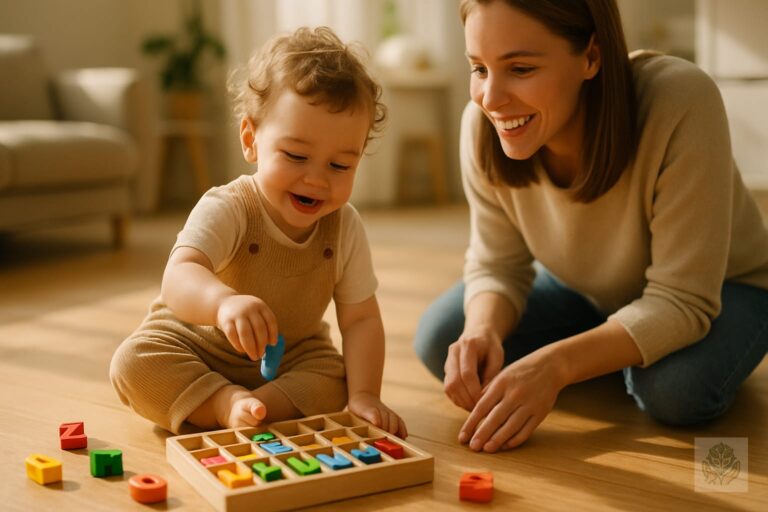
Fill a large plastic bin with kinetic sand, dried rice, or pasta. Bury plastic alphabet letters inside and encourage your toddler to dig them out. As they find each letter, celebrate the discovery and say the sound it makes.

2. Letter Hunt

Hide foam or plastic letters around your living room. Give your toddler a basket and a mission: find all the letters you have hidden! This gets them moving and keeps them engaged in a physical search for knowledge. This is also a wonderful way to keep kids active, similar to our easy movement activities for kids at home.

3. Sticky Note Wall Match

Write uppercase letters on a piece of paper and stick them to the wall. Give your toddler a stack of sticky notes with lowercase letters written on them. Their job is to match the sticky note to the corresponding letter on the wall.

4. Letter Stomp

Use masking tape to create large letters on the floor or use foam play mats. Call out a letter and have your toddler jump or stomp on the correct one. This is a fantastic way to burn off energy while building recognition skills.

5. Alphabet Soup

Fill a bin with water and toss in floating bath letters. Give your toddler a kitchen ladle or a small net. They must fish the letters out one by one. Once they have a letter, ask them to tell you what it is or find an object in the house that starts with that sound. You can combine this with other fun ideas from our screen-free water activities for toddlers.

6. Play-Doh Letter Pressing

Roll out a flat pancake of Play-Doh. Use letter stamps or plastic toys to press letters into the dough. This sensory experience helps children understand the shape and structure of each character. You can find similar hands-on ideas in our guide to hand strengthening activities for preschoolers.

7. Chalk Letter Trace

Head outside with a box of sidewalk chalk. Draw large letters for your toddler to trace with their feet or by using a paintbrush dipped in water. Writing with a giant canvas is much more appealing to a toddler than sitting at a table with a pencil.

8. Letter Matching Puzzles

Create simple, DIY puzzles by drawing a line down the middle of an index card. Write an uppercase letter on one side and a lowercase letter on the other. Cut the card into a jagged shape so the two pieces only fit together if they are the correct match. Puzzles are a fantastic learning tool, as you can read more about in our article on educational puzzle games for kids.

9. Morning Message

Start each day by writing a simple note on a whiteboard or a piece of paper, such as ‘Hi Sam!’ Point to the letters in their name each morning. Name recognition is the most meaningful starting point for toddlers because it is the word they hear most often.

10. Bath Time Foam Letters

Foam letters are a bath-time classic for a reason. They stick to the side of the tub when wet. While your child is splashing around, encourage them to stick the letters in order or spell out short words if they are ready.

Best Practices for Teaching Toddlers the Alphabet

When you start playing these letter recognition games for toddlers, keep a few expert tips in mind. First, focus on letter sounds rather than just the names of the letters. While it is great to know that ‘B’ is for ‘Ball,’ understanding that ‘B’ makes a ‘buh’ sound is essential for future reading. You can explore more ideas for growing minds in our guide on best educational toys for kids.

Always follow your child’s lead. If they want to play with the letters in a way that wasn’t in your plan, let them. Engagement is the goal, not strict adherence to the rules. Consistency beats intensity every single time. Five minutes of play every day is far more effective for long-term retention than a single hour of drilling on the weekend.

Conclusion

Teaching your toddler to recognize letters doesn’t have to be a monumental task. By incorporating these letter recognition games for toddlers into your daily routine, you are setting the stage for literacy in a way that feels natural and fun. Remember, be patient, keep the laughter flowing, and enjoy this special season of discovery with your child.

What is your favorite way to play with letters at home? Share your ideas in the comments below, or download our free printable alphabet sheet to kick off your learning journey today!

Frequently Asked Questions

At what age should toddlers start learning letters?

Most children begin to show an interest in letters between the ages of two and three. However, every child develops at their own pace, so focus on fun and exposure rather than rigid timelines.

Should I teach uppercase or lowercase letters first?

It is often easiest to start with uppercase letters because their lines are distinct and easier for toddlers to recognize. Once they master those, you can easily introduce lowercase letters.

How long should toddler learning sessions last?

Toddlers have short attention spans, so keep learning sessions between three to five minutes long. Short, frequent bursts of play are much more effective than long, structured lessons.

Should I teach letter names or letter sounds first?

While teaching letter names is common, introducing letter sounds is crucial for early reading. Teaching that the letter ‘B’ makes a ‘buh’ sound builds a strong foundation for phonics.

What are some low-prep letter games for home?

You can easily hide plastic letters in a sensory bin filled with rice, use sidewalk chalk outside, or play a matching game with sticky notes on the wall using everyday household items.

How can I help a toddler who loses interest quickly?

If your toddler loses interest, immediately switch to a different activity or put the letters away for the day. Forcing participation can lead to frustration and resistance to learning.


Why Family Bonding Matters for Young Children: Building a Foundation for Life

Why Family Bonding Matters for Young Children: Building a Foundation for Life

As parents, we often hear that spending time with our children is essential. However, the true essence of family life goes far beyond simply occupying the same room. Understanding why family bonding matters for young children is the first step toward creating a secure, nurturing environment that lasts a lifetime. It is about the quality of the connection, the consistency of the presence, and the way we respond to our children in their earliest, most formative years.

True bonding is not about grand gestures or expensive outings. It is the rhythmic, everyday dance of interaction between a parent and child. When we prioritize this connection, we are not just having fun; we are building a secure base that allows our children to explore the world with confidence. In this guide, we will explore the developmental science behind these connections and provide actionable strategies to foster deep, meaningful bonds in even the busiest households. To help inspire your days together, you can also explore 50 family bonding ideas for creating lasting memories together.

The Science Behind the Bond: Attachment Theory

At the heart of child development lies the concept of attachment theory. When a parent is consistent, responsive, and attuned to a child’s needs, the child develops what psychologists call a secure attachment. This is the bedrock of emotional stability.

How Consistent Caregiving Shapes the Brain

During the first few years of life, a child’s brain is growing at an incredible rate. Every interaction acts as a building block. When you comfort a crying toddler or laugh at a game of peek-a-boo, you are literally wiring their brain for connection. Consistent caregiving helps the brain develop healthy pathways for trust, empathy, and social interaction.

Long-term Impact on Mental Health

Children who grow up with strong, secure attachments are generally better equipped to manage stress later in life. They have learned that when they are overwhelmed, there is a safe harbor to return to. This internal sense of security acts as a buffer against anxiety and depression, fostering resilience that serves them well into adulthood.

Why Family Bonding Matters for Young Children: Core Benefits

When we ask why family bonding matters for young children, the answer is found in the holistic development of the child. A strong bond is the primary catalyst for growth across almost every domain.

Boosting Emotional Intelligence

Children learn to recognize and name their own emotions by watching how their parents handle them. Through bonding, we model empathy and emotional intelligence. When a child feels heard and understood, they learn how to listen to and understand others, which is the foundation for healthy relationships throughout their lives. Building these traits goes hand in hand with applying 7 positive parenting habits for raising confident and caring kids.

Developing Social Skills

Interaction within the family is a training ground for social life. In a supportive home, children learn the basics of turn-taking, conflict resolution, and communication. They learn that their voice matters and that they have the power to influence their social environment in positive ways.

Building Self-Esteem and Confidence

Validation is the fuel for a child’s self-esteem. When we show genuine interest in their play, their ideas, and their struggles, we tell them that they are worthy of our time and attention. This consistent positive feedback helps them develop a strong sense of self-worth.

The Impact on Behavioral Development

Many parents struggle with behavioral challenges, often feeling like they are in a constant battle for control. Strengthening the parent-child bond is often the most effective, yet underutilized, tool for behavior management. For additional guidance on navigating these challenges, explore the complete guide to managing everyday behavior challenges in kids.

Promoting Emotional Regulation

Young children do not have the neurological maturity to calm themselves down when they are upset. They rely on their parents to act as an external nervous system—a process known as co-regulation. By staying calm and present while your child is having a tantrum, you are teaching their brain how to regulate its own distress. Over time, they internalize this ability.

Making Discipline More Effective

Discipline is most effective when it is rooted in connection rather than fear. When a child feels a deep, secure bond with their parent, they are naturally more inclined to follow the rules of the household. They want to maintain that connection, which makes them more receptive to your guidance and redirection. You can also explore gentle discipline strategies: how to guide your child without yelling.

Practical Ways to Foster Connection in a Busy World

Modern parenting often feels like a race against the clock. However, you do not need hours of free time to nurture a bond. It is often the small, consistent habits that yield the biggest results.

The Power of Micro-Moments

Focus on micro-moments. These are the two-minute intervals where you put your phone down, look your child in the eye, and fully engage with whatever they are doing. A high-five, a warm hug before school, or a quick conversation about their favorite dinosaur can significantly strengthen your connection.

Quality in Routines

Mealtime and bedtime are the perfect opportunities for connection. Try to eliminate screens during these times to make them intentional. Ask open-ended questions about their day or read a book together. These rituals create a sense of predictability and safety that children crave.

Intentional Play

You don’t need to be an expert in every game. Simply sitting on the floor and following your child’s lead during playtime is an act of love. Let them be the captain of the ship while you follow their instructions. This signals that you value their creativity and their world. To extend this creative play, consider incorporating insights from the educational benefits of pretend play explained: why imagination matters for child development.

Common Obstacles to Bonding and How to Overcome Them

Even the most dedicated parents face hurdles. Burnout, work demands, and the chaos of sibling dynamics can make it difficult to feel connected. The goal is not to be a perfect parent, but to be an intentional one.

The Busy Parent Trap

If you are feeling burned out, you cannot pour from an empty cup. It is okay to lower your standards for a clean house or a perfectly cooked meal to prioritize ten minutes of one-on-one time with your child. A relaxed parent is a more available parent.

Balancing Needs

If you have multiple children, try to carve out small pockets of individual time. Even five minutes of dedicated time with one child while the other is engaged in independent play can make a world of difference. It reinforces that they are individually valued and seen.

Conclusion

Ultimately, understanding why family bonding matters for young children is about recognizing that your presence is the greatest gift you can provide. By fostering these connections, you are providing your child with the security they need to navigate the complexities of life with confidence and empathy.

Remember that parenting is a marathon, not a sprint. There will be days when you feel disconnected, and that is perfectly normal. What matters is the repair—coming back to your child, offering a hug, and resetting the connection. Do you have a favorite family tradition that helps you stay connected? We would love to hear about it in the comments below!

Frequently Asked Questions

Why is family bonding important for young children?

Family bonding is crucial because it builds a secure emotional base, boosts confidence, fosters emotional intelligence, and helps children develop healthy social skills that last a lifetime.

What is attachment theory in child development?

Attachment theory explains that when parents are consistent and responsive, children develop a secure attachment. This provides emotional stability and acts as a buffer against future stress and anxiety.

How can busy parents bond with their children?

Busy parents can utilize micro-moments by putting away phones, making eye contact, giving warm hugs, and turning daily routines like meals and bedtime into intentional connection rituals.

How does family bonding improve child behavior?

Strong bonding aids in emotional co-regulation, helping children calm down during tantrums. When children feel secure and connected, they are naturally more receptive to parental guidance and discipline.

What are some simple ways to practice intentional play?

Intentional play involves sitting on the floor and letting your child lead the activity. Following their instructions shows them that you value their creativity and world.

How do I balance bonding time with multiple children?

Carve out small pockets of individual time, such as dedicating five minutes to one child while the other plays independently, ensuring each child feels individually valued and seen.

How Parents Can Manage Screen Time at Home: A Stress-Free Guide for Families

0

How Parents Can Manage Screen Time at Home: A Stress-Free Guide for Families

In our modern digital landscape, the question of how parents can manage screen time at home has become one of the most pressing challenges of raising children. Technology is woven into the fabric of education, social connection, and entertainment, making the dream of a completely screen-free childhood feel nearly impossible. However, the goal is not to eliminate screens entirely, but rather to foster a healthy, balanced digital ecosystem where technology serves your family rather than dictates it.

Many parents feel guilty about their child’s screen habits, but it is important to remember that balance is almost always better than total restriction. When we demonize screens, we often turn them into forbidden fruit, which can create more desire. Instead, we can shift our focus toward intentional usage, helping children develop the critical thinking skills they need to navigate the digital world responsibly.

Understanding the Impact of Excessive Screen Time

Recognizing when technology use is becoming a problem is the first step toward finding balance. Children often lack the internal regulation to stop scrolling or playing, which can lead to what many experts call digital burnout. You might notice your child becoming unusually irritable, struggling to focus on non-digital tasks, or experiencing sleep disturbances. If a child becomes explosive when asked to put a device away, it is often a sign that their brain has become overstimulated by the dopamine hits of gaming or social media.

The American Academy of Pediatrics (AAP) offers helpful guidelines, but it is important to use them as a compass rather than a rigid rulebook. The AAP suggests that high-quality, educational content is vastly different from passive, mindless scrolling. Distinguishing between active engagement—such as coding, creating digital art, or playing an interactive strategy game—and passive consumption, like binge-watching short-form videos, is crucial. Not all screen time is created equal, and understanding this distinction can help you make more informed decisions about what your children consume. You can explore more choices through our best educational toys for kids age-wise guide for smart learning to keep them actively engaged offline.

How to Create a Personalized Family Media Plan

One size does not fit all when it comes to technology. A teenager needs different boundaries than a toddler, and every family has unique values and routines. The most effective way to start is by conducting a family meeting. This is a low-pressure environment where everyone gets a voice in the discussion about digital habits. By making the process collaborative, you reduce the likelihood of pushback because your children feel like active participants rather than victims of a new rule.

When drafting your family media agreement, keep it simple. Outline where devices are kept, when they are used, and what the consequences are for violating the rules. You can write these rules on a piece of paper and post it on the refrigerator. Having a clear, agreed-upon document provides a reference point for when arguments arise, taking the emotion out of the conflict and allowing you to point back to the family policy you created together. Establishing clear frameworks is similar to maintaining consistency as outlined in our complete guide to flexible daily schedules for young children.

Actionable Strategies for Managing Daily Screen Time

Implementing consistent boundaries is the secret to success. Start by establishing tech-free zones in your home, such as the dinner table and bedrooms. Keeping devices out of the bedroom, in particular, ensures that children are not tempted to engage with screens late at night, protecting their sleep and mental health. When these areas are permanently off-limits, it removes the need for daily negotiation.

Similarly, defining tech-free times can protect family connection. Consider declaring the hour before bedtime as a screen-free window. During this time, the brain can begin to unwind from the blue light and fast-paced stimuli, making for a much smoother transition to sleep. Parents should also utilize parental control apps if they find that managing time limits manually is too stressful. These tools can automatically turn off access to certain apps or websites at a predetermined time, acting as an impartial gatekeeper. For more tips on easing evening friction, check out our guide on how to help a child who fights bedtime.

Encouraging Alternatives: What to Do Instead of Screens

If you remove the screen, you must replace it with something else, or your child will inevitably gravitate back to what they know. Younger children thrive with open-ended play materials like building blocks, art supplies, or simple sensory bins. For older children, consider activities that offer a sense of autonomy and challenge, such as learning to cook, starting a physical hobby like skateboarding or swimming, or even helping with age-appropriate home projects. You can discover plenty of physical inspiration in our collection of 15 easy movement activities for kids at home to burn energy.

Do not be afraid of a little boredom. Many parents feel the need to constantly entertain their children, but boredom is actually a powerful tool for creativity. When children are left to their own devices, they learn how to occupy their minds without external stimuli. Most importantly, model the behavior you want to see. If you are constantly checking your phone during family time, your children will naturally follow suit. Being a mindful digital role model is perhaps the most powerful teaching tool you have.

Navigating Resistance: Dealing with Pushback

You should expect some friction when you start to tighten your screen time rules. Children are hardwired to enjoy the instant gratification of a screen, so when that is taken away, they may experience tantrums or intense negotiations. Stay calm and stay consistent. If you consistently enforce the rules you set, the pushback will eventually fade as your children realize that the boundaries are firm and non-negotiable.

Avoid using screen time as a reward or punishment whenever possible. When screen time becomes a commodity to be earned, it gains more value in the child’s mind. Instead, treat it like any other activity. If they are frustrated, acknowledge their feelings without folding on the boundary. You might say, I know you want to keep playing, and I understand that feels frustrating, but our family rule is that we put the tablet away at 6 PM. Validation paired with consistency is much more effective than yelling or giving in. For broader behavioral strategies, review our insights on how to handle a child who refuses to listen.

Conclusion

Learning how parents can manage screen time at home is a journey of patience and trial and error. You do not need to be perfect to be a successful digital parent. Consistency is the primary factor that will lead to long-term change, even if the results are not immediate. By setting clear boundaries, modeling healthy habits, and focusing on connection, you can create a home environment where technology is a helpful tool rather than a source of stress.

Remember that even small steps—like banning phones at the dinner table or enforcing a nightly tech cutoff—can lead to big improvements in family harmony. You have the power to guide your children toward a balanced digital life. For more help getting started, download our free Family Media Plan Template today to simplify your planning process. You can also explore our expert advice on common parenting mistakes Indian parents make (and how to fix them) for additional guidance on managing daily routines.

Frequently Asked Questions

How can parents manage screen time at home without daily arguments?

Involve your children in creating a collaborative family media plan. Establishing clear, pre-agreed rules and posting them on the refrigerator removes emotion from conflicts and sets clear expectations.

What are good tech-free zones to establish at home?

Designate the dinner table and bedrooms as permanent tech-free zones. Keeping devices out of bedrooms protects children’s sleep quality and prevents late-night screen temptation.

Is all screen time equally harmful for children?

No. Active engagement, such as coding or digital art, differs greatly from passive consumption like binge-watching short videos. Focus on the quality of content rather than just total hours.

How should parents handle pushback when reducing screen time?

Stay calm and consistent. Validate your child’s feelings of frustration without giving in to tantrums, reinforcing that boundaries are firm and non-negotiable.

Why is boredom important when limiting screen time?

Boredom acts as a powerful catalyst for creativity and independent problem-solving, teaching children how to occupy their minds without relying on external digital stimuli.

Should screen time be used as a reward or punishment?

Avoid using screen time as leverage, as this turns it into a high-value commodity. Instead, treat it like any other regular daily activity to reduce its psychological pull.

How to Help Kids Follow a Morning Schedule: 7 Stress-Free Strategies

How to Help Kids Follow a Morning Schedule: 7 Stress-Free Strategies

If you have ever found yourself frantically searching for a missing shoe while your child stares blankly at a bowl of cereal, you are not alone. The morning rush is a universal parenting challenge. Between getting dressed, eating breakfast, and finding backpacks, the clock seems to accelerate the moment the sun comes up. When you learn how to help kids follow a morning schedule, you replace chaos with confidence and reclaim your sanity.

Establishing a morning routine is not just about logistics; it is a fundamental aspect of child development. When children know what to expect, they feel secure. This structure reduces anxiety and sets the tone for the entire day. In this article, we will explore why mornings are so challenging and how you can implement a sustainable schedule that works for everyone. For broader structural ideas, you can also review the complete guide to flexible daily schedules for young children.

Why Kids Struggle with Mornings

To support your child effectively, it helps to understand why they might struggle with a morning schedule. Much of the challenge lies in the developing brain. Children, particularly those under the age of ten, are still building their executive function skills—the cognitive processes responsible for planning, focusing, and managing time.

When a child wakes up, they are immediately hit with a barrage of decisions: What do I wear? What do I want for breakfast? Where is my homework? This leads to decision fatigue, which can result in irritability or total paralysis. Furthermore, young children often lack an internal sense of time. To them, five minutes feels like an hour, and an hour can feel like a fleeting moment. Routines serve as external scaffolding for these developing skills, providing the security they need to navigate their day successfully.

Step-by-Step Strategy to Build a Morning Routine

Implementing a successful routine requires patience and a bit of planning. Use these seven strategies to help your kids follow a morning schedule with minimal friction.

1. Prep the Night Before

The secret to a calm morning actually happens the night before. By setting the stage in the evening, you remove the heavy lifting from the morning. Make it a habit to check backpacks, lay out clothes, and prepare lunchboxes together before bedtime. When your child wakes up knowing exactly where their socks are, the morning momentum stays positive.

2. Keep it Visual

Abstract concepts like time are difficult for children to grasp. Use visual aids like chore charts, icons, or photo checklists. A visual representation of the morning steps allows your child to see what has been accomplished and what remains. This gives them a sense of autonomy and keeps them on track without you needing to repeat yourself constantly.

3. Simplify the Steps

A big task, like getting ready, can be overwhelming. Break it down into small, bite-sized wins. Instead of saying get ready, try a sequence: put on your shirt, put on your pants, brush your teeth, and then come to the kitchen. These small wins build momentum and keep the child focused on the immediate task at hand. For developing related daily habits, take a look at how parents can encourage independent hygiene habits.

4. Leverage Natural Consequences

If your child is dragging their feet, avoid the urge to lecture or nag. Instead, use natural consequences. If they spend too long playing with toys, they might not have time for their preferred morning cartoon or a snack. Communicate these expectations clearly in advance so they understand that their choices during the routine directly impact their free time. To manage pushback effectively, you can explore proven methods on how to handle child tantrums without shouting.

5. Gamification

Transform the mundane into something engaging. Use a kitchen timer or a fun app to turn getting dressed into a race against the clock. When you frame it as a challenge rather than a chore, you often see a significant increase in cooperation. Ensure the goals are realistic so your child feels the thrill of success often.

6. Foster Independence

Children are much more likely to follow a schedule they had a hand in creating. Give them choices within boundaries. Let them pick between two shirts or choose their own breakfast cereal. When they feel like they have ownership over their routine, they are far more motivated to execute it without constant prodding.

Tools to Make Mornings Easier

The right tools can significantly reduce the mental load for both you and your child. For younger children, simple laminated checklists with pictures are often most effective. As children grow, they may prefer a digital app that sends reminders or a traditional alarm clock that helps them learn to manage their own wake-up time.

Visual timers are particularly helpful for kids who struggle with the concept of time. Seeing the red portion of a timer shrink provides a physical representation of how much time they have left before it is time to leave. Choose a tool that matches your child’s age and learning style to ensure it becomes a helpful companion rather than another source of stress.

Troubleshooting Common Morning Roadblocks

Even with the best plans, some days will simply go sideways. If you have a child who tends to be a slow poke, focus on identifying the specific hurdle—is it a lack of motivation, or are they genuinely struggling with the physical tasks? Tailor your support to their specific need.

For morning meltdowns, remember that empathy is your best tool. Validate their feelings while gently nudging them back to the schedule. If the routine breaks down entirely, avoid dwelling on it. Instead, treat it as a learning opportunity. Once the dust settles, ask your child what they think could go differently tomorrow to make things smoother. To strengthen overall behavior management, you can read more through the complete guide to managing everyday behavior challenges in kids.

Conclusion

Helping your kids follow a morning schedule is a journey, not a sprint. Consistency is your greatest ally, but remember that perfection is not the goal. Some mornings will be effortless, while others will remain a work in progress. Stay patient, keep your expectations age-appropriate, and celebrate the small victories along the way. By providing this structure, you are not just getting them to school on time; you are teaching them valuable life skills that will serve them well into adulthood. Ready to get started? Download our free printable morning routine checklist today and transform your mornings for the better. For more daily scheduling frameworks across different age groups, visit daily routine for kids by age.

Frequently Asked Questions

Why do kids struggle so much with morning routines?

Children struggle because their developing brains are still building executive function skills needed for time management and planning. They also experience decision fatigue and lack an internal sense of time.

At what age can children start following a morning schedule?

Children as young as two or three can begin following simple routines using picture-based visual charts. As they grow older, the complexity of the schedule can increase to match their developmental stage.

How can I make my child’s morning routine more engaging?

You can use gamification, such as turning getting dressed into a race against a kitchen timer. Giving children choices within boundaries also increases their engagement and motivation.

What should I do if my child ignores the morning schedule?

Instead of lecturing or nagging, rely on natural consequences. If they spend too much time playing, they might miss out on extra free time, helping them learn the importance of staying on track.

How does prepping the night before help with morning stress?

Prepping the night before removes heavy decision-making from the morning rush. Laying out clothes, packing lunches, and checking backpacks ahead of time ensures a much smoother and calmer start to the day.

What tools are best for kids who do not understand time?

Visual timers, picture checklists, and chore charts are excellent tools. Visual timers show a physical representation of shrinking time, making it easier for younger children to grasp time management.

How to Set Healthy Boundaries With Toddlers: A Gentle Parenting Guide

How to Set Healthy Boundaries With Toddlers: A Gentle Parenting Guide

If you are currently navigating the toddler years, you know the drill. One minute your child is laughing, and the next, they are testing every limit you have carefully established. This phase of development is often referred to as the testing phase, and while it can be exhausting, it is a completely normal part of growing up. Many parents find themselves asking how to set healthy boundaries with toddlers without feeling like they are constantly in conflict with their little ones.

The truth is that boundaries are not meant to be restrictive cages; they are actually a vital form of security for toddlers. When we approach discipline through a lens of gentle, firm, and consistent guidance, we provide our children with the roadmap they need to navigate the world. This article explores how you can foster a respectful, calm environment while maintaining the essential limits your child needs to thrive.

Why Toddlers Need Boundaries (Even When They Fight Them)

It is easy to interpret a toddler’s pushback as a sign that they want total freedom, but the opposite is often true. The world is a vast, overwhelming, and unpredictable place for a two-year-old. When boundaries are absent, the world can feel chaotic. By setting clear limits, you provide your child with a predictable framework that helps them regulate their emotions.

Boundaries serve as a container for big feelings. When you maintain a limit, you are teaching your child that their impulses do not control the situation. There is a profound difference between punishment and healthy boundary-setting. Punishment focuses on shame or fear to stop a behavior, whereas setting healthy boundaries focuses on teaching and safety. When we guide our children with kindness, we are helping them build internal self-discipline rather than just teaching them to avoid consequences. Learn more effective techniques in our guide to gentle discipline strategies: how to guide your child without yelling.

The 3 Pillars of Effective Boundary Setting

Effective boundary setting relies on a foundation of three core pillars: clarity, consistency, and connection. Mastering these will transform the way your household runs.

  • Clarity: Toddlers do not have the cognitive maturity to process long lectures. Use short, simple, and direct language. Instead of explaining the physics of why they cannot run into the street, simply say, Stop. The street is not safe. Walk with me.
  • Consistency: This is the secret sauce. If a rule changes depending on your mood or your level of fatigue, your toddler will inevitably test the boundary again to see if it is still there. Use the broken record technique: repeat your boundary calmly every time it is tested, without escalating your volume or frustration.
  • Connection: Boundaries are best received when the child feels connected to you. Ensure your boundaries are set from a place of love and protection rather than anger or power. When your child feels safe in your relationship, they are much more likely to cooperate with your rules.

Practical Strategies for Setting Limits

Theory is important, but practical application is where the real work happens. Here are some actionable tools to help you set healthy boundaries with toddlers effectively:

Offer Choices to Encourage Autonomy

Toddlers crave independence. When you force a demand, they naturally resist. Instead, frame the request as a choice. Ask, Do you want the red cup or the blue cup? or Would you like to put your shoes on before or after we get your coat? This gives them a sense of control while keeping the boundary intact.

The When-Then Method

This is a powerful, low-conflict way to communicate expectations. For example, say, When we put our shoes on, then we can go outside. This frames the requirement as a prerequisite to a desirable activity rather than an arbitrary order.

Use Visual Cues and Timers

Transitions are notoriously difficult for toddlers. A timer provides a neutral authority figure. When the timer goes off, the transition is inevitable. You can say, The timer says it is time to stop playing, instead of making the decision yourself, which reduces the potential for a power struggle.

Validate Feelings While Maintaining the Limit

You can absolutely hold a firm boundary while empathizing with your child’s frustration. Use scripts like, I see you are angry that it is time to stop playing, but our screen time is over. This shows you hear them, which de-escalates the tension, even while you stand your ground.

Handling the Pushback: What to Do When They Resist

When you hold a boundary, a meltdown may follow. This is not a sign that you have failed; it is a sign that your child is expressing their disappointment in a way they know how. Your job is to stay calm. Practice deep breathing, ground yourself, and remember that your child needs you to be the steady anchor during their emotional storm. You can discover more proven techniques in our article on how to handle child tantrums without shouting.

Hold the boundary without losing your temper. If you cave or give in after they protest, you are inadvertently teaching them that persistence is the key to breaking a rule. If they see that yelling or crying changes the outcome, they will learn to use those behaviors more often. By staying kind but firm, you teach them that their emotions are valid, but the rule remains.

Common Boundary Pitfalls to Avoid

Even the most well-intentioned parents run into traps. Avoid these common mistakes to keep your boundary-setting effective:

  • Setting too many rules at once: If you constantly correct every minor behavior, you and your child will become overwhelmed. Prioritize the most important rules, such as those regarding safety, and let the small stuff slide.
  • Inconsistency between caregivers: If one parent sets a boundary and the other lets it slide, the toddler will become confused and frustrated. Try to get on the same page as your partner so the child knows what to expect regardless of who is in charge.
  • Using ‘No’ too often: Constant negatives can cause a child to tune you out. Instead of saying No running, say, Please use walking feet. This gives the child a positive action to perform rather than just a restriction.

When to Be Flexible: Choosing Your Battles

Not every rule is worth a power struggle. It is essential to distinguish between non-negotiable safety rules—like wearing a car seat or not touching a hot stove—and preference rules, like what color shirt they wear or what toy they carry to the store.

By picking your battles, you reserve your energy for the things that truly matter. When you give your child room for personal expression in low-stakes situations, they are often more willing to comply when you need them to follow a rule in a high-stakes situation.

Conclusion

Learning how to set healthy boundaries with toddlers is a marathon, not a sprint. It takes patience, consistency, and a lot of grace—for both you and your little one. Remember that every time you calmly uphold a limit, you are providing your child with the safety and structure they need to grow into a resilient and respectful individual. For further insights on overall child management, check out our complete guide on managing everyday behavior challenges in kids.

You do not have to be perfect; you just have to be present and consistent. Are you struggling with a specific boundary in your home? We would love to hear from you. Please leave a comment below sharing your biggest challenge, or sign up for our newsletter to receive more gentle parenting tips delivered straight to your inbox.

Frequently Asked Questions

Why do toddlers test boundaries?

Toddlers test boundaries because they are exploring their environment and testing their independence. It is a normal part of development where they learn cause and effect and seek the security of predictable limits.

What is the difference between punishment and boundaries?

Punishment focuses on fear or shame to stop a behavior, whereas setting healthy boundaries focuses on teaching, safety, and guiding children toward self-regulation and emotional control.

How can I stop power struggles with my toddler?

You can reduce power struggles by offering limited choices, using visual timers for transitions, and applying the ‘When-Then’ method to frame expectations around desirable activities.

What should I do when my toddler has a meltdown over a rule?

Stay calm, validate their feelings by acknowledging their frustration, and hold the boundary firmly without losing your temper or giving in to the demand.

How many rules should I set for a toddler?

Focus on a few essential rules, primarily concerning safety and core values, to avoid overwhelming both yourself and your child with too many restrictions.

Is it okay to be flexible with toddler rules?

Yes, it is important to pick your battles. Be firm on non-negotiable safety rules, but allow flexibility in low-stakes situations like clothing choices to give your toddler a sense of autonomy.

15 Unforgettable Family Adventure Ideas for Your Next Day Off

0

15 Unforgettable Family Adventure Ideas for Your Next Day Off

Between work deadlines, school projects, and the never-ending list of household chores, finding time to connect as a family can feel like an impossible puzzle. Many parents fall into the trap of thinking that high-quality connection requires a plane ticket or a hefty vacation budget. The truth is that the most impactful moments often happen right in your own backyard or neighborhood.

By prioritizing intentional family time, you can transform a simple day off into a core memory for your children. 15 unforgettable family adventure ideas for your next day off provide a roadmap for breaking the cycle of routine. Whether you are seeking thrills or quiet exploration, these activities prove that you do not need a fancy itinerary to build stronger family bonds. You can also explore 50 family bonding ideas for creating lasting memories together for even more inspiration.

Why Spontaneous Adventure Days Matter

When life moves at breakneck speed, our brains—and our children’s brains—become cluttered with digital noise. Taking a full day to step outside of the norm offers significant mental health benefits for both parents and kids. It lowers cortisol levels, sparks creativity, and creates a sense of shared purpose that is often missing from our daily chores.

Choosing to disconnect from screens allows you to trade pixels for presence. When you embark on an adventure, you are signaling to your children that they are your priority. This isn’t just about fun; it is about building emotional security. By exploring the world together, you model curiosity and resilience, teaching your children that adventure is a mindset rather than a destination. For ideas on bringing this energy indoors on rainy days, check out our guide on how to create an epic family adventure day at home.

5 Outdoor Adventure Ideas to Get Everyone Moving

Getting fresh air is the quickest way to reset a grumpy mood or a sluggish morning. Use these outdoor activities to reconnect with nature and each other:

  • Local Trail Exploration: Pick a nearby nature trail and turn it into a scavenger hunt. Create a list of things to find, such as a Y-shaped stick, three different leaf types, or a bird’s nest. This keeps children engaged and encourages them to observe their surroundings.
  • Geocaching: Known as the world’s largest treasure hunt, geocaching uses GPS coordinates to find hidden containers. Many apps are free and simple to use, turning a standard walk into an exciting mystery that tech-savvy kids will love.
  • Picnic at an Unknown Park: We often stick to the same two or three playgrounds. Use your day off to find a park in a neighboring town that you have never visited before. Pack a simple lunch and spend the afternoon letting the kids discover new play structures.
  • Backyard Camping or Stargazing: You do not need to pack a car to have an adventure. Set up a tent in the yard or lay out blankets on the roof for a stargazing session. The novelty of sleeping—or just hanging out—outside creates instant magic.
  • Biking or Scooter Safari: Map out a route that hits a few local landmarks, like a historical statue, a favorite mural, or a landmark tree. Treat it like a race or a photography tour, stopping to take fun pictures at each waypoint. Before heading out on wheels, make sure your children know the fundamentals covered in our guide on how to practice starting and stopping a bicycle.

5 Budget-Friendly Cultural & Indoor Adventures

If the weather isn’t cooperating or you prefer a quieter pace, indoor activities can be just as adventurous. Here is how to keep the curiosity flowing while staying on budget:

  • Museum ‘Speed-Run’: Instead of trying to see the entire museum, pick one theme or one era to master in an hour. This prevents the classic museum burnout and keeps the experience focused and exciting.
  • Public Library Discovery: Visit a branch of your library you haven’t seen before. Challenge every family member to find one book on a topic they know nothing about. It is a low-pressure way to spark new interests.
  • Foodie Exploration: Choose a country or culture you have never explored and visit a local market or restaurant to try one authentic dish. It is a fantastic way to broaden your children’s palates and discuss geography and culture.
  • Art Gallery or Street Mural Hunt: Many cities have vibrant street art. Use a map to plan a walking tour of your city’s murals. Bring sketchbooks and pencils so the kids can try to recreate their favorite pieces on the spot.
  • The ‘Tourist in Your Own Town’ Challenge: Visit that one local landmark you drive past every day but never actually step inside. Whether it is a clock tower, a small historical home, or a botanical garden, viewing your own city through a visitor’s eyes changes your perspective entirely.

How to Plan Your Adventure Day Without the Stress

The secret to a successful adventure day is balancing structure with flexibility. If you over-plan, you will spend the whole day managing a schedule rather than enjoying the moment. Use these practical strategies to keep the day running smoothly:

The ‘Pick-a-Card’ Method

Write down four or five potential activities on index cards. Let your children draw one from a hat to decide the main event. Giving them autonomy makes them more invested in the success of the day.

Essential Gear Checklist

Always keep a go-bag ready. Pack high-energy snacks like dried fruit or granola, a basic first aid kit, extra layers for changing weather, and plenty of water. Being prepared for minor hiccups prevents them from becoming major meltdowns. For longer excursions, you can also review the ultimate packing list of 15 must-have travel items for family trips.

Setting Expectations

Adventure fatigue is real, especially for younger children. Plan for plenty of downtime. If you feel a mood swing coming on, build in a coffee break or a quiet stop to prevent overstimulation.

The Rule of ‘No Screens’

Establish a family rule that phones stay in pockets or bags unless they are being used for navigation or taking photos. This creates a focused environment where everyone is truly present.

Capturing the Memories (Without Over-Documenting)

It is tempting to want to record every second of your day, but looking at life through a lens often prevents you from actually living it. To capture the memories without letting the camera get in the way, designate a specific time for photos. For example, agree that you will take photos at the beginning and the end of the activity, but keep the camera away during the main event.

Better yet, give the camera to one of your kids for a portion of the day. You will get a unique, ground-level perspective of your adventure, and they will feel empowered by the responsibility of being the official photographer. The blurred or slightly off-center shots are often the ones you will cherish the most years from now. If your adventures frequently involve outdoor water play, you can also discover fun ideas like 15 fun family water play activities for epic summer weekends.

Conclusion

Engaging in 15 unforgettable family adventure ideas for your next day off doesn’t require a miracle. It simply requires a decision to step away from the mundane and lean into discovery. Whether you are hiking a local trail or hunting for murals, the goal is not perfection—it is connection. Start small, stay flexible, and watch how these tiny adventures transform your family dynamic. Do you have a favorite hidden gem in your town? Share it in the comments below or tag us in your family adventure photos on social media!

Frequently Asked Questions

What are some good family adventure ideas for a day off on a budget?

Budget-friendly ideas include exploring local nature trails, visiting a new public library branch, hunting for public street art, trying geocaching, or setting up a backyard camping and stargazing experience.

How do I plan a family adventure day without stressing out?

Keep the day balanced by avoiding over-scheduling. Use the pick-a-card method to let kids choose activities, pack essential snacks and first-aid gear in advance, and build in plenty of quiet downtime.

How can I get my children excited about outdoor family activities?

Turn standard walks into interactive games like scavenger hunts or geocaching. Giving children specific roles, such as being the official photographer or map reader, increases their engagement.

What should I pack for a family adventure day?

Always pack high-energy snacks like granola bars or dried fruit, plenty of water, weather-appropriate extra clothing layers, a basic first aid kit, and any necessary navigation or camera gear.

Are there indoor family adventure ideas for bad weather days?

Yes, you can do a museum speed-run focusing on a single exhibit, explore a new local market or restaurant to try global foods, or visit an unfamiliar public library to discover new books.

How can we limit screen time during our family adventure?

Set a clear rule that phones remain tucked away unless needed for navigation or photos. Encourage children to experience the environment directly rather than through a digital screen.

15 Genius Sports Equipment Storage Ideas to Tame the Garage Clutter

0

15 Genius Sports Equipment Storage Ideas to Tame the Garage Clutter

Does your garage feel more like an obstacle course than a place to park your car? If you are tired of tripping over baseball bats, stepping on rogue soccer balls, or digging through a mountain of tangled hockey gear just to find one shin guard, you are not alone. The sports gear explosion is a common rite of passage for active families. However, reclaiming your space is entirely possible with the right approach. For older kids getting into competitive sports, checking out a sports equipment guide for active kids can help you figure out what gear actually needs storage space.

Implementing smart sports equipment storage ideas does more than just make your home look tidy. It saves you precious minutes during the morning rush, prevents expensive gear from getting damaged, and significantly reduces the daily stress of household management. In this guide, we will explore practical, budget-friendly ways to transform your chaos into a highly functional system.

Assessing Your Family’s Sports Storage Needs

Before you run out to buy expensive shelving, take a moment to perform a thorough inventory. Drag every piece of equipment into the middle of the driveway. You will likely find items that have been outgrown, broken, or abandoned. Sort your gear into three piles: keep, donate, and trash. Getting rid of the excess is the most important step in successful garage organization.

Once you have narrowed down your inventory, decide on a categorization system that works for your household. Some families prefer to organize by sport, keeping all basketball items together and all swimming gear in one bin. Others find it more effective to assign a dedicated zone to each family member. If your children are old enough to take responsibility, personal cubbies or bins for each person can significantly decrease the amount of time you spend hunting for misplaced items.

Finally, choose your location wisely. While the garage is the go-to spot for bulky items, smaller, daily-use gear might be better suited for a mudroom or a utility closet inside the home. Evaluate your flow: where do you actually put your bag when you walk through the door? That is where your primary storage hub should be.

Garage Sports Storage Solutions for Large Items

Large sports equipment requires vertical thinking. Wall-mounted overhead racks are a game-changer for seasonal items that you do not need every day, such as snowboards, skis, or even out-of-season surfboards. By utilizing the upper space of your garage, you keep valuable floor space open for vehicles or other projects.

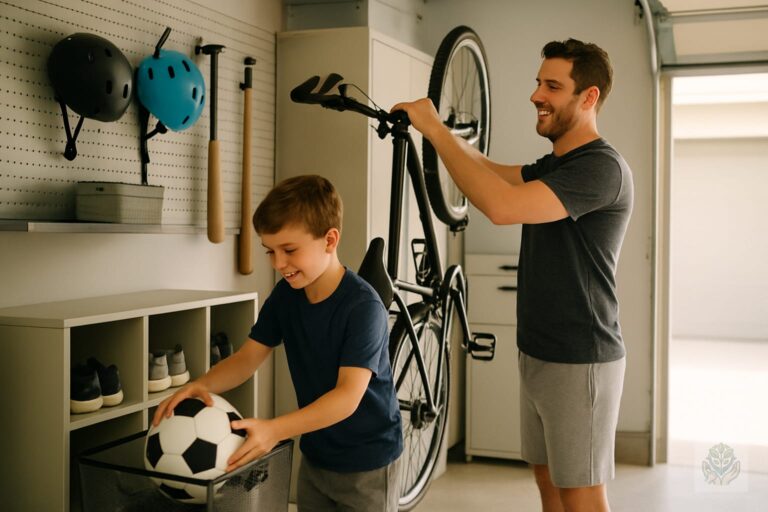
When it comes to balls of various sizes, avoid the pile on the floor. Freestanding ball bins or wall-mounted cages are excellent sports storage hacks. These allow you to store balls securely while ensuring they do not roll under the car or into the street. If you have bicycles or scooters, vertical storage hooks or wall tracks are essential. Mounting bikes vertically allows you to store more in less space while protecting the tires from sitting on a cold, damp concrete floor. For families managing two-wheelers, having a bike repair kit for family cycling stored nearby can keep your maintenance gear just as organized.

DIY Sports Equipment Storage on a Budget

You do not need a professional closet organizer to create an efficient system. A simple pegboard is one of the most versatile tools for any garage. You can mount it on the wall and use various hooks to hang helmets, baseball jerseys, pads, and even jump ropes. This keeps everything visible and accessible, preventing the dreaded gear pileup.

Upcycling is another fantastic way to manage your athletic gear storage. Old wooden bookshelves can be repurposed to hold cleats, batting gloves, and smaller items like water bottles or whistles. If you have plastic laundry baskets or milk crates, label them clearly with specific sports or family members. These bins are lightweight, portable, and easily cleaned if they get muddy. For smaller children’s spaces inside the house, looking into open storage ideas for a kids’ room can offer even more inspiration for accessible bins.

Mudroom & Entryway Organization for Daily Practice Gear

Your mudroom or entryway is the first line of defense against household clutter. Creating a dedicated grab-and-go station can change your entire afternoon routine. Install hooks at heights that even younger children can reach, ensuring that sports bags, cleats, and hats have a permanent home the moment they arrive at the door.

Individual cubbies are highly effective for busy families. By giving each person their own designated slot, you eliminate the “who left this here?” argument. Most importantly, focus on ventilation. Sports gear, especially for hockey or football, can retain moisture and odor. Ensure your storage area has good airflow—open-front lockers or mesh bins are superior to airtight plastic containers for items that need to dry out between practices. If your little ones are also managing outdoor gear like strollers or trikes, setting up a smooth daily routine for kids can help them remember where everything goes.

Tips for Maintaining an Organized Sports Closet

Organization is not a one-time project; it is a habit. Adopt the one-in, one-out rule for your seasonal gear. When you buy a new pair of cleats, ensure the old ones are either donated or tossed. This prevents your storage space from becoming overwhelmed over time.

Labeling is your best friend when trying to maintain order. Use clear, simple labels that even young children can understand. If a child knows exactly where the soccer ball goes, they are much more likely to put it back. Finally, schedule a seasonal maintenance check. Every few months, take 20 minutes to clean out the bins, check for broken gear that needs repair, and ensure that everything is in its proper place before the next season hits. Cultivating these habits early can even support independent habits in kids across other areas of household responsibility.

Conclusion

A well-organized home does more than just look nice; it sets the tone for a more peaceful and productive family life. By using these sports equipment storage ideas, you can spend less time hunting for lost shin guards and more time focusing on the activities that matter most. Remember, you do not have to do everything at once. Start with one shelf or one corner of the garage, and build from there.

Do you have a clever way to keep your sports gear under control? We would love to hear your best storage hacks in the comments section below! If you want more tips on how to simplify your home and streamline your daily routine, sign up for our weekly newsletter for exclusive home organization insights.

Frequently Asked Questions

What is the best way to store large sports equipment in a garage?

Vertical storage is best for large items. Use wall-mounted overhead racks for seasonal gear like snowboards, and vertical bike hooks to keep floors clear.

How can I store multiple balls so they don’t roll away?

Freestanding ball bins, bungee cord ball cages, or wall-mounted sports organizers are excellent ways to keep balls contained and prevent them from rolling across the garage floor.

What are some budget-friendly sports storage ideas?

Pegboards with adjustable hooks, upcycled bookshelves, and labeled plastic milk crates are affordable and versatile options for organizing athletic gear.

How do I keep sports gear from smelling up the house?

Ensure good ventilation by using open-front lockers, mesh bins, or hooks in a mudroom rather than airtight plastic containers, allowing sweaty gear to dry out.

How can I get my kids to put their sports equipment away?

Assign personal cubbies, bins, or low hooks labeled for each family member. Clear labeling makes it easy for children to know where their gear belongs.

How do I maintain an organized sports storage system over time?

Adopt a one-in, one-out rule for seasonal gear and schedule a quick seasonal maintenance check every few months to clear out broken or outgrown equipment.

15 Engaging Screen-Free Water Activities for Toddlers to Beat the Boredom

0

15 Engaging Screen-Free Water Activities for Toddlers to Beat the Boredom

As a parent, you know the struggle of the afternoon slump. When the toys are scattered, the books have been read for the third time, and the temptation to turn on the television is strong, it is time to pivot. Finding screen-free water activities for toddlers is one of the most effective ways to break the monotony of the day while supporting your child’s natural curiosity.

Water play is more than just a way to stay cool; it is a powerful tool for cognitive and physical development. By engaging in hands-on exploration, your toddler learns about science, physics, and sensory integration, all while having a blast. Let’s dive into these 15 simple, engaging, and screen-free ideas to help you conquer boredom.

Why Screen-Free Water Play is Essential for Toddler Development

In an age dominated by digital stimuli, prioritizing screen-free play is a gift to your child’s developing brain. Water play provides a tactile experience that screens simply cannot replicate. When a toddler splashes, pours, or drips water, they are engaging multiple senses at once, which builds neural pathways and fosters deep focus. For more inspiration on keeping little ones entertained without devices, check out our guide on indoor toddler activities.

Beyond the brain benefits, these activities allow children to practice self-regulation. There is something inherently calming about the rhythmic motion of pouring water or the soft sound of splashing. These screen-free water activities for toddlers help channel high energy into productive, quiet play, leaving both parent and child feeling refreshed.

Benefits of Sensory Water Play

Sensory play is a cornerstone of early childhood development. When children manipulate water, they encounter concepts like volume, buoyancy, and temperature. This is early-stage STEM learning in its purest form. They learn that a heavy rock sinks while a plastic boat floats, and that water can change shape depending on the container it occupies. You can discover more concepts like this in our educational STEM toys guide.

Furthermore, these activities improve fine motor skills. Using droppers, squeeze bottles, sponges, and cups requires coordination and grip strength. These small movements are the foundation for future skills like holding a pencil, using scissors, and performing daily tasks like zipping up a jacket. If you want to build these abilities further, try exploring these hand strengthening activities for preschoolers.

Safety First: Essential Tips for Water Play with Toddlers

Before you begin, safety must remain the top priority. Even a small amount of water requires your undivided attention. Never leave a toddler unattended near water, regardless of how shallow the basin or pool may be. Always keep a towel nearby to clean up spills immediately, preventing slip-and-fall accidents.

Choose non-toxic, age-appropriate tools for your activities. Avoid small items that could become a choking hazard. If you are playing outdoors, ensure your toddler is protected with sunscreen and shade to prevent overheating during long play sessions.

Outdoor Screen-Free Water Activities

1. DIY Backyard Car Wash

Set up a mini car wash for your child’s plastic ride-on toys, wagons, or tricycles. Fill a bucket with soap and water, provide a few sponges or a soft scrub brush, and let them get to work. It is a fantastic way to teach them about cleaning up while they enjoy the sudsy mess.

2. Water Table Painting with Paintbrushes

You do not always need actual paint to create art. Give your toddler a bucket of water and a variety of paintbrushes. Let them paint the fence, the patio, or the side of the house. The water darkens the surface, creating a temporary masterpiece that disappears as it evaporates.

3. Rescue the Frozen Toys

Freeze small plastic dinosaurs or waterproof figurines in a container of water the night before. The next day, provide your toddler with a spray bottle of warm water or a small brush and invite them to help the animals escape from the ice. This is an excellent exercise in patience and problem-solving.

4. Bubble Foam Station

Mix two parts water with one part tear-free bubble bath or mild dish soap in a blender until it creates stiff, fluffy peaks. Scoop the foam into a large bin, add some scoops or bowls, and let your child explore the sensory texture of the bubbles. It is tactile, safe, and incredibly fun.

5. Sponge Relay Race

Place two buckets several feet apart. Fill one with water and leave the other empty. Your toddler’s goal is to move the water from the full bucket to the empty one using only a sponge. It is a simple game that keeps them moving and focused on the task at hand. For even more ways to keep kids active, browse our collection of movement activities for kids at home.

Indoor Water Play Ideas (When You’re Stuck Inside)

6. Bath Time Glow-in-the-Dark Fun

Transform the bathroom into a magical space by using waterproof glow sticks or LED submersible lights. Dim the lights and let your toddler play with their toys in the glowing water. It turns a routine bath into a sensory-rich, calming experience that prepares them for bedtime. You can establish even smoother routines with tips from our daily routine guide for kids.

7. Kitchen Sink Sorting and Pouring

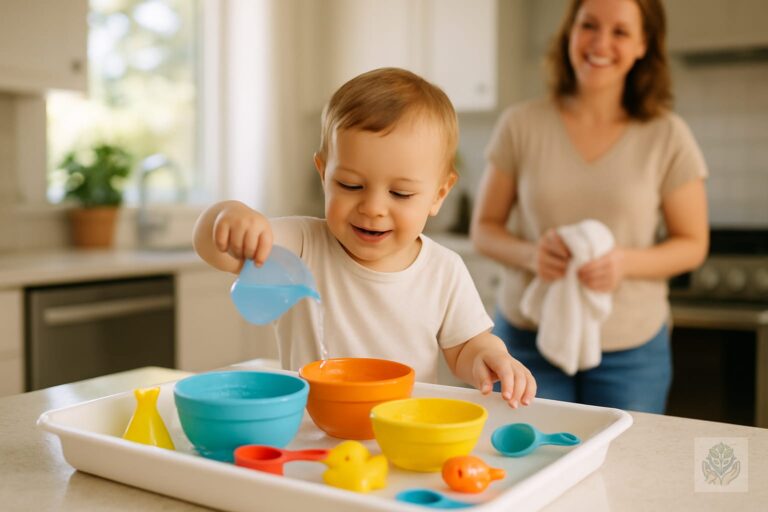
The kitchen sink is the ultimate indoor water station. Gather various containers, measuring cups, and funnels. Allow your toddler to experiment with pouring water between containers, which helps them understand capacity and volume. Sorting waterproof toys into different colored bowls also adds a cognitive layer to the fun.

8. Animal Washing Station

Fill a plastic bin with warm, soapy water and gather all the plastic toy animals from the playroom. Provide a scrub brush or a soft cloth so your toddler can bathe the animals. It is a quiet, gentle activity that mimics caregiving and promotes empathy. Roleplay like this pairs wonderfully with insights from our article on the educational benefits of pretend play.

9. Tea Party with Colored Water

Add a drop of food coloring to a pitcher of water. Provide plastic tea sets and let your child serve tea to their stuffed animals. Using different colors of water allows them to practice pouring without the risk of staining your carpets with actual juice or tea.

Educational Water Activities for Preschoolers

10. Sink or Float Experiment

Gather a collection of random objects from around the house—a leaf, a coin, a Lego brick, a spoon. Before placing each item in a basin of water, ask your toddler if they think it will sink or float. This introduces the scientific method and critical thinking skills in an approachable way.

11. Measuring and Pouring Station

Set up a station with various graduated cylinders, measuring cups, and pitchers. Label the containers with lines or numbers if you want to emphasize math, or simply let them explore how many small cups it takes to fill one large bowl. This builds early mathematical fluency and spatial awareness.

Tips for Keeping the Mess Under Control

The biggest deterrent for parents is the potential cleanup. To keep the mess manageable, try placing a waterproof picnic blanket or a large plastic shower curtain liner under your play area. When the activity is over, simply shake the mat off outside or wipe it down. Keeping a pile of old towels nearby is also essential for quickly addressing any spills.

Conclusion: Making Screen-Free Play a Habit

Incorporating screen-free water activities for toddlers into your weekly routine does not have to be complicated. By starting small and utilizing items you already have at home, you can create a world of wonder for your child. These moments of play provide more than just entertainment; they foster resilience, creativity, and a lifelong love of learning. Next time you feel the urge to hand over a tablet, try filling a bucket with water instead—the results will surprise you. For additional ideas to expand your play repertoire, check out our favorite family water play activities.

Frequently Asked Questions

Why is water play important for toddlers?

Water play supports cognitive and physical development by introducing early STEM concepts like volume and buoyancy, while also improving fine motor skills through pouring, splashing, and squeezing.

How can I keep indoor water play from making a big mess?

To manage the mess indoors, place a large plastic shower curtain liner or a waterproof picnic blanket beneath the play area. Keep old towels nearby to quickly wipe up any accidental spills.

Are these water activities safe for all toddlers?

Yes, but direct adult supervision is mandatory at all times. Always use non-toxic, age-appropriate materials and avoid small items that could pose a choking hazard.

What are some easy outdoor water activities for toddlers?

Great outdoor options include setting up a DIY backyard car wash for ride-on toys, painting fences with water and brushes, or staging a sponge relay race between buckets.

How can water play teach toddlers science?

Activities like the sink-or-float experiment introduce toddlers to the scientific method by helping them observe and predict whether various household objects will float or sink.

What can I do if my toddler gets bored inside on a rainy day?

You can transform indoor time with a kitchen sink pouring station, a bath time glow-in-the-dark sensory experience, or an animal washing station using plastic toys and soapy water.

The Complete Guide to Baby Skin Care for New Parents: Everything You Need to Know

0

The Complete Guide to Baby Skin Care for New Parents: Everything You Need to Know

Welcoming a new baby into your home is an incredible milestone, but it often brings a whirlwind of questions about how to best care for your little one. Among the most common concerns is managing baby skin care. Newborn skin is thinner, more sensitive, and more prone to irritation than adult skin, making it essential for parents to understand exactly how to protect and nurture it.

Why newborn skin is different

When your baby is born, their skin is essentially adjusting to a whole new world. In the womb, they were protected by a waxy coating called the vernix caseosa. Once this is removed after birth, their skin must begin to function as a primary barrier against bacteria, temperature changes, and environmental pollutants. Because infant skin is roughly 30 percent thinner than adult skin, it absorbs substances more readily and loses moisture much faster.

The importance of a gentle approach cannot be overstated. By minimizing harsh chemicals and sticking to simple, hypoallergenic routines, you can prevent many common irritations before they start. Remember, less is often more when it comes to grooming your newborn.

Setting expectations is also part of the process. You might notice peeling, redness, or strange spots in the first few weeks. Much of this is completely normal as the baby sheds their newborn layer of skin. Understanding what is typical helps you stay calm and avoid over-treating the skin with unnecessary products. Learn more in our Everything Parents Should Know About Baby Skin Care: The Ultimate Guide.

Understanding Your Baby’s Skin Biology

The barrier function of infant skin is still developing during the first year. This means the protective outer layer is not yet fully sealed, allowing irritants to enter more easily. This is why you might notice your baby reacts differently to certain fabrics or laundry detergents than you do.

Common conditions are frequent visitors in the early months. Milia, which are tiny white bumps on the nose or cheeks, are essentially clogged oil glands and will clear up on their own. Baby acne often appears around two to four weeks of age and is thought to be a response to maternal hormones. Finally, cradle cap presents as scaly, yellowish patches on the scalp. While it may look unsightly, it is harmless and usually responds well to gentle brushing with a soft-bristled baby brush.

The Ultimate Baby Skin Care Routine

One of the most frequent questions parents ask is how often they should bathe a newborn. The truth is, newborns do not need daily baths. Bathing three times a week is usually sufficient, as over-washing can strip the skin of its natural oils. Stick to sponge baths until the umbilical cord stump falls off and the belly button has fully healed. For step-by-step instructions, check out our Complete Guide to Bathing Your Baby Safely: Step-by-Step Instructions for New Parents.

Choosing the right cleansers is vital. Look for products that are fragrance-free, dye-free, and pH-balanced. Your baby’s skin pH is slightly different than an adult’s, and using harsh soaps can disrupt the acid mantle, leading to dryness or rashes.

Moisturizing should be a part of your daily routine if you notice dry patches. Apply a gentle, baby-safe lotion or ointment immediately after a bath to lock in moisture while the skin is still slightly damp. Avoid products with heavy perfumes or essential oils, as these can trigger contact dermatitis in sensitive infants.

Post-bath care tips include patting the skin dry rather than rubbing it. Focus on areas where moisture tends to hide, such as the skin folds in the neck, armpits, and thighs. Keeping these areas clean and dry is the best way to prevent yeast infections or friction-related irritation.

Navigating Diaper Rash and Irritation

What causes diaper rash? It usually comes down to prolonged contact with moisture, stool, or urine. The ammonia in urine and enzymes in stool can break down the skin barrier, creating a perfect environment for irritation and infection.

Prevention strategies start with frequent diaper changes. Even the most absorbent diapers need to be swapped out regularly. Allow your baby some diaper-free time each day to let the skin air out. When you clean the area, use water and a soft cloth or fragrance-free wipes to minimize irritation. You can find more tips in our The Complete Guide to Baby Diapering for New Parents: Tips, Tricks & Safety.

When to use barrier creams vs. powders is a common point of confusion. Use a zinc-oxide-based barrier cream at every change if your baby is prone to redness to create a protective seal. Avoid talcum-based powders, as these can be inhaled and cause respiratory issues. If the rash looks bright red, has pimples, or does not go away after three days of diligent care, call your pediatrician, as it may require a prescription antifungal cream.

Managing Sensitive Skin and Eczema

Identifying signs of infant eczema involves looking for patches of dry, itchy, and red skin. These patches often appear on the cheeks, scalp, or in the folds of the elbows and knees. Eczema is chronic, so the goal is to manage flares and keep the skin as hydrated as possible.

Environmental triggers to avoid include dust, pet dander, and harsh synthetic fabrics. Stick to organic cotton clothing whenever possible, as it allows the skin to breathe. Choose laundry detergents that are specifically labeled as sensitive or hypoallergenic, and ensure they are free from brighteners and perfumes.

Tips for keeping baby’s skin hydrated include consistent moisturizing. Use thick, fragrance-free creams or ointments rather than thin, watery lotions, which tend to evaporate too quickly. During colder months, using a humidifier in the nursery can also prevent the indoor air from drying out your baby’s skin.

Ingredients to Avoid in Baby Products

When shopping for skin care, always read the label. Avoid common toxins and irritants like phthalates, parabens, formaldehydes, and synthetic fragrances. Many of these chemicals are known endocrine disruptors or contact allergens. For guidance on picking safe items, read our tips on How to Choose Safe Skin Care Products for Babies: The Ultimate Parent’s Guide.

The importance of patch testing new products cannot be ignored. Before applying a new lotion or cream all over your baby, rub a small amount on the inside of their forearm or behind their ear. Wait 24 to 48 hours to ensure there is no redness or swelling before using it regularly.

Frequently Asked Questions (FAQs)

Can I use adult skincare on my baby? It is generally advised to stick to products formulated specifically for infants. Adult products often contain active ingredients or fragrances that are too harsh for a newborn’s delicate skin.

What should I do if my baby has dry patches? For minor dryness, apply a fragrance-free baby lotion or ointment. If the patches are cracked, bleeding, or look infected, consult your pediatrician immediately.

Is it normal for a newborn’s skin to peel? Yes, especially for babies born past their due date. It is a natural process as they shed the skin that was protected in the womb. Simply moisturize as needed and let it happen naturally.

Conclusion

Managing baby skin care is a journey that requires patience and close observation. By keeping routines simple, avoiding harsh chemicals, and staying consistent with hydration, you can ensure your little one’s skin stays soft and healthy. Remember that every baby is unique, and what works for one child may not work for another.

You are doing a great job, and these early days of skin sensitivity will soon pass as your baby grows. If you ever notice signs of infection, persistent rashes, or if you are simply worried about your baby’s skin condition, do not hesitate to reach out to your pediatrician or a pediatric dermatologist. They are your best resources for ensuring your baby remains comfortable and healthy.

Frequently Asked Questions

Can I use adult skincare on my baby?

It is generally advised to stick to products formulated specifically for infants. Adult products often contain active ingredients or fragrances that are too harsh for a newborn’s delicate skin.

What should I do if my baby has dry patches?

For minor dryness, apply a fragrance-free baby lotion or ointment. If the patches are cracked, bleeding, or look infected, consult your pediatrician immediately.

Is it normal for a newborn’s skin to peel?

Yes, especially for babies born past their due date. It is a natural process as they shed the skin that was protected in the womb. Simply moisturize as needed and let it happen naturally.

How often should I bathe my newborn?

Newborns do not need daily baths. Bathing three times a week is usually sufficient, as over-washing can strip the skin of its natural oils.

How can I prevent and treat diaper rash?

Prevent diaper rash by changing diapers frequently, allowing some diaper-free time, and using a zinc-oxide-based barrier cream at every change to create a protective seal.

When should I call a pediatrician about a skin rash?

Call your pediatrician if a rash looks bright red, has pimples, shows signs of infection, or does not go away after three days of diligent care.

The Ultimate Guide to Bike Repair Kits for Family Cycling: Stay Prepared on Every Adventure

The Ultimate Guide to Bike Repair Kits for Family Cycling: Stay Prepared on Every Adventure

There is nothing quite like the feeling of hitting the local trails or bike paths on a sunny Saturday morning with the entire family. Cycling is one of the best ways to bond, stay active, and instill a love for the outdoors in your children. However, any seasoned parent cyclist knows that the joy of the open road can quickly evaporate if a tire goes flat or a chain slips miles away from the car.

Being prepared is the secret to a stress-free family adventure. A well-organized bike repair kit for family cycling acts as your mobile safety net, ensuring that minor mechanical issues don’t turn into ruined afternoons. By carrying a few essential items, you can handle common road issues with confidence, keeping the wheels turning and the smiles wide.

Why Every Family Cyclist Needs a Mobile Repair Kit

The most obvious reason to carry a repair kit is to avoid the dreaded long walk home. When you are two miles deep into a nature trail and your child’s bike chain drops or a tire loses pressure, the situation can become stressful quickly. Having the right tools on hand transforms a potential crisis into a quick, five-minute fix that turns into a great teaching moment.

Beyond convenience, carrying a kit teaches your children the value of self-reliance and proper equipment maintenance. When kids see you inspecting your gear or fixing a minor issue, they learn that responsible cyclists take care of their equipment. Furthermore, as a parent, the peace of mind factor is priceless. Knowing you are equipped to handle the unexpected allows you to focus on the fun rather than worrying about what might go wrong.

Essential Tools for Your Family Bike Repair Kit

Building a kit does not require an entire garage of tools. A few high-quality, versatile items will suffice for most family outings. Here is what you should include in your bike repair kit for family cycling:

  • Multi-tools: Look for a compact multi-tool that includes various sizes of Allen keys, a flathead screwdriver, and a Phillips head. Ensure it is compatible with the bolts on both your bike and your children’s bicycles.
  • Tire maintenance: Carry a portable hand pump that fits both Presta and Schrader valves. Pack a patch kit and at least one spare tube for each wheel size in your family fleet.
  • Tire levers: Opt for high-quality plastic levers. While metal ones are strong, they can easily damage delicate aluminum rims, especially on smaller children’s bikes.
  • Chain lube and cleaning supplies: A tiny bottle of dry-lube can save a noisy, rusty chain, and a few paper towels or a rag tucked in a bag can keep your hands clean during repairs.
  • Emergency extras: Small items like heavy-duty zip ties, a short roll of duct tape, and a basic first-aid kit can address more than just bike issues.

Customizing Your Kit: Kids’ Bikes vs. Adult Bikes

One of the biggest challenges in family cycling is the variety of hardware involved. A high-end mountain bike has very different needs compared to a 16-inch wheel youth bicycle. Before heading out, perform a compatibility check. Ensure your pump works with the valves on the kids’ bikes, as some smaller models use different connectors than performance adult bikes. For more gear guidance, check out The Ultimate Sports Equipment Guide for Active Kids: Safety, Sizing & Gear by Age.

Weight is also a factor. You want to be prepared, but you do not want to carry unnecessary bulk. Balance the utility of your kit with the weight you can reasonably manage. If you have multiple adults riding, consider splitting the weight of the tools between your respective bags to keep the load balanced.

How to Pack Your Kit: Storage Solutions for Families

Access is everything when you are on the side of a trail. Saddle bags are the gold standard for cyclists because they keep tools tucked neatly under the seat. However, for family rides, you might find frame bags more useful, as they allow for quicker access and can hold larger items like an extra tube.

Do not forget the storage space already available on the bikes. If your child has a front basket, it is a great place to store a light pump or extra tubes. If you use a bike trailer, use the ample storage pockets behind the seats for heavier tools. Always keep your kit organized in a small, waterproof pouch so you aren’t digging through snacks or sunscreen to find your Allen wrench. When planning trips with kids, you can also consult The Ultimate Packing List: 15 Must-Have Travel Items for Family Trips.

3 Basic Bike Repairs Every Parent Should Master

You do not need to be a professional mechanic to maintain family bikes. Mastering these three skills will handle 90 percent of the issues you encounter:

  1. Fixing a flat tire: Use your tire levers to remove the tire, inspect for thorns or glass, insert the new tube, and pump it up. Practice this in your driveway once so you aren’t doing it for the first time on a rainy trail.
  2. Adjusting seat posts or handlebars: Sometimes a bump in the trail causes a seat to slip. A simple turn of the correct Allen key on the seat-post clamp is all it takes to keep the ride comfortable.
  3. Fixing a dropped chain: This is the most common issue for kids’ bikes. Teach your child to shift their bike into the smallest cog if possible, then use your hands or a small stick to guide the chain back onto the chainring while rotating the pedals.

Maintenance Tips to Reduce Breakdowns on the Road

Prevention is the best way to avoid using your repair kit altogether. Adopting a consistent pre-ride safety check—known as the ABCs—can save your day. Check Air pressure in all tires, Brakes for responsiveness and proper grip, and the Chain for signs of dryness or rust.

Additionally, commit to regular at-home tune-ups. Children’s bikes often take more abuse than adult bikes, and bolts can rattle loose over time. Every few months, give the bikes a thorough cleaning and tightening. If you hear persistent clicking or notice shifting issues that you cannot fix, do not hesitate to visit a professional bike shop. Safety should always come before saving a few dollars.

Conclusion

Investing time in assembling and learning to use a bike repair kit for family cycling is one of the best ways to ensure your adventures stay fun and safe. When you are prepared, you turn potential obstacles into minor chores, keeping the focus squarely on the joy of riding together. For more inspiration on getting outside, read our guide on 10 Outdoor Activities to Boost Toddler Development Naturally.

Before your next big outing, set aside an hour this weekend to practice these repairs at home with your kids. It is a fantastic way to engage them in the mechanics of their bikes while building their confidence as young cyclists. Do you have a favorite multi-tool or a clever packing hack for your family rides? We would love to hear your tips—share them in the comments below!

Frequently Asked Questions

What should be in a bike repair kit for family cycling?

An essential kit should include a compact multi-tool, tire levers, a portable hand pump, tire patches, spare tubes for all wheel sizes, and a small bottle of chain lube.

How do I choose the right tire levers for kids’ bikes?

Opt for high-quality plastic tire levers. Metal levers can easily scratch and damage the delicate aluminum rims commonly found on children’s bicycles.

Why is a portable pump important for family rides?

A portable hand pump ensures you can quickly reinflate tires after fixing a flat. Make sure the pump is compatible with both Presta and Schrader valves used in your family’s bike fleet.

How can I prevent flat tires during family bike rides?

Perform a quick pre-ride check focusing on air pressure, avoid glass and sharp debris on trails, and ensure tires are properly inflated before heading out.

Where should I store the family bike repair kit?

Saddle bags and frame bags are great for quick access. You can also utilize bike baskets, trailer storage pockets, or a parent’s backpack to keep the gear organized.

How often should I check my kids’ bikes for maintenance?

Give the bikes a quick ABC check (Air, Brakes, Chain) before every ride, and do a deeper cleaning and bolt-tightening session every few months.