Home Blog Page 17

How to Choose Soft and Comfortable Festival Fabrics for Kids: The Ultimate Parent Guide

0

How to Choose Soft and Comfortable Festival Fabrics for Kids: The Ultimate Parent Guide

There is an undeniable magic to family festivals. Watching your little ones dance to live music, explore art installations, and soak up the vibrant atmosphere creates memories that last a lifetime. However, any seasoned parent will tell you that the reality of outdoor events can quickly turn sour if your child is wearing the wrong outfit. Nothing derails a fun afternoon faster than a grumpy, overheated child dealing with stiff clothes and itchy seams.

When preparing for an outdoor concert, street fair, or multi-day music event, choosing soft and comfortable festival fabrics for kids is the absolute number one factor in preventing meltdowns and skin irritation. Kids experience the sensory overload of crowds, noise, and changing temperatures much more intensely than adults do. If their clothing is scratchy or traps heat, their joy turns to misery within minutes.

In this ultimate parent guide, we will walk you through everything you need to know about selecting the best textiles for your child. From identifying naturally breathable materials to understanding sensory-friendly design features, you will discover how to keep your little ones happy, stylish, and dancing all day long.

Why Fabric Choice Matters Most for Kids at Festivals

Festivals are high-sensory environments. Between the blaring speakers, massive crowds, walking for miles, and unpredictable weather, a child’s nervous system is already working overtime. Adding a poorly breathable or stiff garment into the mix acts as a catalyst for complete sensory overload.

Low-quality synthetic fabrics trap body heat and sweat against the skin, leading to painful heat rashes, chafing, and general crankiness. Children’s skin is significantly thinner and more sensitive than adult skin, meaning they react much more severely to rough textures and chemical dyes. Prioritizing skin-friendly textiles ensures their physical comfort remains steady, even when the festival grounds get dusty and crowded.

Finding the sweet spot between durability, trendy festival style, and pure comfort can feel challenging. However, once you learn which materials to look for and which to avoid, packing for your next family adventure becomes effortless.

Top 5 Soft and Breathable Festival Fabrics for Children

To keep your child cool and content, you need to look at the fiber content tag before making any purchases. Here are the top five materials recommended by child development and pediatric experts for outdoor events:

  • Organic Cotton: Widely considered the gold standard for children’s wear, organic cotton is exceptionally breathable, soft, and grown without harmful synthetic pesticides. It allows delicate skin to breathe and reduces the risk of allergic reactions.
  • Bamboo Viscose: This fabric is ultra-silky to the touch, highly moisture-wicking, and naturally temperature-regulating. It keeps kids cool when the sun beats down and cozy when the evening breeze rolls in.
  • Linen Blends: Lightweight and airy, linen allows maximum airflow. While pure linen wrinkles easily, linen-cotton blends offer the breezy feel of linen with the softness and flexibility active kids need.
  • Modal and Tencel: Sourced from sustainable wood pulp, these eco-friendly fibers are incredibly soft, resistant to shrinkage, and remarkably durable against playground equipment and grass stains.
  • Lightweight Jersey Knit: Stretchy, flexible, and cozy, jersey knit moves with your child. It is fantastic for younger children who need unrestricted movement for running, jumping, and dancing.

Fabrics to Avoid When Shopping for Festival Kids

Just as important as knowing what to buy is knowing what to leave on the rack. Certain materials might look adorable on a clothing rack or in product photos, but they turn into a nightmare once worn outdoors in the elements.

Avoid heavy polyester and nylon, as these synthetic fibers completely trap heat and block moisture evaporation, resulting in sweaty, irritated skin. Similarly, steer clear of stiff tulle, scratchy lace, and unlined sequin garments. If a piece of clothing has sequins or metallic threads, ensure it features a 100 percent cotton inner lining so the rough elements never touch your child’s skin.

Non-breathable acrylics and cheap faux leather items should also be avoided for warm-weather outdoor events. They lack elasticity, hold onto odors, and can cause rapid overheating.

Key Factors Parents Should Consider Beyond the Fabric

Selecting the right textile is only the first step. When evaluating festival outfits, keep these practical considerations in mind:

  • Weather Adaptability: Festivals often span from scorching afternoon heat to chilly evening temperatures. Choose lightweight base layers and pack easy-to-carry sweaters or jackets made from soft fleece or organic cotton.
  • Sensory-Friendly Features: Look for tagless labels, flat-lock seams that do not dig into the skin, and elastic waistbands that do not pinch. Many children with sensory processing sensitivities will refuse to wear an outfit if a single tag scratches their neck.
  • Ease of Cleaning: Festival grounds mean mud, spilled drinks, ice cream, and dirt. Stick to machine-washable, quick-drying materials that release stains easily without requiring special care.
  • Stretch and Mobility: Festival fashion should never restrict play. Ensure garments offer generous stretch so your child can climb, sit cross-legged on the grass, and dance freely.

Age-by-Age Festival Fabric Breakdown

Different developmental stages require different wardrobe strategies. Here is how to tailor your fabric choices according to your child’s age:

Toddlers (Ages 1 to 3)

Toddlers are in constant motion and often still in diapers. Prioritize maximum stretch and easy diaper accessibility through rompers with snap closures or soft elastic waistbands. Ultra-gentle organic cotton and bamboo blends prevent diaper rash and keep delicate skin happy during long stroller rides or toddler dance sessions. For more travel gear ideas, check out our ultimate packing list for family trips.

Young Kids (Ages 4 to 8)

Children in this age group are explorers. They roll in the grass, climb structures, and dive headfirst into festival activities. Focus on durable, breathable play-friendly fabrics like modal blends or sturdy jersey knits that withstand grass stains, dirt, and frequent washing without losing their softness. You can also explore our guide on best outdoor toys for active toddlers to keep them moving outside the festival.

Tweens (Ages 9 to 12)

Tweens care deeply about festival aesthetics and personal style. Help them balance trendy boho or retro looks by inspecting garment interiors together. Ensure their stylish pieces feature soft cotton linings, flexible waistbands, and breathable outer shells so they feel cool, confident, and comfortable all day.

Checklist: How to Test Festival Clothes Before You Buy

Before checking out at the store or clicking buy online, run through this quick evaluation checklist to guarantee your purchases meet the highest comfort standards:

  1. The Scratch Test: Rub the inside fabric against the inside of your own wrist or your child’s forearm for ten seconds. If it feels prickly or rough to you, it will feel ten times worse for them after hours of sweating.
  2. The Stretch and Recovery Test: Pull the fabric gently in opposite directions and let go. If it snaps back into its original shape quickly, it will maintain its fit throughout a long day of active play.
  3. The Label and Certification Check: Read the fiber content label. Look for trusted safety certifications like OEKO-TEX Standard 100, which guarantees the garment is free from harmful levels of toxic chemicals and heavy metals. For everyday skin protection, you can also learn how to choose safe skin care products for babies and kids.

Conclusion

Preparing for a family outing requires careful planning, and prioritizing soft and comfortable festival fabrics for kids is one of the best ways to ensure a successful trip. By steering clear of stiff synthetics and investing in breathable, skin-friendly materials like organic cotton, bamboo, and modal, you protect your child from unnecessary irritation and fatigue. To ensure their feet remain equally happy during long days of walking, take a look at our guide on finding comfortable footwear for kids.

Ultimately, happy and comfortable kids mean a much more enjoyable, stress-free festival experience for the whole family. When your little ones feel great in what they are wearing, everyone can focus on what matters most: making wonderful musical memories together. For more inspiration on making outdoor experiences fun, explore our ideas for family bonding and creating lasting memories together.

What is your child’s go-to festival clothing brand? Do you have a favorite breathable fabric we missed? Drop a comment below and share your family tips with our community!

Frequently Asked Questions

Why is fabric choice important for kids at festivals?

Festivals are high-sensory environments. Poorly breathable or stiff fabrics trap body heat and sweat, leading to heat rashes, chafing, and sensory overload, which can quickly ruin a child’s day.

What are the best festival fabrics for children?

The top fabrics include organic cotton, bamboo viscose, linen blends, modal, Tencel, and lightweight jersey knits. These materials are breathable, moisture-wicking, and gentle on sensitive skin.

Which fabrics should parents avoid for outdoor events?

Parents should avoid heavy polyester, nylon, acrylics, cheap faux leather, stiff tulle, and scratchy lace, as these materials trap heat, cause sweating, and irritate delicate skin.

How can I test festival clothes before buying them?

You can perform the scratch test by rubbing the fabric against your wrist, check the stretch and recovery, and look for safety certifications like OEKO-TEX Standard 100 on the label.

What sensory-friendly features should I look for in kids’ festival wear?

Look for tagless labels, flat-lock seams that do not dig into the skin, and flexible elastic waistbands that prevent pinching and discomfort during active play.

How do I dress my toddler for an outdoor festival?

Prioritize maximum stretch and easy diaper access using rompers with snap closures. Choose ultra-gentle organic cotton or bamboo blends to keep delicate skin comfortable all day.
The Ultimate Packing List: 15 Must-Have Travel Items for Family Trips

The Ultimate Packing List: 15 Must-Have Travel Items for Family Trips

Introduction

The Chaos vs. The Calm of Family Travel

Let us be completely honest for a moment. Packing for a family vacation can feel less like preparation and more like playing an impossible game of physical tetris. You stare at an open suitcase, wondering how three pairs of shoes for a toddler somehow require a duffel bag the size of a small car. The thought of navigating airports, train stations, or long highway stretches with restless children can easily trigger pre-trip anxiety.

Yet, family travel remains one of the most rewarding investments you can make in your children. Exploring new cultures, tasting unfamiliar foods, and building lifelong memories together outweigh the logistical hurdles every single time. The secret to transitioning from chaotic packing stress to serene travel bliss lies entirely in strategic preparation and knowing exactly what gear actually works. For more inspiration on creating unforgettable memories, check out our guide on 50 family bonding ideas for creating lasting memories together.

Why the Right Gear Makes All the Difference

Experienced parents will tell you that the right travel gear is not about luxury; it is about survival and sanity. When you pack intentionally, you eliminate friction points before they derail your day. A lightweight stroller prevents sore arms during a long museum day, while a portable white noise machine ensures your little one sleeps in a strange hotel room just as well as they do at home.

As child development specialists and seasoned travelers note, children thrive on predictability and comfort, even on the road. Bringing along versatile, high-utility items bridges the gap between home comfort and adventure. Let us dive into the ultimate packing list designed to make your next family getaway smooth, organized, and remarkably fun.

Top Must-Have Travel Items for Babies and Toddlers

Compact, Lightweight Travel Stroller

Luggage weight limits and tight airplane aisles make bulky everyday strollers a massive headache. Investing in a compact, lightweight travel stroller that folds down small enough to fit into an overhead bin or easily sling over your shoulder is a total game-changer. Look for models with a one-handed fold and a comfortable recline so your toddler can nap on the go while you explore.

Portable White Noise Machine for Better Sleep

Hotel hallways, early morning traffic, and unfamiliar ambient sounds can wreak havoc on a baby or toddler sleep schedule. A rechargeable, portable white noise machine creates a familiar acoustic cocoon anywhere in the world. It blocks out disruptive noises and signals to your child brain that it is time to rest, protecting your precious evening downtime. Establishing good rest habits while away is much easier when you know how to help a child who fights bedtime.

Leak-Proof Sippy Cups and Travel-Friendly Feeding Gear

Spilled milk or juice at the bottom of a diaper bag or rental car can quickly sour a travel day. Pack a few reliable, leak-proof sippy cups or straw bottles designed specifically for travel pressure changes. Pair these with a collapsible silicone snack cup and a few reusable placemats for stress-free dining out at restaurants or rest stops. You can also explore our top picks for the best sippy cups for babies learning to drink before you hit the road.

Inflatable Toddler Travel Bed or Bed Rail

Transitioning toddlers out of a crib while away from home often leads to middle-of-the-night falls or sleeplessness. An inflatable toddler travel bed with raised bumpers keeps your child secure and cozy within standard hotel beds. Alternatively, a portable foam bed rail slides easily under fitted sheets to convert any hotel bed into a safe sleeping space.

Must-Have Travel Items for Kids (Ages 4-10)

Kid-Sized Rolling Suitcase or Ride-On Suitcase

Children love feeling independent, and giving them ownership of their belongings fosters confidence. A vibrant, kid-sized rolling suitcase allows school-aged children to manage their own clothes and toys. For younger children, a ride-on suitcase lets them scoot through long airport terminals when their little legs get tired, saving you from carrying both them and their bags.

Volume-Limiting Travel Headphones

Digital entertainment can be a lifesaver on long flights or road trips, but protecting your child hearing is paramount. Durable, volume-limiting travel headphones cap the audio output at safe decibel levels. Look for wireless, comfortable over-ear models with long battery life to keep your kids happily engaged with audiobooks, educational apps, or movies.

Reusable Sticker Books and Mess-Free Activity Pads

Screen time is helpful, but tactile, screen-free entertainment keeps kids engaged for hours without battery anxiety. Reusable sticker books, water-reveal painting pads, and magnetic puzzle games are fantastic travel companions. They take up minimal space in your carry-on and leave zero mess behind on tray tables or car seats. For more screen-free fun at home or on the road, discover the benefits of educational puzzle games for kids.

Kid-Friendly Refillable Water Bottle

Dehydration is a fast track to crankiness during travel days. Pack a durable, insulated, kid-friendly refillable water bottle for each child. Fill them up after passing airport security to save money and ensure your children have access to cool water throughout flights, hikes, and sightseeing adventures.

Organization and Health Essentials for Parents

Packing Cubes for Family Luggage Separation

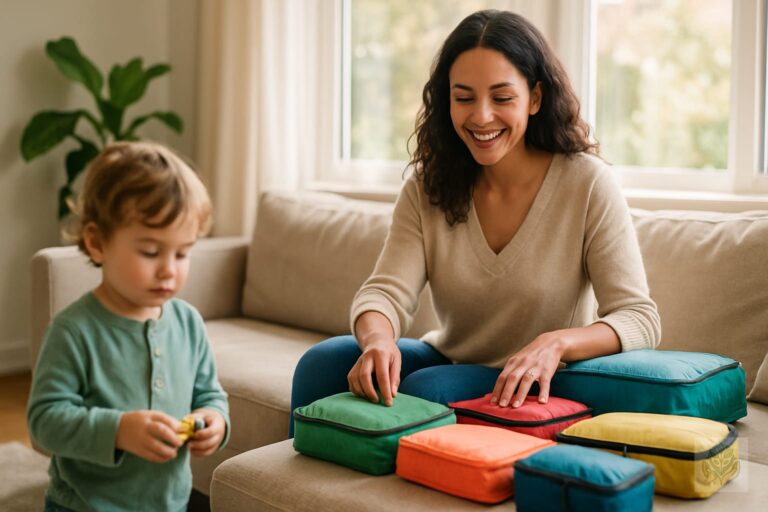
If you have ever dumped an entire suitcase onto a hotel bed just to find one pair of socks, you understand the magic of packing cubes. Assign a different color packing cube to each family member. This brilliant organization hack compresses clothing, separates clean clothes from dirty laundry, and makes sharing large suitcases effortless.

Comprehensive Kids First Aid Kit and Medications

Scraped knees, sudden fevers, and upset stomachs do not adhere to vacation schedules. Assemble a dedicated travel first aid kit stocked with pediatric pain relievers, digital thermometers, antiseptic wipes, bandages, motion sickness remedies, and any prescription medications your children require. Keeping this kit easily accessible in your carry-on ensures you are ready for minor bumps in the road, especially when monitoring how to tell when a child’s symptoms are getting worse.

Wet Bags for Muddy Clothes and Accidents

Potty training mishaps, spilled juice boxes, and muddy playground adventures are bound to happen. Reusable, waterproof wet bags are essential for containing damp swimsuits, soiled outfits, or messy shoes without ruining the rest of your luggage. Toss them into your day bag and wash them out easily at the end of the day.

Portable Power Bank for Devices and Tablets

Dying devices in the middle of a travel delay or navigation emergency is every parent worst nightmare. Always pack a high-capacity portable power bank and the appropriate charging cables. Keeping your phones, tablets, and cameras fully charged guarantees you can access digital boarding passes, maps, and entertainment whenever needed.

Road Trip vs Air Travel: Bonus Must-Haves

Backseat Organizer with Tablet Holder (For Road Trips)

Long hours in the car call for clever interior organization. A backseat organizer featuring multiple pockets and a secure tablet holder keeps toys, books, and water bottles within easy reach of little hands. It also protects your vehicle seats from muddy footwear and keeps clutter neatly contained.

TSA-Approved Snacks and Reusable Snack Spinners (For Flights)

Hungry kids equal unhappy travelers. Pack a wide variety of nutritious, TSA-approved snacks in a multi-compartment reusable snack spinner. Foods like pretzels, cheese sticks, berries, and crackers give kids a fun way to graze slowly through security checkpoints and long flights, keeping blood sugar levels stable. For daily inspiration outside of travel days, look at some of the top 7 healthy snacks for kids in India.

Child ID Safety Bracelets or Temporary Tattoos

Crowded theme parks, bustling airports, and busy tourist attractions can be overwhelming, and momentary separations can happen in a flash. Equip your children with child ID safety bracelets or temporary waterproof tattoos inscribed with your phone number and emergency contact details. It offers invaluable peace of mind in crowded environments.

Expert Packing Tips to Save Space and Sanity

The Rule of Threes for Outfits

One of the most common mistakes parents make is overpacking “just in case” outfits. Instead, rely on the rule of threes. Pack three base days worth of mix-and-match clothing and plan to do a quick mid-trip laundry load, or utilize hotel laundry services. Kids rarely care if they repeat a favorite shirt, and your back will thank you for lighter luggage.

Involving Kids in the Packing Process

Children as young as three can participate in packing their own travel bags. Give them a checklist of choices, letting them pick their favorite outfits or select two special toys for the journey. When children take ownership of their packing list, they feel more invested in the trip and excited for the adventures ahead.

Conclusion

Final Thoughts on Traveling Light and Smart

Family travel does not have to be a stressful exercise in endurance. By approaching your next adventure with careful planning and the right family travel items, you transform potential chaos into memorable bonding experiences. Remember that perfection is never the goal; flexibility, connection, and joy are what truly matter.

Call to Action: Share Your Favorite Family Travel Item

What is your ultimate secret weapon when traveling with kids? Do you swear by a specific brand of stroller or a brilliant snack hack? Drop a comment below and share your favorite family travel items to help inspire our community of traveling parents!

Frequently Asked Questions

What are the most important must-have travel items for family trips?

Essential items include a compact travel stroller, packing cubes for organization, a portable white noise machine, leak-free sippy cups, and a well-stocked first aid kit.

How can I keep my kids entertained during a long flight?

Bring volume-limiting headphones, reusable sticker books, mess-free activity pads, and a snack spinner filled with their favorite treats to keep them busy.

What is the best way to organize family luggage?

Use color-coded packing cubes for each family member to compress clothing and easily separate clean items from dirty laundry.

How do I prevent my toddler from falling out of a hotel bed?

Pack an inflatable toddler travel bed with raised bumpers or use a portable foam bed rail that slips securely under the fitted sheets.

What snacks are best to pack for air travel with children?

Pack TSA-approved, non-messy snacks like pretzels, cheese sticks, crackers, and berries in a multi-compartment reusable snack spinner.

How can I prevent overpacking for my children?

Follow the rule of threes by packing three days’ worth of mix-and-match outfits and planning to do a quick mid-trip laundry wash.

School Backpack Safety Tips for Parents: Protect Your Child’s Spine

School Backpack Safety Tips for Parents: Protect Your Child’s Spine

The back-to-school season brings a whirlwind of excitement. Children eagerly pick out shiny new notebooks, colorful folders, and trendy outfits. Amidst the hustle and bustle of shopping, parents often overlook one of the most critical health investments of the school year: proper school backpack safety. While a bag may look stylish, an ill-fitting or overloaded pack can pose a hidden danger to a child’s physical health.

Pediatricians and physical therapists treat thousands of children each year for preventable strain and injuries caused by improperly worn or overly heavy bags. When kids sling a massive load over one shoulder day after day, their growing bodies compensate in unhealthy ways. Fortunately, by focusing on proper selection, smart packing, and correct wearing techniques, you can easily protect your child’s posture and overall physical well-being. For younger children transitioning into early routines, you can also explore our daily routine for kids by age guide to ensure balanced physical habits.

Why School Backpack Safety Matters

Children are not miniature adults. Their spines, bones, and muscles are still developing, making them particularly vulnerable to physical stress. When a child carries a heavy load, their body naturally leans forward to compensate, which distorts the natural curves of the spine. This unnatural posture can lead to muscle strain, fatigue, and chronic discomfort.

Common symptoms of backpack strain go far beyond simple muscle soreness. Many children complain of neck pain, shoulder tension, lower back aches, and even tingling or numbness in their arms and hands. If left unaddressed, poor carrying habits during childhood can lead to long-term orthopedic implications, including chronic back conditions and permanent postural imbalances that persist into adulthood.

The Golden Rule: The 10-15% Weight Limit

The single most effective way to prevent injury is to monitor the weight of the bag. As a general rule of thumb, a loaded backpack should never exceed 10% to 15% of your child’s total body weight. For example, if your elementary schooler weighs sixty pounds, their loaded bag should weigh no more than six to nine pounds.

To put this into perspective, a child weighing eighty pounds should carry a maximum of eight to twelve pounds. Heavier loads force the spinal muscles to work overtime, leading to rapid fatigue. You can easily check this at home using a standard bathroom scale. Weigh yourself first, then step on the scale while holding your child’s packed school bag, and subtract your weight to find the difference.

How to Choose the Right School Backpack

When shopping for a new school year, parents should prioritize ergonomics over aesthetics. A well-designed bag supports the body and distributes weight evenly. Look for features that actively protect your child’s posture, similar to how you look for proper support when reviewing options in a best school bags for kids guide.

  • Wide, padded shoulder straps: Narrow straps can dig into the shoulders, pinching nerves and cutting off circulation. Padded straps cushion the load and distribute pressure evenly.
  • A padded back panel: This adds comfort and protects the child from being poked by sharp objects, notebooks, or binders stored inside.
  • A waist strap or chest strap: These crucial features help transfer some of the heavy load from the shoulders and spine to the hips and pelvis.
  • Proportionate size: The bag should never be wider or longer than your child’s torso. Avoid buying an oversized bag with the idea that your child will grow into it.

Smart Packing: How to Organize a School Backpack

Even a well-designed bag can cause strain if it is packed incorrectly. Teaching your child how to organize their belongings is an essential part of school backpack safety. The goal is to keep the center of gravity as close to the body as possible.

Always place the heaviest items, such as large textbooks and heavy binders, closest to the center of the child’s back. Utilize multiple compartments to keep items from shifting around during transit, which can throw off a child’s balance while walking. Finally, encourage your kids to declutter regularly. Have them review their contents daily and leave unnecessary books or toys at home rather than hauling them back and forth. For more structured study habits at home, consider looking into top kids study tables & chairs for better focus.

Proper Wearing Techniques

Having the right bag and packing it correctly is only half the battle. How your child wears the bag makes a tremendous difference. One of the most common mistakes children make is slinging the bag over just one shoulder to look cool.

Always insist that your child uses both shoulder straps. Slinging a bag over a single shoulder forces the child to lean to one side, creating a severe muscle imbalance and spinal curvature. Adjust the shoulder straps so that the bag fits snugly against the center of the back. A properly adjusted bag should rest evenly in the middle of the back, with the bottom sitting no more than two inches below the waistline. If the bag sags down toward the buttocks, it is hanging too low and pulling the child backward.

Alternatives to Traditional Backpacks

If your child’s daily load remains too heavy despite your best efforts, you might consider alternative options. Rolling backpacks are a popular choice for reducing spinal weight entirely. They are fantastic for long walks on smooth pavement, but they do have drawbacks. Rolling bags can be difficult to maneuver up and down school stairs and are impractical in muddy or snowy weather.

Another great strategy is teaching your child how to utilize their school locker effectively. Encourage them to make strategic trips to their locker between classes to swap out books rather than carrying every single subject’s materials all day long. To keep their energy levels up after a long school day, you can also prepare nutritious snacks, such as those found in our top 7 healthy snacks for kids guide.

Conclusion

Protecting your child’s growing spine does not have to be complicated. By sticking to the 10-15% weight limit, choosing an ergonomic design with wide padded straps, and ensuring your child always wears both shoulder straps correctly, you can prevent unnecessary strain and injury.

Make it a habit to do a backpack check before the school year starts, and perform follow-up weight checks mid-term to ensure bad habits have not crept back in. Your proactive steps today will support your child’s posture, comfort, and healthy development for years to come.

Frequently Asked Questions

How heavy should a child’s school backpack be?

A child’s loaded backpack should never exceed 10% to 15% of their total body weight to prevent strain on their developing spine and muscles.

Why is wearing a backpack over one shoulder bad?

Slinging a bag over one shoulder forces the child to lean to one side to compensate for the weight, which creates muscle imbalance, poor posture, and spinal strain.

What features should I look for when buying a school backpack?

Look for wide, padded shoulder straps, a padded back panel, waist or chest straps for weight distribution, and a size that is proportionate to your child’s torso.

How can I check if my child’s backpack is too heavy?

You can use a bathroom scale to weigh yourself first, and then weigh yourself while holding your child’s packed backpack. Subtract your weight to find the exact load.

Where should the heaviest items be placed inside a backpack?

The heaviest items, such as large textbooks and binders, should always be placed closest to the center of the child’s back to keep their center of gravity stable.

Are rolling backpacks a good alternative for kids?

Rolling backpacks are great for reducing spinal weight on smooth surfaces, but they can be difficult to carry up stairs and impractical in bad weather.

The Complete Guide to Baby Diapering for New Parents: Tips, Tricks & Safety

0

The Complete Guide to Baby Diapering for New Parents: Tips, Tricks & Safety

Introduction

Welcome to the wonderful, messy, and rewarding world of parenthood. If you are expecting a little one or recently brought your newborn home, you are likely about to change a lot of diapers. In fact, newborns can go through anywhere from ten to twelve diapers a day. Mastering baby diapering is one of the very first practical skills you will learn as a new mom or dad.

It is completely normal to feel a bit intimidated at first. Fumbling with fasteners, worrying about leaks, and navigating delicate newborn skin can feel overwhelming. Take a deep breath because you will build confidence faster than you think. Soon, you will be changing diapers like a seasoned pro, even in the middle of the night with your eyes half-closed.

During the first few weeks, your baby’s output will change rapidly. You will transition from meconium—the sticky, dark first stool—to regular milk-stool feeds. Tracking these wet and dirty diapers is actually your pediatrician’s favorite way to ensure your baby is feeding well and staying hydrated. Knowing what to expect takes the guesswork out of the process and helps you spot normal patterns versus concerns. For a broader overview of infant care, check out What Every Parent Should Know About Newborn Care: The Ultimate First-Time Parent Guide.

Phase 1: Stocking Your Diapering Station (The Essentials)

Preparation is your best friend when it comes to smooth baby diapering. Having a well-stocked station means you never have to leave your baby unattended to grab a missing wipe or fresh onesie.

Choosing Your Setup: Changing Table vs. Portable Mats

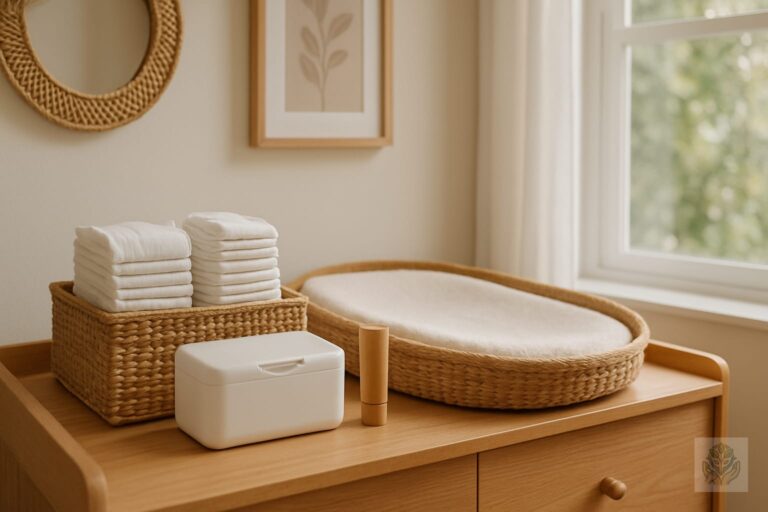
You do not need a fancy nursery setup to change a baby safely. A dedicated changing table with built-in storage offers great back support and keeps all supplies within arm’s reach. However, many parents find that portable changing mats are just as useful. You can roll them up and carry them from the living room floor to your bed, ensuring you always have a clean surface wherever you happen to be.

Diapers: Cloth vs. Disposable (Pros & Cons)

One of the biggest choices you will make is selecting between cloth and disposable diapers. Disposables offer unbeatable convenience and high absorbency, making them a favorite for busy parents and nighttime use. On the other hand, modern cloth diapers are budget-friendly over time and produce far less landfill waste, though they require regular washing routines. You can explore more options in Everything Parents Need to Know About Modern Baby Diapering: The Ultimate Guide.

Wipes, Ointments, and Diaper Rash Creams

Stock up on sensitive-skin, fragrance-free baby wipes or soft cotton washcloths with warm water. Keep a zinc oxide or petroleum-based barrier ointment nearby for quick application. Having a secure caddy for these items keeps your station organized and hazard-free. For guidance on choosing gentle products, read our guide on How to Choose Safe Skin Care Products for Babies: The Ultimate Parent’s Guide.

The Ultimate Diaper Bag Checklist for Outings

When venturing outside the house with your baby, packing the right diaper bag is essential. Always include:

  • At least six to eight clean diapers
  • A travel pack of wipes
  • A portable changing pad
  • Two spare baby outfits (plus extra onesies for unexpected blowouts)
  • Disposal bags for dirty diapers
  • A safe barrier cream
  • Hand sanitizer for yourself

You can also reference the The Ultimate Baby Diapering Checklist for Everyday Use: Everything You Need to ensure you never miss an essential item.

Phase 2: Step-by-Step Diaper Changing Guide

Once your station is ready, mastering the physical technique of baby diapering becomes second nature. Follow these systematic steps for a clean and secure change every time.

Step 1: Prep and Safety First (Never Leave Baby Unattended)

Always gather your supplies before placing your baby on the changing surface. Safety rule number one is to keep a hand on your baby at all times if you are using an elevated table. Babies can wiggle and roll off surfaces surprisingly quickly, even as newborns.

Step 2: Remove the Dirty Diaper and Clean Up (Front to Back for Girls)

Unfasten the diaper and use the front flap to wipe away excess mess downward. Lift your baby’s ankles gently by placing your fingers between their feet to slide the dirty diaper out. Clean the skin thoroughly, remembering to always wipe from front to back for baby girls to prevent urinary tract infections.

Step 3: Apply Barrier Cream to Prevent Rash

Allow your baby’s skin to air dry for a few seconds. If you notice any redness or want to protect sensitive skin from moisture, apply a thin layer of barrier cream. A little goes a long way in keeping skin healthy and soft. Proper hygiene in this area is further detailed in How Parents Can Encourage Independent Hygiene Habits: A Step-by-Step Guide.

Step 4: Put on the New Diaper (Snug, Not Too Tight)

Slide the fresh diaper underneath your baby. The tabs should fasten symmetrically across the front band. Ensure the fit is snug enough to prevent leaks, but loose enough that you can comfortably fit two fingers between the waistband and your baby’s tummy.

Handling Newborn Umbilical Cord Care During Diaper Changes

Until your baby’s umbilical cord stump falls off naturally, keep the diaper folded down below the belly button. This allows the area to stay dry, clean, and exposed to air, which speeds up the healing process.

Phase 3: Troubleshooting Common Diapering Challenges

Even with great preparation, you will encounter unexpected messes along your parenting journey. Knowing how to handle these hurdles keeps stress levels low.

How to Prevent and Treat Diaper Rash

Diaper rash is extremely common and usually caused by moisture trapped against the skin. Prevent it by changing diapers frequently, cleaning gently, and letting your baby spend a few minutes each day kicking with no diaper on. If a rash develops, apply a thick layer of zinc oxide cream at every change. For more tips on keeping sensitive skin healthy, consult Everything Parents Should Know About Baby Skin Care: The Ultimate Guide.

Dealing with Blowouts Like a Pro

Every parent dreads the dreaded upward blowout. Did you know that the shoulder ruffles on baby onesies are actually designed so you can pull the bodysuit down over the baby’s shoulders and body instead of pulling it over their head? This clever design trick prevents you from smearing mess through your baby’s hair.

Understanding Diaper Sizes and When to Move Up

Diaper sizes are determined primarily by weight, but every baby’s body shape is unique. If you notice frequent leaks, red marks around the thighs, or difficulty fastening the tabs comfortably, it is likely time to size up.

Signs Your Baby Needs a Different Diaper Brand

If your current diaper brand causes persistent skin irritation or recurring leaks despite correct sizing, do not hesitate to experiment with other brands. Every baby’s anatomy is different, and finding the right fit often takes a little trial and error.

Conclusion

Mastering baby diapering is a journey of patience, practice, and a good sense of humor. In the beginning, simple changes might feel clumsy, but within a couple of weeks, you will be changing diapers with your eyes closed. Give yourself grace as you learn your baby’s cues and preferences.

Remember that every messy diaper and midnight change is just a temporary phase in your incredible parenting journey. You are doing an amazing job keeping your little one clean, comfortable, and loved. Trust your instincts, lean on your support system, and enjoy these fleeting moments with your growing baby.


Frequently Asked Questions

How often do newborns need their diapers changed?

Newborns typically need their diapers changed every 2 to 3 hours, or immediately after they poop, which can add up to 10 to 12 times a day.

How do I prevent diaper rash?

Prevent diaper rash by changing wet or soiled diapers frequently, cleaning the area gently, letting the skin air dry, and applying a zinc oxide barrier cream.

Should I wipe front to back for both boys and girls?

Always wipe from front to back specifically for baby girls to prevent harmful bacteria from spreading and causing urinary tract infections.

When should my baby move up a diaper size?

Consider moving up a size if you experience frequent leaks, see red marks around your baby’s thighs, or if the diaper tabs barely reach across the front.

How do I deal with an upward blowout?

Pull the onesie down over your baby’s shoulders and body instead of pulling it up over their head to avoid spreading the mess.

How should I care for the umbilical cord during diaper changes?

Keep the diaper folded down below the belly button until the umbilical cord stump falls off naturally to keep the area dry and clean.

How to Choose Lightweight Shoes for Toddlers: The Ultimate Parent’s Guide

0

How to Choose Lightweight Shoes for Toddlers: The Ultimate Parent’s Guide

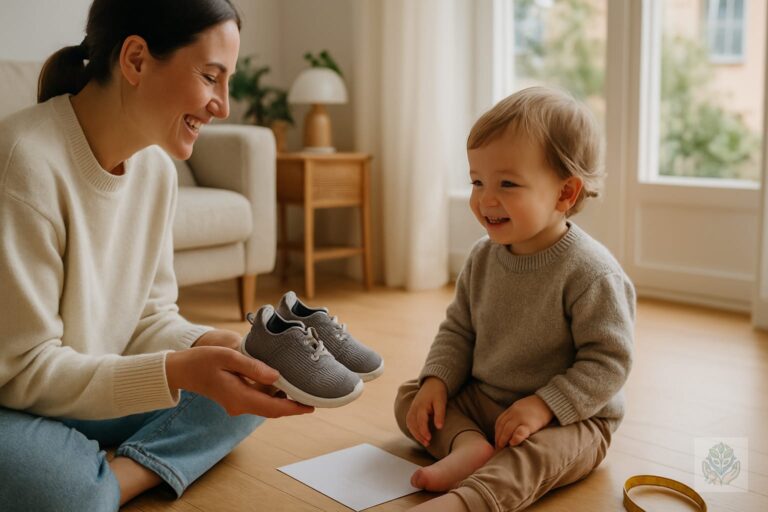
Watching your little one take their first wobbly steps is a milestone you never forget. As they transition from crawling explorers to active runners, every detail of their daily routine matters—especially what you put on their feet. Finding the right pair of shoes can feel overwhelming with so many options on the market. However, pediatricians and child development specialists consistently point to one major factor: lightweight shoes for toddlers make all the difference in healthy growth and joyful movement.

Proper footwear supports natural foot development, protects delicate skin from rough surfaces, and gives little ones the confidence to explore their world. When shoes are heavy or stiff, they act like miniature weights on tiny legs, altering a child’s natural stride. This comprehensive guide will cover everything you need to know about selecting the best lightweight footwear, ranging from how to select comfortable footwear for kids to measuring feet at home and evaluating flexible soles and breathable materials.

Why Toddlers Need Lightweight Shoes

A toddler’s foot is not just a miniature adult foot. It is mostly soft cartilage that will eventually harden into bone over several years. Because their bones, ligaments, and muscles are still forming, experts heavily advocate for barefoot-style benefits whenever possible. When going barefoot isn’t practical—such as on hot pavement or at the public park—lightweight shoes for toddlers act as the next best alternative.

New walkers burn a significant amount of energy with every step. Heavy, rigid shoes cause muscle fatigue quickly, leading to unnecessary trips, stumbles, and falls. By choosing ultra-lightweight footwear, you reduce the physical burden on your child’s legs, allowing them to run, jump, and balance with ease. You can support this physical development further with 15 easy movement activities for kids at home to help burn excess energy.

Furthermore, lightweight shoes enhance sensory feedback. When the soles are thin and flexible, sensory receptors in the bottom of your toddler’s feet send crucial signals to the brain. This feedback loop improves overall balance, spatial awareness, and neuromuscular coordination.

Key Features to Look for in Lightweight Toddler Shoes

Shopping for children’s footwear requires looking past adorable designs and focusing strictly on functional anatomy. When evaluating potential pairs, keep these essential features in mind:

  • Flexible soles: You should be able to bend the shoe effortlessly in half and twist it with minimal resistance.
  • Breathable materials: Mesh, canvas, and soft leather prevent sweaty feet and reduce bacterial growth.
  • Wide toe box: A natural, fan-shaped toe box allows little toes to wiggle and splay out naturally.
  • Secure closures: Adjustable velcro or elastic laces keep the foot locked in place without restricting circulation.
  • Flat soles: Avoid any shoes with elevated heels or cushioned arches, as flat soles promote natural posture.

Materials Compared: What Makes a Shoe Truly Lightweight?

Not all shoes marketed as flexible actually deliver on weight. The materials used in both the upper construction and the sole dictate just how heavy the final product will be.

Mesh and knit uppers are currently the gold standard for breathability and minimal weight. They hug the foot like a sock while allowing maximum airflow. For soles, EVA foam provides incredible cushioning and flexibility while weighing next to nothing compared to dense, heavy rubber.

Traditional leather and suede have pros and cons. While durable and naturally moldable, thick leather can sometimes add unwanted weight and stiffness unless it is specifically treated for early walkers. Always inspect the shoe by lifting it with a single finger; if it feels heavy to you, it will feel twice as heavy to your toddler.

How to Measure Your Toddler’s Feet at Home

Toddler feet grow at an astonishing rate, sometimes jumping a full size every few months. Buying shoes without measuring often leads to poor fits. Follow this simple step-by-step guide to measure accurately at home:

  1. Tape a piece of plain white paper to a hard floor, ensuring it does not slide.
  2. Have your toddler stand firmly on the paper with their weight evenly distributed.
  3. Mark the tip of their longest toe and the back of their heel with a pen or pencil.
  4. Use a ruler to measure the distance in inches or centimeters between the two marks.
  5. Add a half-inch to three-quarters of an inch for growing room.

Always measure your toddler’s feet in the afternoon, as feet naturally swell slightly throughout the day. Additionally, check both length and width to ensure the shoe does not pinch the sides of their feet.

Common Mistakes to Avoid When Buying Toddler Shoes

Even well-meaning parents can fall into common footwear traps. Avoiding these mistakes will protect your child’s developing feet and save you money:

  • Buying shoes that are too big: Sizing up excessively so they “grow into them” causes toddlers to trip and alters their natural gait.
  • Choosing rigid ankle support: High-top, stiff boots restrict natural ankle movement and weaken the lower leg muscles.
  • Hand-me-downs with worn soles: Pre-owned shoes mold to the previous child’s foot shape and often feature uneven tread wear.
  • Prioritizing style over function: Stiff fashion boots and heavy canvas slip-ons often sacrifice comfort for aesthetics.

Top Types of Lightweight Shoes for Different Occasions

Different activities require different styles of footwear. Having a versatile rotation ensures your toddler stays comfortable no matter where the day takes you.

Everyday sneakers made with flexible mesh and EVA soles are ideal for playground trips and active play. For warm summer months, look for lightweight water shoes and sandals with secure strap systems that protect sensitive toes without trapping heat. You can also explore best outdoor toys for active toddlers to keep them engaged during park visits.

Indoor settings and daycare classrooms call for soft-soled slippers or lightweight canvas shoes that offer slip resistance while maintaining a barefoot feel.

Conclusion

Choosing the right footwear is a wonderful way to support your child’s physical milestones. By prioritizing flexibility, breathability, and minimal weight, you give your little explorer the freedom to move naturally and comfortably. Always measure frequently, look for quality materials, and remember that comfort always trumps current fashion trends. For more ideas on supporting your child’s physical development, check out 10 outdoor activities to boost toddler development naturally.

What is your go-to brand for footwear? Share your favorite lightweight shoes for toddlers in the comments below to help fellow parents in our community!

Frequently Asked Questions

How often should I check my toddler’s shoe size?

Because toddler feet grow in rapid spurts, you should check their shoe size every two to three months. Inspect their fit and check the thumb-width space at the top of the toe box at the start of every season.

Are soft-sole shoes better than lightweight sneakers?

Soft-sole shoes are fantastic for infants and new indoor walkers. However, active toddlers running outdoors need lightweight sneakers with flexible outsoles to protect their feet from debris and rough pavement.

Can toddlers wear slip-on shoes?

Slip-on shoes can be convenient, but many styles lack adjustable closures. If a shoe is too loose, your toddler will grip the sole with their toes to keep it on, causing foot fatigue.

How do I clean lightweight mesh toddler shoes?

Remove the insoles, gently scrub the upper with mild soap and a soft brush, and rinse with cool water. Always air dry them naturally rather than using a hot clothes dryer.

Why are heavy shoes bad for toddlers?

Heavy shoes act like miniature weights on tiny legs, causing muscle fatigue, stumbles, and falls. Lightweight shoes allow children to run, jump, and balance with natural ease.

How much growing room should I leave in toddler shoes?

When measuring your toddler’s feet at home, you should add a half-inch to three-quarters of an inch of growing room to ensure a comfortable fit without causing tripping.

The Ultimate Beginner’s Guide to Buying Age-Appropriate Toys

0

The Ultimate Beginner’s Guide to Buying Age-Appropriate Toys

Introduction

Walking down the toy aisle can feel overwhelming for any parent or caregiver. Shelves overflow with flashing lights, loud electronic sounds, and endless plastic packaging. Navigating this sea of options becomes much easier when you focus on finding age-appropriate toys that genuinely match your child’s current developmental stage. For more guidance on picking items for different developmental milestones, check out our guide on choosing toys by age.

Choosing the right playthings is not merely about keeping kids busy on a rainy afternoon. Thoughtfully selected play items form the building blocks of early childhood development. They shape how children learn, interact with the world, and build confidence in their own abilities.

The Importance of Choosing the Right Toy

Toys serve as a child’s primary tools for learning about the physical and social world. When a baby shakes a rattle or a preschooler builds a towering block castle, they are conducting important scientific experiments. Selecting toys that fit their exact developmental window helps maximize these natural learning opportunities. Discover more options suited for early growth in our age-wise guide for smart learning.

As parents, we want our investments to matter. We look for items that will not end up forgotten at the bottom of a toy chest after a single afternoon. Mindful toy selection bridges the gap between pure entertainment and meaningful growth.

Why Age-Appropriateness Matters for Safety and Growth

Safety is always the top priority when introducing new playthings to your household. Manufacturers design labels and age guidelines based on rigorous safety standards and average developmental milestones. Ignoring these guidelines can accidentally expose a child to choking hazards or sharp edges.

Beyond physical safety, age-appropriateness protects a child’s emotional well-being. A toy that is too advanced causes frustration and self-doubt. Conversely, a toy that is too simple leads to immediate boredom. Finding the sweet spot keeps engagement high and joy front and center.

Why Age-Appropriate Toys Matter

Understanding the deeper reasons behind toy categorization helps parents make smarter shopping choices. Every stage of childhood brings rapid changes in brain development and physical capability. Providing the right stimuli at the right time unlocks incredible potential.

Cognitive and Motor Skill Development

Play directly influences brain wiring and muscle control. Fine motor skills improve when toddlers stack small blocks or manipulate puzzle pieces. Gross motor skills blossom when preschoolers run, jump, and balance on outdoor equipment.

Cognitive growth happens simultaneously as children sort shapes, recognize colors, and solve simple problems. High-quality playthings challenge growing minds just enough to encourage critical thinking without causing overwhelm. You can also explore options like those detailed in our parent’s guide to Montessori toys for cognitive development.

Preventing Safety Hazards and Choking Risks

Age ratings on packaging are not mere suggestions; they are vital safety warnings. Small parts that pose zero risk to a school-age child can easily block the airway of an inquisitive infant or toddler. Always inspect labels carefully to ensure the items entering your home match your child’s current mouthing habits and developmental maturity.

Avoiding Frustration vs. Boredom

Have you ever watched a child toss a toy aside in disgust after thirty seconds? That usually happens when the item fails to match their skill level. Toys that hit the mark inspire sustained concentration, deeper engagement, and a powerful sense of accomplishment.

Toy Selection by Age Group

Every child develops at their own unique pace, but general age milestones provide a reliable roadmap for shopping. Here is a breakdown of what to look for as your child grows.

Infants (0–12 Months): Sensory Stimulation and Motor Skills

Babies learn about the world primarily through their senses and physical touch. During the first year, prioritize high-contrast cards, soft texture books, easy-to-grasp rattles, and activity gyms.

Look for items that encourage tummy time, tracking movement with the eyes, and reaching out. Safe teethers and stacking cups also provide wonderful early tactile experiences.

Toddlers (1–3 Years): Exploration, Movement, and Imagination

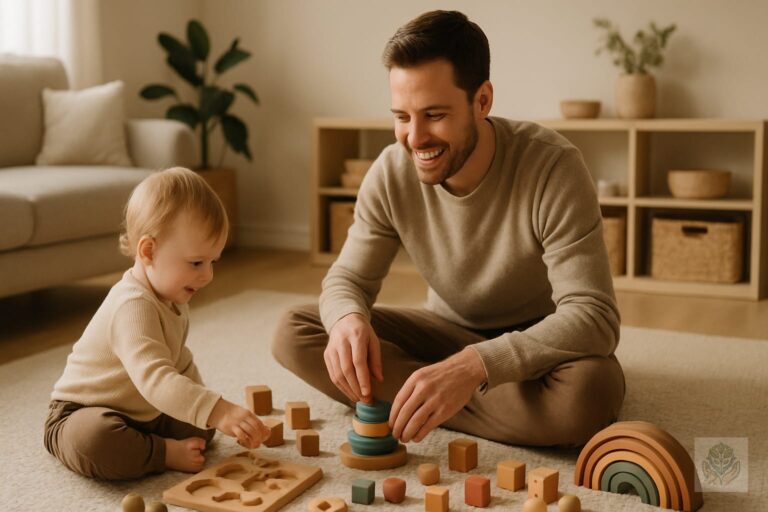
Toddlers are famously active, curious, and constantly on the move. Push and pull toys help refine walking skills, while chunky wooden blocks encourage early spatial awareness.

This is also the golden age for pretend play. Simple kitchen sets, toy phones, and dress-up items let toddlers mimic everyday adult behaviors, which is a crucial part of social and emotional development. Learn more about these benefits in our resource on the educational benefits of pretend play.

Preschoolers (3–5 Years): Social Play, Problem Solving, and Creativity

Preschoolers begin interacting more with peers, making cooperative playthings a wonderful investment. Board games with simple rules teach turn-taking, patience, and how to handle winning and losing gracefully.

Arts and crafts supplies, complex building sets, and storytelling props fuel vivid imaginations. These items allow children to express big feelings and invent entire worlds of their own.

School-Age Kids (6+ Years): Strategy, Complex Rules, and Independence

Older children crave challenges that test their intellect and strategy. Science kits, complex construction sets, strategy board games, and outdoor sports equipment fit this stage perfectly.

At this age, kids also enjoy pursuing independent hobbies. Supporting their specific interests through targeted hobby kits fosters lasting passion and self-reliance.

Key Factors to Consider Before Buying

Before you add items to your shopping cart, take a moment to evaluate them against a few core criteria. Smart shopping saves money and protects your child.

Checking Safety Labels and ASTM Standards

Always scan the packaging for safety certifications. In the United States, look for the ASTM International seal, which indicates the product meets rigorous consumer safety standards. Also check for non-toxic paint labels and flame-retardant disclosures.

Durability and Non-Toxic Materials

Kids can be wonderfully rough on their belongings. Choose sturdy wood, high-impact recycled plastics, or organic cotton fabrics that withstand daily wear and tear. Durable toys can often be passed down to younger siblings or donated later.

Open-Ended Play Value vs. Single-Use Gadgets

Toys that do one specific trick often lose their appeal quickly. In contrast, open-ended materials like plain blocks, magnetic tiles, and play silks grow with your child over several years. They encourage creativity because the child decides how the play unfolds.

Common Toy-Buying Mistakes to Avoid

Even well-meaning parents can fall into common marketing traps. Recognizing these pitfalls helps keep your home organized and your child engaged.

Buying Solely Based on Age Recommendations Without Child’s Skill Level

Age labels provide a helpful baseline, but you know your unique child best. A precocious builder might master intermediate sets early, while another child needs simpler options for a while longer. Tailor your choices to individual capabilities rather than strict numbers.

Overlooking Storage and Clutter

An influx of new playthings can quickly overwhelm a living space. Before buying, consider how the item will fit into your current storage system. Embracing quality over quantity keeps cleanup manageable and reduces household stress.

Prioritizing Screen-Heavy Toys Over Hands-On Play

Electronic gadgets with flashing screens and pre-recorded voices often do all the thinking for the child. Hands-on, tactile playthings require active physical and mental participation, which yields far better developmental outcomes.

Conclusion

Investing in age-appropriate toys is one of the most rewarding parts of parenting. By understanding developmental milestones and prioritizing safety, you create an environment where learning and fun go hand in hand.

Summary of Key Takeaways

  • Match playthings to your child’s current developmental stage, not just their chronological age.
  • Prioritize open-ended options that encourage imagination, motor skills, and problem-solving.
  • Always verify safety certifications, durability, and non-toxic material labels.
  • Balance your collection to avoid clutter and reduce overwhelming screen time.

Final Encouragement for Mindful Toy Shopping

Remember that the best toy in the world is often your undivided attention and a shared moment of play. Approach your next shopping trip with confidence, knowing that thoughtful choices lay the foundation for a joyful, creative childhood.

Frequently Asked Questions

Why are age-appropriate toys important for child development?

Age-appropriate toys match a child’s current cognitive and motor skill levels, preventing frustration while supporting healthy growth, safety, and engagement.

How do I know if a toy is safe for my infant?

Check the packaging for ASTM safety standards, ensure there are no small parts that pose choking hazards, and look for non-toxic materials designed for mouthing babies.

What are open-ended toys?

Open-ended toys are versatile playthings like blocks, magnetic tiles, and art supplies that do not have a single fixed outcome, allowing children to use their imagination in countless ways.

How can I prevent toy clutter in my home?

Focus on quality over quantity by selecting versatile, open-ended items and regularly rotating a smaller subset of toys to keep your child engaged without overwhelming your living space.

Should I strictly follow age recommendations on toy packaging?

Age recommendations provide a great safety baseline, but you should also consider your individual child’s unique skills, interests, and developmental readiness.

Why should I choose hands-on toys over screen-heavy electronic toys?

Hands-on toys require active physical and mental participation from children, fostering critical thinking and creativity, whereas screens often do all the thinking for them.

The Educational Benefits of Pretend Play Explained: Why Imagination Matters for Child Development

0

The Educational Benefits of Pretend Play Explained: Why Imagination Matters for Child Development

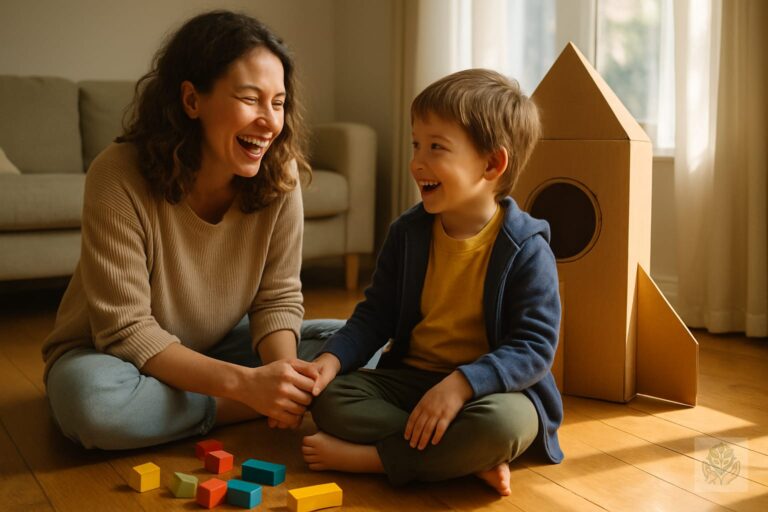
Have you ever watched your child spend an entire afternoon transforming a simple cardboard box into a roaring spaceship, a cozy castle, or a bustling grocery store checkout lane? To an adult, it is just a piece of shipping packaging waiting for the recycling bin. To a growing child, that box is a limitless portal to another universe. This simple scenario highlights the everyday magic of pretend play, a cornerstone of early childhood experiences that shapes how kids learn, think, and interact with the world around them.

As modern parents, we often feel immense pressure to load our children’s schedules with structured activities, flashcards, and educational apps designed to give them a head start. Yet, child development specialists continually emphasize that unstructured, imaginative play is just as crucial as any formal lesson. When children engage in make-believe, they are not just passing the time; they are actively wiring their brains for future success. For a broader look at imaginative activities, check out our guide to educational pretend play benefits, ideas, and milestones.

In this comprehensive guide, we will explore the profound benefits of pretend play, break down how imagination fuels cognitive and social growth, and share actionable tips to help you nurture your child’s creativity at home.

What is Pretend Play? (A Quick Definition)

At its core, pretend play—also known as imaginative play, dramatic play, or symbolic play—occurs when children use their imaginations to transform objects, actions, and roles. Instead of interacting with the physical world strictly as it is, a child uses abstract thinking to represent something else entirely. A wooden block becomes a ringing telephone, a banana becomes a television remote, and a plush teddy bear becomes a patient in urgent need of medical care.

This type of play evolves naturally over time. It typically begins around twelve to eighteen months of age, when toddlers start engaging in simple imitation. You might notice your toddler bringing a toy phone to their ear and saying hello, or pretending to feed a baby doll. These early actions show that the child understands symbols and can mirror real-world behaviors.

As children grow into preschoolers and school-age kids, their imaginative scenarios become increasingly complex. Solo role-playing evolves into elaborate cooperative games with peers, complete with assigned characters, detailed storylines, and negotiated rules. This progression from simple imitation to intricate storytelling is a vital milestone in healthy child development. To support this stage effectively, review our advice on choosing toys by age.

Core Educational Benefits of Pretend Play

It is easy to view play as the polar opposite of learning, but for young children, play is their primary method of learning. When we look closely at the educational benefits of pretend play, we see a powerful engine driving holistic growth across multiple domains.

Cognitive Development: Building Problem-Solving and Abstract Thinking

Imaginative play gives children a safe sandbox to test hypotheses, experiment with cause and effect, and solve complex problems. When kids plan a pretend rescue mission or figure out how to arrange cushions to build an indoor fortress, they are engaging in executive function skills. They must plan, organize, adapt when things fall apart, and remember the rules of their imaginary game. This abstract thinking lays the essential groundwork for later academic success in mathematics, science, and reading comprehension. You can also incorporate educational puzzle games for kids to further boost their problem-solving capabilities.

Language and Literacy Skills: Expanding Vocabulary and Narrative Structure

Have you ever listened to your child talk to their action figures? They often use sophisticated vocabulary and conversational tones they have picked up from you, television shows, or books. Role-play encourages children to experiment with new words, practice proper sentence structure, and learn the back-and-forth rhythm of conversation. Furthermore, storytelling during imaginative games helps children understand narrative arcs—beginning, middle, and end—which directly supports future reading and writing skills.

Social and Emotional Growth: Practicing Empathy, Sharing, and Self-Regulation

When children play together and negotiate who gets to be the doctor and who is the patient, they are learning vital emotional intelligence. They must practice empathy by stepping into someone else’s shoes and seeing the world from a different perspective. Pretend play also teaches self-regulation. A child who desperately wants to be the fire chief must learn to accept another role, manage their disappointment, and cooperate with their peers for the good of the game. Building these emotional foundations aligns well with practicing positive parenting habits for raising confident and caring kids.

Physical Development: Enhancing Fine and Gross Motor Skills Through Role-Play

While imaginative play is largely mental, it requires plenty of physical movement. Tiptoeing quietly like a stealthy ninja, buttoning up a superhero cape, stirring an imaginary pot of soup with a wooden spoon, or running around the yard like a wild animal all contribute to physical mastery. These activities refine both fine motor coordination and gross motor strength, helping children gain confidence in their own bodies. For additional ways to keep them active, browse these easy movement activities for kids at home to burn energy.

How Different Types of Pretend Play Boost Learning

Not all imaginative play looks the same, and different variations offer unique learning opportunities. Understanding these nuances helps parents create a balanced environment for their children.

Solo play allows children complete autonomy. When playing alone, a child is the absolute director of their universe. This fosters deep independence, self-soothing skills, and uninhibited creative expression. Conversely, collaborative play with siblings or peers teaches negotiation, compromise, and teamwork. Children learn that others have different ideas, and they discover how to merge those ideas into a shared vision.

The items you provide also shape the experience. Open-ended toys—such as plain wooden blocks, silk scarves, cardboard boxes, and blank paper—encourage deeper imagination than highly specialized toys with fixed electronic functions. When a toy does everything for the child, the imagination goes to sleep. When a toy can be anything, the imagination comes alive. You can explore more ideas for hands-on creativity in our guide on DIY crafts for kids.

Finally, the balance between adult-guided play and child-led scenarios matters immensely. While it is wonderful to join your child’s games, letting them take the lead empowers them to build confidence and leadership skills.

Expert Tips for Encouraging Pretend Play at Home

You do not need an elaborate playroom or expensive specialty toys to foster imagination. Here are a few practical, low-cost ways to support pretend play in your household:

  • Create an accessible prop station: Gather old clothes, hats, scarves, purses, and safe household items into a dedicated dress-up bin where kids can reach them easily.
  • Embrace boredom: Resist the urge to entertain your child every time they say they are bored. Boredom is often the fertile ground where creativity takes root.
  • Provide open-ended materials: Keep a stash of cardboard boxes, blankets, pillows, and natural materials handy for spontaneous construction projects.
  • Join in without taking over: When your child invites you to play, accept a supporting role. Let them direct the narrative and make the creative decisions.
  • Read together: Books are a fantastic springboard for imaginative play. Act out scenes from favorite stories or invent what happens to the characters next.

Conclusion

The educational benefits of pretend play extend far beyond childhood, laying the groundwork for resilient, creative, and empathetic adults. In a world that often rushes kids to grow up quickly, imaginative play offers a precious space where they can slow down, explore possibilities, and simply be children.

By providing time, space, and a few simple props, you give your child the greatest gift of all: the freedom to imagine. So the next time your child hands you a pretend cup of tea or asks you to join their spaceship crew, step right in. You are not just playing a game—you are building a brilliant mind. To discover more options for early learning, read our overview of the best educational toys for kids.

Frequently Asked Questions

What is pretend play in child development?

Pretend play, or imaginative play, occurs when children use their imaginations to transform objects, actions, and roles. It helps children develop cognitive, social, and emotional skills by letting them act out scenarios and symbolic ideas.

At what age does pretend play typically begin?

Pretend play typically begins around 12 to 18 months of age with simple imitation, such as pretending to talk on a toy phone or feeding a doll, and grows into complex storytelling during the preschool years.

How does pretend play help with cognitive development?

Pretend play builds problem-solving skills, abstract thinking, and executive function as children plan scenarios, test ideas, and adapt when their imaginary games face unexpected changes.

How can parents encourage imaginative play at home?

Parents can encourage imaginative play by limiting screen time, providing open-ended toys like cardboard boxes and blocks, creating a dress-up station, and joining in on games while letting the child lead.

Does pretend play improve language and literacy skills?

Yes, imaginative play exposes children to new vocabulary, conversational rhythms, and narrative structures, which directly support future reading, writing, and communication skills.

What are open-ended toys and why are they important?

Open-ended toys lack fixed electronic functions and can be anything a child imagines, such as wooden blocks or cardboard boxes, encouraging deeper creativity and independent problem-solving.

The Educational Benefits of Puzzle Games Explained: Why Kids Need More Playtime

0

The Educational Benefits of Puzzle Games Explained: Why Kids Need More Playtime

In a world dominated by flashing screens, fast-paced apps, and digital entertainment, the humble jigsaw puzzle often sits quietly on the shelf. Yet, this timeless pastime holds a profound magic that modern technology struggles to replicate. When a child sits down to sort through colorful cardboard pieces, something remarkable happens in their developing brain.

While children simply see a fun challenge, child development experts see a powerhouse of learning. Simple pieces contribute to surprisingly complex learning outcomes every single time a child engages with tactile play. You can explore more options in our age-wise guide to the best educational toys for kids.

Puzzle games are far more than just a rainy-day distraction or a quick way to keep kids quiet. They are essential, foundational tools for holistic child development, fostering everything from sharp cognitive abilities to robust emotional resilience. For further insights, read our complete guide to educational puzzle games for kids.

Cognitive Benefits: Building a Smarter Brain

When your child bends over a table trying to figure out where a corner piece goes, their brain is working overtime. The educational benefits of puzzle games begin with profound cognitive growth, starting with spatial awareness and visual-spatial reasoning. Children learn to perceive shapes, sizes, and relationships between objects in their physical environment. These skills overlap heavily with the principles found in Montessori toys for cognitive development.

Problem-solving and critical thinking take center stage during puzzle play. Kids naturally adopt a trial-and-error approach. When a piece does not fit, they do not give up; they rotate it, test another spot, and analyze the visual cues. This scientific method of testing hypotheses builds neural pathways that translate directly to math and science later in life, much like what you experience when using educational STEM toys.

Memory enhancement is another major cognitive perk. Children must remember the picture on the box, recall the colors they have already sorted, and retain the mental image of where certain pieces belong. This active engagement strengthens both short-term memory and visual recall.

Fine Motor Skills and Hand-Eye Coordination

Physical development is just as important as mental growth during the early years. The physical manipulation of small pieces does wonders for strengthening finger muscles and improving dexterity. Picking up, turning, and squeezing small wooden or cardboard shapes refines the pincer grasp.

This hands-on practice directly improves hand-eye coordination. Children must constantly look at the board, judge the exact placement spot, and guide their hands to put the piece in place accurately.

Ultimately, these physical mechanics serve as vital preparation for writing, drawing, using safety scissors, and mastering other daily self-care tasks. Traditional tabletop play gives small muscles the workout they desperately need in a digital era, perfectly complementing a well-rounded set of indoor toddler activities.

Emotional and Psychological Advantages

Beyond the mental and physical wins, puzzles offer incredible emotional benefits. Developing patience, perseverance, and frustration tolerance is a major milestone for growing children. Puzzles teach kids that worthwhile achievements take time and effort. Practicing these skills alongside positive parenting habits can help raise confident kids.

There is nothing quite like the boost in self-esteem and confidence a child feels when they slide that final piece into place. That sense of accomplishment teaches them to trust their own abilities when facing difficult tasks.

Additionally, puzzle play promotes mindfulness and stress relief. The deep focus required to match colors and patterns acts as a natural calming agent, giving busy kids a peaceful mental break from overstimulating environments.

Social and Communication Skills

While puzzles are often viewed as a solitary activity, they can also be wonderful tools for connection. Cooperative play happens naturally when children work on a large floor puzzle together. They learn to collaborate toward a shared goal.

Language development flourishes during shared puzzle sessions. As parents and children discuss strategies, describe colors, point out shapes, and narrate their thought processes, kids absorb rich new vocabulary.

In a group setting or classroom, puzzles teach essential social etiquette. Children learn to share pieces, take turns, and respect each other’s personal space and ideas.

Choosing the Right Puzzle by Age and Stage

To maximize these developmental benefits, it is important to offer puzzles that match your child’s current developmental stage. A puzzle that is too hard causes frustration, while one that is too easy leads to boredom. For broader toy selection advice, consult our guide on choosing toys by age.

  • Toddlers (1-3 years): Look for chunky wooden knob puzzles, peg puzzles, and simple 4 to 10-piece jigsaws featuring bright, familiar objects.
  • Preschoolers (3-5 years): Introduce 12 to 50-piece puzzles with larger, sturdy interlocking cardboard pieces and engaging storybook themes.
  • School-age (6+ years): Challenge them with complex jigsaw puzzles containing 100+ pieces, tangrams, and even 3D logic puzzles that test spatial reasoning.

Conclusion

The educational benefits of puzzle games span every area of a child’s growth, touching everything from cognitive sharpness and fine motor strength to emotional resilience and social bonding. These timeless toys prove that learning does not require batteries or screens.

We encourage parents to incorporate screen-free puzzle time into their daily family routine. Set up a puzzle table in the living room and watch how naturally your children gravitate toward tactile, engaging play.

Embracing simple, traditional play gives our children the strong foundation they need to thrive in an increasingly complex world. One puzzle piece at a time, we are helping them build a brighter future.

Frequently Asked Questions

What are the main cognitive benefits of puzzle games for kids?

Puzzle games enhance spatial awareness, improve visual-spatial reasoning, foster problem-solving skills, and strengthen both short-term and long-term memory through trial-and-error learning.

How do puzzles improve fine motor skills in young children?

Manipulating, turning, and placing small puzzle pieces strengthens finger muscles, refines the pincer grasp, and significantly improves hand-eye coordination necessary for writing.

At what age should children start playing with puzzles?

Children can start as early as one to three years old with simple chunky wooden knob puzzles and peg puzzles before progressing to larger jigsaw pieces.

Do puzzle games help with emotional development?

Yes, puzzles teach patience, perseverance, and frustration tolerance. Completing a puzzle also gives children a major boost in self-esteem and confidence.

Can puzzles be a social activity for children?

Absolutely. When children work together on large floor puzzles, they practice collaboration, communication, sharing pieces, and taking turns.

How do I choose the right puzzle for my child’s age?

Match the puzzle complexity to their developmental stage. Toddlers do well with 4 to 10 chunky pieces, preschoolers enjoy 12 to 50 pieces, and school-age kids can handle 100 or more.

The Ultimate Guide to the Educational Benefits of STEM Toys Explained

0

The Ultimate Guide to the Educational Benefits of STEM Toys Explained

Introduction: Why Playtime Matters More Than Ever

Modern parenting has experienced a wonderful shift toward purposeful play. As caregivers, we want our children to enjoy their childhood while simultaneously building skills that will help them thrive in an increasingly complex world. Enter the world of educational toys designed to engage young minds in science, technology, engineering, and math. Understanding the educational benefits of STEM toys helps parents make informed choices that turn ordinary playtime into an exciting journey of discovery.

STEM stands for Science, Technology, Engineering, and Math, while STEAM incorporates Art into the mix. These disciplines might sound intimidating for toddlers and school-age children, but they simply represent how young children naturally interact with the world. They test gravity by dropping spoons, explore textures in the sandbox, and build towering block structures that inevitably tumble down.

STEM toys are not just entertaining distractions; they are essential cognitive tools that lay the foundation for critical thinking, problem-solving, and future academic success. By introducing these concepts early through play, we remove the intimidation factor of technical subjects and foster a lifelong love for learning.

What Exactly Are STEM Toys?

At their core, STEM toys are playthings specifically designed to encourage curiosity, experimentation, and exploration. Examples range from classic wooden building blocks and magnetic tiles to advanced coding robots, beginner chemistry sets, and simple circuitry kits. Unlike traditional toys that offer passive entertainment—such as watching a flashing screen or pressing a button for a pre-recorded sound—STEM toys require active engagement from the child.

How do they differ from traditional toys? Traditional toys often have a single, predetermined outcome. STEM toys, on the other hand, are open-ended. They invite children to ask questions, test hypotheses, and create their own solutions. The evolution of toys from passive entertainment to active engagement represents a massive leap forward in early childhood development.

Top Educational Benefits of STEM Toys Explained

1. Fostering Critical Thinking and Problem-Solving

When a child builds a bridge out of blocks and it collapses, they face a puzzle. Instead of simply giving up, they must analyze why the structure failed. Did it need a wider base? Was the weight distributed unevenly? This process of trial-and-error builds incredible resilience.

STEM toys encourage kids to test hypotheses and carefully analyze outcomes. When a robot does not move in the desired direction, young programmers troubleshoot their code step-by-step. This iterative process teaches children that mistakes are not failures, but rather valuable data points on the path to success. You can further support their development with educational puzzle games for kids that challenge their logic.

2. Enhancing Fine Motor Skills and Spatial Awareness

Manipulating small parts, snapping gears together, and building intricate structures requires immense physical dexterity. These hands-on activities strengthen the small muscles in a child’s hands and fingers, which are crucial precursors to writing and drawing.

Furthermore, building in a three-dimensional space enhances spatial awareness. Children learn geometry organically as they figure out how shapes fit together, how balance works, and how to visualize a finished structure before they even place the first block.

3. Introducing Early Coding and Technological Literacy

We live in a digital age, and technological literacy is no longer optional. Fortunately, children do not need hours of screen time to prepare for this future. Screen-free coding toys allow young children to grasp foundational programming logic through physical manipulation, such as arranging sequence tiles or directing a mechanical mouse through a maze.

By learning loops, sequencing, and conditional logic through tactile play, children demystify technology. They transition from passive consumers of digital media to confident creators and problem-solvers.

4. Encouraging Creativity and Innovation

There is a powerful bridge between STEM and STEAM that brings artistic design into technical exploration. When children are given open-ended engineering kits, they are not just following instructions; they are designing, building, and inventing original solutions to imaginary problems.

This fusion of logic and creativity allows young inventors to visualize unique contraptions, artistic structures, and innovative gadgets. It teaches them that science and engineering require imagination just as much as they require math and measurement. Encourage this spark further with our ultimate guide to DIY crafts for kids.

5. Building Social Skills Through Collaborative Play

While many STEM toys can be enjoyed independently, they truly shine during collaborative play. Whether children are working together to build a massive block tower or collaborating on a robotics kit in the classroom, they practice essential social skills.

Teamwork requires effective communication, negotiation, and the sharing of ideas. When children work alongside peers or parents to solve a complex engineering challenge, they learn how to listen to different perspectives, compromise, and celebrate shared achievements.

Choosing the Right STEM Toys by Age Group

Toddlers (Ages 1-3)

For the youngest learners, focus on sensory exploration, cause-and-effect, and large motor blocks. Simple stacking rings, large interlocking blocks, and push-and-pull toys help toddlers understand weight, balance, and spatial relationships safely and intuitively. Check our guide on choosing toys by age to ensure the products are developmentally appropriate.

Preschoolers (Ages 4-6)

At this stage, children are ready for basic puzzles, magnet tiles, and simple gear sets. These toys introduce mechanics and basic geometry while allowing preschoolers to build more complex, imaginative structures independently.

School-Age Kids (Ages 7-12)

Older children thrive on introductory robotics, circuitry kits, chemistry sets, and advanced building systems. These toys challenge their growing cognitive abilities, encouraging independent experimentation, scientific inquiry, and early programming skills.

How Parents Can Maximize Learning Through STEM Toys

Buying the right toy is only the first step. Parental involvement plays a massive role in maximizing the educational benefits of STEM toys. Instead of giving kids the answers, ask open-ended questions like, What do you think will happen if we add another block? or How can we make this tower stronger?

Participate in play without taking over. Let your child lead the exploration, even if it means their design takes a messy or unconventional route. Finally, connect toy concepts to real-world scenarios. Point out suspension bridges during a drive, discuss the weather cycle on a rainy day, or talk about how electricity powers your home appliances. You can also explore more age-wise educational toy recommendations to round out your home collection.

Conclusion: Investing in Your Child’s Future Through Play

The educational benefits of STEM toys extend far beyond a momentary distraction. By fostering critical thinking, resilience, spatial awareness, and technological literacy, these toys prepare children for a rapidly changing world.

Viewing playtime as an intentional investment in lifelong learning transforms how we approach parenting and education. Every block stacked and every robot coded is a step toward a confident, capable future.

What are your family’s favorite STEM toys? Share your experiences in the comments below, or check out our recommended product roundup to find the perfect addition to your playroom today!

Frequently Asked Questions

What does STEM stand for in toys?

STEM stands for Science, Technology, Engineering, and Math. STEM toys are specifically designed to incorporate these disciplines into playtime, encouraging kids to explore, experiment, and solve problems.

How do STEM toys help with critical thinking?

STEM toys are usually open-ended, meaning children must test hypotheses and troubleshoot failures. When a structure collapses or a toy does not work as planned, kids analyze the problem and try new solutions, building resilience.

Are STEM toys suitable for toddlers?

Yes, STEM toys are available for all age groups. For toddlers ages 1 to 3, suitable options include large stacking blocks, sorting toys, and cause-and-effect playthings that introduce basic spatial awareness.

Do STEM toys require a lot of screen time?

Not at all. Many fantastic STEM toys are completely screen-free, using tactile objects like magnetic tiles, gears, and physical sequencing tiles to teach foundational math and engineering concepts.

How can parents maximize the benefits of STEM toys?

Parents can maximize learning by asking open-ended questions, encouraging trial and error without taking over, and connecting the concepts learned through play to real-world situations.

What is the difference between STEM and STEAM toys?

STEAM incorporates Art into the traditional STEM subjects. STEAM toys blend technical logic and engineering with creative design, encouraging children to invent and build with artistic flair.

Best Montessori Toys for Cognitive Development: A Parent’s Guide

0

Best Montessori Toys for Cognitive Development: A Parent’s Guide

Introduction

Every parent wants to give their child the best start in life. During the early years, a child s brain grows at an astonishing rate, forming more than one million new neural connections every second. This incredible period of neurological growth means that everyday play is not just a way to pass the time; it is the primary engine of early childhood brain development. When children interact with their environment, they wire their brains for lifelong learning, emotional regulation, and complex problem-solving.

Enter the Montessori philosophy. Developed by Dr. Maria Montessori over a century ago, this educational approach centers on self-directed, hands-on learning in a prepared environment. Rather than forcing children to memorize facts, Montessori education empowers kids to explore concepts independently through tactile experiences. One of the hallmarks of this method is its intentional approach to playthings. The best Montessori toys for cognitive development are designed to invite deep concentration, foster independence, and teach foundational logic without overwhelming the senses. You can learn more about this approach in our guide to Montessori learning toys.

Discover the best Montessori toys for cognitive development and how they help your child build critical thinking, focus, and problem-solving skills. Whether you are setting up a dedicated playroom or simply looking to replace flashing plastic gadgets with mindful alternatives, this guide will walk you through the top choices for every developmental stage.

What Makes a Toy ‘Montessori’ for Cognitive Development?

Walking down the toy aisle today often means navigating a storm of flashing lights, loud electronic noises, and battery-operated distractions. Montessori toys take the exact opposite approach. They are grounded in simplicity, utilizing natural materials like wood, metal, cotton, and wool. This focus on natural textures provides rich sensory feedback that helps children ground themselves in the physical world.

Another defining characteristic of a true Montessori toy is the built-in control of error. Traditional toys often feature a digital voice that yells wrong when a child makes a mistake. Montessori toys, however, are designed so that the child can see and correct their own errors independently. For example, if a wooden cylinder does not fit into a specific hole, the child immediately realizes they need to try a different size. This process builds resilience and self-reliance.

Furthermore, these toys focus on a single skill at a time. By isolating one concept—such as weight, size, color, or spatial orientation—these materials prevent cognitive overload. Your child can concentrate deeply on mastering one specific task, which lays the neurological groundwork for sustained attention spans later in life. For a broader perspective on selecting items for your child, refer to our guide on choosing toys by age.

Best Montessori Toys for Infants (0-12 Months)

Infant brain development relies heavily on visual tracking, sensory exploration, and early motor coordination. During the first year of life, simple, beautifully crafted objects capture an infant s attention far better than chaotic electronic toys.

  • Visual Mobiles: In the first few months, infants benefit from high-contrast visual stimulation. Mobiles like the Munari or the Octahedron help develop early visual tracking, depth perception, and concentration.
  • Wooden Rattles and Grasping Beads: As babies discover their hands, lightweight wooden rattles and smooth grasping beads encourage bilateral coordination, fine motor control, and the foundational understanding of cause and effect.
  • Object Permanence Box: Around eight to ten months, babies begin to grasp that objects continue to exist even when out of sight. An object permanence box with a wooden tray and ball lets infants practice dropping a ball through a hole and watching it reappear, cementing this crucial cognitive milestone.

Best Montessori Toys for Toddlers (1-3 Years)

Toddlerhood is a whirlwind of mobility, curiosity, and burgeoning independence. This is the prime age for introducing toys that test spatial awareness, sorting capabilities, and everyday practical skills.

  • Cylinder Blocks and Shape Sorters: These classic wooden materials teach dimensions, size differentiation, and spatial reasoning as toddlers figure out how different cylinders fit into their corresponding sockets.
  • Simple Wooden Puzzles with Knobs: Puzzles featuring chunky wooden knobs help toddlers refine their pincer grasp while encouraging trial-and-error problem-solving. For more options, check out our list of educational puzzle games for kids.
  • Practical Life Sets: Practical life toys, such as child-sized pouring sets, locking boards, and matching games, bridge the gap between play and the real world. They build profound concentration, hand-eye coordination, and confidence as toddlers master everyday tasks.

Best Montessori Toys for Preschoolers (3-5 Years)

Preschoolers are ready for abstract thinking, early literacy, and foundational mathematical concepts. The materials designed for this age group translate abstract academic ideas into concrete, touchable realities.

  • Early Math and Logic: Spindle boxes, number rods, and colored bead stairs allow children to physically hold quantities. A child does not just look at the number five; they hold a rod divided into five distinct segments, helping them internalize mathematical volume and sequence.
  • Language and Literacy: Sandpaper letters provide a tactile introduction to the alphabet. By tracing the rough texture of the letters with their fingers while hearing the phonetic sound, children engage multiple senses to accelerate reading readiness.
  • Complex Problem-Solving: Open-ended pattern block sets and building planks, such as Kapla blocks, encourage engineering thinking, spatial visualization, and creative design without instruction manuals or rigid rules. You can explore further educational STEM toys to challenge their engineering skills.

Key Cognitive Benefits of Montessori Toys

Investing in intentional playthings yields remarkable dividends for your child s developing mind. When you curate an environment centered around the best Montessori toys for cognitive development, you unlock several core benefits:

  • Enhancing Concentration: Because these toys eliminate distractions and focus on a single challenge, children naturally experience deep periods of flow and sustained attention spans.
  • Developing Spatial Reasoning: Handling physical objects in three-dimensional space builds the neural pathways necessary for future success in geometry, engineering, and advanced mathematics.
  • Fostering Intrinsic Motivation: When children correct their own mistakes without adult interference, they learn to derive satisfaction from mastery itself rather than chasing external praise or sticker charts.

How to Choose the Right Montessori Toy for Your Child

Navigating the world of mindful parenting can feel overwhelming, but choosing the right toys comes down to a few guiding principles. First, always follow the child. Observe your little one s current interests and developmental leaps rather than buying toys based strictly on chronological age.

Second, prioritize open-ended play over toys that only do one flashy trick. A basket of wooden blocks can become a castle, a bridge, a train, or a mountain range, growing with your child across multiple years. In contrast, an electronic toy quickly loses its novelty once the novelty wears off. You might also want to incorporate educational pretend play, which complements the open-ended nature of Montessori materials.

Finally, look for durability, safety, and sustainable wooden materials. High-quality toys made from non-toxic finishes and solid wood withstand the rigors of daily toddler play and can often be passed down to younger siblings or future generations.

Conclusion

Intentional, Montessori-aligned play offers a powerful framework for nurturing a resilient, focused, and naturally curious child. By stripping away the noise of modern commercialism and replacing it with beautifully simple, purposeful materials, you create an environment where natural learning can thrive.

Remember that more is not always better when it comes to toy selection. Instead of overwhelming your child with a mountain of choices, try rotating a small selection of toys every few weeks to renew their interest and encourage deeper focus. Explore the best Montessori toys for cognitive development today and watch your child flourish through the power of mindful play. For more ways to support their growth, check out our preschool activities for early learning.

Frequently Asked Questions

What makes a toy Montessori?

Montessori toys are typically made from natural materials, focus on a single skill at a time, and feature a built-in control of error that allows children to independently recognize and correct their own mistakes.

How do Montessori toys help with cognitive development?

They encourage deep concentration, enhance spatial reasoning, foster intrinsic motivation, and build neural pathways through tactile, hands-on problem-solving without electronic distractions.

What are good Montessori toys for infants?

Great infant options include high-contrast visual mobiles, lightweight wooden rattles, grasping beads, and object permanence boxes that support visual tracking and early motor coordination.

At what age can you start introducing Montessori toys?

You can introduce Montessori-inspired items from birth, starting with simple visual mobiles in the first few months and gradually transitioning to tactile grasping toys and sensory materials.

Why are electronic toys discouraged in Montessori?

Electronic toys often cause cognitive overload with flashing lights and loud sounds, whereas Montessori toys promote open-ended thinking, active engagement, and sustained attention spans.

How many toys should be out for a child at one time?

It is best to offer a curated selection of five to eight toys and rotate them every few weeks to maintain interest, prevent overwhelm, and encourage deeper focus.