Home Blog Page 2

25 Smart Storage Ideas for Baby and Toddler Rooms: Maximize Your Space

0

25 Smart Storage Ideas for Baby and Toddler Rooms: Maximize Your Space

If you are a new parent, you know that tiny humans somehow come with a massive amount of gear. From mountains of onesies and muslin swaddles to an ever-expanding collection of plush toys, nursery clutter can quickly spiral out of control. When your sanctuary feels more like a storage unit, it can lead to unnecessary stress during late-night feedings and chaotic mornings.

The good news is that you do not need a walk-in closet or a massive floor plan to maintain a tidy space. With the right strategy, you can turn even the smallest bedroom into a functional haven. In this guide, we will explore 25 smart storage ideas for baby and toddler rooms that prioritize efficiency, aesthetics, and sanity. Whether you are dealing with a newborn or an active toddler, these tips will help you reclaim your space and create a peaceful environment for your little one. For further inspiration on designing a secure layout, check out our guide on how to create a safe and comfortable nursery for your baby.

The Golden Rules of Nursery Organization

Before you start buying organizers, you need to establish a foundation. The first step is the keep, toss, and donate mindset. Sort through your child’s belongings and be honest about what is currently in use. If a toy is broken or a piece of clothing no longer fits, it is time for it to move on.

Second, think vertically. Most parents focus on floor space, but the walls are often underutilized. When you shift your focus upward, you instantly double your storage capacity without crowding the play area. By combining an edit-first approach with vertical utility, you create a system that is easy to maintain long-term.

25 Smart Storage Ideas for Baby and Toddler Rooms

1. Maximize Closet Potential

Install a second rod lower in the closet to hang double the amount of tiny outfits. Use the back of the closet door with a hanging shoe organizer to store socks, bibs, and hair accessories that would otherwise get lost in a drawer.

2. Vertical Wall Shelving

Keep essential items off the floor by mounting sturdy shelves above your changing station or rocker. This keeps ointments, wipes, and burp cloths within arm’s reach while ensuring they remain safely out of a curious toddler’s grasp.

3. Under-Crib Rolling Bins

The space underneath a crib is often wasted. Use low-profile rolling bins to store off-season clothing, extra crib sheets, or bulky blankets. Since they are on wheels, you can easily slide them out when needed.

4. Over-the-Door Hanging Organizers

If you lack drawer space, an over-the-door organizer is a game changer. Use the clear pockets to categorize diapers, lotions, and small toys. It is an inexpensive way to keep your changing area clean.

5. Cube Storage with Fabric Bins

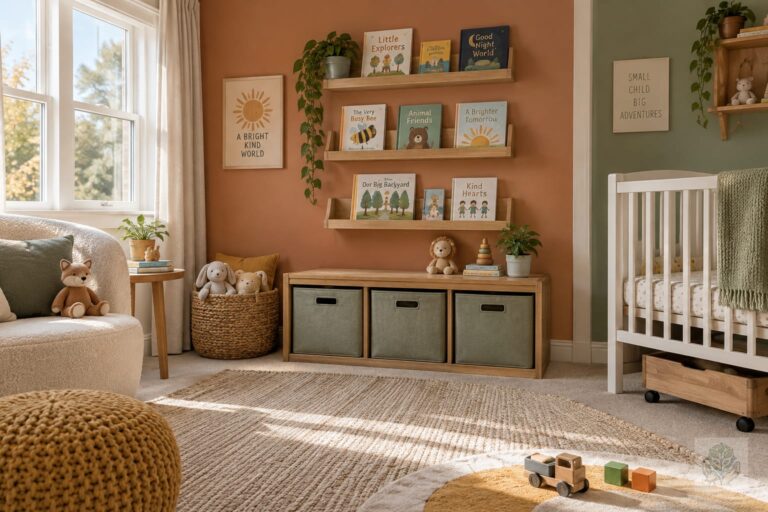
Cube storage units are versatile staples for any toddler room. Use fabric bins to hide the visual clutter of colorful plastic toys. This keeps the room looking cohesive and calm while keeping toys accessible for playtime.

6. Floating Book Ledges

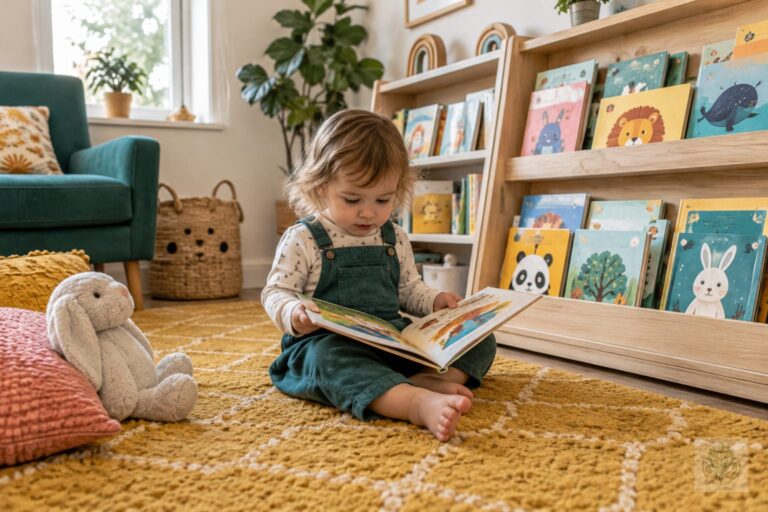
Display books facing outward on floating ledges. This acts as wall decor while making books more inviting for your child. It prevents the frustration of digging through a deep toy box to find a favorite bedtime story. For more ways to arrange reading materials, check out our tips on how to organize baby books in a small nursery.

7. Pegboard Walls

A wall-mounted pegboard is a customizable storage dream. Use hooks and small baskets to hang nursery essentials, baby monitors, or even a collection of stuffed animals, allowing you to rearrange items as your child grows.

8. Rolling Carts

A mobile cart is perfect for creating a portable changing station. You can keep diapers, wipes, and a change of clothes on the cart and wheel it into whichever room you happen to be in, maximizing your efficiency throughout the day.

9. Clear Labeled Bins

Teaching a toddler to tidy up is easier when they know exactly where items belong. Use clear, labeled bins so your child can identify where their blocks, cars, or dolls go, fostering a sense of independence and order.

10. Ottoman with Internal Storage

Choose an ottoman that doubles as a storage container. It serves as a comfortable place to sit during story time while hiding a stash of toys or extra bedding inside.

11. Behind-the-Door Hooks

Install a row of sturdy hooks on the back of the nursery door. This is the perfect spot for hooded towels, robes, or even a diaper bag, keeping these items off the floor and out of sight.

12. Drawer Dividers

Tame the onesie chaos inside your dresser drawers. Using simple drawer dividers allows you to separate items by size or type, making it easy to find what you need during a middle-of-the-night wardrobe change.

13. Woven Baskets for Soft Items

Add warmth and texture with large woven floor baskets. They are ideal for throwing in blankets, pillows, or large plush toys at the end of the day, making cleanup quick and visually appealing.

14. Multi-Purpose Changing Table

If you have a changing table with open shelves or an open bottom, use that space strategically. Store baskets filled with extra diapers and supplies directly under the mattress surface for easy access.

15. Toy Hammocks

If floor space is at a premium, install a toy hammock in the corner of the room. It is a fantastic way to store a large collection of soft toys while keeping them off the floor, giving your toddler more room to move.

16. Command Hooks for Baby Gear

Use heavy-duty adhesive hooks to hang your diaper bag, baby carrier, or sound machine. These hooks are easy to apply and remove, making them a temporary yet highly effective solution for gear that needs a home.

17. Window Seat Storage

If your room layout allows, a window seat with built-in drawers is the ultimate luxury in storage. It provides extra seating and a massive amount of hidden capacity for books and toys.

18. Magnetic Strips

Mount a magnetic strip on a wall or the side of a shelf to organize small metal-based toys, art supplies, or even metal tins filled with craft items. It keeps small pieces contained and prevents them from rolling under the bed.

19. Bedside Caddy

Keep a caddy attached to the side of your chair or crib. It is perfect for storing night-time feeding essentials like burp cloths, a water bottle, or a pacifier, so you are never scrambling for items in the dark.

20. Closet Shelf Dividers

Use vertical shelf dividers in your closet to keep stacks of clothing or blankets neatly separated. It prevents your perfectly folded stacks of clothes from toppling over every time you grab an item.

21. Wall-Mounted Cubbies

Individual wall-mounted cubbies are excellent for displaying special keepsakes or storing small items like baby socks or pacifiers. They help keep the dresser top clear for the actual changing process. You can find more inspiration with these genius shelf organization ideas for children’s rooms.

22. Repurposed Furniture

Consider a small vintage cabinet or sideboard for the nursery. These pieces often provide more storage than modern nursery furniture and add a unique, charming aesthetic to the room.

23. Corner Shelves

Corners are often forgotten spaces. Install triangular floating shelves to maximize these awkward spots, perfect for holding a nursery lamp or a few select books.

24. Stackable Crates

Modular, stackable crates are great because they grow with your child. Start with a few, and add more as your collection of toys and supplies increases over the years.

25. Under-Bed Storage Boxes

If your toddler has moved to a big kid bed, use long, shallow bins that slide underneath. This is the best place for long-term toy rotation, allowing you to swap out toys every few months to keep things fresh.

How to Maintain Your Nursery Organization

The secret to staying organized is not in the storage bins themselves, but in the daily reset. At the end of every evening, take five minutes to return items to their designated homes. This simple habit prevents the dreaded pile-up of toys and laundry.

Additionally, implement a toy rotation system. Keep only a portion of your child’s toys in the room at any given time and store the rest in a closet or under the bed. Swap them out periodically. This keeps the room from becoming overwhelmed and makes old toys feel new again, which is a massive win for both you and your toddler. For guidance on selecting developmentally appropriate playthings to include in your rotation, explore the complete guide to choosing age-wise toys for kids.

Conclusion

Creating an organized space does not have to be an overwhelming project. By implementing these smart storage ideas for baby and toddler rooms, you can create a functional environment that supports your daily routine and grows with your child. Whether you start with one or two simple changes, every step toward organization makes a difference in your home’s peace of mind.

Which of these organization tips will you try first in your nursery? Share your plans in the comments below, and let us know what storage challenges you are currently trying to solve!

Frequently Asked Questions

How can I organize a small baby and toddler room?

Focus on vertical space by installing wall shelves, use multi-purpose furniture like ottomans with storage, and utilize under-crib rolling bins to maximize floor space.

What is the best way to store tiny baby clothes?

Install a double-hanging closet rod to double your space and use simple drawer dividers to separate onesies by size and type.

How do I keep toddler toys from cluttering the room?

Use cube storage units with fabric bins to hide visual clutter, and implement a toy rotation system by swapping out toys every few months.

Are hanging shoe organizers useful in a nursery?

Yes, hanging shoe organizers on the back of the closet door are great for storing small items like socks, bibs, and lotions.

How can I make books accessible for a toddler?

Install floating book ledges facing outward so your child can easily see and choose their favorite bedtime stories without digging through toy boxes.

What is the secret to maintaining a clean nursery?

Establish a daily five-minute evening reset to return items to their designated homes and regularly edit out items your child has outgrown.
15 Indoor Activities That Encourage Creative Thinking in Kids

0

15 Indoor Activities That Encourage Creative Thinking in Kids

Is there a more common parental challenge than the cry of, I am bored, echoing through the house on a rainy afternoon? While it is tempting to hand over a tablet to secure an hour of peace, the digital world often leaves a child’s natural curiosity untapped. Finding meaningful ways to keep your little ones engaged indoors is not just about filling time; it is about cultivating their potential.

Creative thinking is the foundation of innovation and emotional intelligence. In the context of child development, it is not merely about painting pretty pictures. Instead, it is the ability to connect disparate ideas, approach problems from new angles, and remain resilient when faced with a challenge. By incorporating intentional, open-ended play, you can transform your living room into a vibrant hub of imagination.

Why Creative Play Matters for Brain Development

At the heart of creative thinking is divergent thinking—the ability to generate multiple solutions to a single problem. When a child engages in open-ended play, they are essentially practicing the neural pathways necessary for high-level cognitive growth. Unlike goal-oriented games with rigid rules, open-ended play forces a child to define their own parameters. You can explore more about why imagination matters in our complete guide to pretend play for child development.

Interestingly, boredom is often the catalyst for this growth. When the constant stream of external entertainment stops, the brain begins to search for its own stimulation. This is when the true magic happens. By providing the tools for creative expression rather than the answers, we empower our children to become active learners rather than passive consumers.

1. Artistic Exploration (Beyond Coloring)

Artistic endeavors are the most accessible way to encourage creative thinking in kids. Move beyond standard coloring books and invite your child to explore new mediums.

Mixed-Media Collage

Gather recyclables like cereal boxes, fabric scraps, and items from nature such as leaves or twigs. Challenge your child to create a 3D scene using only these materials.

Draw-a-Story Challenge

Start a story with one sentence and ask your child to draw the next scene. Alternate between words and pictures to build a complex narrative that evolves visually.

Process Art

Focus on the act of creating rather than the final product. Set out diverse materials—like oil pastels, watercolors, and textured sponges—and encourage your child to explore how the materials interact without a specific goal in mind. Find more inspiration in these creative finger painting and coloring activities for toddlers.

2. Construction and Engineering Challenges

Young engineers learn best through trial and error. These activities turn structural planning into a game of creative strategy.

The Box Castle Project

Save your delivery boxes and provide tape and scissors. Ask your child to plan and build a structure that fits a specific toy inhabitant.

Kitchen Physics

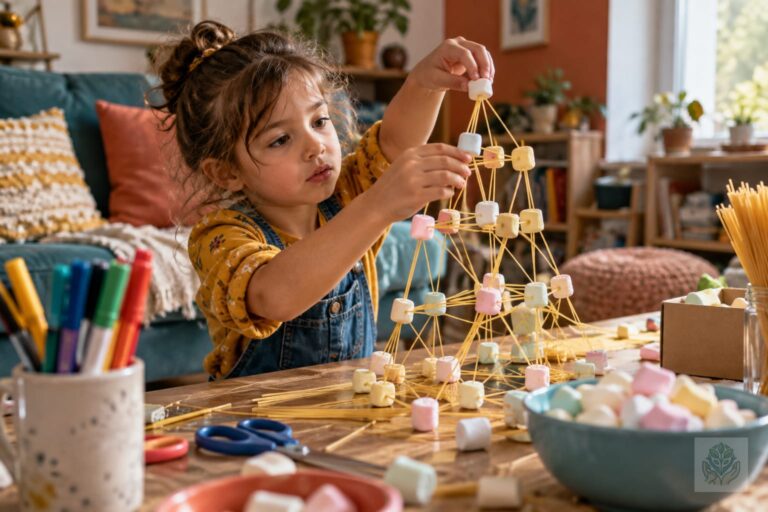
Using dry spaghetti and marshmallows or gumdrops, challenge your child to build the tallest tower that can hold the weight of a small figurine.

Living Room Obstacle Courses

Use pillows, chairs, and blankets to design a course. Encourage your child to solve spatial puzzles by determining the most efficient way to navigate from one end of the room to the other. You can incorporate ideas from these indoor activities that build gross motor skills to make it even more active.

3. Imaginative Role-Play and Storytelling

Role-play is the ultimate training ground for empathy and social problem-solving. By stepping into another persona, children explore different perspectives.

Living Room Theater

Raid your closets for old clothes and linens to create costumes. Let your child write and direct a short play that requires solving a specific conflict within the story.

Collaborative Storytelling

Play the What Happens Next? game. Start a bizarre scenario, such as a giraffe finding a pair of shoes, and have your child invent the next turn of events.

Mock Business

Set up a pretend restaurant or post office. This involves logic-based tasks like designing a menu, setting prices, and managing transactions, which reinforces creative thinking alongside early math skills. For more play sets, check out our guide on the best kitchen pretend play sets every child will love.

4. Cognitive and Logic-Based Creativity

Logic and creativity are not mutually exclusive; they are partners in the investigative mind.

The Reverse Engineer Game

Take an old, non-functional gadget apart with your child. Ask them to hypothesize what each piece does and why it was built that way.

Riddle Scavenger Hunts

Instead of writing down items to find, write clever riddles that describe the location of the next clue. This forces children to analyze language and spatial relationships.

Sensory Science

Create custom potions using safe household items like water, food coloring, and baking soda. Encourage your child to experiment with ratios and observe how the mixtures react. You can also try adding some of these fun sensory bin fillers for toddlers to your playtime routine.

Tips for Parents: Creating an Environment for Creativity

To truly foster innovation, you must curate an environment that supports it. Start by dedicating a small Maker Space or Creativity Corner in your home where your child has access to basic supplies like paper, tape, and markers.

Rotating toys is another powerful strategy. By hiding away half of their toy collection and swapping them every few weeks, you maintain a sense of novelty and interest in the items they already own. Remember, your role is that of a facilitator, not a director. Offer prompts instead of instructions, and celebrate the process rather than the result. To select the best options, consult our age-wise toy buying checklist for parents.

Finally, address the mess factor. Setting healthy boundaries, such as keeping art supplies on a vinyl tablecloth or limiting construction to a specific rug, allows you to relax and enjoy the creative chaos without the stress of constant cleanup.

Conclusion

Creativity is a muscle that needs regular exercise to grow. By providing your children with these 15 indoor activities that encourage creative thinking, you are helping them build the confidence to solve problems, think critically, and find joy in the process of discovery. Start small this weekend with one activity and watch as their imagination takes flight. We would love to hear how it goes; share your child’s most creative indoor project in the comments below!

Frequently Asked Questions

What is divergent thinking in child development?

Divergent thinking is the ability to generate multiple solutions to a single problem, forming the foundation of high-level cognitive growth and creativity.

Why is boredom good for kids?

Boredom acts as a catalyst for growth by stopping external entertainment, forcing the brain to search for its own stimulation and spark imagination.

What is process art?

Process art focuses on the act of creating rather than the final product, allowing children to explore how materials interact without strict rules.

How do construction challenges help kids?

Construction challenges help young engineers learn through trial and error, turning structural planning into a fun game of creative strategy.

How can parents create an environment for creativity?

Parents can curate an environment by setting up a dedicated maker space, rotating toys to maintain novelty, and offering open-ended prompts.

Are logic and creativity related?

Yes, logic and creativity are close partners in the investigative mind, working together to solve problems and analyze spatial relationships.

How to Build a Home Library for Young Children: A Curated Guide

0

How to Build a Home Library for Young Children: A Curated Guide

Creating a dedicated space for books in your home is one of the most powerful gifts you can offer your child. When you learn how to build a home library for young children, you are not just gathering physical objects; you are cultivating a sanctuary for imagination and cognitive development. Early literacy is the bedrock of future academic and emotional success, and having books within arm’s reach makes reading a natural part of everyday life.

Building a collection does not require a massive budget or a dedicated room. It is about prioritizing quality over quantity and creating an environment where stories become a cherished ritual. Whether you are starting with a small basket in the corner or a sprawling set of shelves, the goal is to ignite a lifelong love of reading.

Phase 1: Curating Your Collection

Choosing the right books is the first step in creating a space that captivates your little one. Start by selecting age-appropriate books that match your child’s developmental stage. For babies, look for sturdy board books with high-contrast images. As they grow, move into picture books with rich narratives and eventually transition to early readers as they begin to decode words. You can also explore our guide on choosing the best picture books for more inspiration.

Diversity is essential in your home library. Ensure your collection includes a wide variety of characters, cultures, and family structures. By exposing children to stories that mirror their own lives and stories that introduce them to the experiences of others, you build both empathy and self-confidence. Balance timeless classics like The Very Hungry Caterpillar or Goodnight Moon with contemporary titles that reflect modern life.

Don’t forget the interactive element. Lift-the-flap books, sensory stories, and touch-and-feel books are excellent for keeping toddlers engaged. These tactile experiences bridge the gap between playing and reading, ensuring that your child associates books with joy and discovery.

Phase 2: Budget-Friendly Strategies

Many parents worry about the cost of building a library, but you do not need to buy everything new. Leveraging local library book sales is a fantastic way to acquire high-quality titles for pennies on the dollar. Thrift stores and second-hand shops are also goldmines for hidden gems.

Online marketplaces and local community swap groups can help you source popular series without breaking the bank. When buying used, always check for safety and condition. Ensure books have no loose pages that could be choking hazards and check for any torn flaps. If you find a great book that is a bit worn, a strip of clear archival tape can work wonders.

Finally, create a wishlist to share with friends and family during birthdays or holidays. When people ask what to get your child, a book request is almost always welcomed and helps you build a curated library that serves your child for years to come.

Phase 3: Creating a Reading-Friendly Environment

The physical setup of your library matters just as much as the books themselves. If you want to know how to build a home library for young children that actually gets used, start by making books accessible. Front-facing shelves are significantly more engaging than traditional bookshelves where only the spine is visible. Seeing the vibrant cover art acts as a visual invitation for a child to pick up a book.

Choose a location that works for your family. A cozy corner in the bedroom is perfect for winding down at night, while a bookshelf in the living room keeps stories central to your family’s daily life. Add comfort essentials like soft rugs, plush beanbags, and good lighting to make the space inviting. As always, prioritize safety by anchoring all bookshelves to the wall to prevent accidents.

Phase 4: Organizing and Maintaining Your Library

Organization helps keep the love of reading alive. For younger children, consider organizing by color or by theme—such as space, animals, or trucks—to help them learn how to navigate their own collection. This independence fosters a sense of ownership over their books. If you need help managing space, check out these genius shelf organization ideas for children’s rooms, or learn how to organize baby books in a small nursery if you are working with tight quarters.

Implement a rotation strategy to keep things fresh. If your child seems to lose interest in their current selection, pack away half of the books and store them in a closet, rotating them back in every few months. This makes old favorites feel like new discoveries again.

Lastly, teach your children how to care for their books. Keep a small repair kit with clear tape and glue ready for those inevitable tears. Treating books with care teaches responsibility and shows that these items are valuable family treasures.

Phase 5: Fostering a Love of Reading

The most important element of any home library is the time spent within it. Establish a consistent daily reading ritual, such as a bedtime story or a quiet period after lunch. When children see their parents reading their own books, they begin to model that behavior, viewing reading as a pleasurable hobby rather than a chore.

Engage with the stories by asking open-ended questions. Instead of just reading the text, ask your child, What do you think happens next? or Why do you think that character made that choice? This interaction deepens their comprehension and makes the reading experience a shared, bonding activity.

Conclusion

Learning how to build a home library for young children is an investment in their future. While the number of books on your shelf might grow over time, the real value lies in the connection you foster through shared stories and quiet moments together. Stay consistent, keep it fun, and remember that even five minutes of reading per day can make a world of difference.

What was your favorite childhood book? Share it in the comments below and let’s inspire each other to keep our home libraries growing. For more inspiration on building your collection, take a look at our curated list of essential books for a preschool learning library.

Frequently Asked Questions

What is the best way to choose books for a toddler’s library?

Start with sturdy board books for babies and transition to picture books with rich narratives as they grow. Include a diverse mix of characters, cultures, and interactive touch-and-feel options to keep them engaged.

How can I build a children’s library on a budget?

You can acquire affordable books by shopping at local library book sales, thrift stores, second-hand shops, and community swap groups. Additionally, create a book wishlist for birthdays and holidays.

Where should I set up a home library for young children?

Choose an accessible spot like a cozy corner in the child’s bedroom for bedtime stories or a shelf in the living room. Ensure shelves are low and anchored securely to the wall for safety.

Why are front-facing bookshelves better for kids?

Front-facing bookshelves display the vibrant cover art, which acts as a visual invitation for young children to pick up and choose their own books compared to traditional spines.

How do I keep my child interested in the same books?

Implement a book rotation strategy. Store half of the books away in a closet and swap them back in every few months so older favorites feel like new discoveries.

How can I encourage my child to read every day?

Establish a consistent daily reading ritual, such as a bedtime story or a quiet period after lunch. Engaging with stories by asking open-ended questions also deepens their comprehension.

25 Engaging Afternoon Activities for Preschoolers to Beat the Wiggles

0

25 Engaging Afternoon Activities for Preschoolers to Beat the Wiggles

If you are a parent of a preschooler, you likely know the feeling of the late afternoon shift all too well. As the clock ticks toward 4:00 PM, the post-nap energy spike hits, or perhaps the post-school fatigue settles in, leading to the dreaded witching hour. It is that window of time where restlessness reigns, the wiggles take over, and your preschooler seems to need more entertainment than a professional circus.

Finding engaging afternoon activities for preschoolers is not just about keeping them busy; it is about providing purposeful play-based learning that supports their cognitive and physical development. When you have a toolkit of ideas ready, you can reclaim your afternoon, reduce screen time dependency, and maintain your parental sanity. You can also explore how to structure this part of the day effectively by reading our guide on creating a simple after-school schedule for preschoolers.

The Benefits of Structured Afternoon Play

Structured play is a fundamental component of early childhood development. When you provide preschooler activity ideas that are both intentional and fun, you are doing more than just passing the time. You are helping your child build essential life skills.

One of the primary benefits of afternoon play is reducing screen time. While technology has its place, hands-on activities foster better concentration and problem-solving abilities. Furthermore, these activities encourage the development of fine and gross motor skills. Whether your child is balancing on a cushion or pinching small objects into a sorting tray, they are fine-tuning their physical capabilities.

Perhaps most importantly, these activities strike a balance between parent-led engagement and independent play. By setting up the environment correctly, you can teach your child how to engage with materials on their own, giving you a few moments to breathe or complete your own tasks. For more inspiration on encouraging solo play, check out these Montessori toys that encourage independent play.

Low-Prep Indoor Active Play

When the wiggles are at an all-time high, you need activities that burn energy quickly. These physical activities for kids require little to no prep time and utilize items you already have around the house.

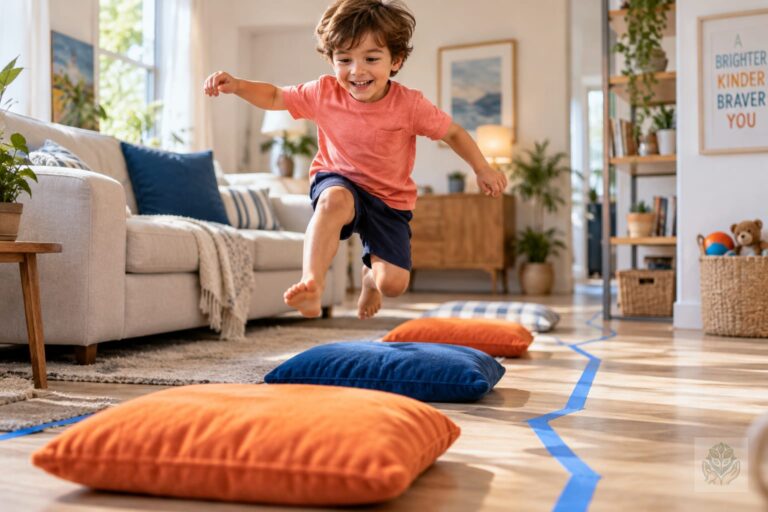
  • Living Room Obstacle Course: Use couch cushions, pillows, and painter’s tape to create a path. Ask your child to jump over the pillows, crawl under the coffee table, and balance along a line of tape.
  • The Floor is Lava: Scatter blankets across the floor. Your child must move from one safe island to the next without touching the carpet. This is a classic for a reason!
  • Indoor Scavenger Hunt: Create simple picture clues for your child to find specific items in the room. For example, a drawing of a book leads to the bookshelf, where they find their next clue.
  • Balloon Volleyball: Keep a balloon in the air as long as possible. It is slow-moving, safe for indoor spaces, and excellent for hand-eye coordination.
  • Animal Movement Cards: Write names of animals on paper slips (frog, bear, crab). Your child draws one and moves across the room like that animal.

Creative & Quiet Afternoon Craft Ideas

When you need to bring the energy level down, turn to creative play. These creative preschool activities encourage focus and calm, making them perfect for pre-dinner wind-down.

  • Process Art with Unconventional Tools: Skip the paintbrushes. Offer sponges, cotton swabs, or even toy trucks with wheels dipped in washable paint. It is about the act of creating, not the final product.
  • DIY Sensory Bins: Fill a plastic bin with dried rice, water beads, or kinetic sand. Add scoops, funnels, and small plastic figures. Sensory play is calming and keeps preschoolers occupied for long stretches. You can also try some ideas from our collection of fun sensory bin fillers for toddlers.
  • Cardboard Box Creations: Never underestimate the power of a cardboard box. With a little tape and markers, it can become a rocket ship, a puppet theater, or a cozy reading nook.
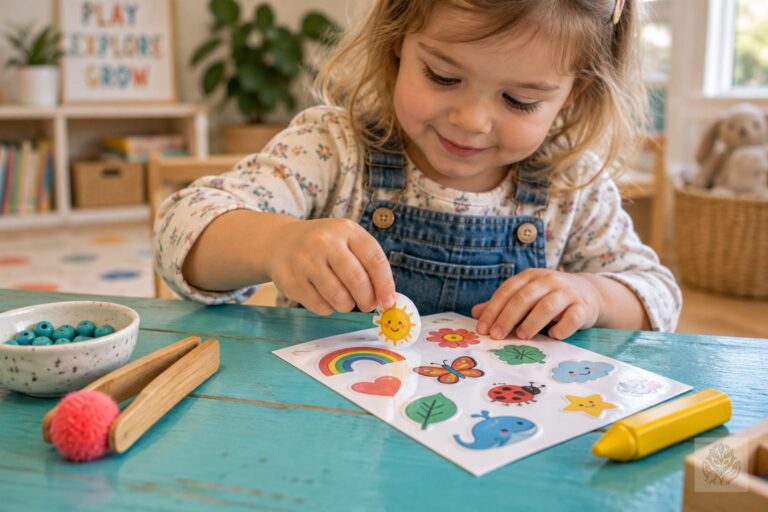
  • Sticker Mosaic Art: Give your child a large sheet of paper and a variety of stickers. Encourage them to fill the entire page.
  • Water Painting: Give your child a bowl of water and a large brush. Let them ‘paint’ on the driveway or even on construction paper to watch the color change as it gets wet.

Educational & Brain-Boosting Activities

Learning does not have to stop when school is out. Use these educational games for preschoolers to sneak in some brain-boosting fun without the pressure of a classroom setting.

  • Sorting and Matching: Use colored pom-poms and an empty muffin tin. Ask your child to sort the pom-poms by color or count them into the cups.
  • Audiobook Listening Station: Set up a cozy corner with headphones and an audiobook. This helps build narrative skills and listening comprehension.
  • Salt-Tray Writing: Pour a thin layer of salt onto a dark tray. Have your child use their finger to practice writing letters or drawing shapes in the salt. For extra practice, you can look into expert tips on how to improve pencil grip in young children.
  • Letter Stamps: Use alphabet stamps and playdough. Let your child press the letters into the dough to form their name or simple words.
  • Shape Hunt: Challenge your child to find five items in the house that are circles, squares, or rectangles.

Additional Quick Ideas

Keep these five activities in your back pocket for those extra-long afternoons:

  1. Tape Roadways: Lay down painter’s tape to create roads for toy cars on your floor.
  2. Sorting Laundry: Turn a chore into a game by having your child match socks.
  3. Homemade Puzzles: Cut an old cereal box image into large pieces for an easy puzzle. You can also explore our complete guide to puzzle games for kids for more ideas.
  4. Window Art: Use dry-erase markers on windows for a unique drawing surface.
  5. Indoor Picnic: Serve snack time on a blanket in the living room to break the monotony.

Tips for Successful Afternoon Play

The secret to keeping your preschooler engaged is all in the delivery. Use the concept of ‘invitations to play’ by setting up an activity before your child walks into the room. A visually appealing setup—like a tray of blocks or a specific craft project—is much more inviting than a pile of random toys.

Rotation is also key. Keep your toy supply manageable by storing items away and rotating them every few weeks. This keeps interest high because old toys feel new again. Finally, be intentional about your timing. If your child is struggling to settle, start with an active game to burn the wiggles, then transition into a quiet activity to prepare for dinner. If you need more ways to keep them moving when they are stuck inside, check out our favorite indoor activities that build gross motor skills for toddlers and kids.

Conclusion

Implementing engaging afternoon activities for preschoolers is about creating a rhythm that works for your family. Consistency helps your child understand expectations, but remember that flexibility is just as important. Keep it simple, choose activities that bring you both joy, and don’t stress if the day doesn’t go exactly as planned.

You are doing a great job navigating these formative years. Download our printable activity checklist today to keep your ideas organized, or share your favorite go-to afternoon activity in the comments below!

Frequently Asked Questions

What are some good afternoon activities for preschoolers to burn energy?

Living room obstacle courses, playing ‘The floor is lava’, and balloon volleyball are fantastic, low-prep ways to help kids burn off extra energy indoors.

How can I reduce screen time in the afternoon?

Having a toolkit of engaging activities like sensory bins, process art, and interactive scavenger hunts helps keep children entertained without relying on screens.

What are some quiet activities for preschoolers before dinner?

Sticker mosaic art, audiobook listening stations, and DIY sensory bins are wonderful calm activities that help wind down the energy level before the evening.

How do I set up an invitation to play?

An invitation to play involves setting up an appealing activity, like a tray of art supplies or blocks, before your child enters the room to spark their natural curiosity.

Can afternoon activities also be educational?

Yes! Sorting and matching games, salt-tray writing, and shape hunts are great ways to sneak in early learning and cognitive development during playtime.

What should I do if my preschooler is too restless?

Start with a high-energy physical game to get rid of the wiggles, and then smoothly transition into a focused, quiet activity once they have calmed down.

10 Fun Pencil Grip Activities for Toddlers and Preschoolers to Boost Fine Motor Skills

0

10 Fun Pencil Grip Activities for Toddlers and Preschoolers to Boost Fine Motor Skills

Watching your toddler scribble their first masterpiece is a milestone every parent cherishes. Beyond the cute art, those early marks are actually the foundations of literacy. Developing an effective pencil grip is a complex journey that begins long before a child ever picks up a formal writing tool. By incorporating fun pencil grip activities for toddlers and preschoolers into your daily routine, you can support their development in a way that feels like play rather than work.

We often focus on the writing tool itself, but the journey to a mature grasp involves the entire arm, shoulder, and hand. Children typically progress from a primitive palmar grasp—where the whole hand wraps around a tool—to the sophisticated dynamic tripod grasp used by adults. This development should be gradual, stress-free, and rooted in play. Forced writing before a child is physically ready can lead to frustration, so let us explore how to build these muscles naturally.

Understanding Hand Development Stages in Young Children

To support your child, it helps to understand how they develop. The pincer grasp, which involves using the thumb and index finger to pick up small objects, is the essential precursor to holding a pencil correctly. When you see your toddler picking up a Cheerio or a small button, they are laying the groundwork for future handwriting.

Many parents wonder if their child is behind. It is important to remember that every child follows their own timeline. While some toddlers show interest in holding crayons by age two, others may not show consistent interest until closer to four. Focus on readiness signs, such as an interest in drawing or manipulating small objects, rather than comparing them to peers. The goal is to strengthen the hand muscles so that when the time comes to write, the physical exertion is minimal.

5 Essential Hand-Strengthening Exercises Before Writing

Before worrying about how they hold a pen, focus on building the intrinsic muscles of the hand and the stability of the shoulder. Strong muscles make the act of writing much easier.

  • Playdough and Putty: Squishing, rolling, and pulling playdough provides excellent resistance training for little hands. Encourage your child to hide small beads inside a ball of dough for them to dig out. Discover more tactile inspiration with our 15 fun sensory bin fillers for toddlers.
  • Tweezers and Tongs: Transferring pom-poms or dry pasta from one bowl to another using kid-sized tongs is a perfect way to isolate the fingers used in a proper grip.
  • Vertical Surface Play: Tape a piece of paper to the wall or use an easel. Working on a vertical surface forces the wrist into an extended position and engages the shoulder muscles, both of which are crucial for stable handwriting.
  • Spray Bottle Games: A spray bottle filled with water is an incredible tool. Using a spray bottle to water plants or clean windows requires significant finger isolation and strength.
  • Beading and Lacing: Threading beads onto a string or using lacing cards requires precise coordination between the eyes and hands. Explore other ideas in our 10 fun DIY crafts that strengthen hand-eye coordination in kids.

10 Play-Based Pencil Grip Activities for Toddlers and Preschoolers

When you are ready to introduce writing tools, try these engaging activities that make learning natural and fun.

  1. Broken Crayon Art: Give your child small, broken crayon pieces. Because they are short, the child is naturally forced to use a pincer grasp rather than a whole-hand fist grasp.
  2. Sticker Peeling: Peeling stickers off a sheet and placing them onto a page is an excellent way to refine finger dexterity.
  3. Cotton Swab Painting: Use cotton swabs instead of brushes. The thin handle encourages the child to hold the tool with their fingers rather than their palm.
  4. Small Chalk Pieces: Like broken crayons, small stubs of sidewalk chalk encourage a more precise hold while allowing for large, expressive movements.
  5. Connecting Dots with Pipe Cleaners: Use pipe cleaners to create shapes or follow lines. This adds a tactile sensory element to drawing practice.
  6. Poke Art: Provide a piece of foam and a toothpick. Let your child poke holes in the foam to create designs or patterns.
  7. Salt or Sensory Sand Trays: Let your child trace letters or shapes in a tray filled with salt or sand. This allows for low-pressure practice without the need for a pencil. You can learn more about related techniques in our guide on how to improve pencil grip in young children.
  8. Clothespin Games: Use clothespins to pick up pom-poms and move them into a sorting tray. This is one of the best ways to build the exact strength needed for holding a pencil.
  9. Finger Socks or Pencil Weights: Sometimes, a little bit of weight on the pencil can provide sensory feedback that helps children understand where to hold the tool.
  10. Bubble Wrap Popping: It sounds simple, but popping bubble wrap with the thumb and index finger is a fantastic, high-engagement workout for tiny muscles.

Tools and Tricks: When to Use Pencil Grips

Rubber pencil grips can be helpful tools, but they are not always necessary. If your child is struggling to maintain a grip, a soft, molded grip can provide a visual and tactile guide. However, be cautious not to become over-reliant on them. Sometimes, a DIY hack works better—try wrapping a thick rubber band around the pencil to create a small “bump” that acts as a natural guide for the fingers.

Choosing the right size writing tool is also vital. Avoid using thin, standard-sized pencils for toddlers. Opt for triangular-shaped crayons or thick, chubby markers. The larger diameter is much easier for small, developing hands to grasp and control.

Common Mistakes Parents Make (And How to Fix Them)

The most common mistake is over-correcting. If you constantly tell your child, “Move your thumb there,” or “Hold it like this,” you risk killing their enthusiasm for drawing. Writing should be a creative outlet, not a chore. If you notice an awkward grip, instead of correcting it verbally, provide more strengthening activities like those listed above. Often, the grip will naturally improve as their muscles become stronger.

Another mistake is ignoring core and shoulder stability. If a child is slouching or hanging off their chair, they lack the physical foundation to control their hand movements. You can support their physical foundation with ideas from our collection of 15 fun indoor activities that build gross motor skills for toddlers & kids.

Conclusion

Improving fine motor skills is a marathon, not a sprint. By focusing on consistent, play-based activities, you provide your child with the physical tools they need for academic success without the pressure of formal lessons. Remember that these fun pencil grip activities for toddlers and preschoolers are designed to build confidence, not just technique.

If you find that your child is having extreme difficulty with basic coordination, or if you have concerns about their development, do not hesitate to reach out to an Occupational Therapist. They can provide personalized strategies that fit your child’s unique needs. Above all, keep it light, keep it fun, and celebrate every little scribble along the way.

Frequently Asked Questions

What is the best age to start pencil grip activities?

Children can start fine motor and pencil grip activities as toddlers, around age two. The focus should be on play-based movements that build hand strength before formal writing begins.

How can I help my preschooler hold a pencil correctly?

Use short crayons, small chalk pieces, or kid-sized tongs. These items naturally encourage a pincer grasp instead of a whole-hand fist grip, making the transition easier.

Are rubber pencil grips necessary for young children?

Rubber grips are not always necessary, but they can help children who struggle with finger placement. Thick triangular pencils and crayons are often better for beginners.

What are signs of handwriting readiness in toddlers?

Readiness signs include an interest in drawing, the ability to pick up tiny objects using a pincer grasp, and enjoying activities like peeling stickers or using playdough.

Why is vertical surface play important for writing?

Working on a vertical surface like an easel or wall-mounted paper extends the wrist and engages shoulder muscles, which are crucial for stable handwriting.

When should I consult an occupational therapist about pencil grip?

Consult an occupational therapist if your child experiences extreme difficulty with basic hand coordination, muscle fatigue, or shows persistent frustration during drawing tasks.

Best Types of Books for Early Readers: A Guide for Parents and Educators

0

Best Types-of Books for Early Readers: A Guide for Parents and Educators

Choosing the right books for your child is one of the most significant steps you can take to foster a lifelong love of learning. As children embark on their literacy journey, the specific texts they encounter can either build confidence or lead to unnecessary frustration. Finding the best types of books for early readers requires understanding both the mechanics of reading and the unique personality of your child.

Why choosing the right books matters for early literacy

Early literacy is not just about identifying letters; it is about connecting symbols to meaning. When children read books that align with their current skill level, they experience the joy of accomplishment. Conversely, pushing a child into complex literature before they are ready can lead to burnout. By selecting books that match their developmental stage, you help them internalize the rhythms of language and the structure of storytelling.

The milestone of independent reading

Transitioning from being read to by an adult to reading independently is a monumental milestone. It marks a shift toward autonomy and critical thinking. During this phase, your role transitions from the primary storyteller to a supportive coach. The books you choose during this period act as the bridge that carries a child across the gap between emerging skills and fluent reading.

How this guide will help you select the perfect books for your child

This guide breaks down the science and the art of book selection. Whether you are a teacher looking to stock a classroom library or a parent trying to find the perfect bedtime story, you will learn how to identify the right early reader books, decode reading levels, and nurture a home environment that celebrates literacy.

Understanding Reading Levels: What to Look For

Navigating the world of educational terminology can be overwhelming. However, understanding a few basics will make your trips to the library much more productive.

Decoding vs. Comprehension

Decoding is the process of translating written words into spoken sounds. Comprehension is the ability to understand the meaning behind those words. The best types of books for early readers balance both. If a child spends all their energy decoding, they often lose the plot. We want books that allow them to practice their phonics skills without sacrificing their enjoyment of the story. For younger children taking their very first steps into literacy, you can also explore helpful resources like How to Teach Lowercase Letters to Preschoolers: Fun and Effective Strategies to build letter recognition.

Understanding Lexile and Guided Reading levels

Many publishers use leveling systems like Lexile or Guided Reading (A-Z) to categorize text complexity. These systems analyze factors like sentence length, vocabulary density, and content familiarity. While these are excellent guidelines, they are not rigid rules. Always use these levels as a starting point rather than a definitive limit on what your child should be exposed to.

The Five Finger Rule for checking book difficulty

If you aren’t sure if a book is right for your child, try the Five Finger Rule. Have your child open the book to a middle page and start reading. For every word they don’t know or struggle to pronounce, they hold up a finger. If they raise five fingers by the end of the page, the book is likely too difficult for independent reading and is better suited as a read-aloud book for you to share together.

Top Types of Books for Early Readers

Not all children’s literature is created equal when it comes to instruction. Here are the categories that offer the most support to growing readers.

Decodable Books: The foundation of phonics-based learning

Decodable books are specifically written to focus on the phonetic patterns a child is currently learning. These texts contain a high frequency of words that follow specific rules (like CVC words: cat, dog, sit). By limiting the number of irregular sight words, these books help children practice phonics effectively, boosting their confidence in their own abilities.

Predictable Text: Building confidence through repetition

Predictable books often use repeating sentence patterns, such as “I see a dog. I see a cat. I see a bird.” These patterns allow children to use picture clues and repetitive structure to guess unfamiliar words. While not a substitute for phonics, they are fantastic for building fluency and helping children feel successful during the early stages.

Emergent Reader Picture Books: Relying on visual cues

For children who are just starting to recognize that words on a page represent stories, picture books are vital. The illustrations provide context that helps the child make sense of the text. When a child can “read” the story by looking at the pictures, they are learning how to narrate a sequence of events—a foundational skill for later reading comprehension. For expert recommendations on finding the right titles, check out How to Choose the Best Picture Books for Young Children: A Parent’s Guide.

Levelled Readers (Step-into-Reading, I Can Read series)

These series are designed to grow with your child. They are usually categorized into levels (Pre-Level 1, Level 1, Level 2, etc.). The best types of books for early readers in these collections offer a sense of progression, allowing children to see how far they have come as they move from simple sentences to longer, more complex narratives.

Graphic Novels for Beginners: Visual storytelling benefits

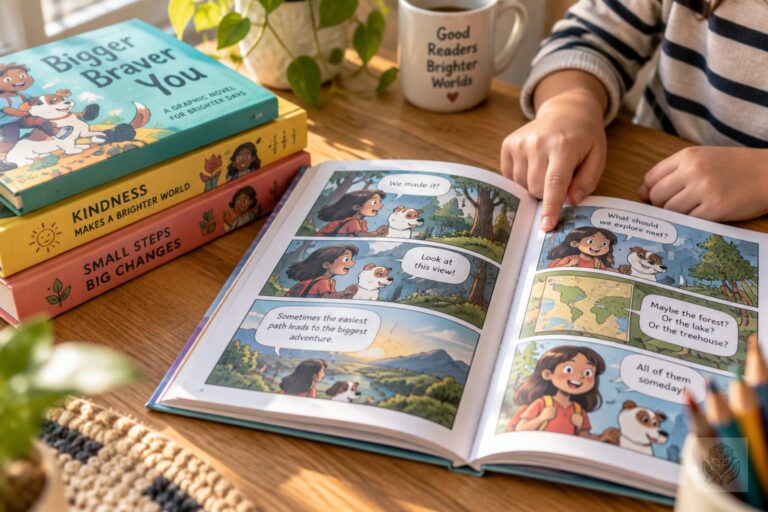
Graphic novels are increasingly popular for a reason. The marriage of text and art makes reading feel less daunting. The limited text in speech bubbles makes them perfect for children who are intimidated by walls of text. These books are excellent for developing inference skills and visual literacy.

How to Match Books to Your Child’s Interests

Even the most perfectly leveled book will fail if it doesn’t capture a child’s imagination.

Following the High-Interest principle

If your child loves dinosaurs, look for decodable books about dinosaurs. If they are obsessed with space, prioritize books about planets. Interest acts as a powerful motivator. When a child cares about the subject matter, they are much more willing to work through the tricky parts of the text.

Integrating non-fiction for curious minds

Many children prefer facts over fiction. Non-fiction early readers provide fascinating information about animals, machines, or history. These books are great for expanding vocabulary and showing children that reading is a gateway to learning about the real world.

The role of humor and interactive books

Reading should be fun. Look for books that make your child laugh, have surprise endings, or include interactive elements like lift-the-flaps or questions for the reader. Humor creates a positive emotional connection to reading, which encourages children to pick up books voluntarily.

Tips for Supporting Early Readers at Home

Your support is the most important factor in your child’s success.

Creating a literacy-rich environment

Make sure books are easily accessible. A dedicated reading nook or a low shelf filled with colorful titles signals that reading is a part of your daily life. When children see adults reading, they are more likely to view reading as a valuable and enjoyable activity. You can also explore How to Organize Baby Books in a Small Nursery: Creative Storage Solutions for Tight Spaces for brilliant ideas on keeping reading spaces tidy.

The importance of reading aloud versus reading alone

Continue reading to your child even after they start reading on their own. This helps them stay interested in sophisticated stories that are beyond their current reading level. It also allows you to model prosody, expression, and pacing, which are essential elements of fluent reading.

How to handle frustration when a book is too hard

If your child becomes frustrated, don’t force them to finish. Simply take over reading for a page or two, or suggest choosing a different, easier book. Remind them that reading is a skill like riding a bike; it takes practice, and it is perfectly normal to start with smaller steps.

Celebrating reading milestones

Acknowledge your child’s progress, whether they finished their first book, learned a new sight word, or started reading longer sentences. Positive reinforcement helps keep their motivation high and their attitude toward reading enthusiastic. To foster even more growth, you might integrate learning tools found in 15 Essential Books for a Preschool Learning Library: A Parent’s Guide.

Common Mistakes to Avoid When Choosing Books

  • Pushing for complexity too soon: Focus on what they can read comfortably, not what they should be reading based on age.
  • Ignoring the child’s preference: A book that is “perfect” by an educator’s standard is worthless if your child finds it boring.
  • Focusing only on speed over understanding: Remember that reading is about meaning. Don’t rush them; encourage them to engage with the story.

Conclusion

The journey toward literacy is a marathon, not a sprint. By understanding the best types of books for early readers and tailoring your selections to your child’s interests and skill level, you are giving them the best possible start. For further development tips, you can read our comprehensive overview on The Complete Guide to Choosing Age-Wise Toys for Kids: A Developmental Roadmap. Stay patient, stay consistent, and remember to keep the experience lighthearted and fun.

What is your child’s favorite book right now? We would love to hear your recommendations in the comments below!

Frequently Asked Questions

What are decodable books?

Decodable books are texts specifically written to focus on the phonetic patterns a child is currently learning. They feature a high frequency of words that follow strict phonics rules, helping beginners build confidence.

What is the Five Finger Rule?

The Five Finger Rule is a quick way to check book difficulty. Have a child read a middle page and raise a finger for every unknown word. If they raise five fingers, the book is likely too difficult.

Why are graphic novels good for early readers?

Graphic novels combine text and art, making reading less intimidating for beginners. The limited text in speech bubbles helps children develop visual literacy and inference skills.

Should I continue reading aloud to a child who can read independently?

Yes. Reading aloud to independent readers exposes them to advanced vocabulary and complex stories beyond their current reading level while modeling fluent pacing and expression.

How do leveled readers help children?

Leveled readers grow with your child, offering a clear sense of progression from simple sentences to longer narratives, ensuring they feel successful at every stage.

What should I do if a book is too frustrating for my child?

If your child gets frustrated, take over reading for a page or two, or switch to an easier book. Keep the experience positive and remind them that reading takes practice.

How to Teach Lowercase Letters to Preschoolers: Fun and Effective Strategies

0

How to Teach Lowercase Letters to Preschoolers: Fun and Effective Strategies

As parents, we often rush to teach our children the alphabet by focusing on big, bold uppercase letters. While those capital letters are great for starting, the reality of early literacy is quite different. Teaching lowercase letters is actually one of the most important steps in preparing your preschooler for reading and writing success. You can also explore how to help kids recognize uppercase letters to give them a complete foundation in the alphabet.

Did you know that approximately 95% of the text children encounter in books, signs, and digital media is written in lowercase? By focusing early on these letters, you are giving your child the tools to decode the world around them. The key is to meet your child where they are, keeping the process lighthearted rather than turning it into a rigid classroom drill.

When Should You Start Teaching Lowercase Letters?

Every child develops at their own unique pace. Before you begin, look for signs of developmental readiness. Is your child showing an interest in signs, cereal boxes, or the letters in their own name? If they can identify some uppercase letters and show a desire to mimic writing, they are likely ready to explore lowercase forms.

There is often a debate about whether to teach uppercase and lowercase letters simultaneously. While some experts prefer one over the other, many early childhood educators recommend introducing them together or focusing on the lowercase version early on. By showing a child both versions of a letter at the same time, you help them understand that they are two representations of the same sound.

The Fundamentals of Letter Recognition

Effective letter recognition is about much more than just rote memorization. Instead of asking your child to recite the alphabet like a song, focus on letter-sound correspondence. Understanding that the letter ‘b’ makes the /b/ sound is far more valuable than simply recognizing the shape.

A great place to start is with the letters in their own name. Children are naturally drawn to their own identity, and they will be much more motivated to learn the lowercase letters that make up their name. Additionally, consider grouping letters by shape. For example, introduce letters like c, o, a, d, and g together, as they share similar curved structures. This helps the brain categorize and remember the shapes more efficiently.

Engaging Sensory Activities for Lowercase Learning

Preschoolers learn best through movement and touch. Tactile learning experiences help solidify neural pathways, making it easier for children to recall how a letter feels to create. Try these sensory-rich ideas:

  • Salt trays or sand writing: Fill a shallow tray with salt or sand and have your child practice tracing lowercase letters with their finger.
  • Shaving cream practice: Spread a thin layer of shaving cream on a tray or a clean table for a fun, messy way to write.
  • Playdough letters: Roll playdough into long snakes and shape them into letters.
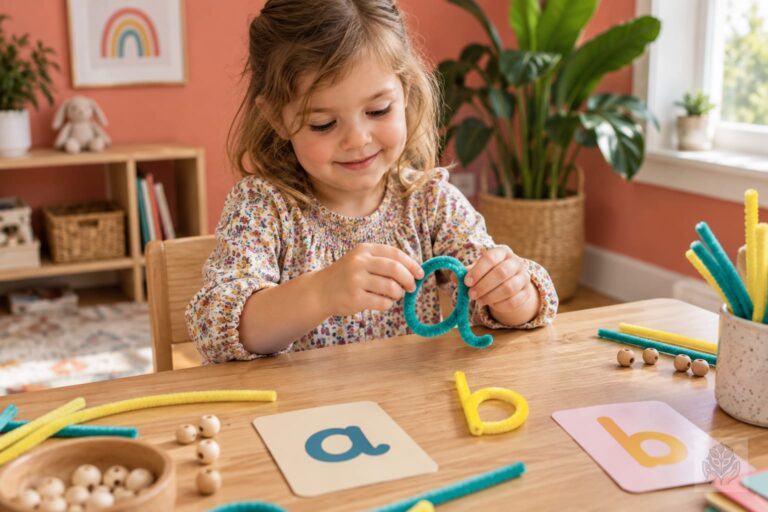
  • Pipe cleaner formations: Twist colorful pipe cleaners into the shapes of letters to help children understand the physical curves and lines.

Play-Based Games to Practice Lowercase Letters

Learning should feel like play, not a chore. You can easily integrate lowercase letter recognition into your daily routine using simple games that keep your child moving and engaged. For even more inspiration, check out these morning learning activities for young children to keep their brains active.

Try a lowercase letter scavenger hunt where you hide magnetic letters around the room and ask your child to find specific sounds. For those who love the outdoors, use a paintbrush and a cup of water to paint letters on the sidewalk. The sun will make them disappear, which is always a thrill for a toddler. You can also play matching games using index cards, pairing an uppercase letter with its lowercase counterpart.

Tips for Successful Letter Formation

When your child is ready to start writing, focus on the process rather than perfection. Modeling correct pencil grip is important, but don’t obsess over it too early. The goal is to encourage a comfortable hold that allows for movement. You can find more targeted strategies in our guide on how to improve pencil grip in young children.

Always model the stroke order. Use simple verbal prompts to guide them, such as start at the top for letters like l or t. Prioritizing tracing and tracing-based activities helps build the muscle memory required to transition to independent writing later on. Remember, their letters may look shaky or wobbly at first, and that is perfectly normal.

Common Challenges and How to Overcome Them

One of the most common challenges is the confusion between reversible letters, such as b, d, p, and q. This is developmentally appropriate for preschoolers, so try not to worry too much. When they mix them up, gently correct them by pointing out the shape or the direction of the circle. If your child becomes frustrated, stop the activity immediately. Learning should never be a source of stress. If they lose interest, pivot to a different activity and come back to it another day.

Consistency is Key: Maintaining Progress

You don’t need a formal classroom setup to foster literacy. Embed learning into your daily life. Point out lowercase letters on grocery store signs, cereal boxes, or road signs during car rides. When you read books aloud, run your finger under the words to show your child that text moves from left to right and is composed of those familiar letters. To expand their reading skills further, explore these essential books for a preschool learning library.

Celebrating small wins is the best way to keep motivation high. A simple high-five or a sticker when they correctly identify a letter goes a long way in building their confidence.

Conclusion

Teaching lowercase letters to your preschooler is a wonderful opportunity to bond and build a foundation for lifelong learning. By focusing on play, sensory engagement, and consistent practice, you can take the pressure off and make literacy fun. Remember to stay patient, keep your sessions short, and celebrate every victory along the way. Your child will be reading in no time!

Ready to start? Sign up for our weekly newsletter to receive a free, printable alphabet tracing sheet and more expert tips delivered straight to your inbox! For additional practice materials, you can also check out our collection of free printable worksheets for 5-year-olds.

Frequently Asked Questions

When should I start teaching lowercase letters to my preschooler?

You can start when your child shows an interest in letters, signs, or writing their own name, typically around preschool age.

Should I teach uppercase and lowercase letters at the same time?

Yes, introducing them together or focusing on lowercase early helps children understand they are two forms of the same sound.

What are the best ways to teach letter recognition to toddlers?

Use multi-sensory activities like salt trays, shaving cream, playdough, and active games like scavenger hunts to make learning engaging.

Why is teaching lowercase letters more important than uppercase?

About 95% of the text children encounter in books and media is written in lowercase, making it vital for early reading success.

How can I help my child stop confusing b, d, p, and q?

Letter reversals are normal in preschoolers. Gently correct them by pointing out the shape features without causing frustration.

How long should daily letter learning sessions last?

Keep sessions short, fun, and play-based, lasting only a few minutes to match a preschooler’s attention span and prevent burnout.

10 Easy Board Games for Family Bonding Time (That Everyone Will Love)

0

10 Easy Board Games for Family Bonding Time (That Everyone Will Love)

In our fast-paced, digital world, finding genuine ways to connect with your children can feel like a challenge. Between school schedules, work commitments, and the constant lure of screens, it is easy to let the evenings slip away without meaningful interaction. This is where easy board games for family bonding come into play as a powerful tool for your parenting toolkit.

Family game night is not just about moving pieces across a board or scoring points. It is about intentional time spent together, laughing at silly mistakes, and navigating the complexities of teamwork. By choosing games that are simple to learn, you remove the barrier of frustration and open the door to genuine connection, shared joy, and the development of essential social skills. To find more inspiration for your gatherings, check out these engaging family game night ideas for toddlers and preschoolers.

Why Choose Easy Board Games for Family Bonding?

When you hear the term family board games, your mind might jump to long, complicated strategy games that take hours to set up. However, for most families, simplicity is the secret sauce. Easy games offer a low learning curve, which means you spend less time reading the rulebook and more time actually playing.

Short play times are another major advantage. They align perfectly with the shorter attention spans of younger children, ensuring everyone remains engaged from start to finish. Furthermore, games with a mix of luck and strategy help level the playing field. When a five-year-old has a genuine chance of beating a parent, it builds confidence, encourages healthy competition, and makes the experience far more rewarding for the little ones.

Our Top Picks: Easy Board Games for Every Type of Family

Finding the right game for your family can be overwhelming. To help you get started, we have curated a list of games that hit the sweet spot between entertainment and ease of play.

The Classic Crowd-Pleasers

Ticket to Ride: First Journey is a fantastic introduction to route-building games. It simplifies the original version just enough to keep it accessible for younger players while remaining engaging for adults. Sushi Go! is another favorite, offering a fast-paced card-drafting experience that teaches basic probability and decision-making in a fun, sushi-themed package. For younger children who also love hands-on learning, you might want to explore the complete guide to choosing age-wise toys for kids.

Cooperative Wins

If your family tends to get a little too competitive, cooperative games are the perfect solution. Outfoxed! is a wonderful whodunit game where everyone works together to catch the pie-thief before they escape. Forbidden Island is equally exciting, requiring players to collaborate to save artifacts from a sinking island before time runs out. Playing these together is a great way to incorporate pretend play that develops emotional intelligence in younger members.

Silly and Creative Options

Sometimes you just need a game that encourages loud laughter. Taco Cat Goat Cheese Pizza is a card game that relies on speed and reflexes. It is fast, chaotic, and almost guaranteed to end in giggles. Sleeping Queens is another gem; it is easy to learn, visually charming, and incorporates just enough strategy to keep older kids interested without overwhelming younger ones. If your children enjoy interactive group activities, you can also look into creative follow-the-leader games for kids at the park for outdoor fun.

How to Host a Successful Family Game Night

Hosting a game night does not need to be a formal event. The best bonding activities for families are often the ones that feel spontaneous and relaxed. Start by setting the scene: clear the coffee table, put phones in a drawer, and prepare a simple snack. The goal is to minimize distractions so you can focus entirely on one another.

If you have busy weeknights, embrace the 15-minute game night. You do not need two hours to bond; ten minutes of focused play can provide a significant emotional reset for everyone. Remember to focus on the process rather than the outcome. If the game starts to cause stress, it is perfectly okay to pause, take a breath, or change the rules to make it more cooperative.

Beyond the Rules: Building Connection While You Play

Beyond the actual gameplay, board games provide a safe environment to practice emotional regulation. Use this time to model good sportsmanship. When you lose a game, narrate your own experience: I feel a little disappointed that I lost, but I had so much fun playing with you all. This helps your children understand that feelings are normal and that how we handle them matters more than the score.

Board games also serve as incredible conversation starters. During the natural downtime between turns, ask open-ended questions like, What was the best part of your day? or If you could have any superpower, what would it be? These simple exchanges during family game nights often lead to deeper conversations that might not happen during the hustle of a typical morning routine.

Conclusion

Incorporating easy board games for family bonding into your routine is one of the most effective ways to nurture your relationship with your children. By starting small and focusing on the experience of playing together, you create a low-pressure environment where memories are made and character is built. Whether it is a quick card game before dinner or a Sunday afternoon tournament, these moments serve as the building blocks for a strong, connected family life. For additional ideas on keeping kids active and entertained indoors, take a look at these indoor activities that build gross motor skills for toddlers and kids.

What is your family’s current go-to game? Do you prefer fast-paced card games or longer, cooperative adventures? Let us know in the comments below—we would love to hear your recommendations!

Frequently Asked Questions

What are the best easy board games for family bonding time?

Some of the best games include Ticket to Ride: First Journey, Sushi Go!, Outfoxed!, Forbidden Island, Taco Cat Goat Cheese Pizza, and Sleeping Queens because they are simple to learn and highly engaging.

Why should I choose easy board games instead of complex strategy games?

Easy board games have a low learning curve, shorter play times, and often include a mix of luck and strategy, which keeps younger children engaged and levels the playing field for everyone.

How can family game nights help reduce screen time?

Game nights provide a fun, interactive alternative to digital devices, capturing children’s attention and encouraging active social engagement instead of passive screen viewing.

Are cooperative board games good for young families?

Yes, cooperative board games like Outfoxed! and Forbidden Island encourage teamwork and eliminate the stress of intense competition, making them ideal for younger children.

How long should a family game night last?

Family game nights do not need to last for hours. Even 15 to 20 minutes of focused play on a busy weeknight can provide a great emotional reset and meaningful connection.

How do board games help build social and emotional skills in children?

Board games teach kids how to take turns, practice good sportsmanship, handle winning and losing gracefully, and regulate their emotions in a safe, supportive environment.

How to Manage Defiant Behavior in Preschoolers: A Gentle Parenting Guide

0

How to Manage Defiant Behavior in Preschoolers: A Gentle Parenting Guide

If you have recently noticed your sweet, agreeable toddler transforming into a little rebel who refuses to put on shoes, eat their dinner, or go to bed on time, you are not alone. Welcome to the stage commonly referred to as the threenager phase. It is a period defined by testing boundaries, loud protests, and a sudden, intense desire for independence. While managing defiant behavior in preschoolers can feel exhausting, it is a vital part of growing up.

Defiance is a normal developmental milestone. During these years, your child is navigating the tension between wanting to be independent and still needing the security of your guidance. By shifting your approach from traditional discipline to gentle, consistent strategies, you can minimize conflict and build a stronger foundation of connection with your child.

Understanding the Why Behind Preschool Defiance

To effectively manage defiant behavior in preschoolers, we must first look at what is happening inside their developing brains. Your child is not trying to give you a hard time; they are having a hard time. At this age, their brains are wired for curiosity and exploration, but their prefrontal cortex—the part responsible for impulse control and logical reasoning—is still very much under construction.

Independence is a major developmental goal. When your child says no to your request to wash their hands, they are asserting their autonomy. They are testing the edges of their world to see how much control they actually have. Furthermore, preschoolers are prone to physical and emotional fatigue. We often use the acronym HALT to identify external triggers: is your child Hungry, Angry, Lonely, or Tired? Often, what looks like behavioral defiance is actually a cry for help because their basic needs have not been met. You can find more helpful context when your toddler says no to everything during daily routines.

Immediate Strategies to De-escalate Defiant Behavior

When you are in the heat of a meltdown, your own nervous system often reacts by feeling stressed or angry. However, the power of the pause is your greatest tool. Before responding to defiance, take a deep breath. By staying calm, you act as an anchor, helping your child regulate their own emotions through your presence.

Once you are grounded, try the Yes/No sandwich technique. Validate their feelings first, set your boundary, and then offer an alternative. For example, you might say, I see that you are having so much fun playing and you do not want to stop for a bath. It is hard to stop when you are enjoying yourself. However, it is bath time now so we can get clean. Would you like to hop to the bathroom like a frog or waddle like a duck? By validating their frustration, you lower their defenses, making them more likely to cooperate. For more guidance on verbal boundaries, read our tips on how to say no without creating a power struggle.

Avoid the urge to use long-winded logic or reasoning. In the middle of a power struggle, a child’s brain is flooded with big emotions and cannot process complex explanations. Keep your language simple, clear, and direct.

Proactive Tools to Reduce Power Struggles

Managing defiant behavior in preschoolers is much easier when you can stop it before it starts. The most effective way to do this is by offering controlled choices. When a child feels they have some power over their day, the urge to resist decreases. Instead of asking if they want to get dressed, ask, Do you want to wear the blue shirt or the red shirt today?

Routine is another massive ally. Preschoolers thrive on predictability. If they know that toothbrushing always happens after stories, there is less room for negotiation. Using visual schedules—charts with pictures showing the sequence of events for the morning or bedtime—can give your child a sense of order and safety. For transitions outside of school hours, establishing a simple after-school schedule for preschoolers can make a noticeable difference.

Finally, never underestimate the power of positive reinforcement. We often focus so much on correcting bad behavior that we forget to comment on the good. When you see your child playing nicely or listening the first time, acknowledge it. Tell them, I noticed how quickly you put your toys away just now; that was so helpful! Positive attention is a powerful motivator.

Effective Discipline Techniques (Non-Punitive)

Gentle parenting focuses on teaching rather than punishing. When your child breaks a boundary, focus on natural or logical consequences. A natural consequence is something that happens on its own, like getting cold if they refuse to wear a coat. A logical consequence is one you set, such as, If you throw your blocks, they have to be put away for a little while because they are for building, not throwing. You can explore more ideas on setting clear rules without constant arguments to encourage peaceful cooperation at home.

Consider the time-in approach instead of traditional time-outs. A time-out can feel like rejection, which increases anxiety and defiance. A time-in involves staying with your child while they calm down, helping them understand their emotions. You are not condoning the behavior, but you are supporting them through the difficulty of managing their feelings. When you can enforce your boundaries with love, clarity, and consistency, you teach your child self-discipline instead of blind obedience.

When to Seek Professional Help

While testing boundaries is normal, there are times when defiance may indicate something more. If your child’s behavior is consistently aggressive, causing harm to themselves or others, or if it significantly impacts their daily life and social interactions, it is worth a conversation with your pediatrician.

Sometimes, what appears to be defiance is a manifestation of sensory processing issues or communication delays. If a child cannot express their needs verbally, they may use behavior as their primary form of communication. For instance, incorporating fun sensory bin fillers for toddlers can sometimes help satisfy tactile cravings and reduce frustration. A professional can help identify if there are underlying issues that require specialized support, ensuring your child gets exactly what they need to thrive.

Conclusion

Learning how to manage defiant behavior in preschoolers is a marathon, not a sprint. There will be days when you feel like a master of gentle parenting and days when you feel like you have lost the battle. That is okay. The goal is not perfection, but rather consistent, loving guidance that helps your child navigate their emotions.

Keep showing up, keep setting those boundaries with kindness, and remember that this phase of intense independence is just a step toward them becoming capable, self-assured individuals. If you need extra support on this journey, be sure to sign up for our newsletter to receive more expert tips, or download our free Calm Down Corner printable to help your little one navigate their big feelings today.

Frequently Asked Questions

Why is my preschooler suddenly acting so defiant?

Defiance is a normal developmental milestone. Preschoolers are navigating a strong desire for independence while their brain’s impulse control center is still developing, often leading them to test boundaries.

How can I de-escalate a preschool meltdown immediately?

Pause and take a deep breath to stay calm. Validate their feelings first, set a clear boundary, and offer a controlled choice to help them cooperate without escalating the power struggle.

What is the Yes/No sandwich technique?

It is a communication method where you validate your child’s feelings, state the necessary boundary, and then offer an alternative or choice to make compliance easier.

How do controlled choices reduce power struggles?

Giving your preschooler limited choices, such as picking between two shirts, gives them a healthy sense of autonomy and control, reducing the urge to resist your requests.

What is the difference between time-out and time-in?

A time-out isolates a child, which can increase anxiety. A time-in involves staying with your child to help them calm down and process their emotions with your support.

When should I seek professional help for defiant behavior?

Consult your pediatrician if the defiance involves consistent aggression, causes harm to themselves or others, or significantly impacts their daily life and social interactions.

How to Include Screen Time in a Daily Schedule: A Stress-Free Guide for Parents

0

How to Include Screen Time in a Daily Schedule: A Stress-Free Guide for Parents

In the modern household, digital devices are often seen as an enemy to productivity and family connection. Many parents find themselves locked in a daily cycle of negotiation, guilt, and frustration over when and how much their children should be using screens. However, the goal of parenting in the digital age is not necessarily total abstinence, but rather intentional management.

Learning how to include screen time in a daily schedule is one of the most effective ways to remove the emotional charge from digital usage. When screen time becomes a predictable part of the day rather than a random reward or a source of conflict, you regain control over your family’s environment. This guide will help you build a routine that supports your child’s development while keeping your sanity intact.

Why Screen Time Needs a Place in Your Routine

The biggest source of stress for parents is often the unpredictability of screens. When screen access is arbitrary, children learn that if they ask enough times or throw a big enough tantrum, they might eventually wear you down. By integrating devices into your structured family daily routine, you eliminate the constant negotiation.

It is important to understand the difference between passive and active screen time. Passive consumption involves staring blankly at videos, while active screen time involves coding, creative design, or interactive educational games. Predictability provides children with a sense of security; when they know exactly when their digital time is coming, they are less likely to demand it during prohibited hours.

Preventing the Screen Time Negotiation Meltdown

Children crave boundaries. When you set a clear schedule for screen usage, you shift the authority from yourself to the clock. Instead of hearing you say no, the child sees the schedule and understands that the time simply hasn’t arrived yet. This simple shift reduces power struggles and helps children build self-regulation skills over time. You can explore more gentle methods in this guide on how to say no without creating a power struggle.

Recommended Guidelines for Screen Time by Age

One size does not fit all when it comes to technology. Developmental needs change rapidly between the ages of two and twelve, and your approach should reflect that. For toddlers aged 2-5, prioritize high-quality, educational content and limit exposure to short, manageable bursts. Their brains are developing rapidly, and they benefit far more from hands-on play than digital interaction. For younger children, you can also incorporate wonderful educational tools like those found in our complete guide to Montessori toys for every age.

For school-age children (6-12), the challenge is balancing homework, extracurricular activities, and digital downtime. This is an ideal age to introduce the concept of earning screen time through the completion of responsibilities. Regardless of age, it is crucial to establish no-screen zones. Bedrooms and the dinner table should remain sacred spaces where technology is not allowed, ensuring that sleep hygiene and family interaction remain priorities.

Step-by-Step: How to Include Screen Time in a Daily Schedule

Before you implement a new plan, take a moment to audit your current flow. Track how your family spends their afternoons for three days. You will likely notice patterns—gaps where kids become restless or times when you are most prone to using devices as a digital babysitter. If you are looking for structured afternoon frameworks, you might find inspiration in these stress-free after-school routine ideas for kids.

  • The After-School Transition: Instead of immediate screen time, use the first hour after school for outdoor play or a healthy snack. This physical reset helps children decompress from the school day naturally.
  • Using Screens as a Reward: Position screen time as a bridge between finishing chores and beginning bedtime routines. This makes technology a positive outcome of a productive day.
  • Visual Routine Charts: For younger children, a visual chart is essential. Use pictures to show the sequence of their day, with a dedicated block for technology. When they can see the sequence, they feel more in control of their day.

Best Practices for Implementation

Implementation is where most parents stumble. The key is to rely on external tools rather than your own verbal reminders. Use physical timers or smart home alarms to announce when a session is ending. Hearing a digital chime from a timer is much less personal than hearing your voice, which keeps you in the role of the supportive coach rather than the digital police officer.

Always incorporate a cool-down period. If a child stops playing a high-stimulation game abruptly, they are likely to feel frustrated. Give them a five-minute warning and perhaps suggest a transitional activity, like drawing or listening to a podcast, to help them shift gears before bed.

Finally, embrace co-viewing whenever possible. Watching a show together or playing a game side-by-side allows you to discuss what you see. It turns a solitary habit into a shared experience, which builds connection and allows you to monitor the content more effectively.

Troubleshooting Common Challenges

Even with the best planning, life happens. If a tantrum occurs when the timer goes off, stay calm. Validate their feelings by saying, I know it is hard to stop when you are having fun, but the time is up. Do not negotiate or extend the time, as this teaches them that the rules are flexible under pressure. For additional help dealing with behavioral pushback, read our tips on what to do when your toddler says no to everything.

If your schedule gets disrupted by an appointment or a late day at school, do not panic. Flexibility is part of a healthy child screen time management strategy. If a day goes off the rails, simply reset the next morning. During weekends and holidays, consider a device-free morning policy. By pushing screen time to the afternoon, you encourage creative play during the early hours of the day. To keep them entertained offline during those weekend hours, check out these engaging indoor activities that build gross motor skills.

Conclusion

Learning how to include screen time in a daily schedule is a journey of trial and error. Consistency is your best tool, but grace is equally important. Your goal is to foster a healthy relationship with technology that serves your family rather than dictating it. Focus on steady progress, avoid the trap of perfectionism, and keep building those positive habits one day at a time.

Ready to get started? Download our free printable Daily Routine Planner to map out your week and bring some much-needed balance back into your home today. For more overarching strategies on managing digital habits, you can also review our guide on creating a balanced screen time routine for kids.

Frequently Asked Questions

Why should screen time be included in a daily schedule?

Including screens in a predictable routine eliminates constant negotiations and tantrums. It teaches children that technology has a designated place and time.

How can I prevent meltdowns when screen time ends?

Use external timers instead of your voice to signal the end of a session, and always provide a five-minute warning paired with a transitional activity.

What is the difference between active and passive screen time?

Passive screen time involves passively watching videos, while active screen time includes coding, creative design, or interactive educational games.

What are the best no-screen zones in a home?

Bedrooms and the dinner table should always be kept as tech-free zones to ensure healthy sleep hygiene and meaningful family interactions.

How much screen time is recommended for toddlers?

For toddlers aged 2 to 5, prioritize high-quality educational content in short, manageable bursts, while focusing primarily on hands-on play.

What should I do if my child throws a tantrum when screens are turned off?

Stay calm, validate their feelings, and hold the boundary firmly without negotiating or extending their screen time.