Home Blog Page 7

How to Choose Safe Baby Furniture for Your Home: A Parent’s Complete Safety Guide

0

How to Choose Safe Baby Furniture for Your Home: A Parent’s Complete Safety Guide

Preparing for a new arrival is an exciting time, but it often brings a long to-do list. Among the most important tasks is setting up a nursery that acts as a secure sanctuary. Choosing safe baby furniture is not just about aesthetics; it is about creating an environment where your child can sleep, play, and grow without hidden hazards.

Many parents-to-be are surprised to learn that not all juvenile furniture is created equal. Older items or mass-produced pieces that do not meet current regulatory guidelines can harbor risks such as unstable construction or toxic chemicals. In this guide, we will walk you through the essential criteria for selecting pieces that prioritize your child’s well-being, from industry certifications to the importance of proper setup. You can also explore our essential furniture for a functional nursery for more tips on outfitting your space.

Understanding Safety Standards: What to Look For

When you start your search for safe baby furniture, you will quickly encounter various acronyms and labels. These are not just marketing fluff; they are vital benchmarks. The Consumer Product Safety Commission (CPSC) sets strict mandatory federal standards for items like cribs and playards. These regulations cover everything from structural integrity to the size of openings.

Beyond federal mandates, look for the Juvenile Products Manufacturers Association (JPMA) seal. A product with this certification has undergone independent laboratory testing to ensure it meets or exceeds ASTM standards. These standards are rigorously updated to address emerging safety concerns, such as improved locking mechanisms on crib sides or enhanced stability tests. Always remember to cross-reference your choices with our everything parents need to know about baby safety guide.

We strongly advise against using older hand-me-down furniture that predates these modern benchmarks. Safety regulations for cribs, in particular, changed significantly in 2011 to ban drop-side cribs and require more robust slat testing. If you cannot verify the manufacturing date or the safety history of a piece, it is safer to opt for new, certified equipment.

Material Matters: Non-Toxic and Sustainable Options

The materials used to construct your nursery furniture are just as important as the design. Many conventional furniture items, especially those made from particle board or MDF, use glues and finishes that contain Volatile Organic Compounds (VOCs). These chemicals can off-gas into the air your baby breathes, potentially causing respiratory irritation or other health concerns over time.

To minimize exposure, prioritize solid wood furniture finished with low-VOC or non-toxic paints and stains. When shopping, keep an eye out for GREENGUARD Gold certification. This third-party verification confirms that a product has been tested for chemical emissions and meets strict health-based criteria, making it a safer choice for a nursery environment.

If you are on a budget, consider looking for solid wood pieces that show their natural grain rather than heavily painted items. This is often an indication of higher quality construction and fewer hidden glues or synthetic resins. Whenever possible, let new furniture air out in a well-ventilated room for a few days before bringing the baby home. You may also want to read our advice on how to choose safe skin care products for babies to ensure other items in the room are equally clean and non-toxic.

Deep Dive: Essential Nursery Furniture Safety Checklist

Every piece of furniture requires a different safety approach. Use this checklist to evaluate the items you plan to bring into your nursery:

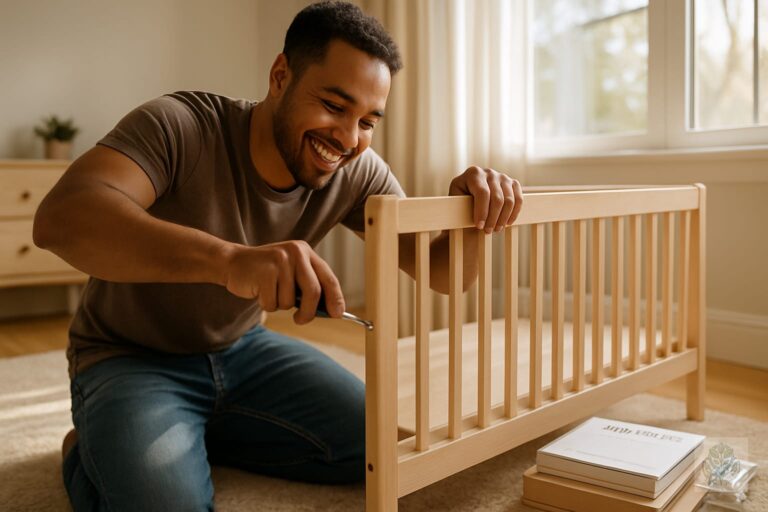
  • Cribs: Ensure slat spacing is no wider than 2 3/8 inches to prevent head entrapment. The mattress should fit snugly, leaving no gaps where a finger can be inserted between the mattress and the crib side. For more on bedding, see our baby fitted sheets buying guide.
  • Changing Tables: Always choose a table with a safety strap and a guard rail on all four sides. The height should be comfortable for you, but the most important factor is a stable base that will not wobble during a squirmy diaper change.
  • Dressers: Look for drawers with safety stops that prevent them from being pulled out completely. If you are using a dresser as a changing station, ensure it is low enough to prevent falls and wide enough to accommodate a changing pad securely.
  • Gliders and Rockers: Ensure all moving parts are enclosed to prevent little fingers from getting pinched. Test the base for stability to ensure it cannot easily tip backward or sideways while you are holding your baby.

The Importance of Furniture Anchoring

One of the most dangerous and overlooked risks in a home is furniture tip-over incidents. As children become mobile, they naturally reach for drawers to pull themselves up. Even a heavy piece of furniture can tip forward if multiple drawers are opened or if the child climbs on the front.

Every heavy item, including dressers, bookshelves, and armoires, should be secured to the wall using furniture anti-tip kits. These kits are inexpensive, easy to install, and essential for childproofing. Most modern furniture comes with pre-drilled holes or recommended attachment points. If yours does not, purchase a universal strap kit from a hardware store. Always use wall anchors appropriate for your wall type, such as studs or high-quality drywall anchors, to ensure a firm hold. For further protection, refer to our room-by-room safety guide to prevent common household accidents for babies.

Placement Strategy: Where to Put Your Furniture

Where you place your furniture matters just as much as what you buy. Proper layout can significantly reduce safety risks. Always position cribs and toddler beds away from windows, as blind cords and drapery pose a severe strangulation risk. You should also ensure the crib is not near electrical outlets or cords that could be pulled into the sleeping area. For more on creating a secure sleeping space, visit our guide on how to create a safer sleep environment for babies.

Avoid placing furniture near heating vents, space heaters, or radiators. These can cause your baby to overheat and may create a fire hazard if fabrics like curtains or blankets come into contact with the heat source. Finally, aim for a layout that keeps the crib in a central, draft-free spot while maintaining a clear path for you to walk safely through the room during middle-of-the-night feedings.

Smart Shopping: New vs. Used Furniture

While buying secondhand is a great way to be sustainable and budget-friendly, some items should always be purchased new. A new crib mattress is a non-negotiable safety requirement; older mattresses can harbor mold, dust mites, or sagging spots that create an uneven sleeping surface, which increases the risk of SIDS.

If you choose to purchase other nursery furniture used, do your due diligence. Check the CPSC website for product recalls using the manufacturer’s name and model number. Inspect items for structural damage, loose screws, or peeling paint that could be ingested. If a piece of furniture feels shaky or requires significant repairs to be stable, it is better to pass on it. You can browse our top 10 best baby products every new parent needs for reliable alternatives.

Conclusion

Creating a safe nursery is one of the most proactive ways you can prepare for your baby’s arrival. By prioritizing JPMA-certified gear, opting for non-toxic materials, and anchoring every piece of heavy furniture, you are building a secure foundation for your child. Remember, safe baby furniture is a long-term investment in your child’s environment.

You have the power to create a space that is both beautiful and protective. If you feel overwhelmed, remember to tackle one piece of furniture at a time. Once the main items are secured, you will feel much more confident and ready to enjoy those precious early days with your baby. For more help, check out our comprehensive baby-proofing checklist to ensure every corner of your home is just as safe as your nursery.

Frequently Asked Questions

What safety standards should I look for in baby furniture?

Look for mandatory CPSC federal safety standards and the JPMA certification seal, which indicates the product has passed rigorous independent testing for structural stability and safety.

Why are non-toxic materials important for nursery furniture?

Conventional furniture can release VOCs from glues and finishes, which may cause respiratory irritation. Non-toxic, low-VOC finishes and GREENGUARD Gold certified items ensure healthier air quality for your baby.

Is it safe to use second-hand baby furniture?

While some furniture can be bought used if checked for recalls and structural integrity, items like crib mattresses should always be purchased new to prevent SIDS risks and hygiene issues.

How do I prevent baby furniture from tipping over?

Always secure heavy items like dressers and bookshelves to the wall using furniture anti-tip kits or wall straps to prevent dangerous tip-over accidents as your child becomes mobile.

What are the spacing rules for crib slats?

Crib slats must be no wider than 2 3/8 inches apart to prevent your baby’s head from becoming entrapped between them.

Where should I place the crib in the nursery?

Position the crib away from windows, blind cords, electrical outlets, and heating vents to eliminate strangulation, fire, and overheating risks.
10 Best Baby Lotions for Soft and Healthy Skin (2024 Expert Guide)

10 Best Baby Lotions for Soft and Healthy Skin (2024 Expert Guide)

Welcoming a new baby into your home brings a whirlwind of joy, but it also brings a new level of awareness regarding your little one’s physical needs. Among these, maintaining the integrity of your baby’s delicate skin barrier is paramount. Infant skin is thinner, more permeable, and loses moisture significantly faster than adult skin. Because of these unique biological differences, standard adult lotions are often too harsh, frequently containing perfumes, alcohols, or preservatives that can irritate a newborn’s sensitive dermis. For more guidance on maintaining health, check out our Everything Parents Should Know About Baby Skin Care: The Ultimate Guide.

Choosing the right moisturizer is more than just a matter of softness; it is an act of protection. When you pick the best baby lotions for soft and healthy skin, you are reinforcing a defensive shield against environmental pollutants and irritants. If you are also preparing for your infant’s grooming routine, be sure to check out our Baby Bathing Essentials guide for a complete approach to hygiene and care.

What to Look for in the Best Baby Lotions

Navigating the baby aisle can feel overwhelming. To make the best choice, prioritize formulas that focus on skin health rather than aesthetic appeal. Look for ingredients that mimic the natural lipids of the skin, such as ceramides, which help restore the barrier. Shea butter is an excellent emollient for long-lasting hydration, and colloidal oatmeal is a gold standard for soothing inflammation and itching. If your baby is struggling with dryness in different seasons, read our The Ultimate Baby Skin Care Checklist for Every Season: A Seasonal Guide.

Equally important is knowing what to leave on the shelf. Avoid products containing parabens, phthalates, and artificial dyes, as these are common allergens for infants. Furthermore, pay attention to labels regarding scent. Fragrance-free means the product contains no masking scents, whereas unscented products may actually contain fragrance chemicals designed to neutralize odors. For the safest experience, fragrance-free is almost always the better choice.

Top 10 Best Baby Lotions for Soft and Healthy Skin

Our expert selection focuses on safety, ingredient quality, and proven effectiveness. Please remember that every baby is unique; always perform a patch test by applying a small amount of lotion to your baby’s inner forearm and waiting 24 hours to check for any redness or reaction. You can also find great general tips in our Top 10 Best Baby Products Every New Parent Needs (India Edition).

  1. Aveeno Baby Eczema Therapy: The best overall pick for daily use, specifically for its ability to balance moisture using high-quality colloidal oatmeal.
  2. CeraVe Baby Moisturizing Lotion: Our top choice for eczema-prone skin, as it contains essential ceramides that strengthen the delicate skin barrier.
  3. Baby Dove Sensitive Moisture: A fantastic budget-friendly option that provides 24-hour hydration without being greasy.
  4. Earth Mama Simply Non-Scents: The premier organic and plant-based choice for parents who prefer a minimalist, worry-free ingredient list.
  5. Aquaphor Baby Healing Ointment: While technically an ointment, this is the gold standard for dry, flaky patches and stubborn skin irritation.
  6. Mustela Hydra Bébé Body Lotion: A lightweight, fast-absorbing formula that is perfect for newborn skin.
  7. Burt’s Bees Baby Fragrance-Free Lotion: A reliable, natural option that leaves skin soft without any residue.
  8. Pipette Baby Lotion: Highly regarded for its clean formulation, utilizing sugarcane-derived squalane to mirror natural skin oils.
  9. Tubby Todd The All Over Ointment: A fan favorite for its plant-based ingredients that tackle dry spots and cradle cap.
  10. Honest Company Face + Body Lotion: An excellent multipurpose choice for busy parents needing a reliable everyday moisturizer.

How to Properly Moisturize Your Baby’s Skin

The timing of your application is just as important as the product you choose. We recommend the soak and seal method. After a bath, gently pat your baby with a soft towel, leaving the skin slightly damp. Applying lotion within three minutes of drying traps that surface moisture, locking it into the skin cells. For more on proper bathing, see Complete Guide to Bathing Your Baby Safely: Step-by-Step Instructions for New Parents.

Use a gentle, circular motion to massage the lotion onto your baby, paying close attention to dry areas like elbows, knees, and cheeks. Avoid over-applying; a thin layer is usually sufficient. If you notice persistent redness, bleeding, or weeping sores, it is time to contact your pediatrician. Skin issues can sometimes signal underlying allergies or conditions like seborrheic dermatitis that require medical-grade treatment.

Common Baby Skin Concerns & Solutions

Many parents worry about cradle cap, which appears as crusty or oily scales on the scalp. While typically harmless, using a gentle moisturizer or baby oil can help soften the flakes before a gentle brushing. For diaper rash, remember that moisturizer is not a substitute for barrier creams containing zinc oxide. Use the moisturizer on the skin surrounding the rash to keep it hydrated, but use a dedicated diaper cream on the irritated area itself. You can find more on general safety and health in our Baby Safety Rules Every Parent and Caregiver Should Know: A Complete Guide.

Infant acne is another common occurrence due to maternal hormones. Usually, this clears up on its own, but sticking to non-comedogenic lotions—those that will not clog pores—is vital during this stage. If you ever see a rash that spreads rapidly or is accompanied by a fever, consult your healthcare provider immediately.

Frequently Asked Questions (FAQs)

  • Can I use coconut oil instead of baby lotion? While natural, coconut oil can be heavy and may clog pores for some babies. Stick to lotions formulated specifically for infants.
  • How often should I moisturize my baby? Once a day, typically after the evening bath, is sufficient for most infants.
  • When can I start using scented lotions on my baby? It is generally recommended to wait until at least six months of age, and only if the skin shows no sensitivities.
  • Is organic always better? Not necessarily. Focus on the ingredient list rather than marketing buzzwords like ‘organic’ or ‘natural.’

Conclusion

Finding the right balance for your little one’s skin takes a bit of trial and error, but focusing on simple, clean ingredients is the best way to ensure your baby stays comfortable. The best baby lotions for soft and healthy skin act as a gentle support system for your baby’s development. Whether you are dealing with seasonal dryness or sensitive eczema patches, consistency is your best tool. Have you found a favorite brand that works wonders for your little one? Leave a comment below or sign up for our newsletter for more expert-backed parenting tips!

Frequently Asked Questions

Can I use coconut oil instead of baby lotion?

While natural, coconut oil can be heavy and may clog pores for some babies. It is generally safer to stick to lotions formulated specifically for infants.

How often should I moisturize my baby?

Once a day, typically after the evening bath, is sufficient for most infants to keep their skin hydrated.

When can I start using scented lotions on my baby?

It is recommended to wait until at least six months of age, and only if the baby’s skin shows no signs of sensitivity or irritation.

Is organic baby lotion always better?

Not necessarily. Focus on the ingredient list and absence of harsh chemicals rather than marketing buzzwords like organic or natural.

Should I use lotion on my baby’s diaper rash?

Moisturizers are not a substitute for barrier creams containing zinc oxide. Use moisturizer on surrounding skin, but use a dedicated diaper cream on the irritated area.

What is the best way to apply baby lotion?

Use the soak and seal method by applying lotion within three minutes after a bath while the skin is still slightly damp to trap moisture effectively.

7 Best Disposable Diapers for Sensitive Baby Skin: A Dermatologist-Reviewed Guide

0

7 Best Disposable Diapers for Sensitive Baby Skin: A Dermatologist-Reviewed Guide

There is almost nothing more distressing for a new parent than seeing their baby in discomfort. You change them, you feed them, and you cuddle them, yet they seem fussy. Upon opening their diaper, you see the telltale signs of irritation—angry red bumps, inflamed skin, or a persistent rash. If you have been struggling to find relief for your little one, you are certainly not alone. Finding the 7 best disposable diapers for sensitive baby skin can be a game-changer for your sanity and your baby’s comfort. For more foundational knowledge, see our complete guide to baby diapering for new parents.

Many standard diapers on the market are packed with hidden chemicals, artificial fragrances, and dyes that can wreak havoc on a newborn’s delicate skin barrier. While these brands are mass-produced for convenience, they often fail the needs of babies with eczema or reactive skin. Understanding what goes into these materials is the first step toward clearing up that rash for good.

What Causes Diaper Sensitivity?

To identify the best disposable diapers for sensitive baby skin, we must first understand why reactions happen. Your baby’s skin is significantly thinner than yours, making it highly susceptible to contact dermatitis. Common culprits include synthetic fragrances, which are often added to mask the scent of chemicals, and chlorine bleaching agents used to turn pulp white. You can learn more about maintaining healthy skin by reviewing our everything parents should know about baby skin care guide.

Phthalates, often used to make plastics flexible, and latex are also frequent irritants. Beyond chemicals, the diaper’s performance matters. If a diaper does not absorb moisture quickly, the skin remains trapped against urine and stool. This environment alters the skin microbiome, raising the pH level and making it easier for bacteria to thrive. A high-quality diaper needs to be both hypoallergenic and incredibly absorbent to maintain skin health.

Key Ingredients to Avoid vs. Seek Out

When you are scanning the back of a diaper package, you might feel like you need a chemistry degree. Let us simplify it with a clear look at what should and should not touch your baby.

The Dirty List

Avoid products containing elemental chlorine, harsh artificial fragrances, parabens, and PVC. These ingredients are often linked to skin sensitization and can trigger immediate flare-ups in babies prone to eczema.

The Clean List

Seek out diapers that prioritize plant-based fibers, such as bamboo or sustainably sourced wood pulp. Look for linings infused with natural emollients like shea butter or aloe, which provide a gentle barrier. A reliable wetness indicator is also a huge plus for parents, helping you keep track of changes without constantly tugging at the tabs.

Top 7 Best Disposable Diapers for Sensitive Baby Skin

Choosing the right diaper is a process of trial and error. Here are our top picks for the best disposable diapers for sensitive baby skin based on absorbency, material safety, and parent satisfaction.

  • 1. Best Overall (Coterie): Coterie is a favorite among dermatologists because of its unparalleled absorbency. By pulling moisture away from the skin faster than almost any other brand, they significantly reduce the risk of irritation.
  • 2. Best Budget-Friendly (Hello Bello): If you want premium ingredients without the premium price tag, Hello Bello is a fantastic choice. They offer a transparent list of materials and are free from fragrances and chlorine, making them a top contender for daily use.
  • 3. Best for Eczema-Prone Skin (Pampers Pure Protection): These are clinically proven to be hypoallergenic. They use a blend of premium cotton and soft, plant-based fibers, which are ideal for babies who react to even the slightest synthetic irritation.
  • 4. Best Eco-Conscious Choice (Dyper): For parents concerned about their environmental footprint, Dyper is a leader. Their bamboo-based diapers are naturally antimicrobial and breathable, which is excellent for babies who tend to get sweaty or overheated.
  • 5. Best for Newborns (Huggies Special Delivery): Newborn skin requires extreme softness. These diapers are specifically designed with a velvety-soft liner that feels gentle against sensitive umbilical cord areas.
  • 6. Best Chlorine-Free (Seventh Generation): If you want to strictly avoid chlorine bleaching, this brand has been a long-time industry standard. Their design is simple, effective, and free from the additives that commonly cause contact dermatitis.
  • 7. Best High-End Luxury (The Honest Company): Known for their commitment to transparency, Honest diapers offer peace of mind. They are free from known irritants and feature adorable prints that do not sacrifice safety for style.

How to Test a New Diaper Brand

We know the temptation to buy in bulk is strong, especially when you find a sale. However, when switching to one of the best disposable diapers for sensitive baby skin, perform a one-pack trial first. Every baby has a unique body chemistry, and what works for one child may not work for another.

Keep a close eye on your baby for 48 hours. Check for any new redness, small bumps, or dry patches after each change. If the skin remains clear and your baby seems comfortable, you have found a winner. If irritation persists, it might be time to look for a different material blend. For more tips, check out our newborn care first-time parent guide.

Pro-Tips for Preventing Diaper Rash

The best diaper in the world cannot fix a rash if the hygiene routine is lacking. Prevention is just as important as the product you choose. Aim to change your baby as soon as you notice wetness. Even high-tech diapers are not magic; keeping the skin dry is your primary defense. If you struggle with messes, our article on how to prevent diaper leaks may offer additional solutions.

During every change, try to give your baby a few minutes of air-out time. Let them lay on a towel and kick freely. If you do notice redness, reach for a high-quality zinc oxide cream to create a breathable barrier. When it comes to wipes, avoid those with alcohol or heavy scents. Stick to water-based wipes to ensure you aren’t adding more irritants to the area.

Conclusion & Frequently Asked Questions

Finding the right diaper is a journey, but you do not have to settle for products that irritate your baby’s skin. By prioritizing plant-based materials and avoiding known chemicals, you can ensure your little one stays happy and rash-free. Whether you choose one of the options above or continue your search, remember that your baby’s comfort is the ultimate metric for success. You can also explore our everything parents need to know about baby safety guide for more tips on keeping your little one secure.

Do I need to buy expensive diapers if my baby doesn’t have a rash?

Not necessarily. If your baby has robust, non-reactive skin, standard diapers may be perfectly fine. However, many parents prefer cleaner options to prevent potential issues before they start.

How can I tell if the diaper is too tight or irritating?

If you see red marks around the thighs or waist after changing, the diaper is likely too tight. If the skin looks chapped or has a sandpaper-like texture, the material itself may be causing the irritation.

Are overnight diapers different for sensitive skin?

Overnight diapers are generally more absorbent to last 10-12 hours. If your baby has sensitive skin, look for overnight versions from brands that are already fragrance-free and hypoallergenic to ensure the added absorbency does not come at the cost of chemical exposure.

Frequently Asked Questions

Do I need to buy expensive diapers if my baby doesn’t have a rash?

Not necessarily. If your baby has robust, non-reactive skin, standard diapers may be perfectly fine. However, many parents prefer cleaner options to prevent potential issues before they start.

How can I tell if the diaper is too tight or irritating?

If you see red marks around the thighs or waist after changing, the diaper is likely too tight. If the skin looks chapped or has a sandpaper-like texture, the material itself may be causing the irritation.

Are overnight diapers different for sensitive skin?

Overnight diapers are generally more absorbent to last 10-12 hours. If your baby has sensitive skin, look for overnight versions from brands that are already fragrance-free and hypoallergenic to ensure the added absorbency does not come at the cost of chemical exposure.

What ingredients should I avoid in baby diapers?

You should avoid elemental chlorine bleaching, synthetic fragrances, parabens, phthalates, lotions, and latex. These common additives can strip the natural moisture barrier and trigger contact dermatitis or eczema flare-ups.

Are bamboo diapers better for sensitive skin?

Yes, bamboo-based diapers are naturally breathable, antimicrobial, and softer than standard wood-pulp diapers. They help regulate temperature and reduce moisture buildup, making them fantastic for babies prone to rashes.

How often should I change a sensitive skin baby?

You should change your baby as soon as they are wet or soiled, ideally every 2 to 3 hours during the day. Keeping urine and stool away from the skin is the most effective way to prevent irritation.

Best Baby Bath Products for Sensitive Skin: A Dermatologist-Recommended Guide

0

Best Baby Bath Products for Sensitive Skin: A Dermatologist-Recommended Guide

There are few things more heartbreaking for a new parent than seeing your baby struggle with red, itchy, or irritated skin. Whether it is a stubborn patch of cradle cap or persistent dryness, baby skin issues are incredibly common and often leave parents feeling helpless. The truth is, the culprit is frequently hiding in plain sight—right inside the bottle of baby wash you use every evening. To better understand these common concerns, you can refer to our everything parents should know about baby skin care: the ultimate guide.

Choosing the best baby bath products for sensitive skin is about more than just picking a cute bottle off the shelf. It requires a commitment to non-toxic, gentle ingredients that protect your baby’s delicate skin barrier. When you understand why your baby’s skin reacts the way it does, you can make informed choices that provide relief. In this guide, we will break down exactly how to navigate labels and select the safest, most effective products for your little one.

Understanding Baby Skin Sensitivity: Why It Happens

To understand why your baby needs special care, we must look at how their skin differs from yours. A baby’s skin is significantly thinner than adult skin and is still developing its natural protective barrier. Because it is more permeable, it absorbs substances more easily and loses moisture at a much faster rate.

Many common bathroom products are loaded with triggers that disrupt this fragile balance. Fragrances are the most frequent offender, even those labeled as natural. Sulfates, which create that bubbly lather we associate with being clean, can be incredibly stripping. Harsh preservatives like parabens can also trigger contact dermatitis. If you notice persistent redness, dry patches that do not go away with simple moisturizer, or persistent flakiness, your baby likely has sensitive skin that requires a minimalist approach.

What to Look for in Baby Bath Products (The ‘Clean’ Checklist)

Navigating the baby care aisle can feel like learning a new language. To simplify your shopping, use this checklist to ensure you are buying the safest options available.

  • Fragrance-Free vs. Unscented: Always choose fragrance-free. The term unscented can be misleading, as it often means a masking fragrance was used to neutralize the smell of other chemicals. Fragrance-free means no fragrance ingredients are present at all.
  • Avoid the Big Four: Steer clear of products containing parabens, phthalates, Sodium Lauryl Sulfate (SLS), and synthetic dyes. These ingredients have no place in a newborn’s skincare regimen.
  • Look for Trustworthy Certifications: When in doubt, look for the National Eczema Association (NEA) seal of acceptance. This means a panel of experts has verified the product is safe for sensitive and eczema-prone skin. EWG Verified and USDA Organic certifications also provide excellent peace of mind regarding ingredient transparency.

Top 5 Recommended Baby Bath Products for Sensitive Skin

Based on dermatologist recommendations and parent feedback, these products are standouts for their gentle profiles.

  • Best Overall: Aveeno Baby Eczema Therapy Wash. This cleanser is a staple for a reason. It uses colloidal oatmeal to soothe inflammation while gently cleansing without soap.
  • Best Budget-Friendly: Baby Dove Sensitive Skin Moisture Wash. It is hypoallergenic, fragrance-free, and leaves the skin feeling soft without a heavy residue. It is easy to find at most local pharmacies.
  • Best for Eczema-Prone Skin: Mustela Stelatopia Cleansing Gel. Formulated specifically for extremely dry or eczema-prone skin, this gel helps replenish the skin’s natural lipids during the bath.
  • Best Natural/Plant-Based Option: Earth Mama Baby Wash. If you prefer plant-based ingredients, this is a top-tier choice. It is made without synthetic preservatives or artificial foaming agents.
  • Best Multi-Purpose (Wash & Shampoo): Pipette Baby Shampoo & Wash. This product uses squalane derived from sugarcane, which mimics the natural oils babies are born with, ensuring their head-to-toe skin stays hydrated.

How to Build a Gentle Bath Routine for Sensitive Skin

Even the best baby bath products for sensitive skin will be ineffective if your routine is too harsh. Keep these steps in mind to maintain your baby’s skin health. For more general advice on maintaining your little one’s well-being, explore our everything parents need to know about baby bath time: the ultimate guide.

Keep Water Temperature Mild

Hot water strips away natural oils, even in adults. For babies, ensure the water is lukewarm. If you can test the water with your inner wrist, it should feel comfortable, not hot. Keep the bath duration short—five to ten minutes is plenty of time for a thorough clean.

The Pat-Dry Method

Resist the urge to scrub your baby dry with a towel. Instead, gently pat the skin until it is almost dry. Leaving a tiny bit of moisture on the skin helps with hydration before you apply any follow-up treatments. For help managing specific concerns like scalp health, see our tips on how to wash your baby’s hair without tears: a stress-free guide for parents.

The 3-Minute Rule

The best time to apply a gentle moisturizer is within three minutes of taking your baby out of the tub. By trapping the residual water into the skin with a fragrance-free lotion or balm, you prevent the moisture from evaporating, which is crucial for sensitive skin types.

Frequently Asked Questions (FAQs)

  • How do I know if my baby is having an allergic reaction? Watch for sudden hives, swelling, or extreme redness immediately after using a new product. If the reaction is severe or accompanied by difficulty breathing, seek medical help immediately.
  • Are organic baby products always better for sensitive skin? Not necessarily. Natural ingredients like essential oils can sometimes be potent allergens. Focus on products that are fragrance-free and hypoallergenic first, regardless of whether they are labeled organic.
  • Can I use adult soap on my baby in an emergency? It is best to avoid it. Adult soaps often have a different pH balance and higher levels of detergents that are too harsh for a baby’s developing skin barrier.
  • When should I consult a pediatrician about skin irritation? If you notice cracked, bleeding, or weeping skin, or if the rash does not respond to gentle, fragrance-free care after a few days, it is time to consult your pediatrician. To stay prepared for other common issues, review our common childhood illnesses every parent should know: a symptom guide.

Conclusion

Caring for a baby with sensitive skin is a journey that requires patience and a bit of detective work. By prioritizing ingredient transparency and focusing on the best baby bath products for sensitive skin that are free from harsh chemicals, you can keep your baby comfortable and happy. Always remember to patch-test new products on a small area of skin for 24 hours before applying them all over. Do you have a go-to brand that saved your baby’s skin? Share your experiences in the comments below or join our parenting newsletter for more tips on navigating your child’s health and wellness journey. For a comprehensive look at ensuring your nursery is ready for your little one, visit our everything parents need to know about baby safety: the ultimate guide.

Frequently Asked Questions

How do I know if my baby is having an allergic reaction?

Watch for sudden hives, swelling, or extreme redness immediately after using a new product. If the reaction is severe or accompanied by difficulty breathing, seek medical help immediately.

Are organic baby products always better for sensitive skin?

Not necessarily. Natural ingredients like essential oils can sometimes be potent allergens. Focus on products that are fragrance-free and hypoallergenic first, regardless of whether they are labeled organic.

Can I use adult soap on my baby in an emergency?

It is best to avoid it. Adult soaps often have a different pH balance and higher levels of detergents that are too harsh for a baby’s developing skin barrier.

When should I consult a pediatrician about skin irritation?

If you notice cracked, bleeding, or weeping skin, or if the rash does not respond to gentle, fragrance-free care after a few days, it is time to consult your pediatrician.

How often should I bathe a baby with sensitive skin?

Bathing your baby two to three times a week is usually sufficient for sensitive skin. Frequent bathing, especially with warm water, can strip natural oils and worsen dryness.

Is colloidal oatmeal safe for baby eczema?

Yes, colloidal oatmeal is widely recommended by dermatologists and pediatricians to soothe inflammation, relieve itching, and protect sensitive, eczema-prone baby skin.

10 Signs Your Newborn Is Healthy and Thriving: A Parent’s Guide

0

10 Signs Your Newborn Is Healthy and Thriving: A Parent’s Guide

The first few weeks of life with a newborn are an intense blend of wonder and exhaustion. As a new parent, it is completely natural to look at your sleeping baby and wonder, is my baby okay? You might find yourself hovering over the crib at 3:00 AM, checking for breathing or questioning if those tiny movements are normal. This anxiety is a hallmark of parenthood, but it can be exhausting. To better prepare for the early days, you may want to review our what every parent should know about newborn care.

While every baby is unique and develops at their own pace, there are universal markers that indicate a newborn is healthy and thriving. Thriving goes far beyond just what the scale says at the pediatrician’s office. By understanding these subtle cues, you can move from a place of uncertainty to a place of confidence. Here is how to identify the signs that your little one is flourishing in their first month of life.

1. Steady Weight Gain: The Gold Standard

Most babies lose a small percentage of their birth weight in the first few days of life, which is a perfectly normal process as they shed excess fluid. However, most newborns regain their birth weight within the first 10 to 14 days. Once they start gaining, a steady upward trend is the most reliable sign of a healthy newborn.

Regular check-ups are essential during this period. Your pediatrician will plot your baby’s growth on standardized charts to ensure they are following their own growth curve. While you do not need to obsess over home scales, seeing your baby grow into their clothes and feeling them gain substance in your arms provides peace of mind that they are getting the nutrition they need to thrive. For more insights on development, check our complete guide to baby nutrition for healthy growth.

2. Diaper Output: Tracking the Input-Output Cycle

What goes in must come out, and for a newborn, diaper output is the number one indicator of hydration. In the first few days, you might only see one or two wet diapers, but by day five or six, you should be seeing at least six heavy, wet diapers every 24 hours.

The stool also tells a story. After passing meconium—that thick, dark, tarry substance—your baby’s stools will transition to a mustard yellow color if they are breastfed, or a lighter tan/brown if they are formula-fed. Consistent output is a sign that your baby is well-hydrated and their digestive system is functioning exactly as it should. If you encounter issues, learn how to prevent diaper leaks with our professional tips.

3. Feeding Patterns and Satisfaction

Newborns often go through a phase called cluster feeding, where they seem to want to eat every hour. This is often misunderstood as a sign that you aren’t producing enough milk, but it is frequently a growth spurt signal. A thriving baby will eventually transition into more predictable feeding patterns as their stomach capacity grows.

During a feed, look for signs of satisfaction. Does your baby’s body go from tense to relaxed? Are their hands opening up? Can you hear or see active swallowing? If your baby settles down and appears calm after a meal, it is a strong indicator that they are receiving adequate nourishment. You can explore more about this stage in our baby nutrition essentials for the first year.

4. Alertness and Social Engagement

As your baby moves past the initial sleepy newborn phase, you will start to see more periods of alertness. While newborns sleep a great deal, the time they spend awake is precious. A thriving baby will begin to focus their eyes on your face, especially when you are close.

Watch for their reaction to your voice or familiar stimuli. Even in these early weeks, babies begin to recognize the rhythm of their parents’ speech. This responsiveness shows that their nervous system is developing well and they are beginning to interact with their environment.

5. Muscle Tone and Reflexes

Newborns are born with primitive reflexes, such as the Moro reflex, which is their startle response, and the rooting reflex, which helps them find the breast or bottle. These reflexes are neurological markers that show your baby’s system is firing correctly.

When you hold your baby, they should have a baseline of muscle tone. While they will be floppy, they should not feel completely limp or lethargic. If you notice your baby is consistently unresponsive or lacks the energy to wake up for feeds, it is time to consult your healthcare provider. For safety, ensure you have established a safer sleep environment for babies at home.

6. Normal Skin and Vital Signs

Healthy newborn skin can vary in color, often looking pink and vibrant. It is common to see mild rashes like baby acne or cradle cap, which usually resolve on their own. However, if your baby looks consistently yellow, particularly in the whites of their eyes, it is worth checking for jaundice with your doctor. For common skin concerns, keep our complete guide to baby skin care handy.

Regarding breathing, newborns often have irregular patterns. You might notice them take a few quick breaths followed by a pause. This is generally normal, provided the baby is not struggling, turning blue, or gasping. You will quickly learn the rhythm of your baby’s breathing, which usually becomes more regular as they grow.

7. The Crying Evolution

It sounds counterintuitive, but a strong, healthy cry is a sign of a healthy baby. Crying is your newborn’s only way of communicating a need, whether that need is hunger, comfort, or a diaper change. A baby who has the lung power to express their needs is a baby who is showing vitality.

Over time, you will learn to distinguish the different types of cries. The hunger cry often sounds different from the tiredness cry or the discomfort cry. Responding consistently to these signals builds secure attachment and helps your baby feel safe, which is a major part of emotional thriving.

8. When to Contact Your Pediatrician

While most issues in the first month are minor, some red flags require immediate attention. These include high fevers, persistent vomiting, signs of dehydration (like fewer than six wet diapers or a sunken soft spot), or extreme lethargy where the baby cannot be woken for feeds. For further guidance on identifying potential concerns, read our article on how to tell when a child’s symptoms are getting worse.

Trust your parental intuition. If you feel that something is simply off, there is no harm in calling your pediatrician. It is always better to have a false alarm than to miss a genuine concern. Your doctor is there to support you through these early, uncertain weeks.

Conclusion

Recognizing the signs that your newborn is healthy and thriving is a journey of observation and learning. By keeping an eye on their weight gain, diaper output, feeding satisfaction, and growing social engagement, you can rest easier knowing your baby is on the right track. Remember that health is a combination of these physical markers and the bond you are building every single day.

You are doing a much better job than you think. Newborn care is a steep learning curve, and the fact that you are seeking this information shows how dedicated you are to your child’s well-being. Take a deep breath, trust your instincts, and cherish these moments.

Would you like more tips on managing newborn milestones? Subscribe to our weekly newsletter for expert advice delivered straight to your inbox, or share your own experience with your newborn in the comments section below!

Frequently Asked Questions

How many wet diapers should a newborn have daily?

By day five or six of life, a healthy newborn should have at least six heavy, wet diapers every 24 hours. This indicates proper hydration and kidney function.

Is it normal for newborns to lose weight initially?

Yes, most babies lose a small percentage of their birth weight in the first few days as they shed excess fluid. They typically regain this weight within 10 to 14 days.

What does cluster feeding mean?

Cluster feeding is a phase where a newborn wants to nurse or bottle-feed very frequently, sometimes every hour. It is usually a sign of a normal growth spurt.

Are irregular breathing patterns normal in newborns?

Yes, newborns often take a few rapid breaths followed by a brief pause. This is generally normal unless accompanied by a bluish tint, gasping, or visible struggle.

When should I call the pediatrician?

Contact your doctor immediately if your baby has a high fever, persistent vomiting, fewer than six wet diapers, extreme lethargy, or if you feel something is wrong.

What are primitive newborn reflexes?

Reflexes like the startle response and rooting reflex are neurological markers showing that your newborn’s nervous system is developing and functioning correctly.

How to Choose the Right Shoes for Toddlers: A Parent’s Expert Guide

0

How to Choose the Right Shoes for Toddlers: A Parent’s Expert Guide

Walking into a children’s shoe store can feel like stepping into a chaotic maze of bright colors, flashing lights, and tiny high-tops. As a parent, you want the best for your child’s development, but the sheer volume of options can make it difficult to know how to choose the right shoes for toddlers. It is easy to get caught up in the latest trends, but when it comes to early childhood, function must always outweigh fashion.

Proper footwear is crucial because toddler feet are essentially made of soft cartilage that is still molding. Because they are so malleable, the wrong shoes can actually interfere with natural development. Interestingly, pediatric experts often remind us that toddlers do not technically need shoes at all until they start walking outdoors consistently. For the house, barefoot is often best. However, once your little one starts navigating parks, driveways, and daycare floors, you need to be prepared with a pair that supports their journey. For more advice on active play, see our guide on 10 outdoor activities to boost toddler development naturally.

The Anatomy of a Perfect Toddler Shoe

When you start learning how to choose the right shoes for toddlers, you will notice that not all footwear is created equal. Many adult-style sneakers are far too rigid for a developing foot. To protect your child, look for shoes that mimic the natural shape and movement of the foot. You can also explore how to choose lightweight shoes for toddlers to ensure maximum comfort.

First, look for flexible soles. If you pick up the shoe, you should be able to bend it easily with your hands. A stiff sole forces the foot to move according to the shoe, rather than allowing the muscles and ligaments to develop naturally. Second, ensure the material is breathable, such as leather, cotton, or high-quality mesh. Toddlers have active sweat glands, and breathable materials prevent moisture buildup that can lead to irritation or fungal growth.

A wide toe box is another non-negotiable feature. Toddlers need to splay their toes for balance as they master their gait. If the front of the shoe is pointed or narrow, it can cause crowding and discomfort. Finally, prioritize a non-slip grip. Whether it is rubberized soles or textured patterns, the grip is essential for preventing slips on smooth surfaces as they transition from unsteady first steps to confident running.

When Should Toddlers Start Wearing Shoes?

Many parents feel pressured to put shoes on their infants the moment they begin standing. However, the benefits of being barefoot are significant. When a child walks without shoes, their brain receives vital sensory feedback from the ground, which improves coordination and arch strength. There is no biological rush to put them in footwear.

The transition to wearing shoes should happen only when necessary. If your toddler is strictly playing inside, let them go barefoot or use socks with non-slip grips. Once they are walking outdoors, navigating rocky terrain, or if your daycare facility has strict footwear requirements, it is time to invest in a pair. Think of shoes as a tool for protection against heat, cold, and sharp debris, rather than a mandatory garment for walking.

Step-by-Step: How to Measure Toddler Feet at Home

Knowing how to choose the right shoes for toddlers starts with accurate sizing. Footwear sizing is notoriously inconsistent between brands, so you should measure your child’s feet every few months. To get a reliable measurement at home, you only need a piece of paper, a pencil, and a ruler.

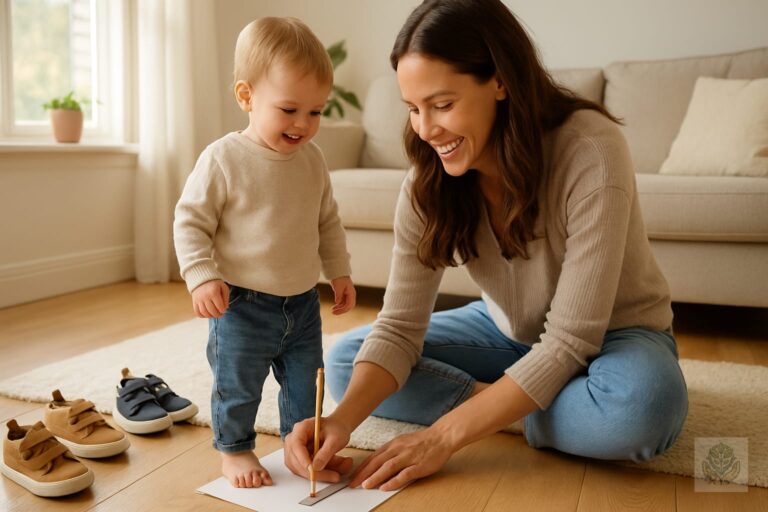
Place a sheet of paper flat against a wall and have your toddler stand on it with their heels touching the wall. Because feet spread out under pressure, you must measure while they are standing. Mark the furthest tip of their longest toe on the paper. Use your ruler to measure the distance from the edge of the paper to that mark.

Once you have the measurement, remember the thumb-width rule. You should leave about half an inch, or roughly the width of an adult thumb, between the end of the longest toe and the front of the shoe. This allows room for growth and natural foot movement. If the shoe is too tight, it can restrict growth; if it is too loose, your child may trip frequently.

Common Mistakes Parents Make When Buying Toddler Shoes

It is common to want to save money, but buying shoes that are too big is a major mistake. Some parents believe they are being thrifty by buying a size or two up, thinking the child will eventually grow into them. This creates a significant tripping hazard and can cause the child to alter their walking pattern to keep the shoe on, which is detrimental to their biomechanics. For more tips on managing household clutter related to kids’ gear, read our article on 15 genius sports equipment storage ideas to tame the garage clutter.

Another common error is prioritizing style over support. While those miniature loafers or high-fashion boots might look adorable in photos, they often lack the necessary flexibility and arch support for a toddler. Furthermore, never accept hand-me-downs that have been heavily worn. Shoes mold to the foot of the original wearer. When a second child wears a shoe that has already been broken in by someone else, it can encourage an improper walking gait.

Signs Your Toddler’s Shoes Don’t Fit Anymore

Because children rarely complain that their feet hurt, it is up to you to monitor for signs that it is time for an upgrade. A visual check of the foot after your child has been playing is the best diagnostic tool. If you see red marks on the tops or sides of their feet, the shoe is likely too narrow or too tight.

If you notice your toddler resists putting their shoes on, they are likely feeling physical discomfort. Additionally, pay attention to their movement. If your previously confident walker starts tripping constantly or seems to be walking differently, their shoes may no longer provide the support they need. Finally, inspect the sole. If the wear pattern is significantly uneven, it might be time to replace the pair to ensure their feet are properly aligned. Learn more about the ultimate guide to finding comfortable footwear for kids: healthy feet & happy kids.

Expert Tips for a Stress-Free Shoe Shopping Trip

If you prefer to buy shoes in person, the timing of your trip makes a huge difference. Go in the afternoon, as feet naturally swell throughout the day. A shoe that fits perfectly at 9:00 AM might feel tight by 4:00 PM, so shopping later ensures you get the right size for all-day comfort.

Involve your toddler in the process to keep them engaged. Let them choose between two pre-approved, supportive options. This gives them a sense of autonomy and makes the experience less of a battle. For younger toddlers, Velcro closures are excellent. They allow for easy application, provide a secure fit, and eventually help your child gain independence as they learn to put on their own shoes. If you are struggling with hygiene transitions during this stage, check out our guide on how parents can encourage independent hygiene habits.

Conclusion

Learning how to choose the right shoes for toddlers is a balancing act of comfort, safety, and functionality. By focusing on flexible materials, wide toe boxes, and a secure fit, you are setting your child up for success as they explore the world. Remember that fashion should never come at the cost of development, and checking their size every two to three months is essential for their growing feet.

Do not stress if you do not get it right on the first try. Parenting is a learning curve, and your child’s feet are resilient. By being mindful of these tips, you can ensure their early steps are supported, comfortable, and ready for adventure. For further support, consider exploring our positive parenting techniques that actually work.

Frequently Asked Questions

When should toddlers start wearing shoes?

Toddlers do not need shoes until they start walking outdoors consistently. Indoors, going barefoot is best because it provides sensory feedback and helps develop natural foot strength and balance.

What features should I look for in toddler shoes?

Look for flexible soles that bend easily, breathable materials like cotton or leather, a wide toe box for toe splay, and a non-slip grip to prevent falls.

How often should I measure my toddler’s feet?

You should measure your toddler’s feet every two to three months. Toddler feet grow rapidly, and sizing can vary significantly between different brands.

Can I buy shoes a size bigger so my toddler can grow into them?

No, buying shoes that are too big is a major tripping hazard and forces your child to alter their walking pattern. Always buy shoes that fit correctly right now, leaving about a thumb-width of space.

Are hand-me-down shoes safe for toddlers?

It is best to avoid heavily worn hand-me-downs. Shoes mold to the shape of the original wearer’s foot, which can negatively impact your second child’s developing walking gait.

What is the best time of day to go shoe shopping for kids?

The best time to shop for shoes is in the afternoon. Feet naturally swell throughout the day, so shopping later ensures you buy a size that provides all-day comfort.

The Complete Guide to Choosing Age-Wise Toys for Kids: A Developmental Roadmap

The Complete Guide to Choosing Age-Wise Toys for Kids: A Developmental Roadmap

Play is the primary language of childhood. It is through play that children learn to navigate their world, solve problems, and connect with others. However, as parents, navigating the endless aisles of toy stores or online marketplaces can feel overwhelming. Choosing age-wise toys for kids is not just about keeping them occupied; it is about providing the right tools to support their brain development and physical growth.

When we select toys that align with a child’s developmental stage, we unlock their potential for learning. This roadmap will help you understand how to match toys to your child’s needs, ensuring every playtime session is purposeful, engaging, and safe. You can also explore our best educational toys for kids age-wise guide for smart learning to find curated recommendations.

The Science of Play: Why Choosing the Right Toy Matters

Toys serve as the building blocks for cognitive, social, and motor skill development. When a child manipulates a block, they learn about gravity and spatial awareness. When they engage in pretend play, they practice empathy and communication. Choosing age-wise toys for kids ensures that the challenge provided by the toy is neither too difficult, which leads to frustration, nor too simple, which leads to boredom. Understanding the educational benefits of pretend play can help you see how these activities build a foundation for life.

Manufacturers include age labels on packaging for a reason: safety and suitability. These labels are guided by developmental psychology, ensuring that the components inside do not pose choking hazards and that the complexity matches typical cognitive milestones. Avoiding both over-stimulation, where a child is bombarded by too many bells and whistles, and under-stimulation is key to fostering deep, creative play.

Toys for Infants (0–12 Months): Sensory Exploration

During the first year, your baby is a little scientist exploring the world through touch, sight, and sound. The primary goal at this stage is to encourage tracking, grasping, and sensory input. Choose items that allow the infant to explore safely.

  • High-contrast cards: These support visual development in newborns.
  • Soft rattles and crinkle toys: Perfect for developing the grasp reflex.
  • Floor gyms: These provide a safe space for reaching and kicking.
  • Textured touch-and-feel books: Great for sensory discovery.

Always prioritize safety by choosing non-toxic materials. Ensure that any item is large enough to prevent choking and is free from strings or small, detachable parts. For more tips on keeping your little one secure, refer to our guide on everything parents need to know about baby safety.

Toys for Toddlers (1–3 Years): Active and Imaginative Play

Toddlers are entering a phase of rapid physical development and language acquisition. They are now moving with intent, so toys that support gross motor skills are essential. This is also when they begin to mimic adult behaviors, making pretend play a major component of their day.

  • Push-pull toys: Encouraging balance and walking.
  • Simple puzzles: Building problem-solving skills and fine motor coordination.
  • Building blocks: Introducing early concepts of engineering and physics.
  • Play kitchens or tool sets: Fostering imagination and social role-play.

Shift your focus toward open-ended play. Toys that can be used in multiple ways are superior to electronic toys that only perform one function. The more the toy does, the less the child has to do. If you need more inspiration, check out these indoor toddler activities.

Toys for Preschoolers (3–5 Years): Social and Creative Growth

Preschoolers are social creatures who thrive on interaction. They have longer attention spans and a burgeoning capacity for complex thought. During these years, you want to provide toys that encourage them to work with others and express their individual creativity.

  • Art supplies: Crayons, clay, and paper encourage creative expression.
  • Dress-up clothes: These are vital for exploring identity and empathy through role-play.
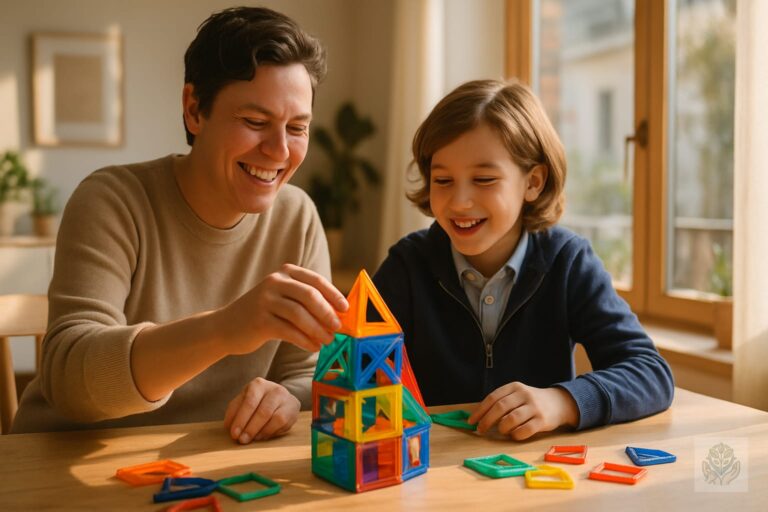
  • Magnetic tiles: These are excellent for building complex 3D structures.
  • Board games for beginners: Teaching turn-taking, patience, and following rules.

Encourage cooperative play by setting up activities where your child can solve a problem alongside a peer or sibling. This builds essential emotional intelligence alongside technical skill. Engaging in DIY crafts for kids is another excellent way to boost their development during these years.

Toys for School-Age Kids (6+ Years): Interests and Skill Building

Once children reach school age, their play becomes more goal-oriented. They are ready to tackle complex hobbies, STEM-based projects, and strategy-driven games. At this stage, it is important to involve the child in the selection process to ensure the toy aligns with their emerging personal interests.

  • Advanced building sets: LEGO Technic or complex architecture sets.
  • Science kits: Chemistry, robotics, or biology sets that satisfy curiosity.
  • Strategy games: Chess, Catan Junior, or card games that require critical thinking.
  • Outdoor equipment: Bicycles, skateboards, or sports gear to keep them active.

By respecting their autonomy, you help them develop a sense of identity and confidence in their own capabilities. You can learn more about finding the right gear in our sports equipment guide for active kids.

Safety First: A Parent’s Checklist Before You Buy

Before bringing a new toy into your home, take a moment to evaluate it. Start by reading the labels carefully, checking for small parts that could be dangerous for younger siblings. Examine the durability of the materials; cheap plastic is prone to cracking, which can create sharp edges.

Establish a routine for cleaning and organizing toy collections. Rotating toys—keeping some in storage and swapping them out every few weeks—can make old toys feel new again and reduce the overwhelming clutter that often leads to decreased focus.

Minimalist Play: Why Less is Often More

There is a growing movement toward minimalist play. When children have too many toys, they often struggle to choose, leading to shallow engagement. By curating a smaller, high-quality collection of toys, you encourage deeper concentration and creativity. Choose toys that serve as a canvas for the imagination rather than toys that dictate exactly how they must be used.

Conclusion

Choosing age-wise toys for kids is a journey of observing your child’s unique pace and interests. By selecting items that challenge them just enough, you provide the support they need to reach their developmental milestones with joy and curiosity. Remember that while a high-quality toy is a wonderful tool, the absolute best toy in your child’s life is your time, attention, and active interaction. To help you stay organized, download our comprehensive Age-by-Age Developmental Milestone Checklist and start curating a purposeful playroom today. You may also find our daily routine for kids by age helpful as you structure their day.

Frequently Asked Questions

Why are age-wise toys important for child development?

Age-wise toys ensure that the challenge provided is appropriate for a child’s current cognitive and physical stage, preventing frustration or boredom while fostering essential developmental skills.

What are the best toys for infants under 12 months?

Infants benefit most from toys that encourage sensory exploration and motor control, such as high-contrast visual cards, soft rattles, textured touch-and-feel books, and safe floor gyms.

How do I choose toys for toddlers aged 1 to 3 years?

Focus on open-ended and active play options like push-pull toys, simple shape sorters, building blocks, and pretend-play kitchen sets that support gross motor skills and imagination.

What kind of toys suit preschoolers aged 3 to 5?

Preschoolers thrive on social and creative growth, making art supplies, dress-up clothes for role-play, magnetic tiles, and beginner board games ideal choices.

How can toy rotation improve my child’s focus?

Rotating toys by storing a portion of them and swapping them out every few weeks keeps toys feeling new, reduces clutter, and encourages deeper concentration.

What safety checks should I perform before buying a toy?

Always read age and safety labels, check for non-toxic materials, ensure there are no sharp edges, and verify that small components do not pose choking hazards for younger siblings.

The Complete Guide to Pretend Play for Child Development: Why Imagination Matters

0

The Complete Guide to Pretend Play for Child Development: Why Imagination Matters

When you watch your child turn a cardboard box into a spaceship or a wooden spoon into a magic wand, you are witnessing more than just a passing distraction. You are seeing the foundational work of cognitive architecture. Pretend play for child development is not merely a cute pastime; it is the laboratory where children test the laws of physics, social interaction, and emotional regulation.

As parents, we often feel pressured to provide structured lessons or educational apps, but the most sophisticated learning tool your child has is their own imagination. In this guide, we will explore why imaginative play is critical for brain growth, how to support it at home, and what you can expect as your child moves through different developmental stages.

What is Pretend Play and Why Is It Essential?

At its core, pretend play occurs when a child uses symbols to represent something other than what is currently present. Psychologists like Jean Piaget identified this as a hallmark of the preoperational stage of childhood. When a child pretends a banana is a telephone, they are practicing symbolic thinking, which is a prerequisite for more complex skills like reading and mathematics. You can also explore the educational benefits of puzzle games to further support these cognitive milestones.

This type of play impacts every major developmental domain. It challenges a child to think outside of their own current reality, forcing the brain to create connections between abstract concepts. Whether through social imitation or creative storytelling, pretend play for child development remains one of the most effective ways to build a flexible, resilient brain.

The Psychological Foundation

Piaget famously argued that play is the work of the child. Through imaginative scenarios, children learn to internalize the rules of the world. They are not just mimicking adult life; they are processing the “how” and “why” behind the actions they observe daily.

Key Developmental Domains

Imaginative activities impact four primary pillars of development:

  • Cognitive: Enhancing memory, attention, and symbolic thought.
  • Social: Practicing turn-taking, sharing, and perspective-taking.
  • Emotional: Providing a safe space to process fears, joys, and frustrations.
  • Physical: Refining fine motor skills through manipulation of props and gross motor skills through active role-play.

The Developmental Benefits of Imaginative Play

Why do experts place such a high premium on play? The benefits go far beyond the immediate joy of the activity. When children engage in sustained imaginative play, they are building the executive functions necessary for academic and life success. You might also want to look into best educational toys for kids to supplement their learning journey.

Language Acquisition and Vocabulary Expansion

During play, children often adopt new roles, which requires them to use different registers of speech. A child playing doctor will use words they hear in the office, while a child playing chef learns culinary terminology. This exposure to diverse language contexts naturally expands their vocabulary and improves sentence structure.

Emotional Regulation and Empathy Building

When children engage in role-play, they often step into the shoes of another person or character. This “theory of mind” development is the precursor to empathy. By experimenting with different personas, children learn to navigate their own feelings and understand the perspectives of their peers.

Problem-Solving and Executive Function

Have you ever watched a group of children try to build a fort? They must negotiate, plan, and troubleshoot when the blankets sag. This is executive function in action. They are setting a goal, inhibiting impulses, and adjusting their strategy in real-time, all of which are critical life skills.

Pretend Play Milestones: What to Expect by Age

Development is a journey, not a race. However, understanding typical milestones can help you better facilitate pretend play for child development in your own home. Establishing a daily routine for kids by age can also help ensure they have dedicated time for this important work.

Ages 1-2: Functional Play and Imitating Adults

During this stage, play is heavily rooted in imitation. Your toddler may push a toy lawnmower or “talk” into a plastic phone. This is the first step toward symbolic thinking, where the child realizes objects have specific functions.

Ages 2-3: Simple Role-Playing and Object Substitution

This is where imagination truly takes flight. A child might declare that a block is a piece of cake. They are beginning to decouple the object from its literal purpose, allowing their creative brain to take over.

Ages 4-5: Complex Narratives and Cooperative Play

Peer play becomes more central here. Children start creating elaborate scenarios with beginnings, middles, and ends. You will hear phrases like, “Let’s pretend that you are the store clerk and I am the customer who lost my wallet.”

Ages 6+: Rule-Based Imaginative Play and Creative Storytelling

As children grow, their pretend play becomes more structured. They might invent complex games with specific rules and hierarchies. This mirrors the social structures they are beginning to navigate in school.

How to Encourage and Facilitate Pretend Play at Home

You don’t need expensive playhouses to foster imagination. In fact, minimalism often leads to deeper engagement. The goal is to create an environment where creativity can thrive without over-stimulation. You can start by learning how to build a simple preschool learning corner to house their resources.

Curating a ‘Yes’ Environment

Choose open-ended toys over structured, battery-operated ones. Toys that can only do one thing limit the child’s brain. Blocks, silks, simple dolls, and animal figurines are excellent because they can be anything the child desires.

The Power of Household Items

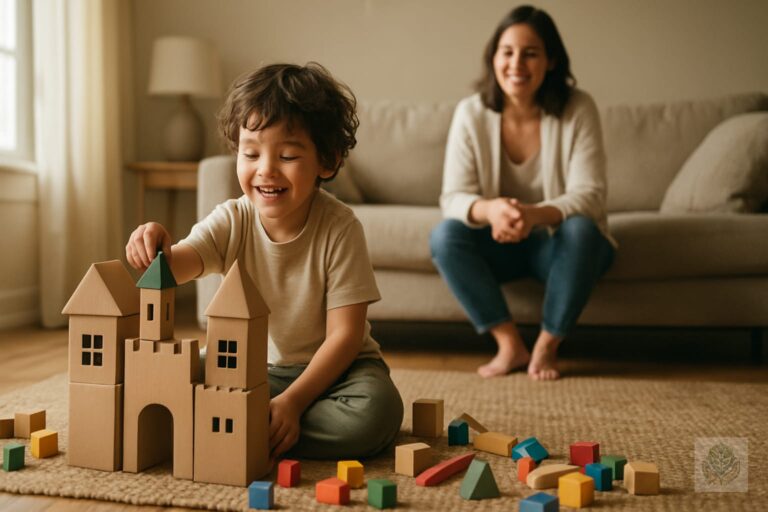
Never underestimate the humble cardboard box. To a child, it is a fort, a rocket ship, or a deep-sea submarine. By providing “loose parts”—items that can be repurposed—you signal to your child that their imagination is the most valuable tool in the house.

Following the Child’s Lead

Resist the urge to direct the play. This is known as scaffolding. You are there to provide support and ask questions, not to script the narrative. Try prompts like, “What do you think happens next in our adventure?” or “I wonder how the bear feels in this scenario?”

Common Challenges and FAQs

Parents often worry that their child isn’t playing “the right way” or that themes have become too aggressive. These concerns are normal and manageable. Refer to our guide on managing everyday behavior challenges in kids if you are finding play transitions difficult.

What if my child doesn’t seem interested in pretend play?

Some children are more concrete thinkers. You can gently introduce pretend play by modeling it yourself. If they prefer structured play, incorporate imaginative elements into those tasks, such as narrating the life of a puzzle piece or giving a toy truck a personality.

Dealing with ‘scary’ or aggressive themes in play

It is common for children to act out conflict, monsters, or “bad guy” scenarios. This is usually how they process power dynamics or fears. As long as it is safe, observe the play. If the themes persist, you might gently guide the story toward a resolution or discuss the emotions behind the conflict.

Screen Time vs. Pretend Play

Screens provide passive input, while pretend play for child development requires active output. Prioritize “analog” play time by setting aside dedicated periods where gadgets are put away. This allows the brain to transition from consumption mode to creation mode. Learn more about healthy habits in our guide on how parents can manage screen time at home.

Conclusion

Integrating pretend play into your child’s daily routine is one of the most impactful investments you can make in their future. It fosters the cognitive flexibility, emotional depth, and social intelligence that will serve them long after they have outgrown their toy box. By creating a space that honors their creativity, you are teaching them that they have the power to imagine new worlds and solve complex problems.

Remember, the best playmate for your child is often you, simply listening and validating their incredible ideas. For a head start, download our free printable Pretend Play Prompt Cards to spark your next afternoon of creative discovery!

Frequently Asked Questions

What is pretend play in child development?

Pretend play occurs when a child uses symbols to represent something else, such as treating a banana like a telephone. It is a vital cognitive milestone that builds symbolic thinking and problem-solving skills.

At what age do children start pretend play?

Children typically begin simple functional play and adult imitation around 12 to 24 months, progressing to complex role-playing and object substitution between ages two and three.

Why is imaginative play important for cognitive growth?

It enhances memory, attention, and executive functions. By creating scenarios and negotiating rules, children develop critical thinking and cognitive flexibility.

How can I encourage pretend play at home?

Provide open-ended toys like blocks, dress-up clothes, and household loose parts such as cardboard boxes. Avoid over-structured toys and let your child lead the imaginative narrative.

What if my child is not interested in pretend play?

Some children are concrete thinkers initially. You can model imaginative play yourself or gently weave storytelling into activities they already enjoy, like puzzles or building blocks.

How does pretend play affect emotional development?

Role-playing helps children step into different perspectives, building empathy and emotional regulation. It provides a safe space to process feelings, fears, and social dynamics.

The Complete Guide to Puzzle Games for Kids of Every Age: Boosting Brainpower Through Play

0

The Complete Guide to Puzzle Games for Kids of Every Age: Boosting Brainpower Through Play

In an era dominated by high-speed digital entertainment, the humble puzzle game for kids might seem like a relic of the past. Yet, parents and educators are rediscovering that these classic activities are essential tools for growth. Beyond the simple satisfaction of clicking a piece into place, puzzles offer a unique pathway to developing a sharp, analytical, and resilient mind.

Integrating puzzle games for kids into your daily routine is about more than just keeping them quiet for an hour. It is about fostering critical thinking, patience, and spatial reasoning. By matching the right challenge to your child’s current developmental stage, you can transform playtime into a powerful brain-boosting exercise as part of everything you need to know about educational puzzle games for kids.

The Science of Play: Cognitive Benefits of Puzzles for Children

The cognitive benefits of puzzles extend far beyond the tabletop. When a child interacts with a puzzle, they are engaging in a multi-sensory process that builds foundational skills for future academic success. One of the most immediate benefits is the refinement of fine motor skills. Manipulating pieces, rotating them, and forcing them into position requires precise hand-eye coordination, which can also be enhanced through 15 engaging indoor activities that improve fine motor skills for kids.

Puzzles also demand spatial awareness. As children learn to perceive shapes, colors, and the relationship between parts and the whole, they are developing visual-perceptual skills that are critical for geometry and reading. Perhaps most importantly, puzzles teach persistence. Encountering a piece that does not fit forces the child to rethink their approach, encouraging them to develop the grit needed to tackle life’s larger obstacles.

Puzzles for Toddlers (Ages 1–3): Building Foundations

At this early stage, the goal is to provide a successful, sensory-rich experience. Toddlers are still developing their dexterity, so look for sturdy materials that can withstand drops and chewing. Chunky wooden puzzles are perfect for this age group as they are easy to grasp and manipulate.

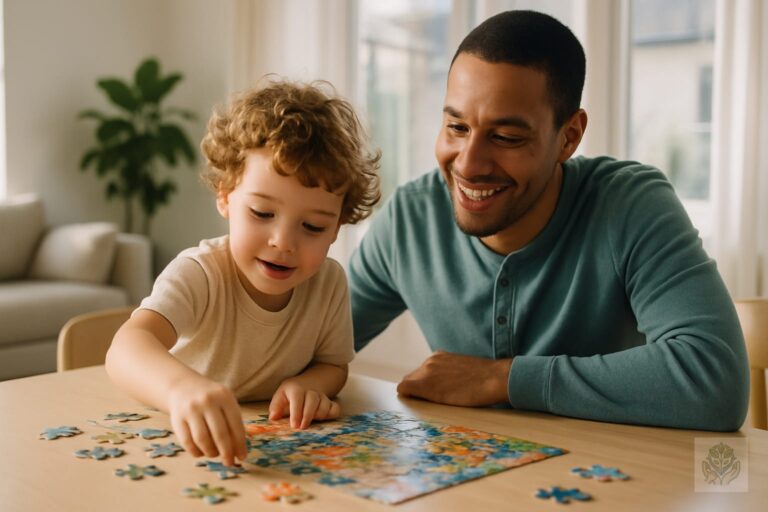
Start with simple knob puzzles where each piece corresponds to a specific hole. These help children associate objects with shapes. As they progress, introduce 2-4 piece cardboard sets that feature familiar animals or colors. Pro tip: Facilitate the process by talking through your own thinking—narrating where a piece might go without doing the work for them. This supportive approach builds their confidence while keeping the game enjoyable, much like the methods suggested in our guide on best educational toys for kids (age-wise guide for smart learning).

Puzzles for Preschoolers (Ages 3–5): Expanding Horizons

Preschoolers are ready for a higher level of complexity. Their ability to categorize and identify patterns has grown significantly, making this the perfect time to introduce floor puzzles. These oversized sets are physically engaging and teach children to work within a defined space, serving as a great addition to any ultimate complete guide to preschool activities for early learning.

Focus on puzzles that feature 12-50 pieces. You can also integrate shape-sorting games or themed puzzles that align with your child’s interests, such as construction vehicles, dinosaurs, or nature scenes. Keep engagement high by rotating their collection, ensuring that they do not get bored with the same designs, and providing just enough support to keep the challenge rewarding rather than frustrating.

Puzzles for School-Age Kids (Ages 6–10): Critical Thinking and Logic

Once children reach school age, you can move beyond standard jigsaws and begin introducing logic-based challenges. This is the stage where puzzle games for kids truly start to emphasize strategic planning. Try introducing tangrams to teach geometric decomposition, or simple Sudoku puzzles designed specifically for children to build number recognition and logical sequencing, which are essential skills discussed in the complete guide to ABC and number activities for young learners.

3D puzzles are another excellent way to engage this age group, as they require a deeper level of spatial reasoning. As your child gains confidence, you might consider introducing timed challenges to turn the task into a friendly competition. This helps them learn to handle pressure and refine their problem-solving speed.

Puzzles for Tweens and Teens (Ages 11+): Complex Challenges

For older children, the complexity of the puzzle should match their growing capability. This is the age to introduce 1,000+ piece jigsaw puzzles, which require genuine focus and sustained effort over several days. Mechanical puzzles—those that require physical manipulation to unlock or disassemble—also provide a great mental workout.

Consider the social aspect of puzzling as well. Working on a large, intricate puzzle as a family project can be a fantastic way to bond and communicate away from screens. While digital brain teasers have their place, encouraging tactile puzzles helps teenagers develop a better balance between technology and real-world logic, which is crucial for why family bonding matters for young children.

How to Choose the Best Puzzles for Your Child’s Interest Level

Choosing the right puzzle is an exercise in observation. Start by assessing your child’s attention span. If they get frustrated easily, choose a slightly easier puzzle with larger, more distinct pieces. If they breeze through them, it is time to level up by increasing the piece count or choosing images with more uniform colors and patterns.

Always follow their interests. If your child loves outer space, a puzzle featuring the solar system will hold their attention far longer than a generic landscape. When a child feels invested in the final image, they are much more likely to persist until the very last piece is placed.

Creating a Puzzle-Friendly Environment at Home

If you want to make puzzles a family ritual, you need an environment that supports them. Invest in storage solutions like clear, stackable bins to keep pieces organized and prevent the frustration of lost corners. A dedicated table or a felt puzzle mat allows you to leave a project in progress without cluttering your living space, an idea supported by our ultimate complete guide to creating a home learning resource collection.

Try to move away from viewing puzzles as a solo chore. Make it a collaborative activity by setting up a puzzle station where everyone can contribute a few pieces throughout the day. This reduces the pressure on the child and turns the activity into a shared, low-stakes family tradition.

Conclusion

Incorporating puzzle games for kids into your family life is a simple way to build complex skills. From the fine motor development of a toddler to the logical reasoning of a teen, puzzles offer a lifelong reward. Start small, follow your child’s lead, and most importantly, have fun with the process. If you are ready to get started, download our printable puzzle checklist to track your child’s progress, and let us know in the comments: what is the favorite puzzle game in your household?

Frequently Asked Questions

What are the benefits of puzzle games for kids?

Puzzle games help children develop fine motor skills, spatial awareness, hand-eye coordination, patience, and critical thinking abilities.

What type of puzzles are best for toddlers aged 1 to 3?

Sturdy wooden chunky puzzles and simple knob puzzles are ideal for toddlers as they are easy to grasp and help associate objects with shapes.

How many pieces should a preschooler’s puzzle have?

Preschoolers aged 3 to 5 are generally ready for floor puzzles or sets featuring between 12 and 50 pieces.

What kind of puzzles work well for school-age kids?

School-age kids benefit from logic-based challenges like tangrams, simple Sudoku, 3D puzzles, and standard jigsaw puzzles.

How can I choose the right puzzle for my child?

Assess your child’s attention span and match the puzzle to their personal interests, such as animals, space, or vehicles, to keep them engaged.

How can I store puzzle pieces so they don’t get lost?

Use clear, stackable bins for organization and a dedicated table or felt puzzle mat to keep ongoing projects safe and tidy.

Complete Guide to STEM Toys for Kids of Every Age: Building Future Skills Through Play

0

Complete Guide to STEM Toys for Kids of Every Age

In a world increasingly driven by technology and innovation, parents often look for ways to give their children a head start. One of the most effective and enjoyable ways to do this is through STEM toys. Whether you are looking for building blocks or advanced coding robots, integrating these tools into your child’s routine can spark a lifelong love for learning.

What are STEM Toys and Why Do They Matter?

STEM stands for Science, Technology, Engineering, and Mathematics. STEM toys are playthings specifically designed to help children develop skills in these four areas. Rather than just being passive entertainment, these toys encourage active exploration and problem-solving.

These toys matter because they bridge the gap between abstract academic concepts and real-world application. By playing with STEM toys, children move from being passive consumers of technology to becoming active creators and critical thinkers. This transition is essential for building future-ready skills that will serve them well in school and beyond.

The Benefits of STEM-Based Learning Through Play

The primary advantage of STEM-based learning is that it happens organically through play. When a child balances blocks to build a tower, they are learning about physics and structural integrity without even realizing it. This approach reduces the pressure associated with formal schooling and replaces it with curiosity.

Additionally, these toys cultivate resilience. When a robot fails to follow a command or a magnetic structure collapses, the child must analyze the issue and try again. This process of trial and error is a cornerstone of the scientific method. By nurturing this mindset, you are teaching your child that mistakes are simply opportunities to learn and refine their strategy. For younger learners, you can also support development through 10 fun DIY crafts that improve fine motor skills in toddlers and preschoolers.

Choosing the Right STEM Toys by Age Group

To maximize the impact of your investment, it is important to choose toys that match your child’s developmental stage. Here is a breakdown of how to navigate STEM play through the years.

Ages 0–2: Sensory and Cause-and-Effect Foundations

At this age, learning is all about exploration through senses. Focus on toys that demonstrate cause and effect. Simple stacking cups, musical instruments, and basic shape sorters are excellent for developing fine motor skills and spatial recognition. These early tools lay the groundwork for understanding how objects interact in space. You might also find best Montessori toys for cognitive development to be a helpful resource for this stage.

Ages 3–5: Building Logic, Spatial Awareness, and Early Engineering

As children enter the preschool years, their ability to follow sequences increases. This is the perfect time to introduce building sets, basic magnetic tiles, and simple puzzles. These toys encourage children to think about how different parts create a cohesive whole, fostering early engineering skills and logical reasoning.

Ages 6–9: Introduction to Coding, Robotics, and Scientific Experimentation

Elementary-aged children are ready for more structured challenges. You can introduce programmable robots that teach the logic of sequences and loops. Additionally, chemistry kits and simple physics sets allow kids to conduct their own experiments, turning your kitchen table into a mini laboratory where they can observe reactions and test hypotheses. Consider checking our educational benefits of puzzle games explained for more ways to challenge their growing minds.

Ages 10–13: Advanced Mechanics, Complex Coding, and Real-World Problem Solving

For pre-teens, the goal shifts toward complex application. Look for advanced robotics kits that allow for custom programming and intricate mechanical construction. At this stage, STEM toys should challenge children to apply their knowledge to solve real-world problems, such as designing a bridge that can support weight or writing code to automate a household task.

How to Select the Best STEM Toys for Your Child’s Interests

Not every child will gravitate toward the same type of play. Understanding your child’s unique interests is the key to choosing a toy that will actually be used.

Identifying Learning Styles (Visual, Tactile, Logical)

Observe how your child interacts with the world. A visual learner might thrive with complex 3D puzzles or model kits. A tactile learner may prefer hands-on building materials like circuitry sets or clay modeling. A logical, analytical child might find deep satisfaction in complex coding board games or strategic card games that emphasize patterns and sequences.

Budgeting vs. Longevity: Choosing Durable Options

High-quality STEM toys are an investment. When shopping, prioritize durability. Many modular building sets or advanced robotics systems are designed to grow with your child by offering add-on parts or increasingly complex challenges. Choosing these modular systems often provides better long-term value than buying a single-use toy that will be discarded once the mystery is solved. You can see more tips in our ultimate beginner’s guide to buying age-appropriate toys.

Top STEM Toy Categories to Explore

If you are feeling overwhelmed by the sheer number of options on the market, focus on these four proven categories to get started:

  • Building Sets and Magnetic Tiles: These are the gold standard for spatial reasoning and basic engineering.
  • Coding Robots for Kids: Essential for building digital literacy and sequential thinking.
  • Chemistry and Physics Experiment Kits: Perfect for hands-on, safe exploration of the natural world.
  • Math and Logic Board Games: Great for teaching strategy, probability, and analytical thinking in a social setting.

Parenting Tips: Fostering a STEM Mindset at Home

You do not need to be a scientist to support your child’s growth. The most important thing you can do is model curiosity. Ask open-ended questions like, “What do you think will happen if we add this piece here?” or “How could we make this structure stronger?”

Allow for unstructured exploration time. Some of the most valuable learning occurs when a child takes a toy apart to see how it works or combines pieces from different sets in an unexpected way. Your role is simply to provide the materials and the encouragement to explore, fail, and try again.

Conclusion: Investing in Future-Ready Skills

Incorporating STEM toys into your home is more than just a way to keep your children entertained. It is a commitment to their future. By encouraging curiosity, persistence, and logical thinking, you are equipping your children with the skills they need to navigate a changing world with confidence. Whether they grow up to be engineers, artists, or entrepreneurs, the foundations built through play will serve as a constant advantage. Learn more about best educational toys for kids to round out your home collection.

Frequently Asked Questions (FAQs)

Are expensive STEM toys always better?

Not necessarily. While some premium kits offer high-end components, many simple and inexpensive items like plain wooden blocks or basic science experiment supplies found at home can be just as effective at teaching critical concepts.

How do I get my child interested in STEM if they prefer art?

STEM and art often overlap. Look for STEAM toys that include an artistic component, such as robots that draw, light-up craft kits, or 3D pens. This allows your child to use creative skills while exploring engineering principles.

What is the best age to start introducing STEM toys?

You can start as early as infancy with sensory toys that demonstrate cause and effect. The key is to keep the activities developmentally appropriate, ensuring the toys are engaging without being overly frustrating.

Frequently Asked Questions

What does STEM stand for in educational toys?

STEM stands for Science, Technology, Engineering, and Mathematics. Toys in this category are specifically designed to help children develop foundational skills in these four core areas through hands-on play.

Are expensive STEM toys always better for child development?

Not necessarily. While some premium kits offer advanced components, many simple and affordable items like building blocks or basic experiment supplies are just as effective at teaching critical thinking concepts.

What is the best age to start introducing STEM toys?

You can start as early as infancy with sensory toys that demonstrate cause and effect. The key is ensuring the toys match the child’s current developmental stage.

How can I encourage a child who prefers art to engage with STEM?

You can explore STEAM toys that integrate art, such as robots that draw, light-up craft kits, or 3D printing pens, allowing children to use creative skills while learning engineering principles.

How do STEM toys help build future-ready skills?

STEM toys encourage active problem-solving, resilience through trial and error, and logical reasoning, helping children transition from passive consumers of technology to active creators.

What types of STEM toys are best for toddlers aged 3 to 5?

For preschoolers aged 3 to 5, building sets, magnetic tiles, and simple spatial puzzles are ideal because they foster early engineering skills, logic, and fine motor control.