

Everything You Need to Know About Choosing Baby Feeding Accessories
Introduction
Walking down the baby aisle for the first time can feel completely overwhelming. New parents are met with endless shelves of colorful bottles, specialized spoons, high-tech sterilizers, and quirky gadgets. Amidst the chaos, you might find yourself wondering what you actually need versus what is just clever marketing. Choosing the right baby feeding accessories is about much more than aesthetics. It directly impacts your baby’s health, safety, and comfort while making your daily routine as a parent smoother and more enjoyable. It is often helpful to see where these items fit within the best baby products every new parent needs to simplify your shopping list.
Whether you are preparing to welcome a newborn or getting ready to introduce your infant to solid foods, having a well-curated set of tools makes all the difference. This comprehensive guide breaks down everything you need to know. We will walk you through each developmental stage, highlight the must-have gear, discuss critical safety factors, and help you avoid buying single-use gadgets that will only clutter your kitchen drawers.
Understanding Your Baby’s Feeding Stages
Babies grow and change at a breathtaking pace, and their nutritional needs dictate the gear you will use. Understanding these milestones helps you purchase items intentionally rather than all at once, saving you money and storage space.
During the newborn stage, spanning from zero to six months, the focus remains entirely on nursing or formula feeding. Your primary purchases will revolve around baby bottles, nursing pillows, and reliable burp cloths. As your baby develops head control and digestive maturity around the six-month mark, you enter the exciting transition stage. This phase introduces solid foods, purees, and the fun world of self-feeding, requiring entirely different equipment.
By the time your child reaches twelve months and beyond, they enter the toddler stage. Now, they want to feed themselves independently using cups, toddler forks, and spoons. Knowing what lies ahead allows you to select versatile baby feeding accessories that adapt as your child grows.
Phase 1: Essential Accessories for Milk Feeding (Bottles & Nursing)
Whether you are exclusively pumping, formula feeding, or combining methods, the newborn milk-feeding phase requires reliable gear. When shopping for baby bottles, you will encounter three main materials: glass, silicone, and traditional plastic. Glass is durable, eco-friendly, and easy to sanitize, though heavier for tiny hands. Silicone bottles are soft, unbreakable, and mimic the feel of skin, while lightweight plastic options are budget-friendly and shatterproof.
Pay close attention to nipple flow rates, starting with slow-flow nipples for newborns to prevent choking and gas. Anti-colic features, such as built-in venting systems or collapsible silicone pouches, are fantastic investments to reduce uncomfortable gas and spit-up. If you are pumping, look for compatible breast milk storage bags and an efficient breast pump. Finally, keep hygiene front and center with a dedicated bottle brush, a spacious drying rack, and an electric sterilizer or microwave sterilizing bags.
Phase 2: Must-Have Gear for Starting Solids (Weaning Essentials)
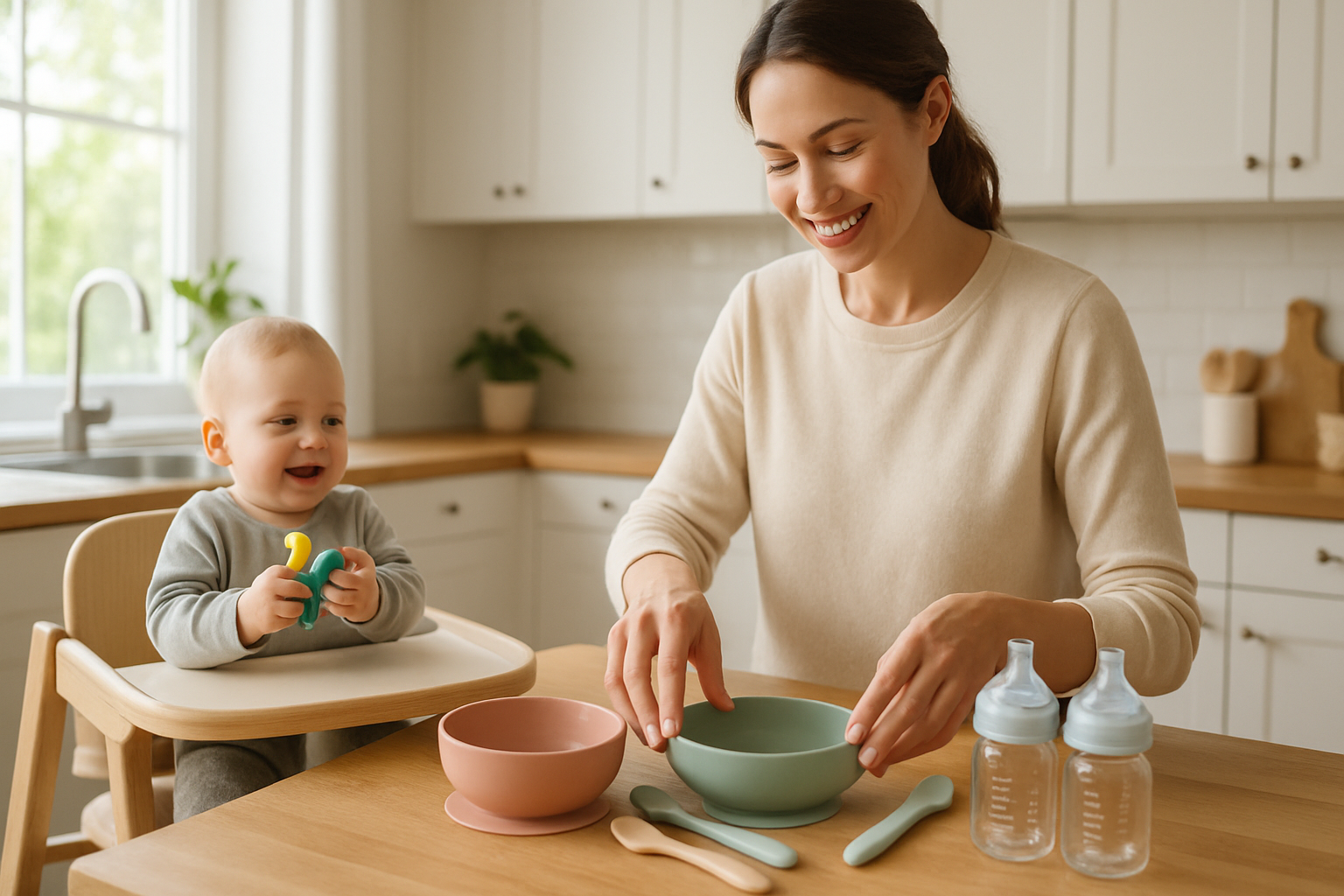
Starting solids is a messy, beautiful milestone that requires a shift in your toolkit. Your baby’s delicate gums need gentle utensils, making soft-tip silicone spoons an absolute must-have. When serving food, standard ceramic or glass plates will likely end up on the floor. Invest in bowls and plates featuring strong suction bases to keep mealtime anchored to the high chair tray. Once you have the gear, you can begin exploring homemade healthy baby recipes to fill those bowls.
Speaking of high chairs, look for models with ergonomic support, a secure safety harness, and easy-to-clean materials like faux-leather or smooth molded plastic. Crevices trap food easily, so a simple wipe-down design will save your sanity. To manage the inevitable mess, silicone catch-all bibs are vastly superior to fabric alternatives because they trap dropped food in a handy pocket and rinse clean in seconds.
Phase 3: Transitioning to Independence (Cups & Utensils)
As your baby transitions toward toddlerhood, encouraging independent drinking and eating becomes the primary goal. When choosing cups, speech therapists often recommend 360-degree cups because they allow babies to drink from any rim while supporting natural oral development, similar to a regular open cup. Straw cups are also fantastic for building oral motor skills, while traditional sippy cups with hard spouts are generally less favored by modern pediatric dental experts.
Introduce training forks and blunt-edge knives once your child shows an interest in copying your table manners. To keep your sanity while running errands, invest in snack catchers with flexible silicone flaps. These let little fingers reach in for puffs or crackers without spilling them all over the car seat or stroller. Using these containers is a great way to serve healthy snacks for kids while on the go.
Key Factors to Consider When Buying Baby Feeding Accessories
With so many products on the market, filtering your choices through a few key safety and practicality criteria will protect your baby and your budget.
- Safety Certifications: Always verify that plastics and silicone items are explicitly labeled BPA-free, PVC-free, phthalate-free, and lead-free. Learn more in our ultimate guide to baby safety.
- Ease of Cleaning: Look for dishwasher-safe items, especially for products you will wash multiple times a day like bottles and pump parts. Avoid items with hidden mold traps.
- Durability and Longevity: Choose convertible high chairs, adjustable cups, and modular storage systems that grow with your child through different developmental milestones.
- Budget vs. Investment: Splurge on items used daily for long periods, like a great high chair or pump, and save on simple items like bibs and basic spoons.
What to Avoid: Overhyped Feeding Gadgets You Don’t Need
It is easy to fall victim to clever marketing campaigns designed to prey on anxious new parents. However, many specialized items simply create more work. Skip single-use gadgets like dedicated avocado slicers, automatic baby food stirrers, or overly complex bottle warmers with unnecessary digital displays that take forever to program.
Be cautious with cheap plastic containers that warp in the dishwasher or absorb tomato-based stains after a single use. Stick to multi-functional, high-quality basics. A standard pot of warm water or a microwave bowl works just as well for warming milk as an expensive countertop appliance.
Conclusion
Choosing the right baby feeding accessories does not have to be an overwhelming ordeal. By focusing on your baby’s current developmental stage, prioritizing safety-certified materials, and investing in easy-to-clean gear, you set the stage for healthy and happy mealtime habits. Remember that every baby is entirely different. One infant might adore a specific bottle brand while another rejects it, and that trial-and-error process is completely normal.
Focus on what works best for your unique family dynamic and budget. Take a deep breath, trust your parental instincts, and enjoy watching your little one discover the joy of food. Be sure to check out our recommended product lists for vetted favorites, or share your absolute favorite feeding hack in the comments below!
Frequently Asked Questions
When should I start buying baby feeding accessories?
You should purchase newborn milk-feeding essentials like bottles, burp cloths, and a pump before birth. Wait until your baby approaches six months old before buying solid food accessories like suction plates and high chairs.
What materials are safest for baby bottles?
Glass, medical-grade silicone, and BPA-free plastics are the safest options. Glass is durable and easy to sterilize, silicone is soft and unbreakable, and plastic is lightweight and budget-friendly.
Are anti-colic baby bottles actually necessary?
They are very helpful if your baby suffers from excessive gas, painful spit-up, or discomfort during feeds, as the venting systems reduce the amount of air swallowed.
What type of cup is best when transitioning from a bottle?
Speech therapists and pediatric dentists often recommend 360-degree cups or straw cups because they promote natural oral development and motor skills compared to traditional hard-spout sippy cups.
How do I ensure baby feeding accessories are safe?
Always check product labels to ensure items are explicitly certified BPA-free, PVC-free, phthalate-free, and lead-free before using them with your infant.
Which baby feeding gadgets should I avoid?
Skip single-use items like avocado slicers, automatic food stirrers, and overly complex appliances. Stick to versatile basics that are easy to clean and dishwasher safe.


