

Everything You Need to Know About Choosing Toys by Age
Stepping into a toy store or scrolling through online shops can feel completely overwhelming. Bright lights, flashing screens, and thousands of shiny boxes promise to make your child the smartest, happiest kid on the block. Yet, many of these items end up gathering dust after just a few days of use.
Understanding the art of choosing toys by age changes everything. When you match playthings to your child’s current developmental stage, magic happens. Play is not merely a way to pass the time; it is the primary work of childhood. It fuels cognitive growth, refines motor skills, and builds emotional resilience.
In this comprehensive guide, we break down developmental milestones and the best playthings for every stage. Whether you are shopping for a newborn or an inquisitive second-grader, you will discover practical tips to make smarter, more intentional toy purchases. To help structure your child’s day around these activities, check out our complete guide to daily routines for kids.
Why Age Matters: The Science Behind Toy Selection
Play fuels early childhood development in profound ways. Through play, children test hypotheses, negotiate with peers, and process big emotions. However, the tools they use matter immensely. Giving a complex engineering kit to a toddler leads to frustration rather than learning. Conversely, offering a simple rattle to a seven-year-old fails to provide the cognitive challenge they crave.
The dangers of toys that are too advanced include plummeting self-esteem and quick abandonment of the item. On the other hand, toys that are too simple fail to stimulate growing neural pathways. The sweet spot is the zone of proximal development, where a toy offers a gentle challenge that a child can master with a little focus or guidance.
Safety always comes first when evaluating play options. Understanding choking hazards is vital for households with young children. Always check manufacturer age labeling, which is designed with strict federal safety standards in mind. A toy marked for ages three and up almost always contains small parts that pose a severe risk to younger siblings. For a deeper dive into home security, read about preventing common household accidents for babies.
Toys for Infants (0–12 Months): Sensory Exploration
The first year of life is a whirlwind of rapid sensory and physical development. Infants move from blurry-eyed newborns to crawling, cruising explorers. Key developmental milestones during this period include tracking objects with the eyes, grasping items with both hands, rolling over, and discovering cause and effect.
When choosing toys by age for babies under one year, look for items that stimulate the senses. High-contrast cards help develop newborn visual acuity. Soft rattles teach hand-eye coordination and sound awareness. Activity gyms provide a safe space for tummy time, while textured teething rings offer relief for sore gums and tactile feedback.
Always prioritize safety for this age group. Avoid anything with long cords or strings that pose strangulation risks. Steer clear of toys with small parts that can easily detach and become choking hazards. You can find more essential tips in our ultimate guide to baby safety.
Toys for Toddlers (1–3 Years): Movement and Imagination
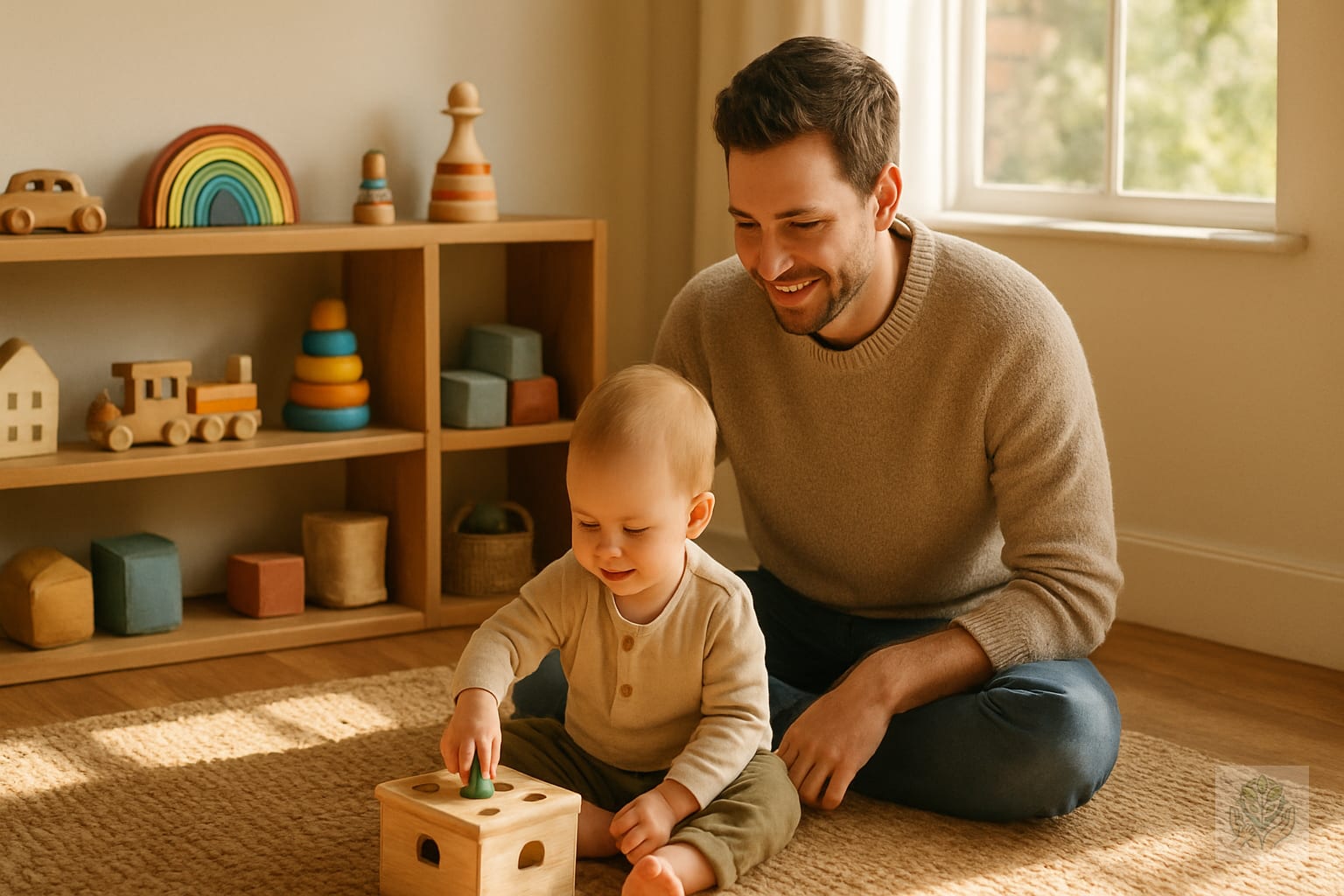
Toddlers are unstoppable balls of energy. Key developmental milestones for this group include walking, running, stair-climbing, stacking, and the exciting emergence of early pretend play. They love mimicking everyday adult tasks like talking on the phone or sweeping the floor.
The best toy types for this stage encourage gross motor skills and foundational problem-solving. Push-pull toys give newly confident walkers a sturdy companion. Simple wooden puzzles, large building blocks, and shape sorters teach spatial awareness and fine motor precision. Dolls and simple kitchen sets spark early imagination. On rainy days, you can supplement these with engaging indoor toddler activities to keep them occupied.
Playtime at this age is also a fantastic vehicle for encouraging independence. Open-ended items allow toddlers to direct their own play, fostering decision-making skills and confidence.
Toys for Preschoolers (3–5 Years): Social Skills and Creativity
Preschoolers enter a wondrous world of social interaction and elaborate storytelling. Key developmental milestones include fine motor refinement, scissor skills, cooperative sharing, and the ability to follow multi-step rules. Their language skills explode during these preschool years.
To support this growth, look for dress-up clothes, arts and crafts supplies, cooperative board games for kids, and open-ended building sets like magnetic tiles. These items encourage teamwork, negotiation, and creative problem-solving. For more inspiration, explore our guide to preschool activities for early learning.
The power of educational pretend play cannot be overstated here. When children pretend to be doctors, teachers, or superheroes, they practice empathy and learn to navigate complex social scenarios. This type of play lays the groundwork for emotional intelligence.
Toys for School-Age Children (6–8 Years): Logic and Strategy
School-age children transition into formal academic environments where logic, reading comprehension, and structured rule-following take center stage. Key developmental milestones involve advanced problem-solving, strategic thinking, and sustained attention spans.
When choosing toys by age for this bracket, focus on mental stimulation and physical endurance. Strategy board games teach patience and tactical planning. Introductory science kits foster curiosity about the natural world. Complex LEGO sets and other educational STEM toys build spatial reasoning, while active outdoor sports gear keeps growing bodies strong and healthy.
A major challenge for parents of school-age children is balancing screen time with hands-on play. Providing engaging, tactile hobbies helps pull kids away from digital devices and into active, creative pursuits.
Red Flags to Avoid When Buying Toys
Even with the best intentions, smart shopping requires vigilance. Here are critical red flags to keep in mind:
- Ignoring manufacturer age recommendations: These guidelines are based on rigorous safety testing and developmental appropriateness, not arbitrary marketing.
- Buying cheap plastics or toxic materials: Low-cost imported toys may contain harmful chemicals like lead or phthalates. Stick to reputable brands with transparent manufacturing practices.
- Overlooking safety certifications: Look for stamps from recognized organizations like ASTM (American Society for Testing and Materials) or the CPSC (Consumer Product Safety Commission) to ensure compliance.
Conclusion
Mastering the art of choosing toys by age takes the guesswork out of gift-giving and parenting. By aligning your purchases with your child’s specific developmental milestones, you foster deeper engagement, learning, and joy. For a curated list of recommendations, see our age-wise guide to the best educational toys.
Remember that less is often more. Piling a playroom high with hundreds of plastic gadgets often leads to overstimulation and boredom. Rotating a smaller collection of intentional toys keeps playtime fresh and exciting while preventing toy clutter.
What is your child’s absolute favorite age-appropriate toy right now? Drop a comment below to share your ideas with fellow parents!
Frequently Asked Questions
Why is choosing toys by age important?
Choosing toys by age ensures that playthings match a child’s current developmental stage, preventing frustration from overly complex items and boredom from toys that are too simple.
What are the best toys for infants under one year old?
Infants benefit most from sensory toys such as high-contrast visual cards, soft rattles, activity gyms for tummy time, and textured teething rings that stimulate development safely.
How do toys help toddlers aged 1 to 3 years?
Toys for toddlers encourage gross motor skills, walking, and early imagination through push-pull toys, simple wooden puzzles, large building blocks, and shape sorters.
What toys support preschool development for ages 3 to 5?
Preschoolers thrive with dress-up clothes, arts and crafts supplies, cooperative board games, and open-ended building sets like magnetic tiles that foster social skills and creativity.
What should I look for when buying toys for school-age children?
For children aged 6 to 8, focus on logic and strategy with board games, introductory science kits, complex building blocks, and active outdoor sports gear.
What safety red flags should parents avoid when buying toys?
Always check manufacturer age recommendations, avoid cheap plastics with potential toxic materials, and look for official safety certifications like ASTM or CPSC.


