

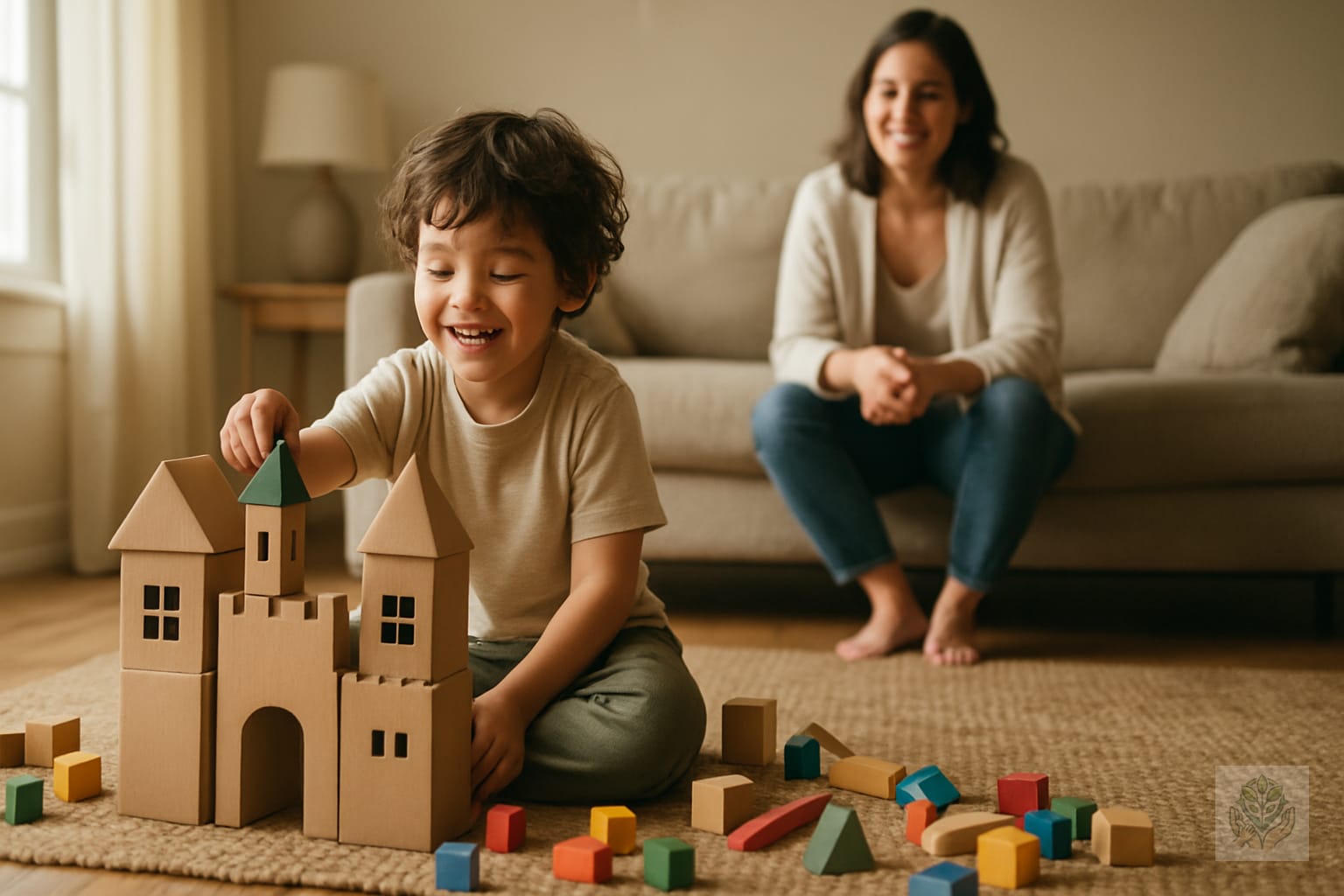
The Complete Guide to Pretend Play for Child Development: Why Imagination Matters
When you watch your child turn a cardboard box into a spaceship or a wooden spoon into a magic wand, you are witnessing more than just a passing distraction. You are seeing the foundational work of cognitive architecture. Pretend play for child development is not merely a cute pastime; it is the laboratory where children test the laws of physics, social interaction, and emotional regulation.
As parents, we often feel pressured to provide structured lessons or educational apps, but the most sophisticated learning tool your child has is their own imagination. In this guide, we will explore why imaginative play is critical for brain growth, how to support it at home, and what you can expect as your child moves through different developmental stages.
What is Pretend Play and Why Is It Essential?
At its core, pretend play occurs when a child uses symbols to represent something other than what is currently present. Psychologists like Jean Piaget identified this as a hallmark of the preoperational stage of childhood. When a child pretends a banana is a telephone, they are practicing symbolic thinking, which is a prerequisite for more complex skills like reading and mathematics. You can also explore the educational benefits of puzzle games to further support these cognitive milestones.
This type of play impacts every major developmental domain. It challenges a child to think outside of their own current reality, forcing the brain to create connections between abstract concepts. Whether through social imitation or creative storytelling, pretend play for child development remains one of the most effective ways to build a flexible, resilient brain.
The Psychological Foundation
Piaget famously argued that play is the work of the child. Through imaginative scenarios, children learn to internalize the rules of the world. They are not just mimicking adult life; they are processing the “how” and “why” behind the actions they observe daily.
Key Developmental Domains
Imaginative activities impact four primary pillars of development:
- Cognitive: Enhancing memory, attention, and symbolic thought.
- Social: Practicing turn-taking, sharing, and perspective-taking.
- Emotional: Providing a safe space to process fears, joys, and frustrations.
- Physical: Refining fine motor skills through manipulation of props and gross motor skills through active role-play.
The Developmental Benefits of Imaginative Play
Why do experts place such a high premium on play? The benefits go far beyond the immediate joy of the activity. When children engage in sustained imaginative play, they are building the executive functions necessary for academic and life success. You might also want to look into best educational toys for kids to supplement their learning journey.
Language Acquisition and Vocabulary Expansion
During play, children often adopt new roles, which requires them to use different registers of speech. A child playing doctor will use words they hear in the office, while a child playing chef learns culinary terminology. This exposure to diverse language contexts naturally expands their vocabulary and improves sentence structure.
Emotional Regulation and Empathy Building
When children engage in role-play, they often step into the shoes of another person or character. This “theory of mind” development is the precursor to empathy. By experimenting with different personas, children learn to navigate their own feelings and understand the perspectives of their peers.
Problem-Solving and Executive Function
Have you ever watched a group of children try to build a fort? They must negotiate, plan, and troubleshoot when the blankets sag. This is executive function in action. They are setting a goal, inhibiting impulses, and adjusting their strategy in real-time, all of which are critical life skills.
Pretend Play Milestones: What to Expect by Age
Development is a journey, not a race. However, understanding typical milestones can help you better facilitate pretend play for child development in your own home. Establishing a daily routine for kids by age can also help ensure they have dedicated time for this important work.
Ages 1-2: Functional Play and Imitating Adults
During this stage, play is heavily rooted in imitation. Your toddler may push a toy lawnmower or “talk” into a plastic phone. This is the first step toward symbolic thinking, where the child realizes objects have specific functions.
Ages 2-3: Simple Role-Playing and Object Substitution
This is where imagination truly takes flight. A child might declare that a block is a piece of cake. They are beginning to decouple the object from its literal purpose, allowing their creative brain to take over.
Ages 4-5: Complex Narratives and Cooperative Play
Peer play becomes more central here. Children start creating elaborate scenarios with beginnings, middles, and ends. You will hear phrases like, “Let’s pretend that you are the store clerk and I am the customer who lost my wallet.”
Ages 6+: Rule-Based Imaginative Play and Creative Storytelling
As children grow, their pretend play becomes more structured. They might invent complex games with specific rules and hierarchies. This mirrors the social structures they are beginning to navigate in school.
How to Encourage and Facilitate Pretend Play at Home
You don’t need expensive playhouses to foster imagination. In fact, minimalism often leads to deeper engagement. The goal is to create an environment where creativity can thrive without over-stimulation. You can start by learning how to build a simple preschool learning corner to house their resources.
Curating a ‘Yes’ Environment
Choose open-ended toys over structured, battery-operated ones. Toys that can only do one thing limit the child’s brain. Blocks, silks, simple dolls, and animal figurines are excellent because they can be anything the child desires.
The Power of Household Items
Never underestimate the humble cardboard box. To a child, it is a fort, a rocket ship, or a deep-sea submarine. By providing “loose parts”—items that can be repurposed—you signal to your child that their imagination is the most valuable tool in the house.
Following the Child’s Lead
Resist the urge to direct the play. This is known as scaffolding. You are there to provide support and ask questions, not to script the narrative. Try prompts like, “What do you think happens next in our adventure?” or “I wonder how the bear feels in this scenario?”
Common Challenges and FAQs
Parents often worry that their child isn’t playing “the right way” or that themes have become too aggressive. These concerns are normal and manageable. Refer to our guide on managing everyday behavior challenges in kids if you are finding play transitions difficult.
What if my child doesn’t seem interested in pretend play?
Some children are more concrete thinkers. You can gently introduce pretend play by modeling it yourself. If they prefer structured play, incorporate imaginative elements into those tasks, such as narrating the life of a puzzle piece or giving a toy truck a personality.
Dealing with ‘scary’ or aggressive themes in play
It is common for children to act out conflict, monsters, or “bad guy” scenarios. This is usually how they process power dynamics or fears. As long as it is safe, observe the play. If the themes persist, you might gently guide the story toward a resolution or discuss the emotions behind the conflict.
Screen Time vs. Pretend Play
Screens provide passive input, while pretend play for child development requires active output. Prioritize “analog” play time by setting aside dedicated periods where gadgets are put away. This allows the brain to transition from consumption mode to creation mode. Learn more about healthy habits in our guide on how parents can manage screen time at home.
Conclusion
Integrating pretend play into your child’s daily routine is one of the most impactful investments you can make in their future. It fosters the cognitive flexibility, emotional depth, and social intelligence that will serve them long after they have outgrown their toy box. By creating a space that honors their creativity, you are teaching them that they have the power to imagine new worlds and solve complex problems.
Remember, the best playmate for your child is often you, simply listening and validating their incredible ideas. For a head start, download our free printable Pretend Play Prompt Cards to spark your next afternoon of creative discovery!
Frequently Asked Questions
What is pretend play in child development?
Pretend play occurs when a child uses symbols to represent something else, such as treating a banana like a telephone. It is a vital cognitive milestone that builds symbolic thinking and problem-solving skills.
At what age do children start pretend play?
Children typically begin simple functional play and adult imitation around 12 to 24 months, progressing to complex role-playing and object substitution between ages two and three.
Why is imaginative play important for cognitive growth?
It enhances memory, attention, and executive functions. By creating scenarios and negotiating rules, children develop critical thinking and cognitive flexibility.
How can I encourage pretend play at home?
Provide open-ended toys like blocks, dress-up clothes, and household loose parts such as cardboard boxes. Avoid over-structured toys and let your child lead the imaginative narrative.
What if my child is not interested in pretend play?
Some children are concrete thinkers initially. You can model imaginative play yourself or gently weave storytelling into activities they already enjoy, like puzzles or building blocks.
How does pretend play affect emotional development?
Role-playing helps children step into different perspectives, building empathy and emotional regulation. It provides a safe space to process feelings, fears, and social dynamics.


