

10 Fun DIY Crafts That Strengthen Hand-Eye Coordination in Kids
Every parent wants to see their child thrive, and often, the most effective tools for development are hiding in plain sight within our own homes. Have you ever considered that the simple act of cutting paper or threading beads is doing far more than just keeping your child entertained? These activities are essential for building hand-eye coordination in kids, a critical skill that serves as the foundation for future success in writing, reading, and even sports.
Developing fine motor skills through the philosophy of learning through play is a gentle and effective way to prepare little ones for the challenges of school. By engaging in creative tasks, children bridge the gap between their visual perception and physical execution. Fortunately, you do not need expensive toys or complicated gadgets to support this growth. Engaging in DIY crafts is an accessible, affordable, and deeply engaging way to boost development while creating lasting memories together. If you are looking for more ways to help your child grow, explore our 10 fun DIY crafts that improve fine motor skills in toddlers and preschoolers.
Why Crafting is a Developmental Powerhouse
At its core, crafting is a sensory-rich experience that strengthens the connection between the brain and the hands. When a child focuses on a specific task, they are building neural pathways that improve their ability to control muscle movements. Repetitive actions like cutting, threading, or pinching require a high level of concentration, which in turn fosters patience and focus.
As your child manipulates materials, they are constantly calibrating their movements based on what their eyes see. This is the essence of hand-eye coordination. When children practice these motions, they are not just making art; they are training their brains to synchronize visual information with physical actions, which is a vital milestone in early childhood development. For additional practice, check out these 15 engaging indoor activities that improve fine motor skills for kids.
10 Fun DIY Crafts for Hand-Eye Coordination
DIY Craft 1: DIY Lacing Cards (The Precision Builder)
Lacing cards are a classic tool for improving dexterity. To create your own, take a piece of sturdy cardboard and cut it into fun shapes like stars, hearts, or animals. Use a hole puncher to create holes around the edges of your shape. Provide your child with a shoelace or a piece of yarn tipped with tape to act as a needle.
Ask your child to thread the string through each hole. This activity is excellent for practicing precision and tracking. By focusing on where the string goes, your child improves their grip and learns to manage space effectively.
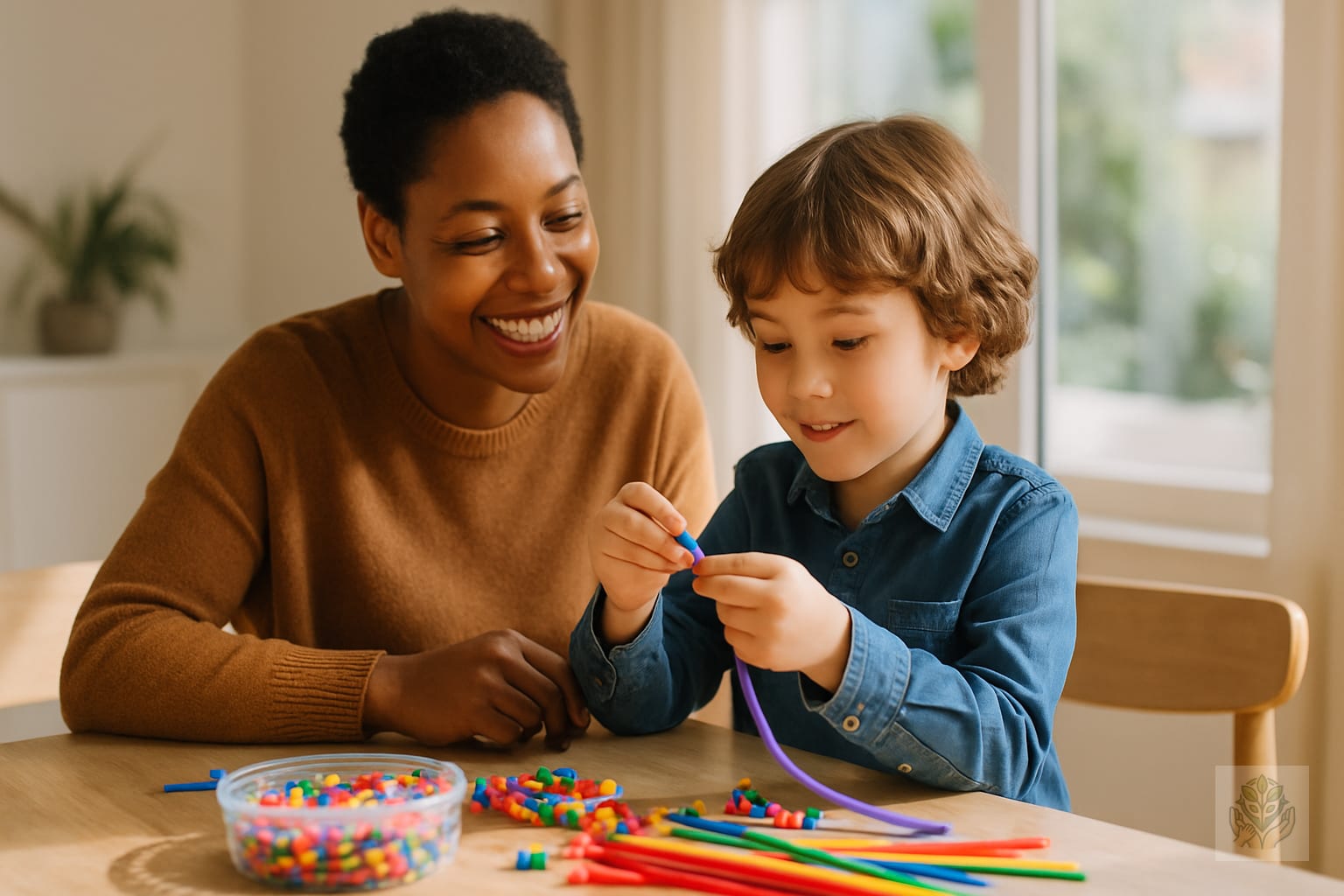
DIY Craft 2: Beaded Pipe Cleaner Sculptures
This craft is perfect for building the pincer grasp—the ability to pick up small objects between the thumb and forefinger. All you need are a handful of colorful pipe cleaners and various plastic beads. Encourage your child to slide the beads onto the pipe cleaners and twist them into different shapes or creatures.
This simple task requires significant focus. As children decide where to place each bead, they also develop spatial awareness. They must gauge the length of the pipe cleaner and the size of the beads, making this an ideal exercise for fine motor control.
DIY Craft 3: Homemade Suncatchers with Tissue Paper
This activity turns your window into a canvas. You will need clear contact paper, colorful tissue paper squares, and a pair of child-safe scissors. Peel back the contact paper and let your child stick the tissue paper pieces onto the sticky side. Once covered, you can frame it with construction paper.
The process of tearing the tissue paper into smaller bits and placing them precisely on the adhesive surface engages the visual system. It encourages children to track their movements carefully to ensure the entire area is covered, providing a great workout for hand-eye synchronization. For more sensory exploration, you might enjoy learning how to make a simple oat sensory bin at home.
DIY Craft 4: Paper Plate Weaving
Weaving is a fantastic way to develop bilateral coordination, which is the ability to use both sides of the body together. Cut an odd number of notches into the edge of a paper plate and wind yarn around the plate to create a loom. Give your child a blunt plastic needle threaded with a different color of yarn to weave in and out of the existing lines.
This requires the child to hold the plate steady with one hand while manipulating the needle with the other. It is a wonderful way to teach them how their hands can cooperate to complete a complex task.
DIY Craft 5: Salt Dough Ornaments with Imprints
Salt dough is a classic, sensory-friendly medium. Combine two cups of flour, one cup of salt, and one cup of water to create a malleable dough. Roll it out and let your child use cookie cutters or natural items like leaves and twigs to create imprints.
The act of pressing an object into the dough requires firm pressure and accurate placement. It offers tactile feedback that helps children understand the force they need to apply, which is crucial for developing the muscle strength necessary for writing and drawing. You can further build hand strength with these 11 easy hand strengthening activities for preschoolers.
Expert Tips for Success
When introducing these crafts, remember that modification is key. For younger children, use larger materials, like thicker yarn or larger beads, to account for their developing motor skills. As they get older, transition to smaller, more intricate materials to keep them challenged.
Parental involvement should balance support and independence. Provide instructions and encouragement, but let the child do the physical work. Even if the craft does not look perfect, the developmental benefits come from the effort they put in. Always keep safety in mind, especially when using scissors, and ensure that all small parts are age-appropriate to prevent choking hazards. For guidance on appropriate gear, see our ultimate beginner’s guide to buying age-appropriate toys.
How to Integrate Crafts into Your Weekly Routine
Consistency is more important than duration. You do not need to spend hours crafting every day. A dedicated 15-minute session is often enough to yield great benefits without overwhelming your child. Create a low-mess craft station using a plastic tablecloth or a designated tray where all your supplies are organized.
Having a consistent place and time for crafts helps children transition into a focused mindset. It turns creativity into a healthy habit rather than a sporadic event, ensuring they get regular practice in strengthening their coordination skills.
Conclusion
Strengthening hand-eye coordination in kids does not have to be a chore. By incorporating these DIY crafts into your weekly routine, you are providing your child with valuable developmental opportunities that extend far beyond the art table. Remember, the goal is not to produce museum-quality masterpieces but to provide a space where your child can experiment, learn, and grow.
Focus on the process, enjoy the messy hands, and celebrate every small success along the way. Your support is the most important part of their developmental journey. If you found these ideas helpful, share your own craft creations in the comments below or subscribe to our newsletter for more fun and developmental activity ideas.
Frequently Asked Questions
What is hand-eye coordination in kids?
Hand-eye coordination is the ability of the visual system to coordinate the information received through the eyes to control, guide, and direct the hands in the execution of a given task.
At what age can kids start doing DIY crafts?
Children can start doing simple, age-appropriate crafts as early as toddlers, around 18 months to 2 years old, using large materials and safe tools like blunt scissors and chunky crayons.
How do crafts improve fine motor skills?
Crafts require children to use small muscles in their hands and fingers for tasks like cutting, pinching, threading, and holding, which directly strengthens their muscle control and dexterity.
Are these DIY crafts safe for toddlers?
Yes, most of these crafts use everyday household items and child-safe materials, but adult supervision is always recommended, especially when using scissors or small beads.
How often should kids do craft activities?
Consistency is key. Short, 15-minute crafting sessions a few times a week are plenty to support healthy developmental growth without overwhelming the child.
What materials do I need for basic coordination crafts?
You only need simple household items like paper plates, yarn, cardboard, pipe cleaners, beads, tissue paper, and non-toxic glue or tape.


