

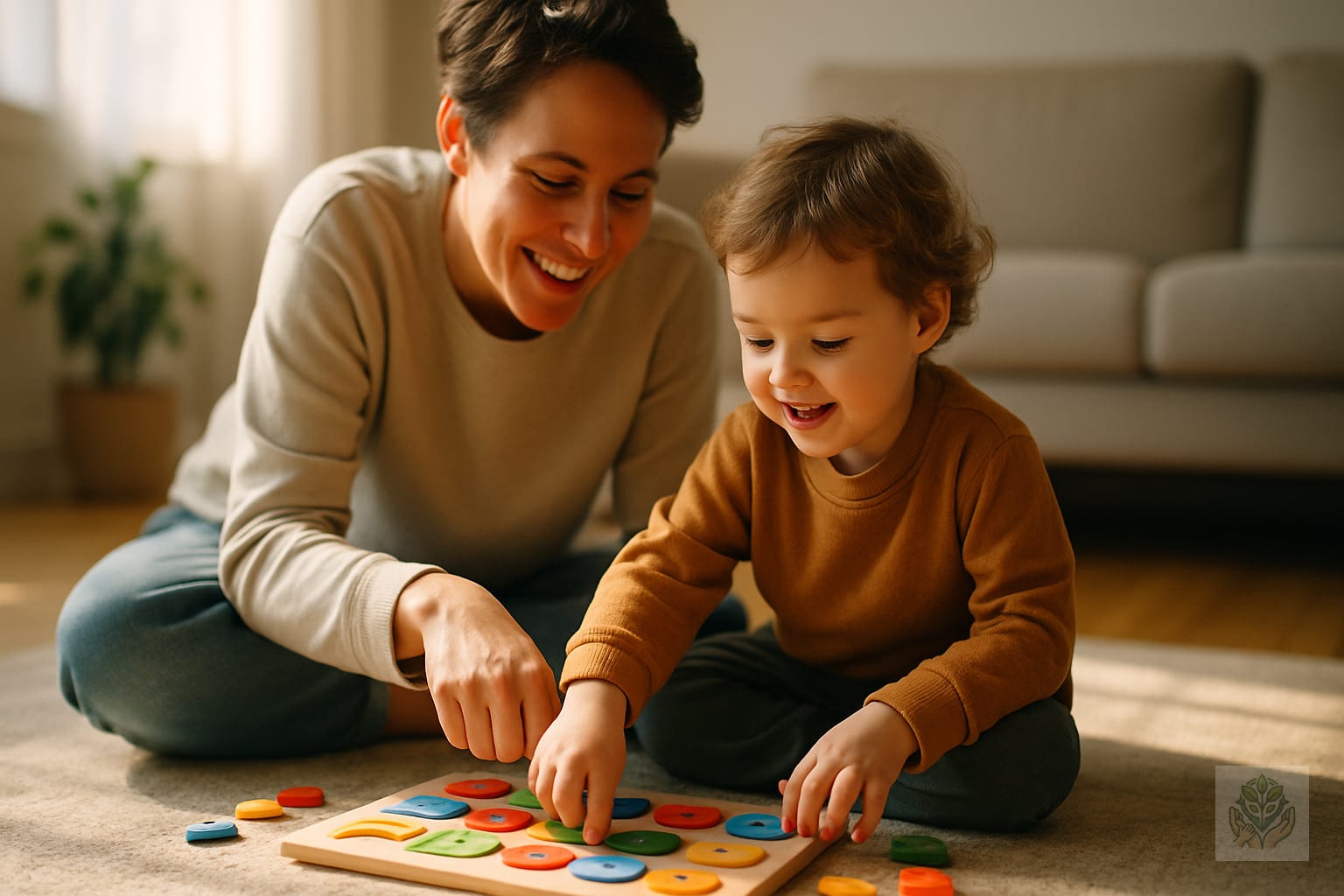
Everything You Need to Know About Educational Puzzle Games for Kids
Remember the quiet satisfaction of snapping that final stubborn piece into a cardboard jigsaw puzzle? Long before tablets and streaming video dominated playtime, wooden and cardboard puzzles were a staple of childhood. Today, that timeless appeal has undergone a modern evolution, blending classic tactile play with digital interactivity and dynamic STEM concepts. As parents, we often look for toys that do more than just entertain for a few minutes. We want tools that genuinely nurture our children’s growing minds.
When play meets structured learning, amazing transformations happen in a child’s brain. Far from being simple rainy-day time-killers, educational puzzle games for kids are powerful catalysts for holistic child development. They offer benefits that reach far beyond simple entertainment, shaping everything from fine motor coordination to advanced mathematical reasoning.
What Are Educational Puzzle Games?
At their core, educational puzzle games are play-based activities designed to challenge the mind while teaching specific concepts or building fundamental skills. Unlike standard toys that may encourage passive observation, puzzles require active participation. They come in many formats, ranging from traditional wooden peg puzzles and cardboard jigsaws to interactive digital puzzle apps and hybrid board games that combine physical pieces with screen-based clues.
These games differ from standard toys by intentionally targeting specific developmental domains. Whether a child is learning geometric shapes, practicing counting, or figuring out how two physical edges fit together, every movement serves a purpose. The history of puzzles in early childhood education dates back to the 1760s when mapmaker John Spilsbury mounted maps on wood and cut them into pieces to teach geography. Since then, educational theory has consistently recognized puzzle play as a cornerstone of cognitive growth.
Top Benefits of Puzzle Games for Child Development
Integrating puzzles into your child’s routine yields a wealth of developmental advantages. From the first time a toddler grasps a chunky knob to the moment an older child solves a complex spatial grid, their brains are hard at work.
Cognitive Development
Puzzles are supreme workouts for the brain. They enhance problem-solving skills as children test different hypotheses to see what works. They also build spatial awareness—the ability to visualize objects in space—along with working memory and sustained concentration.
Fine Motor Skills
Manipulating puzzle pieces requires precision. Children must practice hand-eye coordination, finger dexterity, and grip strength. These physical manipulations build the exact hand muscles needed later for writing, drawing, and using scissors.
Emotional Benefits
Puzzles teach patience and emotional resilience. Children inevitably encounter pieces that do not fit, giving them a safe space to manage frustration. Overcoming these small hurdles builds frustration tolerance and delivers a wonderful sense of accomplishment when the final picture emerges.
Social Skills
When children work on puzzles together, they practice vital communication and collaboration skills. They learn to share pieces, listen to alternative ideas, and work toward a common goal.
Types of Educational Puzzles by Age and Stage
Every developmental milestone calls for a different level of challenge. Choosing the right educational puzzle games for kids means matching the complexity of the game to your child’s current capabilities.
Toddlers (1 to 3 years)
At this stage, chunky wooden knob puzzles, shape sorters, and large-piece floor puzzles work best. These toys help toddlers understand object permanence, basic shapes, and cause-and-effect relationships.
Preschoolers (3 to 5 years)
Preschoolers are ready for jigsaw puzzles ranging from 12 to 50 pieces. Alphabet and number puzzles help reinforce early literacy and numeracy, while simple tangram sets introduce basic geometry through shape manipulation.
Early Elementary (6 to 8 years)
Children in this age bracket can tackle logic grid puzzles, traditional jigsaw puzzles with 100 or more pieces, and introductory STEM puzzle games that teach basic coding concepts without screens.
Tweens (9+ years)
Older kids benefit from complex 3D mechanical puzzles, intricate spatial logic challenges, and advanced digital puzzle apps that require strategic planning and deep critical thinking.
STEM and STEAM Learning Through Puzzles
Modern educational frameworks heavily emphasize STEM and STEAM, integrating Science, Technology, Engineering, Arts, and Math. Puzzles serve as a natural bridge into these critical subjects.
Spatial puzzles lay the fundamental groundwork for mathematical thinking, fractions, and geometry. When a child rotates a piece to fit a corner, they are intuitively exploring angles and symmetry. Popular STEM puzzle genres include circuit-building puzzles that teach electrical flow, physical balancing games that explore physics concepts, and architectural building puzzles that introduce basic engineering principles.
Screen-Based vs. Traditional Physical Puzzles
In our digital age, parents often weigh the pros and cons of screen time versus tactile play. Both formats offer unique advantages for young learners.
Digital Educational Puzzle Apps
Digital educational puzzle apps provide high interactivity, portability, and adaptive difficulty levels that automatically adjust as your child improves. They often feature engaging animations and instant feedback that keep children motivated.
Traditional Physical Puzzles
On the flip side, traditional physical puzzles offer vital tactile feedback, engage multiple senses, and reduce overall screen time. They also provide wonderful opportunities for family bonding when parents and siblings sit around a table together. Finding a healthy balance between digital and tactile play ensures your child enjoys the best of both worlds.
How to Choose the Right Puzzle Game for Your Child
With countless options on store shelves and online marketplaces, selecting the best game can feel overwhelming. Start by assessing your child’s current developmental stage and personal interests. If your child is obsessed with dinosaurs, a dinosaur-themed floor puzzle will instantly capture their attention.
Keep the Goldilocks Rule in mind: look for puzzles that are challenging yet achievable. A puzzle that is too easy leads to boredom, while one that is too difficult leads to immediate meltdowns. Finally, always prioritize safety by checking for non-toxic materials, ensuring appropriate sizing to avoid choking hazards for younger kids, and verifying overall product durability.
Tips for Parents: How to Engage Kids with Puzzles
How you interact with your child during puzzle time can dramatically impact their learning experience. Here are a few practical ways to support them:
- Co-play without taking over: Resist the urge to point out where pieces go. Instead, ask guiding questions such as, What shape do you think we need for this corner?
- Create a dedicated puzzle space: Set up a small low table or a portable puzzle mat where a work-in-progress can sit safely undisturbed.
- Celebrate the process: Praise your child’s persistence, strategy, and effort rather than just focusing on the completion of the final picture.
Conclusion
Educational puzzle games for kids are far more than simple pastimes. They are foundational learning tools that foster cognitive growth, fine motor control, emotional resilience, and early STEM literacy. By understanding your child’s developmental stage and providing the right balance of physical and digital challenges, you can set them up for a lifetime of joyful problem-solving. Whether you introduce a simple wooden knob puzzle to a toddler or tackle a complex 3D structure with an older child, every piece placed is a step toward building a confident, capable mind.
Frequently Asked Questions
What are educational puzzle games?
Educational puzzle games are play-based activities designed to challenge children’s minds while teaching specific concepts like shapes, numbers, and spatial reasoning.
At what age should children start playing with puzzles?
Children can start with simple wooden knob puzzles and shape sorters as early as one year old to develop motor skills and object permanence.
How do puzzles help with child development?
Puzzles enhance cognitive development, spatial awareness, fine motor coordination, problem-solving abilities, and emotional resilience through patience.
Are digital puzzle apps as good as traditional physical puzzles?
Both have benefits. Digital apps offer adaptive learning and portability, while traditional physical puzzles provide vital tactile feedback and reduce screen time.
How do I choose the right puzzle for my child?
Choose puzzles that match your child’s developmental stage and personal interests, following the Goldilocks Rule so they are challenging yet achievable.
Do puzzle games support STEM learning?
Yes, spatial and logic puzzles lay the groundwork for mathematical thinking, geometry, physics, and basic engineering principles.


