

25 Engaging Afternoon Activities for Preschoolers to Beat the Wiggles
If you are a parent of a preschooler, you likely know the feeling of the late afternoon shift all too well. As the clock ticks toward 4:00 PM, the post-nap energy spike hits, or perhaps the post-school fatigue settles in, leading to the dreaded witching hour. It is that window of time where restlessness reigns, the wiggles take over, and your preschooler seems to need more entertainment than a professional circus.
Finding engaging afternoon activities for preschoolers is not just about keeping them busy; it is about providing purposeful play-based learning that supports their cognitive and physical development. When you have a toolkit of ideas ready, you can reclaim your afternoon, reduce screen time dependency, and maintain your parental sanity. You can also explore how to structure this part of the day effectively by reading our guide on creating a simple after-school schedule for preschoolers.
The Benefits of Structured Afternoon Play
Structured play is a fundamental component of early childhood development. When you provide preschooler activity ideas that are both intentional and fun, you are doing more than just passing the time. You are helping your child build essential life skills.
One of the primary benefits of afternoon play is reducing screen time. While technology has its place, hands-on activities foster better concentration and problem-solving abilities. Furthermore, these activities encourage the development of fine and gross motor skills. Whether your child is balancing on a cushion or pinching small objects into a sorting tray, they are fine-tuning their physical capabilities.
Perhaps most importantly, these activities strike a balance between parent-led engagement and independent play. By setting up the environment correctly, you can teach your child how to engage with materials on their own, giving you a few moments to breathe or complete your own tasks. For more inspiration on encouraging solo play, check out these Montessori toys that encourage independent play.
Low-Prep Indoor Active Play
When the wiggles are at an all-time high, you need activities that burn energy quickly. These physical activities for kids require little to no prep time and utilize items you already have around the house.
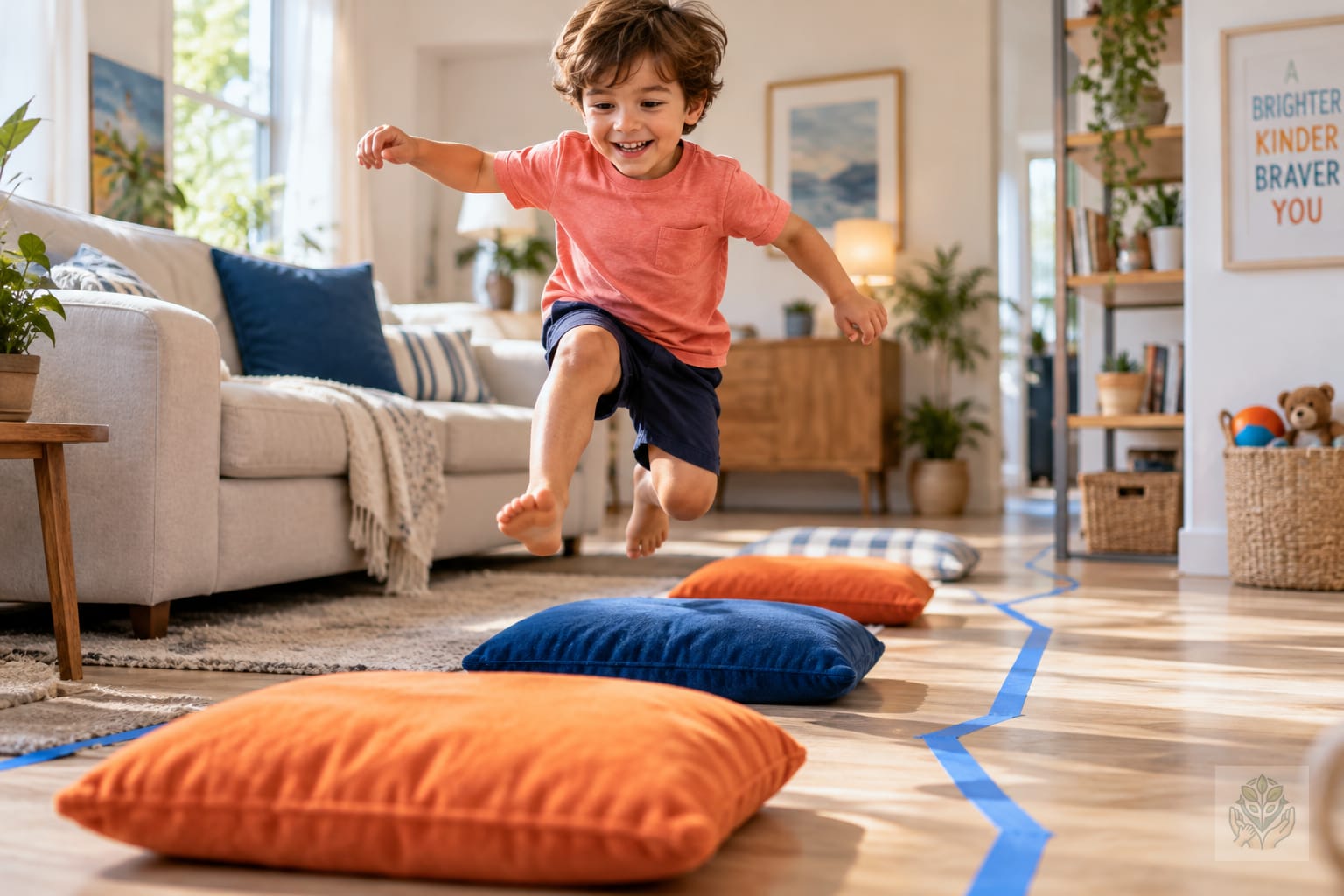
- Living Room Obstacle Course: Use couch cushions, pillows, and painter’s tape to create a path. Ask your child to jump over the pillows, crawl under the coffee table, and balance along a line of tape.
- The Floor is Lava: Scatter blankets across the floor. Your child must move from one safe island to the next without touching the carpet. This is a classic for a reason!
- Indoor Scavenger Hunt: Create simple picture clues for your child to find specific items in the room. For example, a drawing of a book leads to the bookshelf, where they find their next clue.
- Balloon Volleyball: Keep a balloon in the air as long as possible. It is slow-moving, safe for indoor spaces, and excellent for hand-eye coordination.
- Animal Movement Cards: Write names of animals on paper slips (frog, bear, crab). Your child draws one and moves across the room like that animal.
Creative & Quiet Afternoon Craft Ideas
When you need to bring the energy level down, turn to creative play. These creative preschool activities encourage focus and calm, making them perfect for pre-dinner wind-down.
- Process Art with Unconventional Tools: Skip the paintbrushes. Offer sponges, cotton swabs, or even toy trucks with wheels dipped in washable paint. It is about the act of creating, not the final product.
- DIY Sensory Bins: Fill a plastic bin with dried rice, water beads, or kinetic sand. Add scoops, funnels, and small plastic figures. Sensory play is calming and keeps preschoolers occupied for long stretches. You can also try some ideas from our collection of fun sensory bin fillers for toddlers.
- Cardboard Box Creations: Never underestimate the power of a cardboard box. With a little tape and markers, it can become a rocket ship, a puppet theater, or a cozy reading nook.
- Sticker Mosaic Art: Give your child a large sheet of paper and a variety of stickers. Encourage them to fill the entire page.
- Water Painting: Give your child a bowl of water and a large brush. Let them ‘paint’ on the driveway or even on construction paper to watch the color change as it gets wet.
Educational & Brain-Boosting Activities
Learning does not have to stop when school is out. Use these educational games for preschoolers to sneak in some brain-boosting fun without the pressure of a classroom setting.
- Sorting and Matching: Use colored pom-poms and an empty muffin tin. Ask your child to sort the pom-poms by color or count them into the cups.
- Audiobook Listening Station: Set up a cozy corner with headphones and an audiobook. This helps build narrative skills and listening comprehension.
- Salt-Tray Writing: Pour a thin layer of salt onto a dark tray. Have your child use their finger to practice writing letters or drawing shapes in the salt. For extra practice, you can look into expert tips on how to improve pencil grip in young children.
- Letter Stamps: Use alphabet stamps and playdough. Let your child press the letters into the dough to form their name or simple words.
- Shape Hunt: Challenge your child to find five items in the house that are circles, squares, or rectangles.
Additional Quick Ideas
Keep these five activities in your back pocket for those extra-long afternoons:
- Tape Roadways: Lay down painter’s tape to create roads for toy cars on your floor.
- Sorting Laundry: Turn a chore into a game by having your child match socks.
- Homemade Puzzles: Cut an old cereal box image into large pieces for an easy puzzle. You can also explore our complete guide to puzzle games for kids for more ideas.
- Window Art: Use dry-erase markers on windows for a unique drawing surface.
- Indoor Picnic: Serve snack time on a blanket in the living room to break the monotony.
Tips for Successful Afternoon Play
The secret to keeping your preschooler engaged is all in the delivery. Use the concept of ‘invitations to play’ by setting up an activity before your child walks into the room. A visually appealing setup—like a tray of blocks or a specific craft project—is much more inviting than a pile of random toys.
Rotation is also key. Keep your toy supply manageable by storing items away and rotating them every few weeks. This keeps interest high because old toys feel new again. Finally, be intentional about your timing. If your child is struggling to settle, start with an active game to burn the wiggles, then transition into a quiet activity to prepare for dinner. If you need more ways to keep them moving when they are stuck inside, check out our favorite indoor activities that build gross motor skills for toddlers and kids.
Conclusion
Implementing engaging afternoon activities for preschoolers is about creating a rhythm that works for your family. Consistency helps your child understand expectations, but remember that flexibility is just as important. Keep it simple, choose activities that bring you both joy, and don’t stress if the day doesn’t go exactly as planned.
You are doing a great job navigating these formative years. Download our printable activity checklist today to keep your ideas organized, or share your favorite go-to afternoon activity in the comments below!
Frequently Asked Questions
What are some good afternoon activities for preschoolers to burn energy?
Living room obstacle courses, playing ‘The floor is lava’, and balloon volleyball are fantastic, low-prep ways to help kids burn off extra energy indoors.
How can I reduce screen time in the afternoon?
Having a toolkit of engaging activities like sensory bins, process art, and interactive scavenger hunts helps keep children entertained without relying on screens.
What are some quiet activities for preschoolers before dinner?
Sticker mosaic art, audiobook listening stations, and DIY sensory bins are wonderful calm activities that help wind down the energy level before the evening.
How do I set up an invitation to play?
An invitation to play involves setting up an appealing activity, like a tray of art supplies or blocks, before your child enters the room to spark their natural curiosity.
Can afternoon activities also be educational?
Yes! Sorting and matching games, salt-tray writing, and shape hunts are great ways to sneak in early learning and cognitive development during playtime.
What should I do if my preschooler is too restless?
Start with a high-energy physical game to get rid of the wiggles, and then smoothly transition into a focused, quiet activity once they have calmed down.


