

How to Create an Epic Family Adventure Day at Home (Ideas & Itinerary)
If you have ever stared at the clock on a rainy Saturday morning, wondering how on earth you are going to keep your children entertained until bedtime, you are certainly not alone. Between rising costs of family outings and the sheer exhaustion of packing up the car for a trip, staying in often feels like the default option. However, staying home does not mean your weekend has to be boring. In fact, it is the perfect canvas to orchestrate an epic family adventure day at home that your kids will talk about for weeks.
A family adventure day is all about shifting your mindset and transforming the ordinary into the extraordinary. Instead of drifting through a standard weekend of chores and screen time, you and your children step into a completely new world together. As a child development specialist, I always emphasize that intentional family bonding and positive parenting techniques do not require expensive theme park tickets. They simply require a little bit of planning, a whole lot of imagination, and a willingness to get a little silly with your kids.
Step 1: Choose Your Adventure Theme
The secret to a successful at-home adventure is choosing a unifying theme. A strong theme acts as an anchor for the day, guiding your decoration choices, snack menus, and games. When kids have a specific storyline to follow, their engagement skyrockets, and passive play naturally transforms into active, immersive storytelling.
Here are a few popular theme ideas to kickstart your brainstorming session:
- Jungle Safari: Turn your hallway into a dense rainforest, hunt for hidden plastic animals, and learn wild animal facts, which is one of the best outdoor activities to boost toddler development if you move the safari to the garden.
- Backyard Campout: Set up a tent in the living room or yard, tell flashlight stories, and roast marshmallows over the stove.
- Space Exploration: Build a cardboard rocket ship, create galaxy sensory bottles, and watch a virtual tour of Mars.
- Around the World: Pick a country, cook a traditional meal together, learn a few words in a new language, and craft a cultural souvenir.
- Pirate Treasure Hunt: Design an aged paper map, bury gold chocolate coins, and talk like a pirate all afternoon.
To ensure your children buy into the experience from the very beginning, involve them directly in the decision-making process. Host a family meeting a few days prior, write down three different ideas on slips of paper, and draw one out of a hat. When children have a voice in shaping their day, their investment and excitement multiply.
Step 2: Build the Ultimate At-Home Itinerary
Without a plan, even the most exciting themed day can quickly devolve into chaos or fatigue. Setting a realistic schedule helps the day flow smoothly and prevents the afternoon crash. The key is to balance high-energy activities with calm-down periods so everyone stays regulated and happy. This approach is similar to strategies used for how to handle child tantrums during busy days.
Here is a sample timeline for a full-day family adventure that keeps things engaging without burning anyone out, much like a structured daily routine for kids:
- 9:00 AM – Base Camp Setup & Briefing: Transform the living room, put on themed costumes, and review the mission objectives.
- 10:00 AM – The Great Exploration: Dive into the core physical or creative activity, such as an obstacle course or scavenger hunt.
- 12:00 PM – Expedition Lunch: Enjoy a themed meal together, often prepared as part of the adventure.
- 1:30 PM – Quiet Mission (Rest Time): Wind down with themed reading, a movie, or quiet crafting.
- 3:30 PM – Afternoon Challenge: Engage in a cooperative game or science experiment related to your theme.
- 5:30 PM – Feast and Debrief: Share dinner and reflect on the day’s favorite moments before bedtime.
Step 3: Transform Your Space (On a Budget)
You do not need to spend a fortune on decorations to make your house feel like a different universe. In fact, raiding your recycling bin and storage closets is half the fun. Using items you already own, such as extra bedsheets, couch cushions, fairy lights, and cardboard boxes, allows you to build an immersive environment on a strict budget.
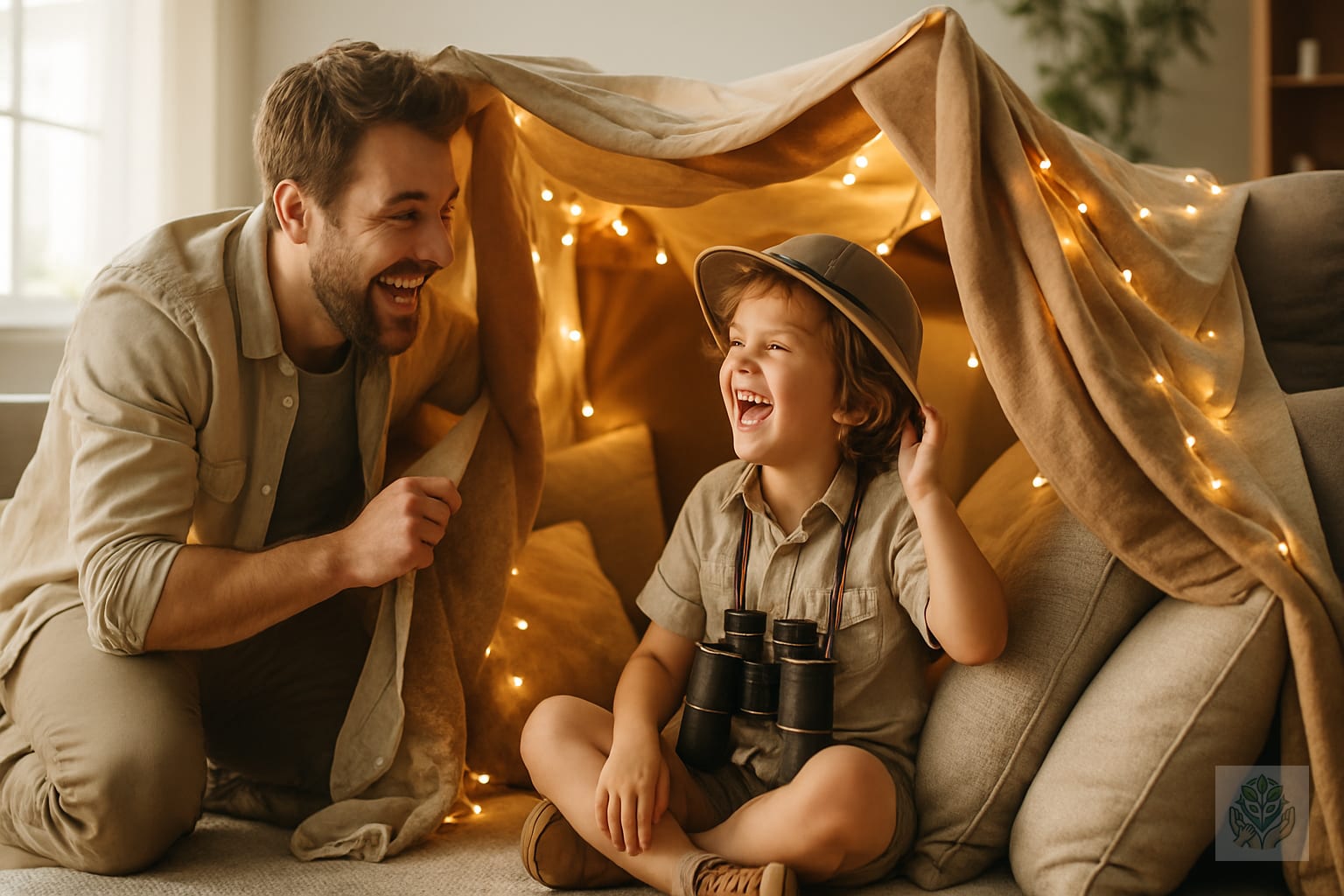
Start by establishing an official Base Camp or living room headquarters. Drape sheets over the couches to create massive blanket forts or mountains, and string up fairy lights to simulate starry skies or jungle canopies. These physical transformations signal to your children’s brains that normal household rules are temporarily suspended for an extraordinary experience.
To elevate the immersion, add special touches like homemade boarding passes, custom mission badges cut out of construction paper, or hand-drawn adventure maps. Handing your child a passport stamped with your living room coordinates makes the fantasy feel wonderfully real.
Step 4: Plan Immersive Activities and Games
Now that your space is transformed, it is time to fill the hours with engaging, hands-on play. Tailor your activities to match your chosen theme while keeping development and educational toys for kids for age-appropriateness in mind.
Here are a few versatile activity ideas that work for almost any theme:
- DIY Obstacle Courses: Use painter’s tape on the floor to create laser mazes, pillows to step across like hot lava, and chairs to crawl under. You can even incorporate items from a sports equipment guide for older children.
- Scavenger Hunts: Hide clues or themed tokens around the house, encouraging problem-solving and teamwork.
- Themed Arts and Crafts: Paint cardboard boxes into spaceships, craft binoculars out of toilet paper rolls, or design pirate eye patches.
- Interactive Role-Playing: Assign roles to family members, such as the expedition leader, the navigator, or the wildlife expert, and act out a rescue mission.
Step 5: Curate Adventure-Themed Snacks and Meals
Food is a central part of any great expedition. Turn ordinary snacks and meals into part of the entertainment by giving them fun, themed names and presentation styles. If you are doing a jungle theme, serve finger foods on banana leaves. If you are camping indoors, make indoor s’mores using the microwave.
One of the best activities of the day is involving kids directly in meal prep. Set up a DIY trail mix station where children can measure out nuts, dried fruit, and chocolate chips into their own expedition pouches. Cooking together teaches valuable life skills while fueling the next phase of your adventure with healthy snacks for kids. Let them knead pizza dough to look like continents for an Around the World theme.
Step 6: Wind Down and Reflect
Every great adventure eventually comes to a close. As the afternoon winds down, intentionally transition your family from high-energy play back to a state of calm relaxation. Turn off the bright lights, put on some soft ambient music, and shift into quiet storytelling or movie time.
Before the day officially ends, host an Adventure Debrief during dinner or right before bedtime. Ask each family member to share their absolute favorite moment of the day, the hardest challenge they overcame, and what theme they want to explore next time. This gentle reflection solidifies positive memory-making and helps children process the day’s excitement before drifting off to sleep.
Conclusion
Creating an epic family adventure day at home does not require perfection, elaborate theatrical sets, or endless energy. What matters most is the shared laughter, the imaginative play, and the intentional connection you build with your children. Embrace the messy living room fort, lean into the silly voices, and enjoy making memories right where you are.
What theme will you choose for your first at-home adventure? Drop a comment below and share your favorite ideas or ask any questions about planning your itinerary!
Frequently Asked Questions
What is a family adventure day at home?
It is a thoughtfully planned day where families transform their living space into a themed environment, using immersive games, imaginative play, and special meals to bond without leaving the house.
How do I choose an adventure theme for my kids?
Involve your children in a family meeting a few days prior. Write down three different concepts, such as a jungle safari or space exploration, and draw one out of a hat together.
What are some budget-friendly ways to decorate?
You can use items you already own, such as bedsheets for giant blanket forts, couch cushions for mountains, fairy lights for starry skies, and cardboard boxes from your recycling bin.
How can I keep the kids from getting tired or cranky?
Create a balanced itinerary that alternates between high-energy physical activities, like obstacle courses or scavenger hunts, and calm-down periods like quiet reading or movie time.
What are easy themed snack ideas?
Involve kids in preparing foods that match your theme, such as a DIY trail mix station, finger foods served on banana leaves for a jungle theme, or microwave s’mores for an indoor campout.
How should we end the adventure day?
Transition to a calm state with soft lighting and ambient music, and host an adventure debrief during dinner where everyone shares their favorite moments and challenges from the day.


