

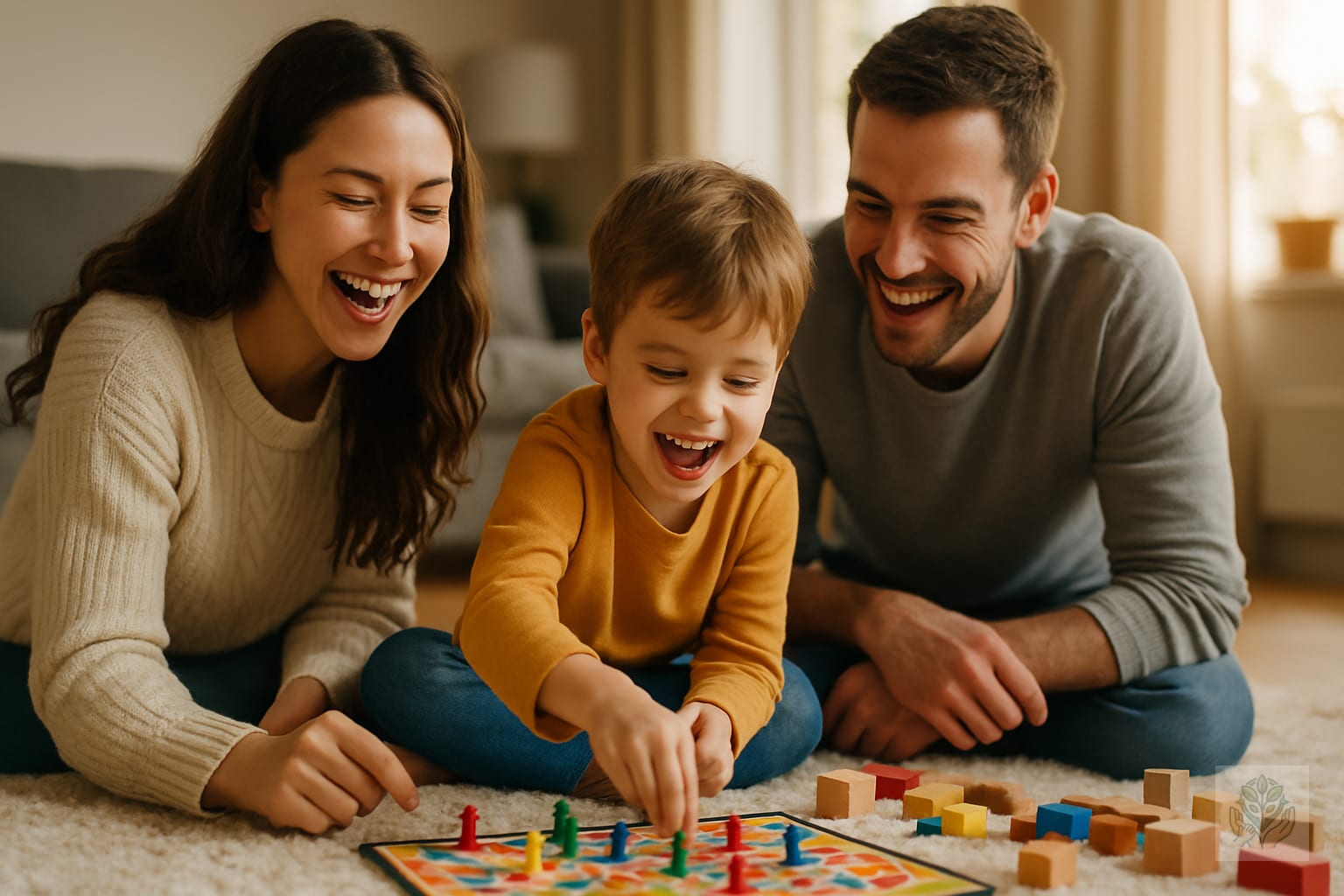
15 Engaging Family Game Night Ideas for Toddlers and Preschoolers
In the whirlwind of daily routines, finding meaningful ways to connect with your little ones can feel like a challenge. You are likely juggling work, chores, and the endless energy of your children. However, establishing a consistent family game night is one of the most effective ways to strengthen your bond while supporting early childhood development. For toddlers and preschoolers, play is their primary language, and structured games offer a unique opportunity to build lasting memories, as explored in our guide on why family bonding matters for young children.
Bringing family game night ideas into your home does not need to be complicated or time-consuming. In fact, at this age, simplicity is your best friend. By focusing on connection rather than the rulebook, you turn an ordinary evening into a developmental milestone. In this guide, we will explore how to set the stage for success and provide you with fifteen actionable game ideas that your little ones will love.
The Benefits of Game Night for Early Childhood Development
When children engage in tabletop or active play, they are doing much more than just having fun. They are actively wiring their brains for future success. Family game night is a secret weapon for social-emotional growth. When children learn to wait for their turn, they are practicing patience and impulse control, two critical skills for future school readiness. Playing with parents allows them to navigate these small social pressures in a safe and supportive environment.
Cognitive development also takes center stage during these moments. Many simple games require color recognition, counting, and pattern matching, which reinforce concepts they are learning in preschool. Additionally, games involving game pieces or dice improve fine motor skills. Moving a character across a board or holding a stack of cards helps refine the small muscles in the fingers and hands, which is essential for later writing tasks. If you want to build these skills further, check out our easy hand strengthening activities for preschoolers.
Setting the Stage: How to Host a Stress-Free Game Night
The success of a game night relies heavily on timing. If you try to introduce a new game right before the dreaded bedtime meltdown, you are setting the experience up for friction. Instead, try to host your family game night on a weekend afternoon or immediately following a calm snack time when energy levels are balanced. For more organization tips, see our guide on how to create a daily activity routine for preschoolers.
Keep the environment distraction-free. Put away tablets, turn off the television, and silence your phone. When children see that you are fully present and focused on the shared experience, they are more likely to stay engaged. Remember that the sweet spot for a toddler or preschooler is usually 20 to 30 minutes. Do not feel the need to finish an entire board game if interest is waning. It is far better to end on a high note while everyone is still happy.
Top Game Categories for Toddlers and Preschoolers
When selecting games, focus on three specific categories: cooperative, active, and simplified classics. Cooperative games are fantastic for this age group because they remove the pressure of winning or losing. Everyone works together to reach a common goal, such as getting characters home before the sun sets or feeding a hungry monster.
Active movement games are equally important. Preschoolers often struggle to sit still for long periods. Incorporating movement helps them get their wiggles out while still engaging in structured play. For more ways to keep them moving, try these easy movement activities for kids at home. Finally, do not hesitate to simplify classic games. If your child cannot handle complex rules, make up your own. The goal is to facilitate interaction, not to strictly adhere to the instructions on the box.
15 Game Night Ideas for Ages 2-5
Here are 15 actionable family game night ideas that are perfect for your toddler or preschooler:
- Hoot Owl Hoot: A classic cooperative game where players work together to get all the owls back to the nest before the sun rises.
- Feed the Woozle: A hilarious movement game where players feed a silly monster snacks using a spoon.
- Color Match Memory: Use standard memory cards but keep the number of pairs small to avoid overwhelming young minds.
- Indoor Bowling: Use empty plastic bottles and a soft ball to practice turn-taking and gross motor skills.
- Scavenger Hunt: Hide specific colored objects around the living room and ask your child to find all the red items.
- DIY Puzzles: Print a family photo on cardstock and cut it into four or five large, simple pieces.
- Freeze Dance: Play your child’s favorite song and have everyone dance until the music stops.
- Animal Charades: Act out simple animals and have the others guess what you are representing.
- Roll and Move: Create a simple DIY board game on a large sheet of paper where players move by rolling a color die.
- Balloon Volleyball: Keep a balloon in the air using only hands or soft taps, focusing on teamwork.
- Stacking Challenge: Use wooden blocks to see how high a tower you can build together before it topples over.
- Story Stones: Use stones painted with pictures to take turns building a collaborative story.
- Sorting Relay: Give your child a basket of mixed toys and ask them to sort them into different colored bins as fast as they can.
- Simon Says: A timeless classic that helps children listen carefully and follow directions.
- Animal Yoga: Use cards with pictures of animals and try to mimic their poses together.
Tips for Handling ‘I Want to Win’ and Frustration
It is perfectly normal for a preschooler to get upset when they do not win or when a game does not go their way. Their brains are still developing the ability to regulate big emotions. As a parent, your role is to model healthy sportsmanship. Celebrate effort rather than the result. Instead of saying, you won, try saying, I love how you kept trying even when that piece was tricky. For more help with tough moments, read about managing everyday behavior challenges in kids.
If your child experiences a meltdown, stay calm and offer validation. Say something like, I can see you are frustrated because you really wanted that piece to move. That makes sense. Once they are calm, redirect their attention to the fun you had during the process. If a game consistently leads to tears, put it away for a few weeks and try again when they have matured slightly.
Conclusion
Creating a family game night routine is about connection, not perfection. Do not worry if your child prefers to make up their own rules or if the game ends prematurely. What matters most is that you are showing up, laughing together, and building a foundation of shared interests. Start with one simple game this week and observe how your child responds. Over time, you will find a selection of favorites that everyone looks forward to. What is your family’s favorite way to play? Share your go-to game in the comments below! If you are looking for even more ways to enjoy quality time, explore our list of 50 family bonding ideas for creating lasting memories together.
Frequently Asked Questions
What are the best games for toddlers and preschoolers?
Cooperative games like Hoot Owl Hoot, simple memory matching games, active movement games like freeze dance, and basic sorting activities are ideal for young children.
How long should a family game night last with little kids?
The sweet spot for toddlers and preschoolers is usually 20 to 30 minutes. Keep it brief to maintain their interest and end on a high note.
How do I handle a toddler who gets upset about losing?
Choose cooperative games where everyone plays together. Model good sportsmanship, praise their effort rather than the outcome, and validate their big emotions.
When is the best time to host a game night with preschoolers?
Host game night on a weekend afternoon or after a calm snack time when energy levels are balanced and before the bedtime routine begins.
Why are game nights important for early childhood development?
Games help develop patience, turn-taking skills, fine motor control, color recognition, and social-emotional growth in a safe environment.
Can I modify rules for toddlers during board games?
Yes! Simplify the rules or make up your own. The primary goal at this age is connection and positive interaction rather than strictly following the box instructions.


