

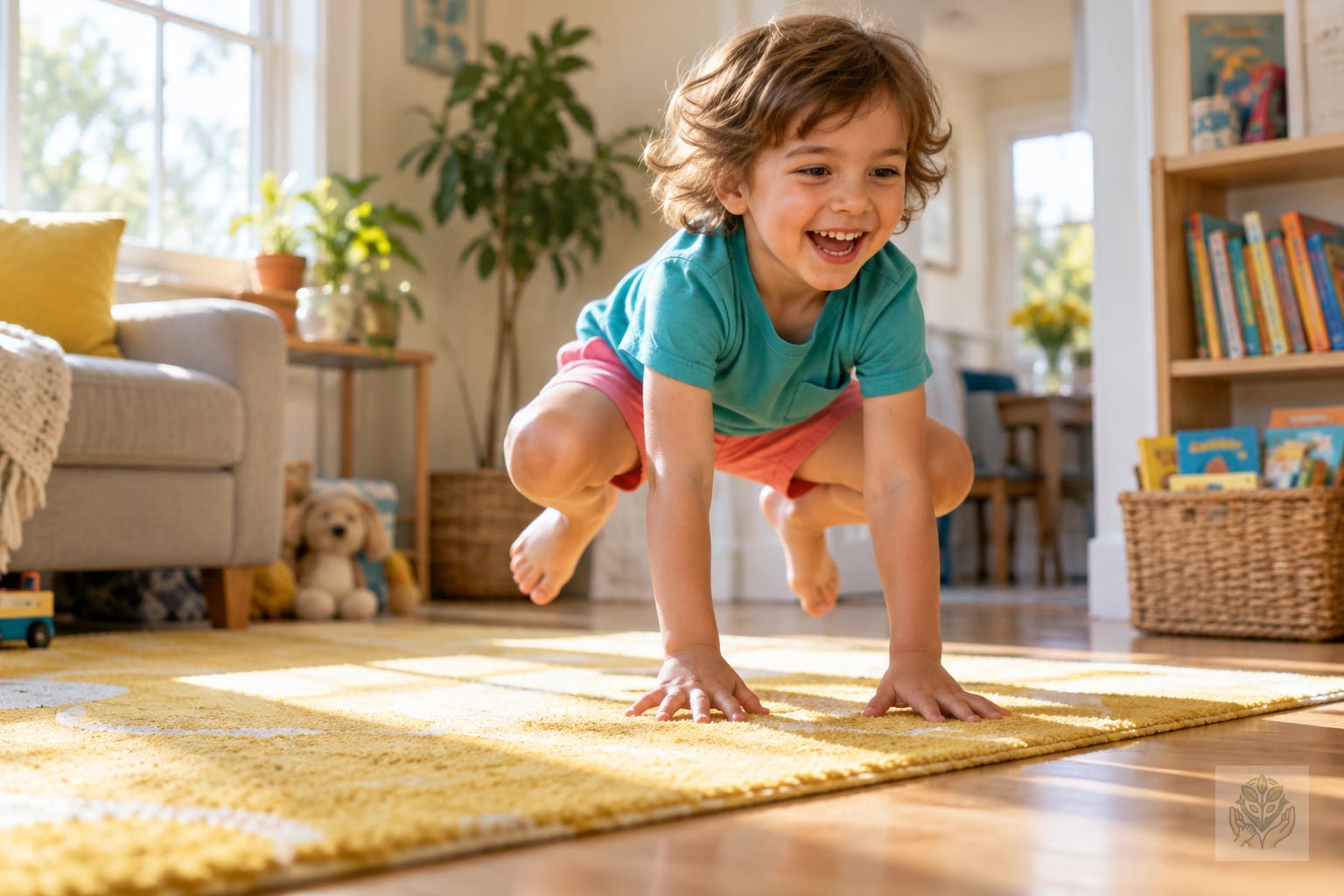
Wild and Wacky: Why Preschoolers Need Animal Walks
If you have ever spent a morning with a four-year-old, you already know that preschool energy is a renewable resource like no other. One minute they are quietly building with blocks, and the next they are leaping off the couch like pint-sized superheroes. As parents, finding healthy, constructive outlets for this boundless energy can feel like a daily marathon.
Enter animal walk exercises for preschoolers—a brilliantly simple, equipment-free way to get kids moving. These playful movement patterns turn physical education into an imaginative safari adventure right in your living room. Instead of nagging your child to sit still, you can channel their wiggles into purposeful play.
In this article, we will explore the developmental perks of these movements, share the top ten fun animal walks to try today, and offer creative ways to weave them into your daily routine. Whether you are looking for rainy-day activities or quick brain breaks, these exercises will have your whole family roaring, waddling, and hopping with joy.
Why Animal Movements Are a Secret Weapon for Child Development
To an adult, crawling around on all fours might just look like silly play. To a child development specialist, however, these movements are a goldmine for growing bodies and brains. Incorporating these playful routines into your child’s day supports foundational physical milestones. You can explore more ideas for rainy days in our guide to gross motor skills activities for kids.
First, animal walks are fantastic for building gross motor skills, balance, and bilateral coordination. When children use their arms and legs in cross-lateral patterns, they strengthen neural pathways between the left and right hemispheres of the brain. This coordination is essential for later academic skills like reading and writing.
Second, these activities provide heavy work, which delivers vital proprioceptive input to the joints and muscles. This heavy work helps kids develop core strength, stability, and spatial awareness. It is also an incredible way to burn off excess indoor energy safely, much like what you experience with engaging afternoon activities for preschoolers.
Finally, these movements are wonderful for boosting focus and self-regulation. If your child is bouncing off the walls or dragging their feet during transition times, a quick burst of heavy movement can reset their nervous system, preparing them for the next activity.
10 Fun Animal Walks to Try Today
Ready to turn your living room into a jungle? Try these ten engaging exercises that target different muscle groups while keeping the fun factor high.
- 1. The Crab Walk: Have your child sit on the floor, place their hands behind them, and lift their hips toward the sky. This classic move builds incredible core, shoulder, and leg strength.
- 2. The Bear Crawl: With hands and feet on the floor and knees lifted off the ground, kids march forward on hands and toes. This provides fantastic bilateral coordination and heavy work for the upper body.
- 3. The Frog Jump: Start in a deep squat with hands on the floor between the knees, then leap forward into the air with a loud ribbit. This builds explosive leg power and landing balance.
- 4. The Penguin Waddle: Keep knees straight, arms pinned to the sides, and waddle side to side. This silly walk challenges balance and stimulates vestibular input.
- 5. The Elephant Stomp: March heavily with straight arms dangling like trunks, stomping feet into the floor. This provides rhythm, grounding, and heavy joint compression.
- 6. The Bunny Hop: Keep feet together and hop across the room with hands held near the chest like paws. Great for leg strength and rhythm.
- 7. The Duck Walk: Squat down low and waddle forward while staying in a deep knee bend. This is a supreme burner for lower body endurance.
- 8. The Cheetah Run / Fast Paws: Run lightly on tiptoes while pumping the arms super fast. This burns cardio energy and builds agility.
- 9. The Snake Slither: Lie flat on the tummy and wiggle across the floor using upper body pulls. This targets core endurance and shoulder stability.
- 10. The Flamingo Balance: Stand tall and lift one leg up, balancing on the other while holding wings out wide. Unilateral balance practice at its finest.
Creative Ways to Keep Preschoolers Engaged
Even the most enthusiastic preschoolers can lose steam if an activity becomes repetitive. To keep things fresh, try embedding these movements into imaginative games and daily routines. You can also mix in some creative follow-the-leader games to keep their attention.
Set up an obstacle course in the hallway or backyard by creating a Safari Adventure path. Place painter’s tape on the floor and tell kids they must crab walk across the river, bear crawl through the cave, and frog jump over the lily pads.
Use movement games during transition times. When it is time to clean up toys, announce that everyone must move like cheetahs to put the blocks away. This playful framing reduces resistance and turns chores into a game.
Incorporate walks into storytime. When reading a favorite picture book about farm animals or jungle creatures, pause to mimic the animals as they appear on the pages. For recommendations on building a reading habit, see our guide on how to build a home library for young children.
Play a round of freeze dance with a twist. Play lively music and let kids dance freely, but when the music stops, call out a specific animal pose they must hold until the music starts again. If your child enjoys rhythm and beats, you might also like trying music and movement games for toddlers.
Supporting Sensory Processing and Self-Regulation
Beyond building physical strength, these activities act as powerful regulatory tools. Heavy work exercises like pushing, pulling, crawling, and stomping send calming signals to the central nervous system.
If you notice your child seeking out constant movement, crashing into furniture, or struggling to sit still, they may have a high threshold for proprioceptive input. Integrating structured animal walks into their daily routine can satisfy this sensory craving in a safe, constructive manner.
Conversely, if your child is sluggish or lethargic after a long day of screen time or preschool, high-energy walks can gently wake up their muscles and boost their mood. For children with physical limitations or lower muscle tone, these movements can be easily adapted. Allow them to perform bear crawls on an incline, such as up a soft wedge or sofa cushion, to reduce upper body strain while still reaping the developmental rewards.
Get Moving and Roaring Today!
Incorporating animal walk exercises into your preschooler’s routine is a win-win for the whole family. Not only do these playful activities burn off excess energy and build crucial gross motor skills, but they also create moments of genuine connection and laughter.
Remember that you do not need fancy equipment or a large space to get started. Just a few minutes of waddling, stomping, and hopping can completely transform your child’s day. We would love to hear from you. What is your child’s absolute favorite animal walk? Drop a comment below and share your family’s safari adventures!
Frequently Asked Questions
What are animal walk exercises for preschoolers?
Animal walk exercises for preschoolers are fun, imaginative movement patterns that mimic how animals move, such as bear crawling, crab walking, and frog jumping, designed to build strength and coordination.
How do animal walks help child development?
These movements build gross motor skills, core strength, balance, and bilateral coordination by strengthening neural pathways between both hemispheres of the brain through cross-lateral patterns.
What is heavy work in sensory processing?
Heavy work refers to activities like pushing, pulling, and crawling that provide deep pressure and proprioceptive input to muscles and joints, helping to calm and regulate the nervous system.
What are some easy animal walks to try at home?
Popular and easy animal walks include the crab walk, bear crawl, frog jump, elephant stomp, penguin waddle, and bunny hop, all of which require zero equipment.
Can animal walks help kids who have trouble sitting still?
Yes, a quick burst of heavy movement acts as a natural reset for the nervous system, helping energetic or restless children burn off excess energy and improve focus.
How can I keep my preschooler engaged in animal walks?
You can keep activities fresh by setting up indoor obstacle courses, playing freeze dance with animal poses, or incorporating walks into storytime and cleanup routines.