

10 Fun Pencil Grip Activities for Toddlers and Preschoolers to Boost Fine Motor Skills
Watching your toddler scribble their first masterpiece is a milestone every parent cherishes. Beyond the cute art, those early marks are actually the foundations of literacy. Developing an effective pencil grip is a complex journey that begins long before a child ever picks up a formal writing tool. By incorporating fun pencil grip activities for toddlers and preschoolers into your daily routine, you can support their development in a way that feels like play rather than work.
We often focus on the writing tool itself, but the journey to a mature grasp involves the entire arm, shoulder, and hand. Children typically progress from a primitive palmar grasp—where the whole hand wraps around a tool—to the sophisticated dynamic tripod grasp used by adults. This development should be gradual, stress-free, and rooted in play. Forced writing before a child is physically ready can lead to frustration, so let us explore how to build these muscles naturally.
Understanding Hand Development Stages in Young Children
To support your child, it helps to understand how they develop. The pincer grasp, which involves using the thumb and index finger to pick up small objects, is the essential precursor to holding a pencil correctly. When you see your toddler picking up a Cheerio or a small button, they are laying the groundwork for future handwriting.
Many parents wonder if their child is behind. It is important to remember that every child follows their own timeline. While some toddlers show interest in holding crayons by age two, others may not show consistent interest until closer to four. Focus on readiness signs, such as an interest in drawing or manipulating small objects, rather than comparing them to peers. The goal is to strengthen the hand muscles so that when the time comes to write, the physical exertion is minimal.
5 Essential Hand-Strengthening Exercises Before Writing
Before worrying about how they hold a pen, focus on building the intrinsic muscles of the hand and the stability of the shoulder. Strong muscles make the act of writing much easier.
- Playdough and Putty: Squishing, rolling, and pulling playdough provides excellent resistance training for little hands. Encourage your child to hide small beads inside a ball of dough for them to dig out. Discover more tactile inspiration with our 15 fun sensory bin fillers for toddlers.
- Tweezers and Tongs: Transferring pom-poms or dry pasta from one bowl to another using kid-sized tongs is a perfect way to isolate the fingers used in a proper grip.
- Vertical Surface Play: Tape a piece of paper to the wall or use an easel. Working on a vertical surface forces the wrist into an extended position and engages the shoulder muscles, both of which are crucial for stable handwriting.
- Spray Bottle Games: A spray bottle filled with water is an incredible tool. Using a spray bottle to water plants or clean windows requires significant finger isolation and strength.
- Beading and Lacing: Threading beads onto a string or using lacing cards requires precise coordination between the eyes and hands. Explore other ideas in our 10 fun DIY crafts that strengthen hand-eye coordination in kids.
10 Play-Based Pencil Grip Activities for Toddlers and Preschoolers
When you are ready to introduce writing tools, try these engaging activities that make learning natural and fun.
- Broken Crayon Art: Give your child small, broken crayon pieces. Because they are short, the child is naturally forced to use a pincer grasp rather than a whole-hand fist grasp.
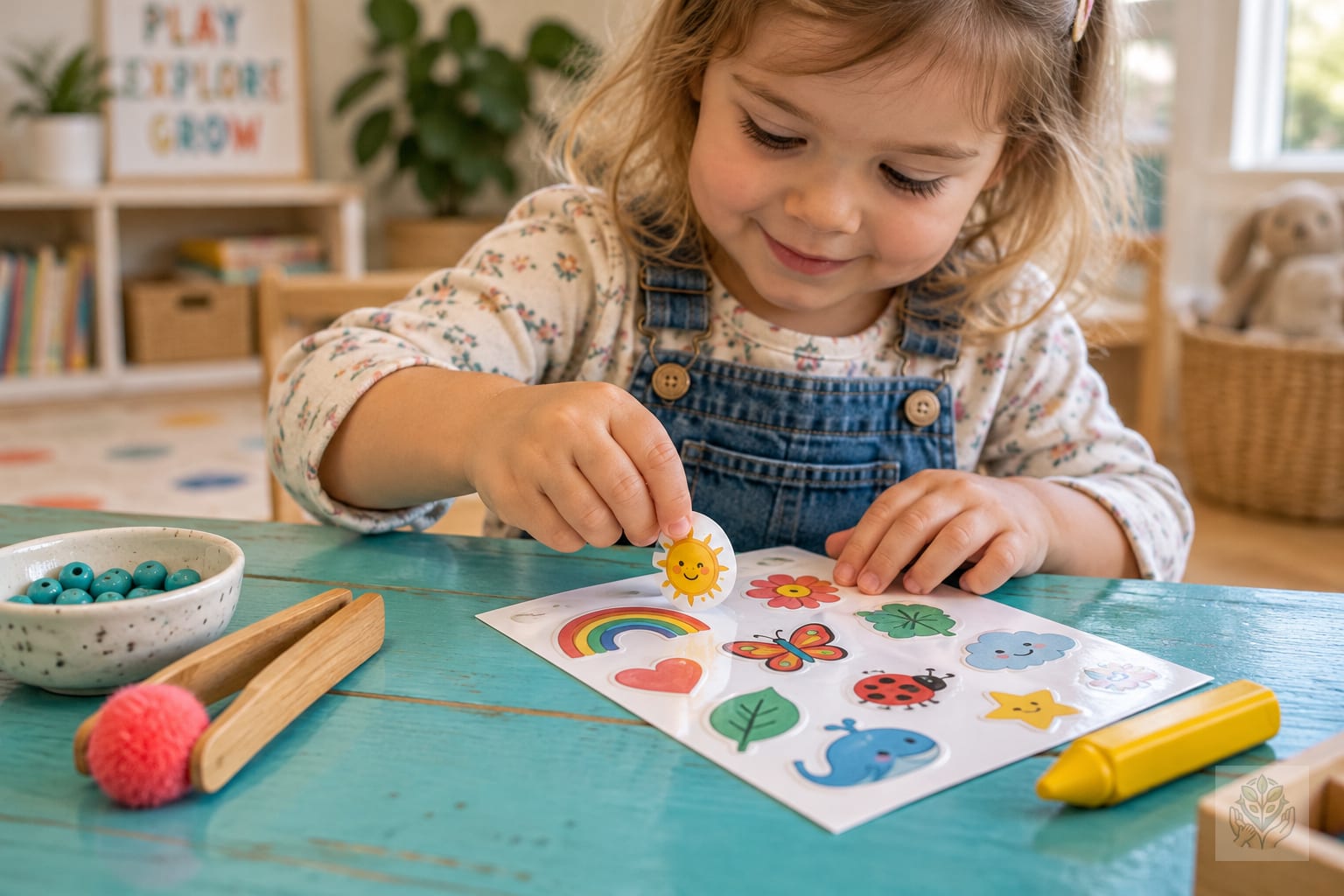
- Sticker Peeling: Peeling stickers off a sheet and placing them onto a page is an excellent way to refine finger dexterity.
- Cotton Swab Painting: Use cotton swabs instead of brushes. The thin handle encourages the child to hold the tool with their fingers rather than their palm.
- Small Chalk Pieces: Like broken crayons, small stubs of sidewalk chalk encourage a more precise hold while allowing for large, expressive movements.
- Connecting Dots with Pipe Cleaners: Use pipe cleaners to create shapes or follow lines. This adds a tactile sensory element to drawing practice.
- Poke Art: Provide a piece of foam and a toothpick. Let your child poke holes in the foam to create designs or patterns.
- Salt or Sensory Sand Trays: Let your child trace letters or shapes in a tray filled with salt or sand. This allows for low-pressure practice without the need for a pencil. You can learn more about related techniques in our guide on how to improve pencil grip in young children.
- Clothespin Games: Use clothespins to pick up pom-poms and move them into a sorting tray. This is one of the best ways to build the exact strength needed for holding a pencil.
- Finger Socks or Pencil Weights: Sometimes, a little bit of weight on the pencil can provide sensory feedback that helps children understand where to hold the tool.
- Bubble Wrap Popping: It sounds simple, but popping bubble wrap with the thumb and index finger is a fantastic, high-engagement workout for tiny muscles.
Tools and Tricks: When to Use Pencil Grips
Rubber pencil grips can be helpful tools, but they are not always necessary. If your child is struggling to maintain a grip, a soft, molded grip can provide a visual and tactile guide. However, be cautious not to become over-reliant on them. Sometimes, a DIY hack works better—try wrapping a thick rubber band around the pencil to create a small “bump” that acts as a natural guide for the fingers.
Choosing the right size writing tool is also vital. Avoid using thin, standard-sized pencils for toddlers. Opt for triangular-shaped crayons or thick, chubby markers. The larger diameter is much easier for small, developing hands to grasp and control.
Common Mistakes Parents Make (And How to Fix Them)
The most common mistake is over-correcting. If you constantly tell your child, “Move your thumb there,” or “Hold it like this,” you risk killing their enthusiasm for drawing. Writing should be a creative outlet, not a chore. If you notice an awkward grip, instead of correcting it verbally, provide more strengthening activities like those listed above. Often, the grip will naturally improve as their muscles become stronger.
Another mistake is ignoring core and shoulder stability. If a child is slouching or hanging off their chair, they lack the physical foundation to control their hand movements. You can support their physical foundation with ideas from our collection of 15 fun indoor activities that build gross motor skills for toddlers & kids.
Conclusion
Improving fine motor skills is a marathon, not a sprint. By focusing on consistent, play-based activities, you provide your child with the physical tools they need for academic success without the pressure of formal lessons. Remember that these fun pencil grip activities for toddlers and preschoolers are designed to build confidence, not just technique.
If you find that your child is having extreme difficulty with basic coordination, or if you have concerns about their development, do not hesitate to reach out to an Occupational Therapist. They can provide personalized strategies that fit your child’s unique needs. Above all, keep it light, keep it fun, and celebrate every little scribble along the way.
Frequently Asked Questions
What is the best age to start pencil grip activities?
Children can start fine motor and pencil grip activities as toddlers, around age two. The focus should be on play-based movements that build hand strength before formal writing begins.
How can I help my preschooler hold a pencil correctly?
Use short crayons, small chalk pieces, or kid-sized tongs. These items naturally encourage a pincer grasp instead of a whole-hand fist grip, making the transition easier.
Are rubber pencil grips necessary for young children?
Rubber grips are not always necessary, but they can help children who struggle with finger placement. Thick triangular pencils and crayons are often better for beginners.
What are signs of handwriting readiness in toddlers?
Readiness signs include an interest in drawing, the ability to pick up tiny objects using a pincer grasp, and enjoying activities like peeling stickers or using playdough.
Why is vertical surface play important for writing?
Working on a vertical surface like an easel or wall-mounted paper extends the wrist and engages shoulder muscles, which are crucial for stable handwriting.
When should I consult an occupational therapist about pencil grip?
Consult an occupational therapist if your child experiences extreme difficulty with basic hand coordination, muscle fatigue, or shows persistent frustration during drawing tasks.


