

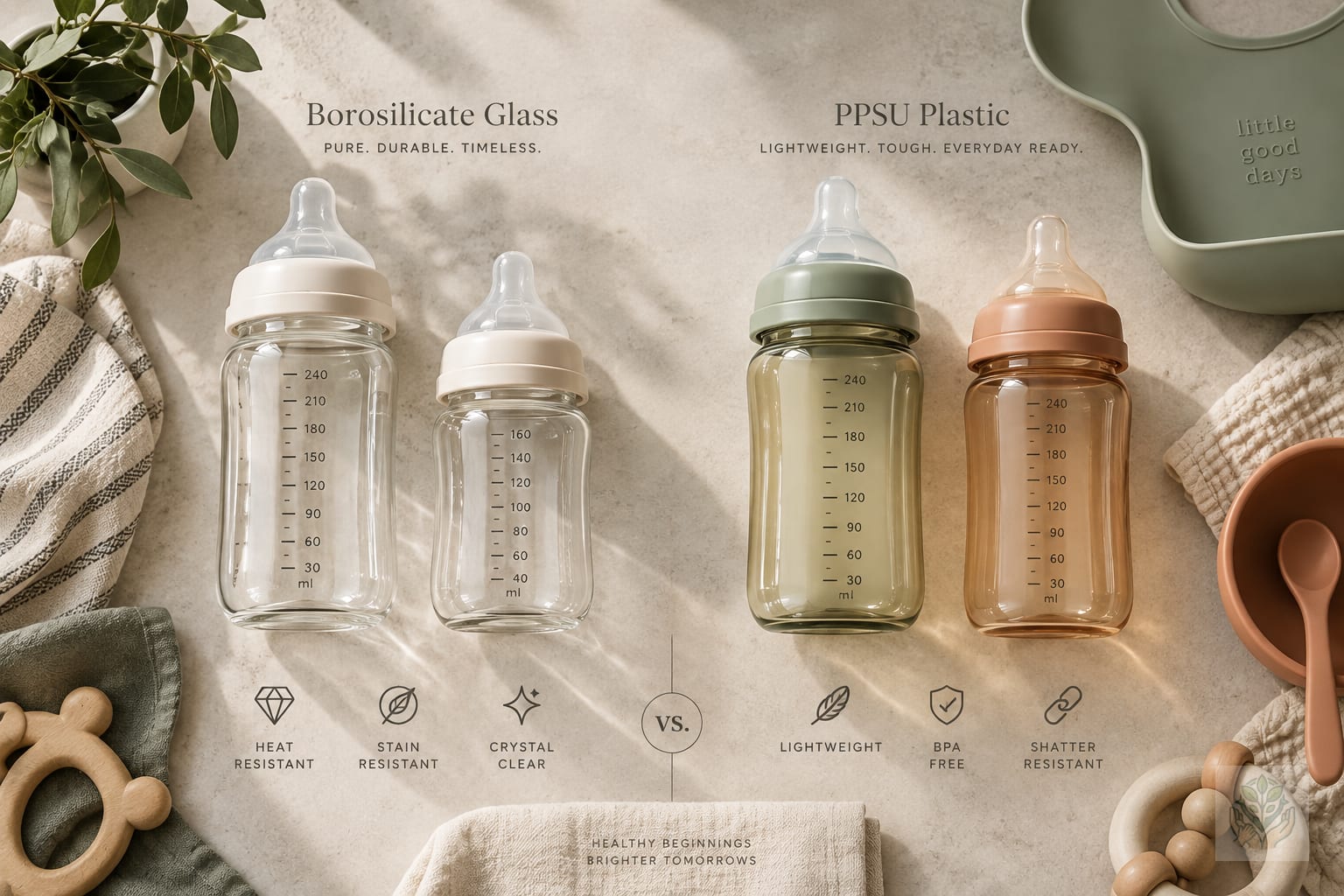
Introduction: The Great Baby Bottle Debate
Preparing for a new baby brings an avalanche of decisions. Standing in the feeding aisle or scrolling through online registries, you might find yourself paralyzed by the sheer volume of choices. Among the most fundamental decisions you will make is choosing your baby gear essentials, specifically the feeding vessels.
When it comes to glass vs. plastic baby bottles, the debate can feel overwhelming. Traditional glass has made a massive comeback among health-conscious families, while modern plastic bottles remain a lightweight, budget-friendly staple in nurseries everywhere.
While both materials have their unique merits, the right choice ultimately depends on your family priorities regarding safety, durability, daily lifestyle, and feeding routines. Let us break down everything you need to know to make the best decision for your little one.
Plastic Baby Bottles: Everything You Need to Know
Modern baby bottle plastics have evolved significantly over the years. Gone are the days of worrying about standard toxic chemicals; today’s market features advanced materials like polypropylene (PP) and polyphenylsulfone (PPSU) that are strictly regulated and certified BPA-free.
Plastic bottles boast several distinct advantages that make them a popular choice for everyday parenting. They are remarkably lightweight, completely shatterproof, and budget-friendly. This makes them exceptionally convenient for tired parents managing 3:00 AM feedings, as well as for older babies learning to hold their own bottles without risking an accidental drop and breakage.
However, plastic is not without its drawbacks. Over time and with repeated washing, plastic bottles develop microscopic scratches. These tiny crevices can harbor bacteria, making rigorous cleaning essential. Additionally, plastic degrades with frequent heat sterilization, meaning you will need to replace plastic bottles every few months. There are also ongoing discussions regarding potential chemical leaching, even in BPA-free plastics, when exposed to high heat.
Glass Baby Bottles: Are They Worth the Hype?
Glass baby bottles have captured the attention of pediatric health advocates and eco-friendly parents alike. Crafted typically from medical-grade, thermal-shock-resistant borosilicate glass, these bottles are designed to withstand extreme temperature changes without cracking or shattering.
The primary advantage of glass is its pristine purity. Glass is 100 percent non-toxic and chemical-free, meaning zero risk of BPA, BPS, phthalates, or microplastics leaching into your baby’s milk. Glass is also highly durable against scratches, does not absorb odors or food colors, and can be sterilized repeatedly without degrading. For families looking to reduce their environmental footprint, glass is an investment that lasts for years and can even be passed down to younger siblings.
On the flip side, glass has a few notable disadvantages. Glass bottles are inherently heavier, which can tire tiny hands attempting to self-feed. There is also the obvious risk of shattering if dropped on hard nursery floors or kitchen tiles, and they carry a higher upfront cost compared to their plastic counterparts.
Glass vs. Plastic Baby Bottles: Head-to-Head Comparison
To help you weigh your options effectively, let us look at how glass and plastic stack up across four essential categories:
- Safety and Health: Glass wins decisively for purity. It is entirely inert and chemical-free. While modern plastic is BPA-free, recent scientific studies suggest heated plastic can release microparticles.
- Durability and Longevity: Glass lasts indefinitely if treated with care and resists scratching entirely. Plastic degrades, scratches easily, and requires regular replacement every three to six months.
- Weight and Usability: Plastic is light, ergonomic, and easy for babies to grip. Glass is heavier, though silicone sleeves can vastly improve grip and provide minor drop protection.
- Cost and Value: Plastic offers a low initial investment. Glass costs more upfront, but its longevity means you will not need to buy replacements down the road.
Safety First: What Science Says About Microplastics and Chemicals
When researching baby bottle safety, parents naturally focus on what touches their baby’s formula or breast milk. Recent scientific studies have highlighted that warming milk inside plastic bottles can release millions of microplastic particles into the liquid.
While regulatory bodies maintain that these levels fall within safety margins, many pediatricians and wellness experts recommend minimizing infant exposure to microplastics and synthetic chemicals whenever possible. This caution is a primary driver behind the surge in popularity of glass baby bottles. You can find more expert insights on infant feeding tools in our guide to the best baby bottles for breastfed and formula-fed babies.
If you choose to use plastic bottles, you can still maintain high safety standards. Opt for high-quality PPSU or PP plastics, wash them gently using non-abrasive sponges, avoid microwaving milk directly in the bottle, and commit to replacing your plastic bottles every three to six months.
Which Should You Choose? Factors to Help You Decide
Selecting the right bottle ultimately comes down to your personal lifestyle and daily routine. Consider these practical factors before making your final purchase:
- Lifestyle and Travel: If you are constantly on the go, packing diaper bags, and running errands, lightweight, shatterproof plastic bottles offer peace of mind. If you feed mostly at home, glass is an effortless addition to your routine.
- Your Baby’s Developmental Stage: Newborns do not hold their own bottles, making the newborn phase an ideal time to utilize glass. As your infant grows into an active toddler eager to hold the bottle independently, transitioning to lightweight plastic or a silicone-sleeved glass bottle is often much easier. For guidance on handling your newborn safely during early feeding sessions, check out our beginner’s guide on how to hold a newborn baby safely and comfortably.
- Budget Constraints: If you need to keep initial baby registry costs low, plastic bottles provide immediate affordability. If you prefer a buy-it-for-life approach, allocating budget toward glass saves money over the long term.
The Compromise: Can You Use Both?
You do not necessarily have to choose just one camp in the glass vs. plastic baby bottles debate. Many experienced parents adopt a hybrid approach that offers the best of both worlds.
A popular strategy is keeping heavy-duty glass bottles at home for daytime and nighttime kitchen feedings where breakage risk is lower. For travel, daycare, and outings, parents often switch to lightweight plastic or wrap their glass bottles in protective silicone sleeves. To ensure your nursery is fully prepared for all aspects of baby care, review our recommendations for creating a safe and comfortable nursery.
If you decide to mix and match, rest assured that most babies easily adapt to different bottle materials, provided the nipple flow and shape remain consistent and comforting to them. When designing your feeding and sleeping spaces, you may also want to explore our checklist of essential sleep items every baby nursery needs.
Conclusion: Making the Final Decision
Choosing between glass and plastic baby bottles ultimately boils down to what matters most for your family. If ultimate chemical purity, zero microplastics, and long-term durability are your top priorities, glass is the undisputed winner. If you value lightweight convenience, affordability, and shatterproof peace of mind, modern plastics will serve your family wonderfully.
Remember that there is no single right answer, only the choice that best supports your parenting journey and daily rhythm. As your baby grows and you transition away from bottles, you can also consult our tips on choosing the right shoes for toddlers for your next big parenting milestone. We would love to hear from you! Which bottle type do you prefer for your little one, and what helped you make your decision? Let us know in the comments below!
Frequently Asked Questions
Are plastic baby bottles safe for newborns?
Yes, modern plastic baby bottles sold today are strictly regulated, certified BPA-free, and made from food-grade materials like polypropylene or PPSU, making them safe for daily use.
Do glass baby bottles break easily?
Most quality glass baby bottles are made from thermal-shock-resistant borosilicate glass, which is surprisingly durable, though they can still shatter if dropped onto hard surfaces.
How often should you replace plastic baby bottles?
Plastic baby bottles should typically be replaced every three to six months because frequent washing and heat sterilization cause microscopic scratches that can harbor bacteria.
Do plastic bottles release microplastics?
Recent studies suggest that warming milk or liquids inside plastic baby bottles can release trace microplastic particles, which is why many parents prefer using glass.
Can I use both glass and plastic baby bottles?
Many parents use a hybrid approach, keeping glass bottles for home use and lightweight plastic bottles for travel, daycare, and outings.
Which bottle type is better for traveling?
Plastic baby bottles are generally better for travel because they are lightweight, shatterproof, and easy to pack in diaper bags without worry.