
Healthy Snack Ideas for Toddlers and Preschoolers
Introduction
If you share your home with a toddler or a preschooler, you likely know the drill. Just one hour after a hearty breakfast, your little one is tugging at your shirt, pointing toward the pantry, and asking for food. The constant request for food can feel like a daily marathon. Providing healthy snack ideas for toddlers and preschoolers is a vital part of parenting young children because their bodies are growing rapidly, yet their physical stomach capacities remain quite small.
Because small tummies cannot hold large volumes of food at one time, they cannot always eat enough during traditional meal times to fuel their high energy levels. Strategic snacking bridges the gap between meals, preventing blood sugar crashes and epic meltdowns. The secret to a great snack is simple: combining protein with fiber or healthy fats. This powerful nutritional combination provides sustained energy and keeps your child satisfied until their next meal.
What Makes a Good Snack for Toddlers and Preschoolers?
When curating snacks for young children, striking the right nutritional balance is essential. Rather than offering empty carbohydrates that cause quick energy spikes followed by sudden fatigue, aim for mini-meals. Combining food groups stabilizes blood sugar and supports healthy brain development. For example, pairing a fruit with a source of protein or healthy fat creates a well-rounded bite. For more inspiration on fueling your little ones right, check out our guide on healthy breakfast ideas for children’s immune support.
Portion control is another critical factor. A toddler snack should not look like a full meal. Keep portions appropriately sized so your child still arrives at the dinner table with a healthy appetite. As a general rule, a snack should be about a quarter of the size of a regular meal. Always keep safety top of mind, especially for kids under the age of four. Avoid common choking hazards such as whole grapes, popcorn, whole nuts, round hot dog slices, and hard candies. Always cut grapes lengthwise and modify textures to suit your child’s developmental chewing skills.
Quick & Easy Fruit and Veggie Snack Ideas
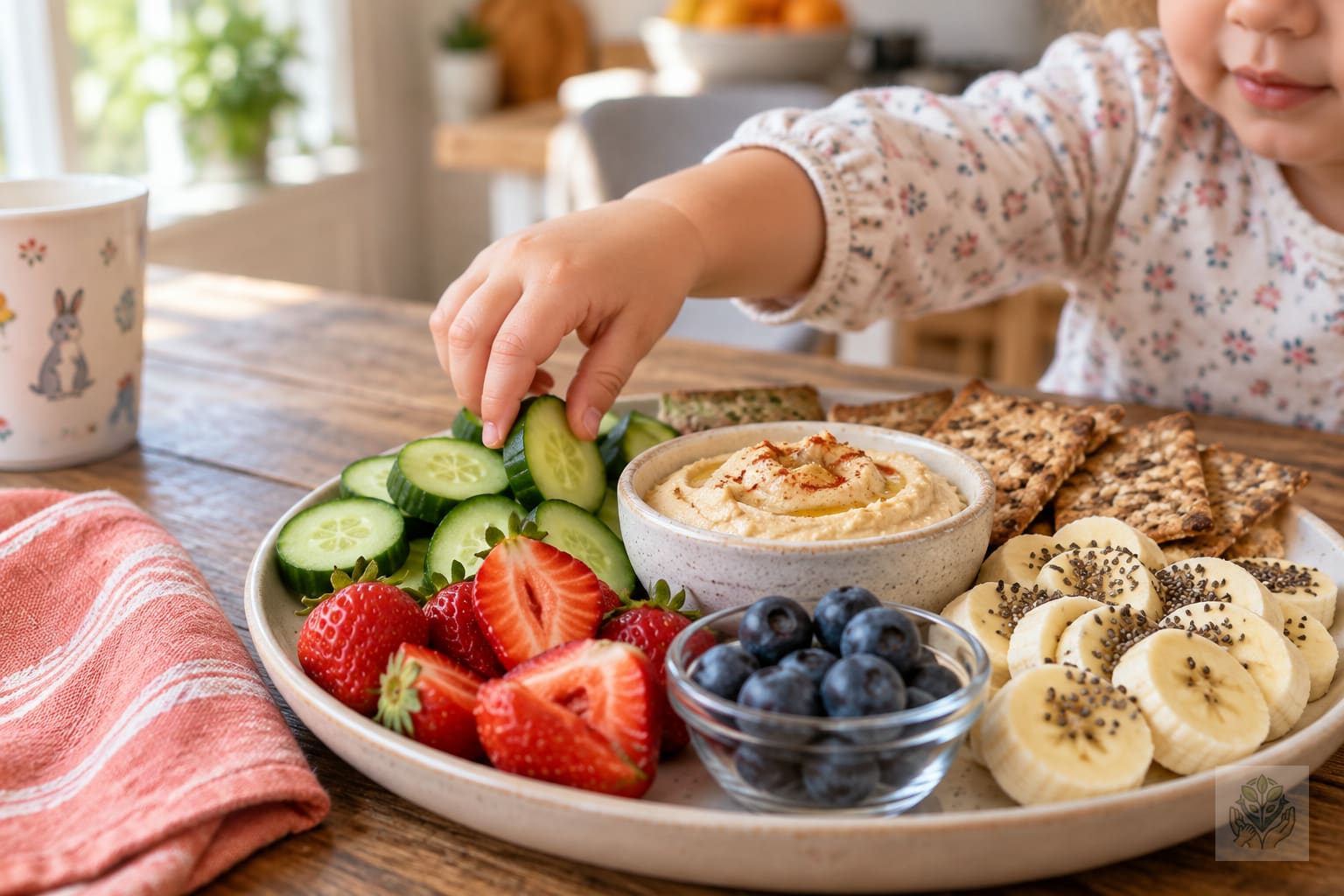
Fruits and vegetables provide essential vitamins, minerals, and hydration, but getting young children to eat them can sometimes require a little creativity. Presenting produce in fun, visually appealing ways transforms healthy eating into a delightful experience.
- Apple donuts: Slice apples horizontally into rounds, core out the center seeds, spread a thin layer of nut butter, and sprinkle with hemp seeds.
- Fun berry and yogurt parfaits: Layer Greek yogurt with mixed berries and a small sprinkle of granola in a mini cup.
- Banana sushi rolls: Spread sunflower seed butter onto a whole banana, roll it in unsweetened coconut flakes or chia seeds, and slice into bite-sized rounds.
- Cucumber coins with dip: Serve crisp cucumber slices alongside a mild hummus or cream cheese for dipping.
Protein-Packed Snacks to Keep Them Full
Protein is the building block of growth and plays a massive role in keeping hunger at bay. Incorporating protein-rich options into your daily routine helps maintain steady energy during busy playdates or preschool afternoons. If you need portable options for outdoor adventures, you can also explore our tips on the best snacks and drinks for children’s bike rides.
- Hard-boiled eggs: Slice them into rounds or use small cookie cutters to create fun animal shapes.
- Cheese and crackers: Pair whole-grain crackers with cubes of cheddar, mozzarella, or colby-jack cheese.
- Deli roll-ups: Roll slices of turkey breast around a thin cheese stick or avocado slice.
- Edamame pods: Steam young edamame pods and let preschoolers have fun popping the beans out of their shells.
No-Bake Energy Bites and Muffins
Baking from scratch with a toddler underfoot can feel overwhelming, which is why no-bake recipes and make-ahead items are absolute lifesavers for busy parents. These wholesome options can be stored in the refrigerator or freezer for grab-and-go convenience.
- 3-ingredient oatmeal banana muffins: Mash ripe bananas, mix with rolled oats and eggs, and bake in mini muffin tins.
- No-bake peanut butter and oat energy balls: Combine rolled oats, peanut butter, and a touch of honey or maple syrup, then roll into bite-sized spheres.
- Mini whole-wheat pancakes: Make a batch on the weekend, freeze them, and pop them into the toaster for a quick afternoon snack.
Fun & Creative Finger Foods for Picky Eaters
Presentation matters immensely to toddlers and preschoolers. When food looks playful and interactive, children are far more likely to engage with it willingly.
- Cookie cutter sandwiches: Use small metal cookie cutters to transform ordinary cheese sandwiches or quesadillas into stars, dinosaurs, or hearts.
- Ants on a log variations: Spread cream cheese or sunflower seed butter inside celery sticks or banana halves, then top with raisins or chia seeds.
- Mini rice cakes with avocado: Mash ripe avocado with a pinch of salt and spread it generously over mini brown rice cakes.
Tips for Dealing with Picky Eaters at Snack Time
Feeding a selective eater can test the patience of any parent. Fortunately, shifting your approach can dramatically reduce mealtime and snack time stress. Involving your children in the snack-making process gives them a sense of ownership. Let them wash berries, stir batter, or choose which vegetable sticks go on their plate. For more comprehensive strategies, read our guide on how to plan healthy meals for picky eaters.
Adopt the popular Division of Responsibility approach in feeding, pioneered by the Ellyn Satter Institute. Your job as the parent is to decide what food is offered, when it is offered, and where it is offered. Your child’s job is to decide whether they want to eat it and how much of it they will consume. Respecting their internal hunger cues prevents power struggles. Always present foods in new, creative ways without forcing or pressuring them to take a bite. If behavioral challenges persist beyond the dining table, you might find helpful advice in our gentle parenting resource on how to manage defiant behavior in preschoolers.
Conclusion
Navigating snack time does not have to be a source of daily frustration. By keeping your offerings simple, nutrient-dense, and balanced with protein and healthy fats, you can easily fuel your growing child throughout the day. Utilizing quick healthy snack ideas for toddlers and preschoolers ensures that you are always prepared for those sudden energy crashes while encouraging lifelong positive eating habits. For more everyday parenting ideas and engaging routines, explore our collection of morning learning activities for young children.
What is your child’s absolute favorite go-to healthy snack? Share your best tips and ideas in the comments below to help inspire other parents in our community!
Frequently Asked Questions
How many snacks should a toddler eat per day?
Most toddlers benefit from two to three small snacks per day, typically mid-morning and mid-afternoon, to maintain steady energy levels between meals.
What is the best nutritional combination for a toddler snack?
The best snacks combine protein or healthy fats with fiber, such as apple slices with nut butter or Greek yogurt with berries, to keep kids full longer.
How can I handle a picky eater during snack time?
Involve your child in choosing or preparing the snack, offer small portions, and avoid pressuring them to eat to encourage a positive relationship with food.
What are some choking hazards to avoid for kids under four?
Avoid whole grapes, popcorn, whole nuts, round hot dog slices, and hard candies. Always cut round foods lengthwise and modify textures for safety.
Why are afternoon snacks so important for preschoolers?
Preschoolers use a tremendous amount of energy playing and learning. Afternoon snacks bridge the gap between lunch and dinner, preventing blood sugar crashes and meltdowns.
Can I prep toddler snacks in advance?
Yes! Many healthy snacks like no-bake energy bites, muffins, hard-boiled eggs, and chopped veggies can be prepared ahead of time for grab-and-go convenience.