

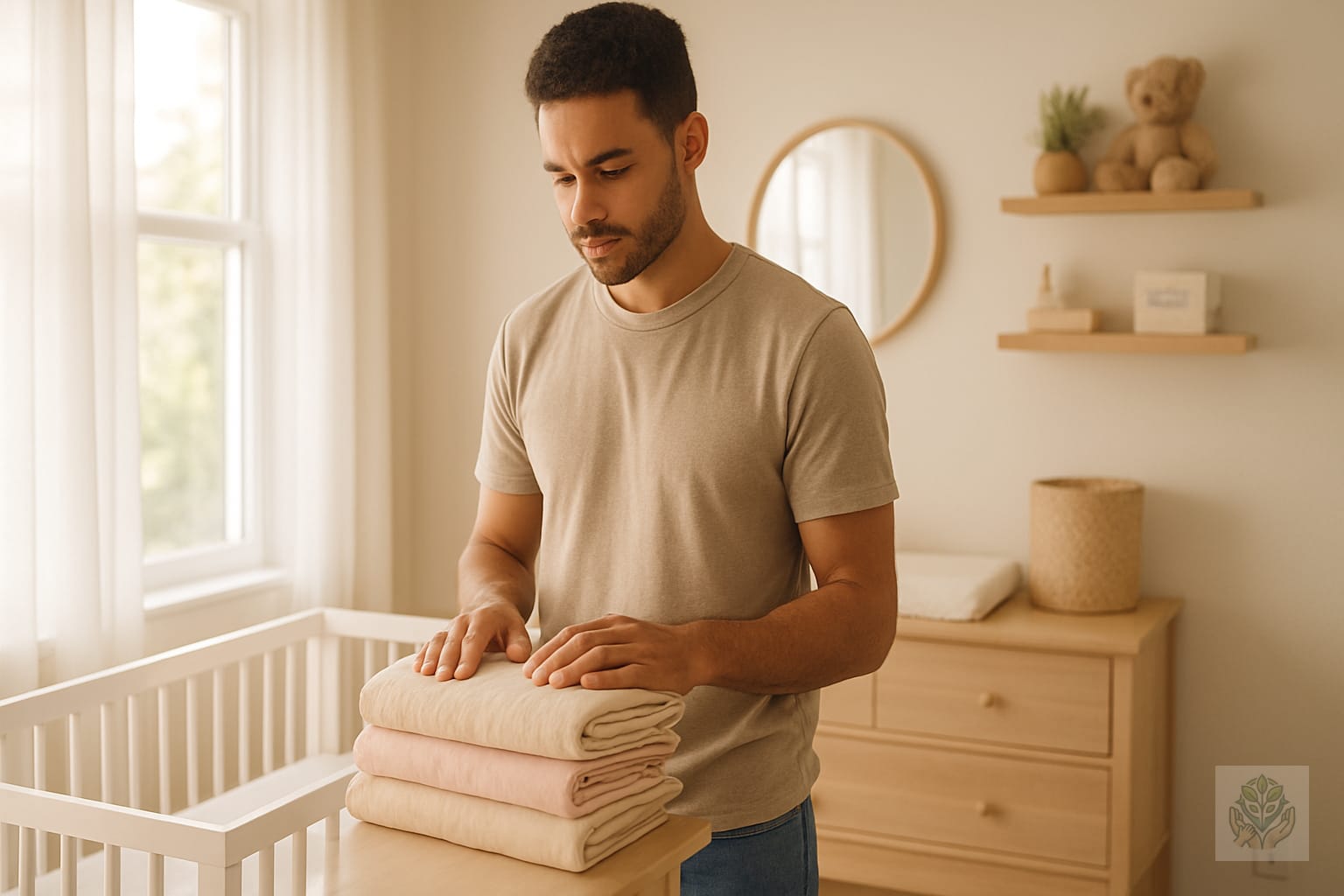
How Many Crib Sheets Do You Really Need? A New Parent’s Guide
Building a baby registry is an exercise in balancing excitement with practicality. As you browse through endless aisles of adorable nursery decor and essential gear, you will eventually reach the bedding section. It is easy to get caught up in the patterns and themes, but the most important question is a practical one: how many crib sheets do you really need?
Many new parents assume they need a massive stockpile to keep up with the chaos of newborn life. Between diaper leaks, surprise spit-up incidents, and the sheer volume of laundry a baby generates, the fear of running out of clean bedding is real. However, over-purchasing can lead to unnecessary clutter. In this guide, we will break down the ideal quantity and why the number of crib sheets matters for your sanity. If you are still setting up, browse our list of essential furniture for a functional nursery to ensure you have all your storage needs met.
The Golden Rule: How Many Crib Sheets Do You Actually Need?
When you are preparing for a new arrival, it is tempting to buy as much as possible. However, when it comes to nursery bedding, there is a distinct difference between what you want and what you truly need. Most experienced parents and child development experts agree that there is a sweet spot for your inventory.
The minimum recommendation: Why 3 is the sweet spot
For most families, three crib sheets is the absolute perfect number. This allows you to follow the one-on, one-off, one-in-reserve rule. You keep one on the mattress, one currently in the laundry basket after a middle-of-the-night change, and one stored away for those dreaded emergency scenarios when the first two are already soiled. For more tips on bedding, check out our baby fitted sheets buying guide.
Factors that might increase your need
While three is the gold standard, some families may find they need a fourth sheet. If your baby suffers from significant reflux, which leads to frequent bedding changes throughout the day, having an extra set on hand can prevent you from having to run the washing machine at midnight. Similarly, if you live in a multi-level home or have a secondary crib in a grandparent’s house, you might want to adjust your numbers to ensure every sleeping space is adequately stocked.
Beyond the Sheets: Essential Bedding Accessories
It is not just about the sheets themselves; it is about how you protect the mattress underneath. Proper preparation is the best way to reduce your laundry load and keep your nursery hygienic.
The importance of a waterproof mattress protector
A high-quality waterproof mattress protector is non-negotiable. This layer serves as the first line of defense against liquid, protecting the integrity of the mattress and ensuring a cleaner sleep environment. When an accident occurs, you only need to strip the sheet and wipe down or replace the protector, rather than worrying about the mattress itself. To learn more about setting up your nursery for safety, visit our guide on how to create a safer sleep environment for babies.
Layering technique: The sandwich method
The sandwich method is a life-saving hack for middle-of-the-night changes. Start by placing a waterproof protector on the mattress, followed by a crib sheet. Then, add a second waterproof protector, followed by a second crib sheet. If your baby leaks in the middle of the night, you simply peel off the top layer to reveal a fresh, clean bed beneath. It saves you from having to fumble with mattress corners in the dark while your baby is crying.
Why you should skip crib bumpers and pillows
When selecting nursery bedding, safety must always come first. The American Academy of Pediatrics strongly advises against using crib bumpers, pillows, blankets, or stuffed animals in the crib. A safe sleep environment is a bare one, featuring only a firm mattress and a tightly fitted sheet. For comprehensive home safety, read our complete guide to baby safety at home.
Choosing the Best Crib Sheets for Your Baby
Not all sheets are created equal. When shopping, consider factors like fabric breathability, durability, and how easily they accommodate your specific crib mattress.
- Organic cotton: An excellent choice for sensitive skin, offering natural breathability and softness.
- Bamboo: Highly popular for its temperature-regulating properties and silky-smooth texture.
- Jersey knit: Known for its stretchy, t-shirt-like feel, which often makes it easier to pull over the corners of a mattress.
Regardless of the fabric, ensure the fit is snug. A sheet should never be loose or bunched up, as this can pose a safety hazard for infants. Always check the manufacturer’s sizing guide to ensure the sheets are specifically designed for your crib type.
Tips for Managing Crib Sheet Laundry
Laundry is inevitable, but it doesn’t have to be overwhelming. With a few simple strategies, you can manage your bedding rotation like a pro.
Change frequency: Most parents change crib sheets once a week, or immediately if there is a spill or leak. Keeping a small bottle of baby-safe stain remover in your laundry room can help you tackle stubborn spots before they set in. If you are worried about your baby’s skin sensitivity during wash routines, see our complete guide to baby skin care.
Quick changes: Keep a clean, folded sheet stored in or near the crib. If you are doing a middle-of-the-night swap, using the sandwich method mentioned earlier allows you to get your baby back to sleep in under a minute, which is crucial for preserving your own sleep schedule.
FAQ
Do I need different sheets for a mini-crib vs. a standard crib?
Yes. Mini-cribs have smaller dimensions, and using a standard-sized sheet would result in a loose fit, which is unsafe. Always purchase sheets designed for your specific mattress size.
Can I use adult sheets for a baby crib?
No. Adult sheets are far too large. Even if you try to tuck them in, they will likely bunch up during the night. Always stick to products specifically designed for crib use.
Are multi-packs worth the investment?
Multi-packs are often a great value. If you find a brand you trust and they offer a set of two or three, it is usually a smart way to stock your nursery while saving money.
Conclusion
Ultimately, having three high-quality crib sheets is the ideal balance for most new parents. It ensures you have enough to manage the unpredictable messes of early parenthood without cluttering your linen closet. By focusing on safety, choosing breathable fabrics, and utilizing the sandwich method for easy middle-of-the-night changes, you can spend less time doing laundry and more time enjoying those precious moments with your baby. For more general advice on your little one’s first year, check out our complete roadmap to healthy newborn care.
Ready to finish your nursery registry? Check out our curated list of the best-rated crib sheets to ensure you are getting the softest, safest options for your little one.
Frequently Asked Questions
How many crib sheets do I actually need?
Three crib sheets is the ideal amount for most families. This allows you to have one on the mattress, one in the wash, and one spare for emergencies or unexpected middle-of-the-night leaks.
Do I need different sheets for a mini-crib vs. a standard crib?
Yes, mini-cribs have smaller dimensions. Using a standard-sized sheet will result in a loose and unsafe fit, so always buy sheets specifically designed for your mattress size.
Can I use adult sheets for a baby crib?
No, adult sheets are too large and will bunch up during the night, posing a serious safety hazard. Always use properly fitted crib sheets designed for infants.
Are multi-packs of crib sheets worth the investment?
Yes, multi-packs are usually a great value. They allow you to stock your nursery efficiently while often saving money compared to buying individual sheets.
How often should I change my baby’s crib sheets?
You should generally change crib sheets once a week. However, you must change them immediately if there is a diaper leak, spit-up, or any other spill.
What is the sandwich method for crib sheets?
The sandwich method involves layering a waterproof protector and a crib sheet, followed by another protector and sheet. If a nighttime leak happens, you just peel off the top layer for an instant clean bed.


