

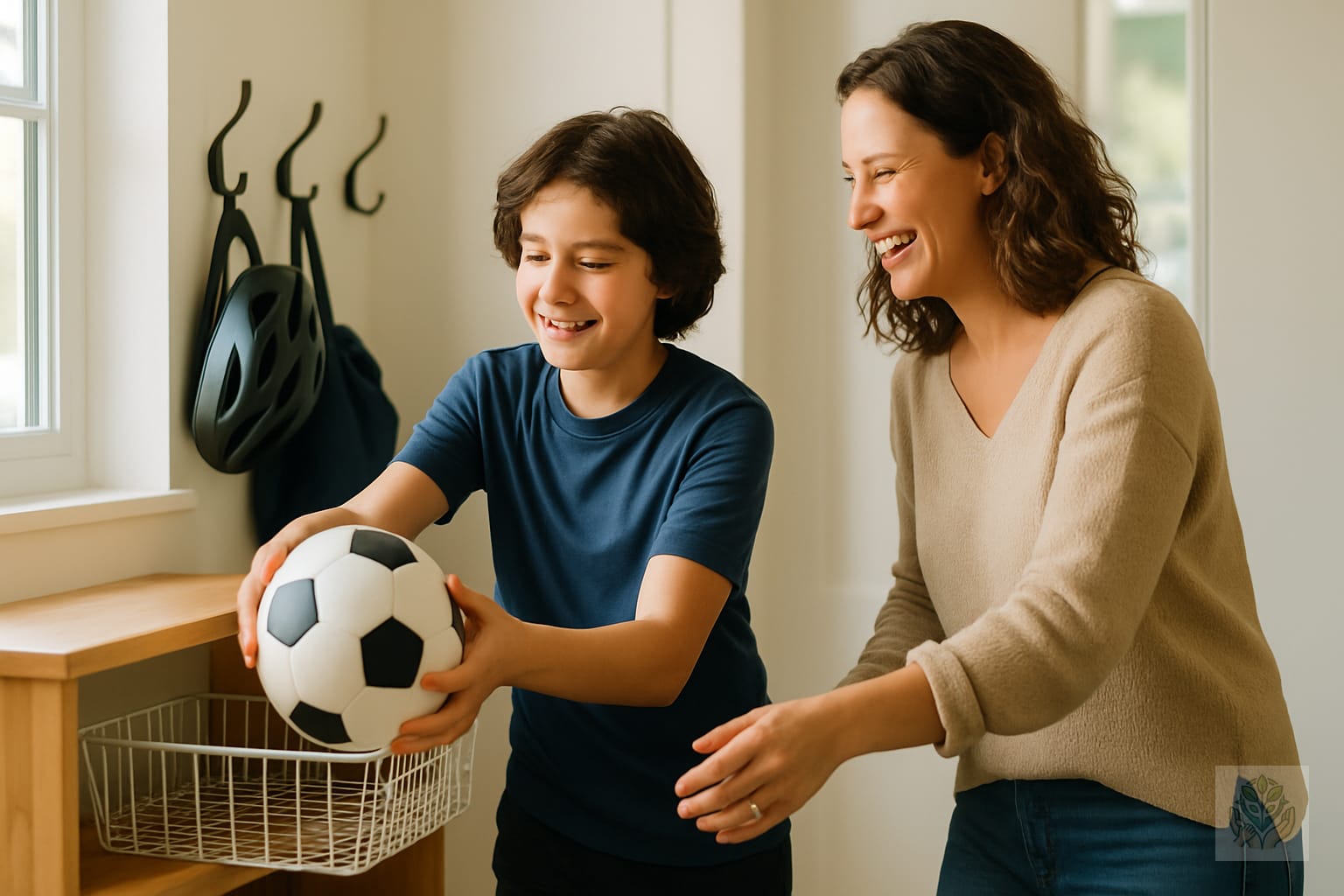
How to Organize Kids’ Sports Equipment at Home: 10 Stress-Free Storage Hacks
If you have an athlete in the family, you are likely familiar with the daily ritual of walking through the front door and tripping over a stray shin guard or a muddy pair of cleats. The chaos of post-practice gear piles can turn even the most patient parent into a stressed-out mess. However, learning how to organize kids’ sports equipment at home is about more than just aesthetics; it is about creating a functional flow that saves you precious time, protects the longevity of expensive gear, and restores peace to your living space. For more help managing an active household, check out our guide on daily routines for kids.
The goal is to move from chaotic piles to a grab-and-go philosophy. When every helmet, bat, and ball has a designated home, your child can take ownership of their gear, and you can reclaim your entryway. Let us dive into the best strategies to conquer the clutter once and for all.
Step 1: The Great Purge (Decluttering)
Before you invest in fancy bins or shelving units, you must start with a clean slate. The biggest mistake parents make is trying to organize gear that shouldn’t be there in the first place. Dedicate an afternoon to sorting everything by sport and by season.
As you sort, create three piles: Keep, Donate/Sell, and Toss. Be ruthless with the Toss pile; broken plastic whistles, single unmatched socks, and cracked mouthguards belong in the trash. If cleats are two sizes too small or a softball glove has seen better days, consider donating them to a local league or selling them on community boards. If you struggle with the sentimental value of an old jersey or a team-signed ball, place those in a dedicated memory box rather than in your active, high-traffic sports storage zone. For gear you are keeping, you can learn more about proper safety and sizing in our sports equipment guide for active kids.
Step 2: Assessing Your Space
Not every home has a spacious mudroom, and that is perfectly okay. The key to successful organization is choosing the right zone based on frequency of use. If your child has soccer practice twice a week, that gear should be in a primary location, such as the garage, basement, or a mudroom bench.
If you are limited on space, look for vertical opportunities. Walls are often underutilized in garages and basements. By installing slat walls or pegboards, you can clear the floor entirely, making the space feel twice as large and preventing those dreaded tripping hazards. You can also explore 15 genius sports equipment storage ideas to help you maximize your available square footage.
Step 3: Creative Storage Solutions for Every Sport
When you know how to organize kids’ sports equipment at home, you start to see storage opportunities everywhere. Here are some of our favorite hacks for specific gear types:
- Ball Storage: Use vertical bungee nets or wire baskets. These keep basketballs, soccer balls, and volleyballs contained while allowing them to air out.
- Stick and Bat Management: Wall-mounted racks are great, but for a budget-friendly option, consider PVC pipe organizers attached to the wall to keep sticks and bats standing upright.
- Helmet and Pad Hooks: The worst thing you can do for gear is throw it into a dark bin while sweaty. Use heavy-duty utility hooks to hang helmets, chest protectors, and shoulder pads so they can air-dry properly.
- Small Item Containment: Use mesh laundry bags for items like cones, scrimmage vests, and mouthguards. These bags are easy to toss into a larger bin and keep small items from wandering.
- Uniforms: If uniforms are needed frequently, a simple over-the-door hook system works wonders. For seasonal storage, use clear, labeled plastic drawers to keep jerseys and pants dust-free.
DIY vs. Buy: Storage Hacks on a Budget
You do not need a professional closet organizer to get results. Many of the most effective solutions involve repurposing items you already have. Crates can be stacked to create a custom shelving unit for shoes, and standard laundry bins are perfect for bulky items like pads and balls.
If you choose to purchase organizational products, focus on durability. Look for powder-coated metal racks or high-density plastic bins that can withstand the weight of heavy gear. Remember to account for your child’s growth. If they are entering a new sport or getting larger, ensure your storage system is modular so it can be easily adjusted next season. If your kids also need new gear, check out our guide on finding comfortable footwear for kids.
Maintenance: Keeping the System Working
The system is only as good as the maintenance behind it. Implement a seasonal swap schedule where you move current gear to the front and tuck away the off-season items in the attic or garage storage. Teaching children to be accountable for their own gear is an essential life skill. Even young children can learn to place their cleats in a specific bin and hang their bag on a hook, which is part of encouraging independent habits.
Consider implementing a gear check-in routine. When they walk in the door, they spend two minutes checking their bag for trash, putting sweaty clothes in the laundry, and placing their equipment in the appropriate spot. This prevents the weekend scramble to find a left glove before a game.
Conclusion
Transforming your home from a gear-strewn obstacle course into an organized athletic hub is entirely achievable. By purging the unnecessary, utilizing vertical space, and teaching your kids to manage their own equipment, you will save yourself countless hours of frustration. Knowing how to organize kids’ sports equipment at home creates a calmer environment for the whole family, allowing you to focus on the game rather than the gear. Start small today—pick one corner or one sport—and see the immediate impact it has on your daily routine. Do you have a favorite storage hack that changed your life? Share it in the comments below! For more ways to foster family connection, check out our list of 50 family bonding ideas.
Frequently Asked Questions
How do I start organizing kids’ sports equipment?
Start with a complete purge by sorting gear into keep, donate, and toss piles. Discard broken items, donate outgrown gear, and only organize the equipment your kids actively use.
What is the best way to store balls without them rolling around?
Use vertical bungee nets, wire baskets, or DIY PVC pipe bins to keep basketballs, soccer balls, and volleyballs securely contained while allowing them to air out.
How can I store bats and sticks efficiently?
Wall-mounted racks or budget-friendly vertical PVC pipe organizers attached to the garage wall work best to keep bats and sticks standing upright and out of the way.
How do I prevent sweaty gear from smelling up the house?
Use heavy-duty utility hooks to hang helmets, pads, and bags so they can properly air-dry. Avoid throwing damp gear directly into dark, enclosed bins.
How do I keep small sports accessories from getting lost?
Store small items like mouthguards, cones, and scrimmage vests in mesh laundry bags. These bags keep everything together and are easy to toss into larger storage bins.
How do I get my kids to maintain the sports storage system?
Implement a two-minute gear check-in routine when they walk through the door. Teach them to empty trash, put dirty clothes in the laundry, and return gear to its designated spot.


