

How to Teach Lowercase Letters to Preschoolers: Fun and Effective Strategies
As parents, we often rush to teach our children the alphabet by focusing on big, bold uppercase letters. While those capital letters are great for starting, the reality of early literacy is quite different. Teaching lowercase letters is actually one of the most important steps in preparing your preschooler for reading and writing success. You can also explore how to help kids recognize uppercase letters to give them a complete foundation in the alphabet.
Did you know that approximately 95% of the text children encounter in books, signs, and digital media is written in lowercase? By focusing early on these letters, you are giving your child the tools to decode the world around them. The key is to meet your child where they are, keeping the process lighthearted rather than turning it into a rigid classroom drill.
When Should You Start Teaching Lowercase Letters?
Every child develops at their own unique pace. Before you begin, look for signs of developmental readiness. Is your child showing an interest in signs, cereal boxes, or the letters in their own name? If they can identify some uppercase letters and show a desire to mimic writing, they are likely ready to explore lowercase forms.
There is often a debate about whether to teach uppercase and lowercase letters simultaneously. While some experts prefer one over the other, many early childhood educators recommend introducing them together or focusing on the lowercase version early on. By showing a child both versions of a letter at the same time, you help them understand that they are two representations of the same sound.
The Fundamentals of Letter Recognition
Effective letter recognition is about much more than just rote memorization. Instead of asking your child to recite the alphabet like a song, focus on letter-sound correspondence. Understanding that the letter ‘b’ makes the /b/ sound is far more valuable than simply recognizing the shape.
A great place to start is with the letters in their own name. Children are naturally drawn to their own identity, and they will be much more motivated to learn the lowercase letters that make up their name. Additionally, consider grouping letters by shape. For example, introduce letters like c, o, a, d, and g together, as they share similar curved structures. This helps the brain categorize and remember the shapes more efficiently.
Engaging Sensory Activities for Lowercase Learning
Preschoolers learn best through movement and touch. Tactile learning experiences help solidify neural pathways, making it easier for children to recall how a letter feels to create. Try these sensory-rich ideas:
- Salt trays or sand writing: Fill a shallow tray with salt or sand and have your child practice tracing lowercase letters with their finger.
- Shaving cream practice: Spread a thin layer of shaving cream on a tray or a clean table for a fun, messy way to write.
- Playdough letters: Roll playdough into long snakes and shape them into letters.
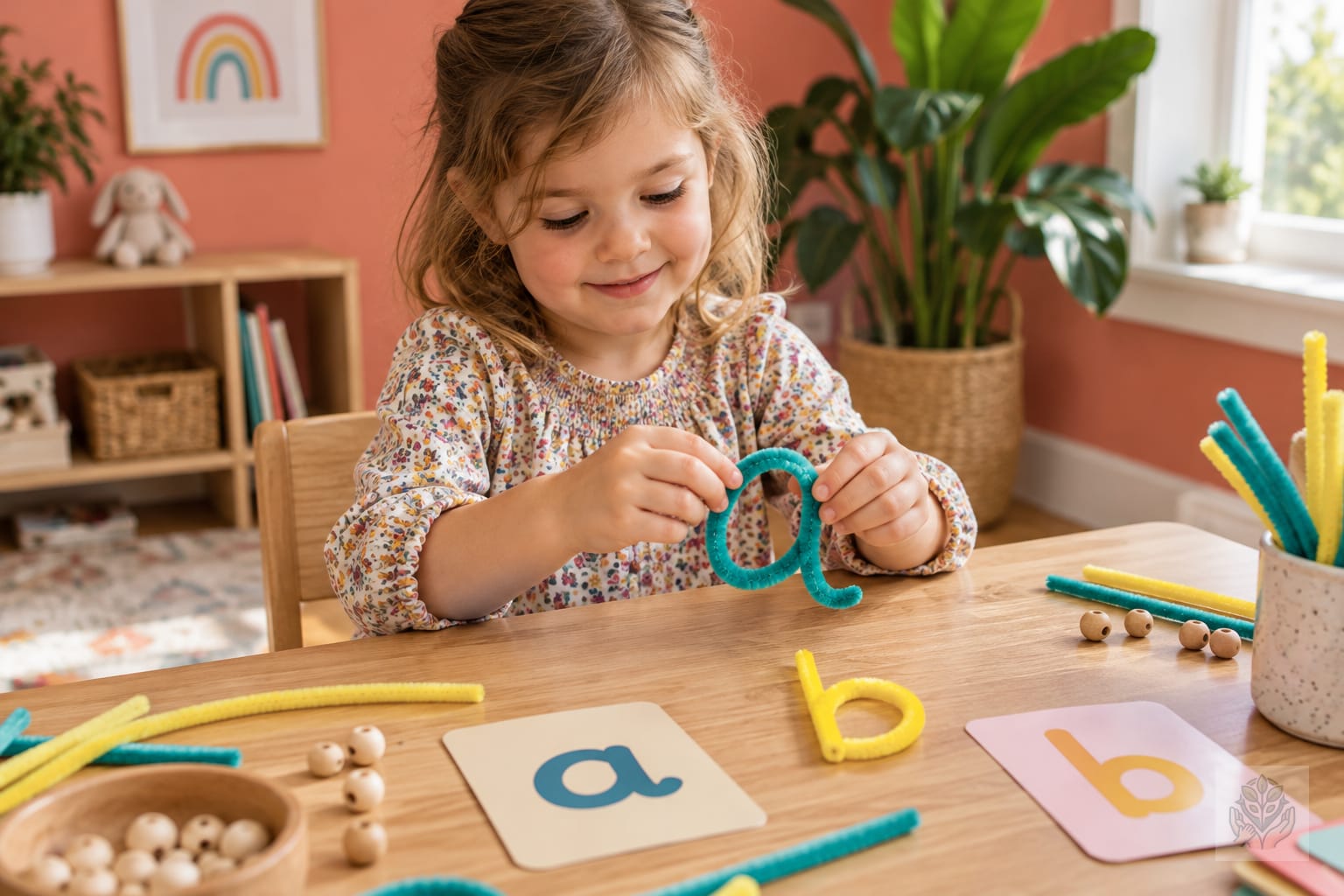
- Pipe cleaner formations: Twist colorful pipe cleaners into the shapes of letters to help children understand the physical curves and lines.
Play-Based Games to Practice Lowercase Letters
Learning should feel like play, not a chore. You can easily integrate lowercase letter recognition into your daily routine using simple games that keep your child moving and engaged. For even more inspiration, check out these morning learning activities for young children to keep their brains active.
Try a lowercase letter scavenger hunt where you hide magnetic letters around the room and ask your child to find specific sounds. For those who love the outdoors, use a paintbrush and a cup of water to paint letters on the sidewalk. The sun will make them disappear, which is always a thrill for a toddler. You can also play matching games using index cards, pairing an uppercase letter with its lowercase counterpart.
Tips for Successful Letter Formation
When your child is ready to start writing, focus on the process rather than perfection. Modeling correct pencil grip is important, but don’t obsess over it too early. The goal is to encourage a comfortable hold that allows for movement. You can find more targeted strategies in our guide on how to improve pencil grip in young children.
Always model the stroke order. Use simple verbal prompts to guide them, such as start at the top for letters like l or t. Prioritizing tracing and tracing-based activities helps build the muscle memory required to transition to independent writing later on. Remember, their letters may look shaky or wobbly at first, and that is perfectly normal.
Common Challenges and How to Overcome Them
One of the most common challenges is the confusion between reversible letters, such as b, d, p, and q. This is developmentally appropriate for preschoolers, so try not to worry too much. When they mix them up, gently correct them by pointing out the shape or the direction of the circle. If your child becomes frustrated, stop the activity immediately. Learning should never be a source of stress. If they lose interest, pivot to a different activity and come back to it another day.
Consistency is Key: Maintaining Progress
You don’t need a formal classroom setup to foster literacy. Embed learning into your daily life. Point out lowercase letters on grocery store signs, cereal boxes, or road signs during car rides. When you read books aloud, run your finger under the words to show your child that text moves from left to right and is composed of those familiar letters. To expand their reading skills further, explore these essential books for a preschool learning library.
Celebrating small wins is the best way to keep motivation high. A simple high-five or a sticker when they correctly identify a letter goes a long way in building their confidence.
Conclusion
Teaching lowercase letters to your preschooler is a wonderful opportunity to bond and build a foundation for lifelong learning. By focusing on play, sensory engagement, and consistent practice, you can take the pressure off and make literacy fun. Remember to stay patient, keep your sessions short, and celebrate every victory along the way. Your child will be reading in no time!
Ready to start? Sign up for our weekly newsletter to receive a free, printable alphabet tracing sheet and more expert tips delivered straight to your inbox! For additional practice materials, you can also check out our collection of free printable worksheets for 5-year-olds.
Frequently Asked Questions
When should I start teaching lowercase letters to my preschooler?
You can start when your child shows an interest in letters, signs, or writing their own name, typically around preschool age.
Should I teach uppercase and lowercase letters at the same time?
Yes, introducing them together or focusing on lowercase early helps children understand they are two forms of the same sound.
What are the best ways to teach letter recognition to toddlers?
Use multi-sensory activities like salt trays, shaving cream, playdough, and active games like scavenger hunts to make learning engaging.
Why is teaching lowercase letters more important than uppercase?
About 95% of the text children encounter in books and media is written in lowercase, making it vital for early reading success.
How can I help my child stop confusing b, d, p, and q?
Letter reversals are normal in preschoolers. Gently correct them by pointing out the shape features without causing frustration.
How long should daily letter learning sessions last?
Keep sessions short, fun, and play-based, lasting only a few minutes to match a preschooler’s attention span and prevent burnout.


