

How to Organize Baby Books in a Small Nursery: Creative Storage Solutions for Tight Spaces
Preparing for a new arrival is an exciting time, but the reality of limited square footage often sets in quickly. When you are trying to fit a crib, a changing table, and a glider into a tiny room, finding a home for your growing collection of children’s literature can feel like an impossible puzzle. However, learning how to organize baby books in a small nursery is entirely possible with a bit of creativity and strategic planning.
Early reading habits are essential for cognitive development, vocabulary growth, and bonding. You should never feel that a lack of space needs to prevent you from building a vibrant library for your child. By prioritizing functionality and aesthetics, you can create a cozy reading environment that fits perfectly into your home, regardless of the room size.
Assessing Your Space: Identifying Hidden Storage Opportunities
Before you run out to buy furniture, take a moment to look at your nursery with fresh eyes. Often, the most effective nursery storage solutions are those that utilize space you are currently ignoring. Start by looking up; vertical space is your best friend in a small room. The walls above your changing table or beside the door are often blank canvases just waiting for shelving. If you need help with the initial room layout, read our guide on crib placement tips for a safe nursery.
Consider the back of the nursery door. This is frequently overlooked, yet it provides excellent real estate for hanging organizers that can house board books and small picture books. Additionally, evaluate your existing furniture. Could a sturdy dresser top accommodate a small, decorative book rack? Could your nightstand be swapped for a slim unit that includes a dedicated shelf for bedtime stories?
Top Space-Saving Storage Solutions for Small Nurseries
When working with limited floor area, you must think outside the box. Here are some of the most effective ways to manage your baby books without cluttering your floor space:
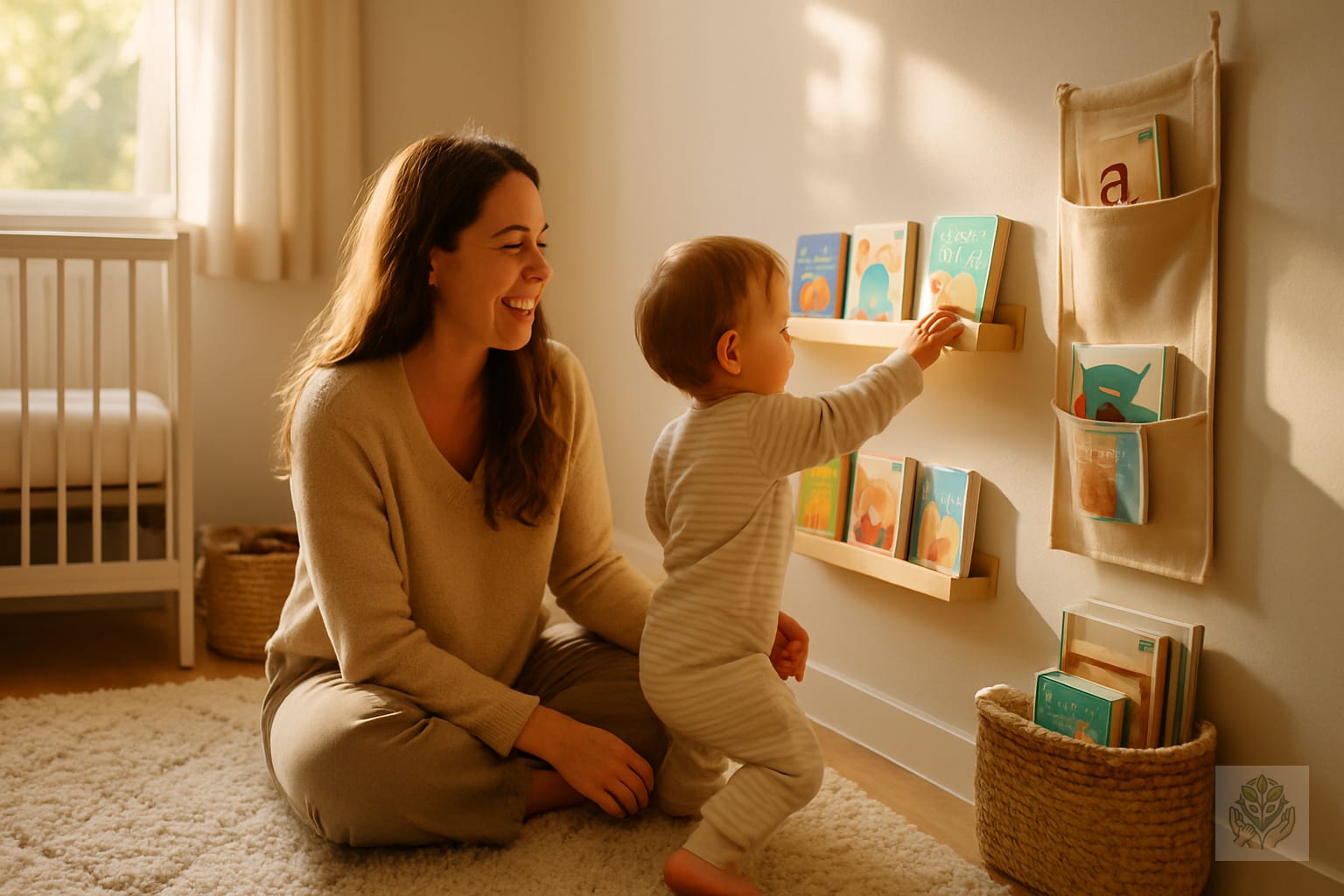
- Floating Ledge Shelves: These are perfect for displaying books without a bulky footprint. By mounting them at different heights, you create a dynamic visual display that keeps books off the floor while being easily accessible for your little one.
- Over-the-Door Hanging Organizers: Using canvas or fabric pockets behind the door keeps your library hidden until storytime. It is a fantastic way to utilize space that would otherwise be wasted.
- Under-Crib Rolling Bins: The area beneath the crib is often a vacuum for dust, but it is prime storage territory. A shallow, rolling wooden crate can house dozens of books and can be pulled out whenever you need a fresh selection.
- Fabric Wall Pockets: These offer a soft, modern look. They are lightweight, easy to mount, and provide a secure place for books without the sharp corners of traditional furniture.
- Stackable Bins and Baskets: If you prefer a minimalist approach, a few matching baskets kept on a low shelf or in a corner allow you to rotate books regularly and keep the room looking tidy. For more inspiration, check out our list of 10 genius shelf organization ideas for children’s rooms to reduce clutter.
Design Tips for Small Nursery Bookcases
Organizing isn’t just about utility; it is about design. Displaying books cover-out rather than spine-out is a game-changer for toddlers. It allows them to recognize their favorite stories by the artwork, which encourages independent reading choices. This also transforms your library into a beautiful piece of nursery decor. If you are just starting your collection, review our tips on how to choose the best picture books for young children.
To keep the look cohesive, try grouping books by theme or color. A rainbow-arranged shelf can look incredibly polished and professional. If you have an overwhelming number of books, implement a rotating library system. Store the bulk of your collection in a closet or under-bed storage, and keep only 10 to 15 titles visible at a time. Rotate them every few weeks to keep your child interested and your shelves clutter-free.
Organization Hacks to Keep it Tidy
Maintaining a small space requires strict discipline. One of the best habits you can adopt is the one-in, one-out rule. For every new book added to your collection, consider donating or storing an older one that your child has outgrown. This prevents the library from becoming unmanageable.
As your child grows, involve them in the cleanup process. Turning tidying up into a game helps teach responsibility and makes the process less of a chore for you. Additionally, use weighted bookends on any open shelves to prevent stacks from tipping over. This keeps your shelves looking neat and prevents the frustration of books constantly sliding off into the walking path. For even more help creating a peaceful environment, see our guide on how to create a calm and comfortable sleep environment for kids.
Safety First: Baby-Proofing Your Storage
Safety is the most important factor in any nursery design. Whenever you mount shelves or bookcases, ensure they are securely anchored to the wall to prevent tipping. For shelving that is within reach of a crawling baby or an active toddler, choose soft-edged materials or fabric bins to avoid injuries during playtime. You can find more safety tips in our guide on how to choose safe baby furniture for your home.
Be mindful of height placement. While floating shelves look beautiful high up, they are out of reach for a child. Placing books at your baby’s eye level encourages them to explore the books independently. As they grow older, move your favorite, more delicate books to higher shelves, leaving the board books down low where your child can handle them safely.
Conclusion
Learning how to organize baby books in a small nursery is a balance of strategy and style. By reclaiming vertical space, utilizing hidden areas like the space under the crib, and keeping your collection curated, you can provide your child with a wonderful reading experience without sacrificing precious room space. Don’t be afraid to experiment with your layout; the best solution is the one that makes your daily routine feel easier and more enjoyable. You might also want to see our 15 essential books for a preschool learning library to round out your collection.
We would love to see how you have set up your own nursery library! Share your photos or reach out if you have questions about these storage solutions. If you found these tips helpful, subscribe to our newsletter for more practical advice on creating a functional and beautiful home for your growing family.
Frequently Asked Questions
How can I store baby books in a tiny nursery?
You can store baby books in a tiny nursery by utilizing vertical wall space with floating ledges, hanging over-the-door organizers, or placing shallow rolling bins underneath the crib.
Should I display baby books cover-out or spine-out?
Displaying baby books cover-out is ideal for toddlers because it highlights the colorful artwork, making it easier for them to recognize their favorite stories and encouraging independent reading.
What is the best way to keep a small nursery library clutter-free?
Adopt the one-in, one-out rule by donating or storing an older book whenever a new one is added, and use a rotating library system to keep only a few books on display at a time.
Are floating shelves safe for a baby nursery?
Yes, as long as they are securely anchored into wall studs to prevent tipping, and placed at appropriate heights depending on whether you want them accessible to your child.
How do I involve my child in organizing their books?
You can turn putting books back onto low shelves or into baskets into a fun game, which helps teach early organization habits and makes clean-up time easier.
What kind of storage works best for board books?
Fabric wall pockets, low baskets, and shallow under-bed bins work wonderfully for board books because they are durable, easy for little hands to reach, and keep clutter off the floor.


