

How to Plan Healthy Meals for Picky Eaters: A Stress-Free Guide for Parents
If you find yourself constantly negotiating over a single broccoli floret or preparing a separate meal because your child refuses to touch the main course, you are certainly not alone. Many parents experience the exhaustion that comes with managing selective appetites. Understanding how to plan healthy meals for picky eaters is a journey, not a sprint, and it requires a mix of patience, strategy, and a shift in perspective.
Picky eating is a normal developmental phase that many children pass through as they assert their independence. By moving away from power struggles and toward proactive meal planning, you can significantly reduce the anxiety surrounding the dining table. This guide will provide you with the tools to increase your child’s nutritional intake while keeping the atmosphere light and supportive. If you struggle with defiance, you may also find our expert tips for power struggles helpful.
Understanding the Why Behind Picky Eating
To address selective eating effectively, we must first look at the biology and psychology behind the behavior. It is rarely about being difficult; rather, it is often a developmental milestone involving food neophobia, or the fear of new foods. During toddlerhood and preschool, children naturally gravitate toward familiar, caloric-dense foods as a way to feel safe and secure.
Sensory processing also plays a major role. Many children are hyper-aware of textures, smells, and colors. A mushy pea or a sauce with an unexpected spice can be overwhelming for a child with sensitive sensory needs. Recognizing that these reactions are often physical rather than behavioral is the first step toward empathy.
While most picky eating is harmless, it is important to know when to seek help. If your child is struggling with significant weight loss, extreme fatigue, or a very limited list of foods that leads to nutritional deficiencies, consult your pediatrician. They can rule out medical issues such as allergies, oral motor delays, or sensory processing disorders.
Step-by-Step Meal Planning for Picky Eaters
When you start to plan healthy meals for picky eaters, the goal is to create a predictable environment where the pressure to eat is removed. Start by implementing the one safe food rule. By ensuring that at least one component of the meal—such as plain pasta, bread, or fruit—is something you know your child likes, you reduce the stress level for everyone at the table.
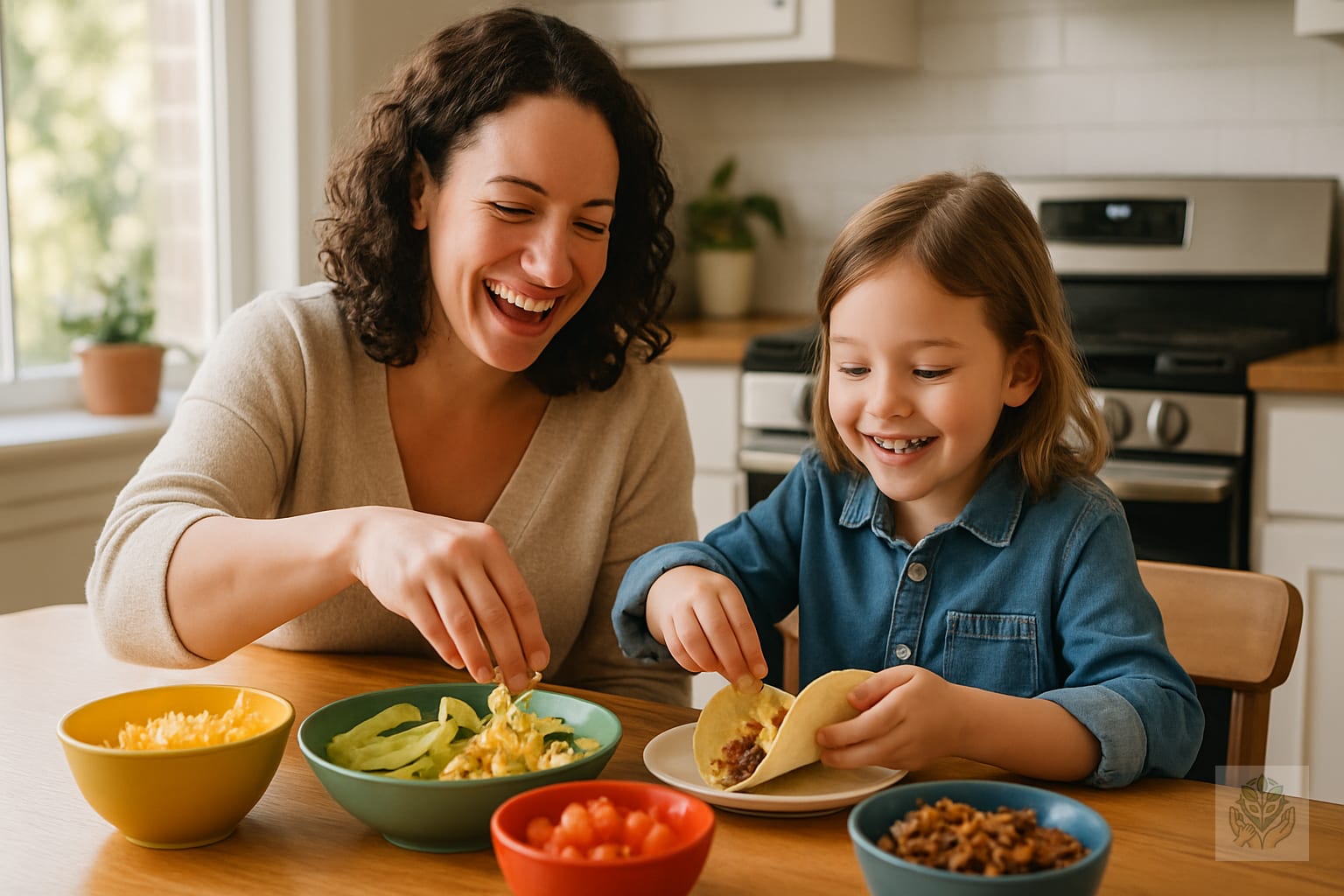
Consistency is your best friend. Rotating themes can make healthy food feel like a fun ritual rather than a chore. Consider designating Taco Tuesdays or Build-Your-Own-Pizza nights. These themes allow for variety while giving your child a sense of autonomy in assembling their plate. For more on creating structure, check out our guide on flexible daily schedules for young children.
Deconstructed meals are another powerful tool. Instead of serving a mixed casserole, serve the chicken, rice, and steamed vegetables in separate piles on the plate. This allows the child to inspect each item individually. For a selective palate, seeing the distinct parts of a meal makes the plate look much less intimidating.
Nutritional Strategies Without the Power Struggle
Feeding experts widely recommend the Division of Responsibility. In this framework, the parent decides what food is served, when it is served, and where it is served. The child, however, is responsible for deciding whether or not they eat and how much they eat. This separation of duties removes the pressure that often turns mealtime into a battleground.
You can also embrace stealthy nutrition without being dishonest. While you should not hide food to trick your child, adding pureed vegetables into a tomato sauce or blending spinach into a smoothie is a great way to boost nutrient density. For inspiration, explore our easy vegetable puree recipes. It is about adding goodness, not hiding the fact that vegetables exist.
Persistence is essential. Studies suggest it can take fifteen or more exposures before a child feels comfortable enough to even taste a new food. Keep offering the food without forcing the bite. The simple act of seeing the vegetable on their plate consistently is a form of exposure that helps build long-term familiarity.
Engaging Your Child in the Process
Children are much more likely to try a food they helped create. Involve your child in the grocery shopping process by letting them choose between two healthy options, such as red apples versus green apples. This small choice fosters a sense of ownership over their nutritional intake.
Bring the kitchen experience to life by cooking together. Even simple tasks like washing lettuce or pressing the button on the blender can increase a child’s food curiosity. When they see the ingredients transform, the food becomes less mysterious and more inviting. If you want to make healthy eating a lifestyle, read our tips on healthy snacks for kids.
Remember to focus your praise on the effort of trying, not the result of finishing. Instead of saying, Eat all your broccoli, try saying, I love how you took a tiny lick of that broccoli to see how it tastes! Positive reinforcement creates a joyful association with the dining experience.
Sample Meal Plan: A Balanced Week for Picky Eaters
Planning for the week helps ensure you have the right ingredients on hand. Here is a sample of how to balance familiar favorites with new challenges:
- Breakfast: Oatmeal with a side of berries and a sprinkle of cinnamon.
- Lunch: Deconstructed turkey and cheese rolls, cucumber sticks, and an orange slice.
- Dinner: Tacos with ground turkey, shredded cheese, and a side of mild salsa.
- Snack: Greek yogurt with a drizzle of honey or a piece of whole-grain toast.
The key here is that every meal contains at least one familiar item, preventing the child from feeling like the meal is a challenge to be overcome. If they only eat the cheese and the turkey, that is a success. Over time, they will become more curious about the other items on the plate. If you are looking for more comprehensive nutritional advice, see our guide on protein-rich foods for healthy child development.
Conclusion
Learning how to plan healthy meals for picky eaters is an investment in your child’s long-term relationship with food. By reducing the pressure, focusing on the division of responsibility, and staying patient through the phases of sensory development, you are laying the groundwork for a healthy, adventurous eater. Remember, progress is rarely linear. There will be good days and bad days, and that is perfectly okay. Stay consistent, stay supportive, and continue to model healthy habits yourself. For more resources on nutrition and family meal planning, sign up for our weekly newsletter and download our free, customizable meal planner template.
Frequently Asked Questions
Why is my child suddenly being picky about food?
Picky eating is often a normal developmental phase involving food neophobia, where children fear new foods and prefer familiar, safe items. Sensory processing, textures, and a desire for independence also play a major role in this behavior.
How many times should I offer a new food to a picky eater?
Studies suggest it can take fifteen or more exposures before a child feels comfortable enough to taste a new food. Keep offering the food repeatedly without forcing them to eat it.
What is the Division of Responsibility in feeding?
The Division of Responsibility is a feeding framework where parents decide what, when, and where food is served. The child decides whether they will eat and how much, which removes mealtime pressure.
How do deconstructed meals help picky eaters?
Deconstructed meals involve serving components like meat, rice, and vegetables in separate piles instead of mixed together. This makes the plate look less intimidating and allows children to inspect items individually.
When should I consult a pediatrician about picky eating?
Consult your pediatrician if your child experiences significant weight loss, extreme fatigue, or a severely restricted diet that leads to nutritional deficiencies or underlying medical concerns.
How can I involve my child in meal planning?
You can involve your child by letting them choose between two healthy grocery options, having them help with simple kitchen tasks like washing produce, or allowing them to assemble their own plates.


